Lower Extremities
1. Children tend to do well with lower-limb prostheses, often requiring little or no formal gait training.
2. Limb-volume changes occur following amputation and can be controlled by rigid dressings in the postoperative period (145).
Although the postoperative edema is not as great as that for the adult dysvascular patient, children will benefit from these rigid dressings for the control of edema as well as to initiate earlier ambulation and prosthetic fitting. A rigid removable dressing is illustrated in Figure 13.25. This is particularly important for children who have had a remnant or dysfunctional limb segment for which they have some psychological attachment. Early ambulation may serve as a distraction to the surgery and provide a new focus on skills of ambulation.3. When fitting an ankle disarticulation prosthesis, the prosthetists should strive to create a prosthesis that permits near full weight bearing on the distal end of the child's residuum. This will ensure that the
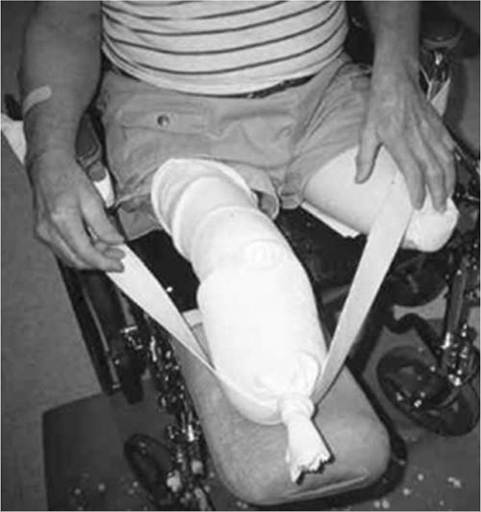
Figure 13.25 Individual with transtibial amputation and removable, rigid dressing. Note strap used to maintain compression on limb.
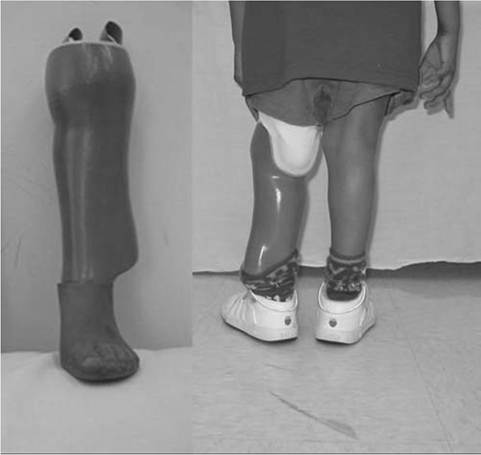
Figure 13.26 Angulation deformity accommodated by prothesis.
distal end of the residuum and the heel pad remain toughened. An end-bearing residuum of this length is beneficial for limited ambulation without the prosthesis (eg, using the bathroom in the middle of the night), as well as long-term fitting.
4. The surface area of the distal residuum will remain fairly consistent throughout the child's life; therefore, the child is encouraged to maintain a reasonable weight, so as not to lose the ability for distal end bearing.
5. Prosthetic fittings may be affected by angular deformities as the alignment of the device must be biomechanically appropriate and not necessarily the most cosmetic. Most of the angulation deformities can be accommodated in a prosthesis; however, it is not possible to provide a device that is advantageous to appropriate gait mechanics and satisfies the cosmetic expectations. The accommodation of angular deformity is illustrated in Figure 13.26.
REFERENCES
1. Rijnders LJ, Boonstra AM, Groothoff JW, et al. Lower limb deficient children in The Netherlands: Epidemiological aspects. Prosthetics and Orthotics International. 2000;24:13.
2. Yoon PW, Rasmussen SA, Lynberg MC, et al. The National Birth Defects Prevention Study. Public Health Reports. 2001;116(Suppl 1):32.
3. Holder-Espinasse M, Devisme L, Thomas D, Boute et al. Pre- and postnatal diagnosis of limb anomalies: A series of 107 cases. American Journal of Medical Genetics. 2004;124A:417.
4. Howard E. Family-centered care in the context of fetal abnormality. Journal of Perinatal and Neonatal Nursing. 2006;20:237.
5. Fertel PE, Reiss RE Counseling prenatal diagnosis patients: The role of the social worker. Social Work in Health Care. 1997;24:47.
6. Graham JM, Miller ME, Stephen MJ et al. Limb reduction anomalies and early in-utero limb compression. J Pediatr. 1980;96(6):1052-1056.
7. Herring J, Birch J. The Child with a Limb Deficiency. Rosemont, IL: American Academy of Orthopedic Surgeons, 1998.
8. Panthaki ZJ, Armstrong MB, Panthaki ZJ, et al. Hand abnormalities associated with craniofacial syndromes. Journal of Craniofacial Surgery. 2003;14:709.
9. Stoll C, Rosano A, Botto LD, et al. On the symmetry of limb deficiencies among children with multiple congenital anomalies. Annales de Genetique. 2001;44:19.
10. Passos-Bueno MR, Armelin LM, Alonso LG, et al. Craniosynostosis associated with ocular and distal limb defects is very likely caused by mutations in a gene different from FGFR, TWIST, and MSX2.
American Journal of Medical Genetics. 2002;113:200.11. Enjolras O, Chapot R, Merland JJ, et al. Vascular anomalies and the growth of limbs: A review. Journal of Pediatric Orthopedics. 2004;13(Pt B):349.
12. Ghabrial R, Versace P, Kourt G, et al. Mobius’ syndrome: Features and etiology. Journal of Pediatric Ophthalmology and Strabismus. 1998;35:304.
13. Prasad C, Quackenbush EJ, Whiteman D, et al. Limb anomalies in DiGeorge and CHARGE syndromes. American Journal of Medical Genetics. 1997;68:179.
14. Kousseff BG, Kousseff BG. Gestational diabetes mellitus (class A): A human teratogen? American Journal of Medical Genetics. 1999;83:402.
15. Nielsen GL, Norgard B, Puho E, et al. Risk of specific congenital abnormalities in offspring of women with diabetes. Diabetic Medicine. 2005;22:693.
16. Marles SL, Reed M, Evans JA, et al. Humeroradial synostosis, ulnar aplasia and oligodactyly, with contralateral amelia, in a child with prenatal cocaine exposure. American Journal of Medical Genetics. 2003;116(Pt A):85.
17. Paskulin GA, Gazzola Zen PR, de Camargo Pinto LL, et al. Combined chemotherapy and teratogenicity. Birth Defects Research. 2005;73:634.
18. Man LX, Chang B, Man L-X, et al. Maternal cigarette smoking during pregnancy increases the risk of having a child with a congenital digital anomaly. Plastic and Reconstructive Surgery. 2006;117:301.
19. McCredie J, Willert HG, McCredie J, et al. Longitudinal limb deficiencies and the sclerotomes. An analysis of 378 dysmelic malformations induced by thalidomide. Journal of Bone and Joint Surgery. 1999;81:9.
20. Pandya NA, Jani BR, Pandya NA, et al. Post-axial limb defects with maternal sodium valproate exposure. Clinical Dysmorphology. 2000;9:143.
21. Sorensen HT, Czeizel AE, Rockenbauer M, et al. The risk of limb deficiencies and other congenital abnormalities in children exposed in utero to calcium channel blockers. Acta Obstetricia et Gynecologica Scandinavica. May 2001;80:397.
22. Engel LS, O'Meara ES, Schwartz SM, et al.
Maternal occupation in agriculture and risk of limb defects in Washington State, 1980-1993. Scandinavian Journal of Work, Environment & Health. 2000;26:193.23. Chou MM, Lin SK, Ho ES. Severe limb reduction defects after uterine lavage at 7-8 weeks' gestation. Prenatal Diagnosis. 1997;17:77.
24. Robin NH, Franklin J, Prucka S, et al. Clefting, amniotic bands, and polydactyly: A distinct phenotype that supports an intrinsic mechanism for amniotic band sequence. American Journal of Medical Genetics. 2005;137(Pt A):298.
25. Gabos PG, Gabos PG. Modified technique for the surgical treatment of congenital constriction bands of the arms and legs of infants and children. Orthopedics. 2006;29:401.
26. Yang Q, Khoury MJ, Olney RS, et al. Does periconceptional multivitamin use reduce the risk for limb deficiency in offspring? Epidemiology. 1997;8:157.
27. Letts M, Blastorah B, al-Azzam S, et al. Neonatal gangrene of the extremities. Journal of Pediatric Orthopedics. 1997;17:397.
28. Meiners PM, Leon-Villapalos J, Dziewulski P, et al. Pneumococcal septicaemia with Purpura fulminans in an 11-month-old child. Journal of Plastic, Reconstructive and Aesthetic Surgery. 2006;59:1377.
29. Olowu WA, Olowu WA. Klebsiella-induced purpura fulmi- nans in a Nigerian child: Case report and a review of literature. West African Journal of Medicine. 2002;21:252.
30. Swanson A. A classification for congenital limb malformations. Journal of Hand Surgery. 1976;1(1):8-22.
31. Swanson A, Barsky A, Entin M. Classification of limb malformation on the basis of embryological failures. Surg Clin North Am. 1968;48(5):1169-1179.
32. Day J. The ISO/ISPO classification of congenital limb deficiency. In: Bowker J, Micheal J, ed. Atlas of Limb Prosthetics. St. Louis: Mosby, 1992.
33. International Organization for Standardization. ISO 8548-1: 1989 Prosthetics and orthotics:Limb deficiencies, part 1: Methods of describing limb deficiencies present at birth.1989; Geneva, Switzerland.
34. Bryant PR, Pandian G, Bryant PR, et al. Acquired limb deficiencies. 1. Acquired limb deficiencies in children and young adults. Archives of Physical Medicine and Rehabilitation. 2001;82:S3.
35. Fagelman MF, Epps HR, Rang M, et al. Mangled extremity severity score in children. Pediatric Orthopedics. 2002;22:182.
36. Poeck K. Phantoms following amputations in early childhood and in congenital absence of limbs. Cortex. 1964; 1:269.
37. Erdmann D, Lee B, Roberts CD, et al. Management of lawnmower injuries to the lower extremity in children and adolescents. Annals of Plastic Surgery. 2000;45:595.
38. Kroening L, Davids JR. Management of lower extremity riding lawn mower injuries in children. Orthopedic Nursing. 2000;19(2):29-37.
39. Loder RT, Dikos GD, Taylor DA, et al. Long-term lower extremity prosthetic costs in children with traumatic lawnmower amputations. Archives of Pediatrics and Adolescent Medicine. 2004;158:1177.
40. McClure SK, Shaughnessy WJ, McClure SK, et al. Farm- related limb amputations in children. Journal of Pediatric Orthopedics. 2005;25:133.
41. George EN, Schur K, Muller M, et al. Management of high voltage electrical injury in children. Burns. 2005;31:439.
42. Goz M, Cakir O, Eren N, et al. Peripheral vascular injuries due to firearms in children. European Journal of Vascular and Endovascular Surgery. 2006;32:690.
43. Yaw KM. Pediatric bone tumors. Seminars in Surgical Oncology. 1999;16:173-183.
44. Chihara IG, Osada H, Iitsuka Y, et al. Pregnancy after limbsparing hemipelvectomy for Ewing's sarcoma. A case report and review of the literature. Gynecologic and Obstetric Investigation. 2003;56:218.
45. Hosalkar HS, Dormans JP. Limb-sparing surgery for pediatric musculoskeletal tumors. Pediatric Blood and Cancer. 2004;42 (4) :295-310.
46. Grimer RJ. Surgical options for children with osteosarcoma. Lancet Oncology. 2005;6 (2):85-92.
47. Wallace RD, Davoudi MM, Neel MD, et al. The role of the pediatric plastic surgeon in limb salvage surgery for osteosarcoma of the lower extremity.
Journal of Craniofacial Surgery. 2003;14:680.48. Abudu A, Grimer R, Tillman R, et al. The use of prostheses in skeletally immature patients. Orthopedic Clinics of North America. 2006;37:75.
49. Delepine G, Delepine N, Desbois JC, et al. Expanding pros- theses in conservative surgery for lower limb sarcoma. International Orthopedics. 1998;22:27.
50. Futani H, Minamizaki T, Nishimoto Y, et al. Long-term follow-up after limb salvage in skeletally immature children with a primary malignant tumor of the distal end of the femur. Journal of Bone and Joint Surgery. 2006;88:595.
51. Kumta SM, Cheng JC, Li CK, et al. Scope and limitations of limb-sparing surgery in childhood sarcomas. Journal of Pediatric Orthopedics. 2002;22:244.
52. Meyer JS, Mackenzie W. Malignant bone tumors and limb-salvage surgery in children. Pediatric Radiology. 2004;34:606.
53. Nagarajan R, Neglia JP, Clohisy DR, et al. Limb salvage and amputation in survivors of pediatric lower-extremity bone tumors: What are the long-term implications? Journal of Clinical Oncology. 2002;20:4493.
54. Angel D, Kligman M, Roffman M, et al. The technique for growth plate sparing in soft-tissue sarcoma around the knee. Journal of Pediatric Orthopedics. 1997;17:437.
55. Brigman BE, Hornicek FJ, Gebhardt MC, et al. Allografts about the knee in young patients with high-grade sarcoma. Clinical Orthopedics and Related Research. 2004: 421:232-9.
56. Jellinek M, Murphy J. Screening for psychosocial disorders in pediatric practice. Am J Dis Child. 1988;142 (11): 1153-7.
57. Costello EJ, Edelbrock C, Costello AJ, et al. Psychopathology in pediatric primary care: The new hidden morbidity. J Pediatr Psychol. 1988:82(3 Pt 2):415-24.
58. Marchese VG, Spearing E, Callaway L, et al. Relationships among range of motion, functional mobility, and quality of life in children and adolescents after limb-sparing surgery for lower-extremity sarcoma. Pediatric Physical Therapy. 2006;18:238.
59. Varni J, Rubenfeld L, Talbot D, et al. Family functioning, temperament and psychological adaptation in children with congenital or acquired limb deficiencies. Pediatrics. 1989;84(2):323-30.
60. Clerici CA, Ferrari A, Luksch R, et al. Clinical experience with psychological aspects in pediatric patients amputated for malignancies. Tumori.2004;90:399.
61. Bond JM, Kent GG, Binney VA, et al. Psychological adjustment of children awaiting limb reconstruction treatment. Child: Care, Health and Development. 1999;25:313.
62. Davies MS, Nadel S, Habibi P, et al. The orthopaedic management of peripheral ischaemia in meningococcal septicaemia in children. Journal of Bone and Joint Surgery. 2000;82:383.
63. Belthur MV, Bradish CF, Gibbons PJ, et al. Late orthopaedic sequelae following meningococcal septicaemia. A multicentre study. Journal of Bone and Joint Surgery. 2005;87:236.
64. Huang DB, Price M, Pokorny J, et al. Reconstructive surgery in children after meningococcal purpura fulminans. Journal of Pediatric Surgery. 1999;34:595.
65. Brown DL, Greenhalgh DG, Warden GD, et al. Purpura ful- minans: A disease best managed in a burn center. Journal of Burn Care and Rehabilitation. 1998;19:119.
66. Varni J, Setoguchi Y. Screening for behavioral and emotional problems in children and adolescents with congenital or acquired limb deficiencies. Am J Dis Child. 1992;146 (1):103-7.
67. Wheeler JS, Anderson BJ, De Chalain TM, et al. Surgical interventions in children with meningococcal purpura ful- minans: A review of 117 procedures in 21 children. Journal of Pediatric Surgery. 2003;38:597.
68. Lowe KG, Boyce JM, Lowe KG, et al. Rehabilitation of a child with meningococcal septicemia and quadrilateral limb loss: a case report. Archives of Physical Medicine and Rehabilitation. 2004;85:1354.
69. Weisz J, Weiss B. Studying the “referability” of child clinical problems. J Consult Clin Psychol. 1991;59(2):266-73.
70. O'Donnell P. Structured parent interaction. Inter-clinic Information Bulletin. 1977;16(5):11-17.
71. Dedmond BT, Davids JR. Function of skin grafts in children following acquired amputation of the lower extremity. Journal of Bone and Joint Surgery. 2005;87:1054.
72. Melzack R, Israel R, Lacroix R, et al. Phantom limbs in people with congenital limb deficiency or amputation in early childhood. Brain. 1997;120:1603.
73. Hamzei F, Liepert J, Dettmers C, et al. Structural and functional cortical abnormalities after upper limb amputation during childhood. Neuroreport. 17 2001;12:957.
74. Wilkins KL, McGrath PJ, Finley GA, et al. Phantom limb sensations and phantom limb pain in child and adolescent amputees. Pain. 1998;78:7.
75. Wilkins KL, McGrath PJ, Finley GA, et al. Prospective diary study of nonpainful and painful phantom sensations in a preselected sample of child and adolescent amputees reporting phantom limbs. Clinical Journal of Pain. 2004;20:293.
76. Sener G, Yigiter K, Bayar K, et al. Effectiveness of prosthetic rehabilitation of children with limb deficiencies present at birth. Prosthetics and Orthotics International. 1999;23:130.
77. James MA, Bagley AM, Brasington K, et al. Impact of pros- theses on function and quality of life for children with unilateral congenital below-the-elbow deficiency. Journal of Bone and Joint Surgery. 2006;88:2356.
78. Taylor S, Yuschyshyn, H., McIvor, J. Stump sensation and prosthetic use in juvenile upper extremity amputees. J Assoc Child Prosthetic-Orthotic Clin. 1991;26(1):24.
79. Tonkin MA. An introduction to congenital hand anomalies: Handchirurgie, Mikrochirurgie, Plastische Chirurgie. 2004;36:75-84.
80. Schenker M, Wiberg M, Kay SP, et al. Precision grip function after free toe transfer in children with hypoplastic digits. Journal of Plastic, Reconstructive and Aesthetic Surgery. 2007;60:13.
81. Beyaert C, Henry S, Dautel G, et al. Effect on balance and gait secondary to removal of the second toe for digital reconstruction: 5-year follow-up. Journal of Pediatric Orthopedics. 2003;23:60.
82. Tu YK, Yeh WL, Sananpanich K, et al. Microsurgical second toe-metatarsal bone transfer for reconstructing congenital radial deficiency with hypoplastic thumb. Journal of Reconstructive Microsurgery. 2004;20:215.
83. Geck MJ, Dorey F, Lawrence JF, et al. Congenital radius deficiency: radiographic outcome and survivorship analysis. Journal of Hand Surgery. 1999;24:1132.
84. Matsuno T, Ishida O, Sunagawa T, et al. Radius lengthening for the treatment of Bayne and Klug type II and type III radial longitudinal deficiency. Journal of Hand Surgery. 2006;31:822.
85. Bennet JB, Riordan DC. Ulnar Hemimelia. In: Herring JA, and Birch JG, eds. The Child with a Limb Deficiency. Rosemont, IL: American Academy of Orthopedic Surgeons, 1998.
86. Penne D, Delanote G, Breysem L, et al. The Holt-Oram syndrome: radiological approach. Journal Belge de Radiologie. 1997;80:118.
87. Mehta P, Puri P, Talbot JF, et al. Disc drusen and peripapillary subretinal neovascular membrane in a child with the VACTERL association. Eye. 2006;20:847.
88. DiCowden MA BA, Robinette H, Ortiz O. Benefit of early fitting and behavior modification training with a voluntary closing terminal device. J Assoc Child Prosthetic-Orthotic Clin. 1987;22:47.
89. Weaver DD. Vascular etiology of limb defects: The subclavian artery supply disruption sequence. In: Herring J, Birch JG, eds. The Child with a Limb Deficiency. Rosemont, IL: American Academy of Orthapedic Surgeons, 1998.
90. Beasley RW. General considerations in managing upper limb amputations. Orthop Clin North Am. 1981; 12(4):743-49.
91. Schuch CM. Prosthetic principles in fitting myoelectric pros- theses in children. In: Herring J, Birch JG, eds. The Child with a Limb Deficiency. Rosemont, IL: American Academy of Orthopedic Surgeons, 1998.
92. Tooms R. The hand: Amputations. In: Crenshaw A ed. Campbell’s Operative Orthopedics. St. Louis: Mosby, 1980.
93. Bradley N. Motor Control: Developmental aspects of motor control in skill acquisition. In: Campbell S, ed. Physical Therapy for Children. Philadelphia: WB Saunders, 1994.
94. Meurs M, Maathuis CG, Lucas C, et al. Prescription of the first prosthesis and later use in children with congenital unilateral upper limb deficiency: A systematic review. Prosthetics and Orthotics International. 2006;30:165.
95. Crandall RC, Tomhave W, Crandall RC, et al. Pediatric unilateral below-elbow amputees: retrospective analysis of 34 patients given multiple prosthetic options. Journal of Pediatric Orthopedics. 2002;22:380.
96. Burger H, Brezovar D, Marincek C, et al. Comparison of clinical test and questionnaires for the evaluation of upper limb prosthetic use in children. Disability and Rehabilitation. 2004;26:911.
97. Vannah WM, Davids JR, Drvaric DM, et al. A survey of function in children with lower limb deficiencies. Prosthetics and Orthotics International. 1999;23:239.
98. Davids JR, Wagner LV, Meyer LC, et al. Prosthetic management of children with unilateral congenital below- elbow deficiency. Journal of Bone and Joint Surgery. 2006;88:1294.
99. Datta D, Ibbotson V, Datta D, et al. Powered prosthetic hands in very young children. Prosthetics and Orthotics International. 1998;22:150.
100. Kuyper MA, Breedijk M, Mulders AH, et al. Prosthetic management of children in The Netherlands with upper limb deficiencies. Prosthetics and Orthotics International. 2001;25:228.
101. Hermansson LM, Bodin L, Eliasson AC, et al. Intra- and inter-rater reliability of the assessment of capacity for myoelectric control. Journal of Rehabilitation Medicine. 2006;38:118.
102. Hermansson LM, Fisher AG, Bernspang B, et al. Assessment of capacity for myoelectric control: A new Rasch-built measure of prosthetic hand control. Journal of Rehabilitation Medicine. 2005;37:166.
103. Postema K, van der Donk V, van Limbeek J, et al. Prosthesis rejection in children with a unilateral congenital arm defect. Clinical Rehabilitation. 1999;13:243.
104. Wiegner S, Donders J, Wiegner S, et al. Predictors of parental distress after congenital disabilities. Journal of Developmental and Behavioral Pediatrics. 2000;21:271.
105. Kerr SM, McIntosh JB, Kerr SM, et al. Coping when a child has a disability: exploring the impact of parent-to-parent support. Child: Care, Health and Development. 2000; 26:309.
106. Hermansson L. Structured training of children fitted with myoelectric prostheses. Prosthet Orthot Int. 1991;15:88.
107. Hermansson L, Eliasson AC, Engstrom I, et al. Psychosocial adjustment in Swedish children with upper-limb reduction deficiency and a myoelectric prosthetic hand. Acta Paediatrica. 2005;94:479.
108. Wright FV, Hubbard S, Naumann S, et al. Evaluation of the validity of the prosthetic upper extremity functional index for children. Archives of Physical Medicine and Rehabilitation. 2003;84:518.
109. Bagley AM, Molitor F, Wagner LV, et al. The Unilateral Below Elbow Test: a function test for children with unilateral congenital below elbow deficiency. Developmental Medicine and Child Neurology. 2006;48:569.
110. Buffart LM, Roebroeck ME, Janssen WG, et al. Comparison of instruments to assess hand function in children with radius deficiencies. Journal of Hand Surgery. 2007;32:531.
111. Buffart LM, Roebroeck ME, Pesch-Batenburg JM, et al. Assessment of arm/hand functioning in children with a congenital transverse or longitudinal reduction deficiency of the upper limb. Disability and Rehabilitation. 2006;28:85.
112. Pruitt SD, Varni JW, Seid M, et al. Functional status in limb deficiency: development of an outcome measure for preschool children. Archives of Physical Medicine and Rehabilitation. 1998;79:405.
113. Pruitt SD, Seid M, Varni JW, et al. Toddlers with limb deficiency: Conceptual basis and initial application of a functional status outcome measure. Archives of Physical Medicine and Rehabilitation. 1999;80:819.
114. Davids EA, Peace LC, Wagner LV, et al. Validation of the Shriners Hospital for Children Upper Extremity Evaluation (SHUEE) for children with hemiplegic cerebral palsy. Journal of Bone and Joint Surgery. 2006;88(2) :326-33.
115. Buffart LM, Roebroeck ME, van Heijningen VG, et al. Evaluation of arm and prosthetic functioning in children with a congenital transverse reduction deficiency of the upper limb. Journal of Rehabilitation Medicine. 2007; 39:379.
116. Pruitt SD, Varni JW, Seid M, et al. Prosthesis satisfaction outcome measurement in pediatric limb deficiency. Archives of Physical Medicine and Rehabilitation. 1997;78:750.
117. Routhier F, Vincent C, Morissette MJ, et al. Clinical results of an investigation of paediatric upper limb myoelectric prosthesis fitting at the Quebec Rehabilitation Institute. Prosthetics and Orthotics International. 2001;25:119.
118. Kuiken TA, Dumanian GA, Lipschutz RD Miller, LA, Stubblefield KA. The use of targeted muscle reinnervation for improved myoelectric prosthesis control in a bilateral shoulder. Prosthet Orthot Int. 2004;28:245.
119. Hijjawi JB, Kuiken TA, et al. Improved myoelectric prosthesis control accomplished using multiple nerve transfers. Plastics and Reconstructive Surgery. 2006;118(7): 1573-8.
120. O’Shaughnessy KD, Dumanian GA, Lipschutz RD, Miller LA, Stubblefield KA, Kuiken TA. Targeted reinnervation to improve prosthesis control in transhumeral amputees: A report of three cases. Journal of Bone and Joint Surgery. 2008;90:393.
121. Oppenheim WL. Fibular deficiency and the indications for Syme’s amputation. Prosthet Orthot Int. 1991;15:131.
122. Lewin SO, Opitz JM. Fibular A/hyplasia: Review and documentation of the fibular development field. American Journal of Medical Genetics. 1986;2(Suppl):215-38.
123. Birch JG, Walsh SJ, Small JM, et al. Syme amputation for the treatment of fibular deficiency. An evaluation of longterm physical and psychological functional status. Journal of Bone and Joint Surgery. 1999;81:1511.
124. Scherl SA. Common lower extremity problems in children. Pediatrics in Review. 2004;25(2):52.
125. McCarthy JJ, Glancy GL, Chnag FM, et al. Fibular hemimelia: Comparison of outcome measurements after amputation and lengthening. Journal of Bone and Joint Surgery. 2000;82-A:1732.
126. Krajbich JI. Lower-limb deficiencies and amputations in children. Journal of the American Academy of Orthopedic Surgeons. 1998;6(6):358-67.
127. Fowler EG, Hester DM, Oppenheim WL, et al. Contrasts in gait mechanics of individuals with proximal femoral focal deficiency: Syme amputation versus Van Nes rotational osteotomy. Journal of Pediatric Orthopedics. 1999;19:720.
128. Wick JM, Alexander KM. Rotationplasty: A unique surgical procedure with a functional outcome. AORN Journal. 2006;84(2):190-214.
129. Heeg M, Torode IP, Heeg M, et al. Rotationplasty of the lower limb for childhood osteosarcoma of the femur. Australian and New Zealand Journal of Surgery. 1998;68:643.
130. Khatri B, Richard B. Use of Van Nes rotationplasty to manage a burnt knee. Burns. 2000;26(1):88-91.
131. Steel H. Iliofemoral fusion for proximal femoral focal deficiency. In: Herring J, Birch JG, eds. The Child with a Limb Deficiency. Rosemont, IL, American Academy of Orthopedic Surgeons, 1998.
132. Clark MW. Autosomal dominant inheritance of tibial mer- omelia. Report of a kindred. J Bone Joint Surg. 1975;57(2): 262-4.
133. Neel MD, Wilkins RM, Rao BN, et al. Early multicenter experience with a noninvasive expandable prosthesis. Clinical Orthopedics and Related Research. 2003;(415):72-81.
134. Hopyan S, Tan JW, Graham HK, et al. Function and upright time following limb salvage, amputation, and rotationplasty for pediatric sarcoma of bone. Journal of Pediatric Orthopedics. 2006;26:405.
135. Kantar M, Cetingul N, Azarsiz S, et al. Treatment results of osteosarcoma of the extremity in children and adolescents at Ege University Hospital. Pediatric Hematology and Oncology. 2002;19:475.
136. Ferrari A, Clerici CA, Spreafico F, et al. Psychological support in children and adolescents with cancer when amputation is required. Medical and Pediatric Oncology. 2002;38:261.
137. Arkader A, Viola DC, Morris CD, et al. Coaxial extendible knee equalizes limb length in children with osteogenic sarcoma. Clinical Orthopedics and Related Research. 2007;459:60.
138. Andrysek J, Naumann S, Cleghorn WL, et al. Design and quantitative evaluation of a stance-phase controlled prosthetic knee joint for children. IEEE Transactions on Neural Systems & Rehabilitation Engineering. 2005;13:437.
139. Centomo H, Amarantini D, Martin L, et al. Kinematic and kinetic analysis of a stepping-in-place task in below- knee amputee children compared to able-bodied children. IEEE Transactions on Neural Systems & Rehabilitation Engineering. 2007;15:258.
140. Cummings DR. Pediatric prosthetics: Current trends and future possibilities. Physical Medicine and Rehabilitation Clinics of North America. 2000;11(3):653-79.
141. Enneking W, Dunham, W., Gebhardt, M., et al. A system for the functional evaluation of reconstructive procedures after surgical treatment of tumors of the musculoskeletal system. Clin Orthop Rel Res. 1993;286:241-6.
142. Centomo H, Amarantini D, Martin L, et al. Muscle adaptation patterns of children with a trans-tibial amputation during walking. Clinical Biomechanics. 2007;22:457.
143. Lerman JA, Sullivan E, Barnes DA, et al. The Pediatric Outcomes Data Collection Instrument (PODCI) and functional assessment of patients with unilateral upper extremity deficiencies. Journal of Pediatric Orthopedics. 2005;25:405.
144. Boonstra AM, Rijnders LJ, Groothoff JW, et al. Children with congenital deficiencies or acquired amputations of the lower limbs: Functional aspects. Prosthet Orthot Int. 2000;24:19.
145. Wu Y, Robert D. Keagy, Krick HJ, Stratigos J, Betts HB. An innovative removable rigid dressing technique for below-the-knee amputation. Journal of Bone and Joint Surgery. 1979;61A:724.
146. Kerr SM, McIntosh JB, Kerr SM, et al. Disclosure of disability: Exploring the perspective of parents. Midwifery. 1998;14:225.
147. Refaat Y, Gunnoe J, Hornicek FJ, et al. Clin Orthop Relat Res. 2002 Apr;(397):298-305.
148. Vocke AK, Schmid A. Arch Orthop Trauma Surg. 2000; 120(7-8):452-4.
149. Tenholder M, Davids JR, Gruber HE, et al. JPediatr Orthop. 2004;24(2):218-26.