PARTICIPATION IN PHYSICAL ACTIVITY
A number of scales have been developed to measure participation in activities. One example is the World Health Organization Health Behavior in Schoolchildren (WHO HBSC) survey. It is a self-reported measure of participation in vigorous activity that correlates well with aerobic fitness and has been shown to be reliable and valid (52).
The Previous Day Physical Activity Recall (PDPAR) survey has been shown to correlate well with footsteps and heart rate monitoring, and may be useful in assessing moderate-to-vigorous activity of a short time span (53).The Physical Activity Scale for Individuals with Physical Disabilities (PASIPD) records the number of days a week and hours daily of participation in recreational, household, and occupational activities over the past seven days. Total scores can be calculated as the average hours daily times a metabolic equivalent value and summed over items (54).
The Craig Hospital Inventory of Environmental Factors (CHIEF) is a 25-item survey that identifies presence, severity, and frequency of barriers to participation, and is applicable to respondents of all ages and abilities. A 12-item short form, CHIEF-SF is also available. When applied to a population with diverse disabilities, the CHIEF measure revealed the most commonly identified barriers to participation are weather and family support (55).
Pediatric measures include CAPE, which stands for Children’s Assessment of Participation and Enjoyment. This tool has been validated in AB and DA children aged 6-21 years. It is used in combination with the PAC, the Preferences for Activities of Children. Together, they measure six dimensions of participation (ie, diversity, intensity, where, with whom, enjoyment and preference) in formal and informal activities and five types of activities (recreational, active physical, social, skillbased, and self-improvement) without regard to level of assistance needed.
The scales can be used to identify areas of interest and help develop collaborative goal setting between children and caregivers. Identification of interests and barriers can facilitate problem solving and substitution of activities fulfilling a similar need (56). The European Child Environment Questionnaire (ECEQ), has been used to show that intrinsic and extrinsic barriers are equally important in limiting PA among DA youth (57).Using these and other measures, one finds that participation in physical activity varies widely, even among nondisabled populations. The Third National Health and Nutrition Examination survey found that the prevalence of little to no leisure-time physical activity in adults was between 24% and 30%. The groups with higher levels of inactivity included women, older persons, Mexican Americans, and non-Hispanic blacks
(58). A number of factors have been positively associated with participation in healthy adults, including availability and accessibility of facilities, availability of culture-specific programs, cost factors, and education regarding the importance of physical activity
(59). Likewise, in healthy adolescents, physical activity is less prevalent among certain minorities, especially Mexican Americans and non-Hispanic blacks. Participation in school-based PE or community recreation centers are positively correlated with physical activity, as are parental education level and family income. Paternal physical activity, time spent outdoors, and attendance at nonvocational schools are more common among children with higher levels of physical activity (60). Access to parks increases participation, especially in boys. Lower levels of moderate or vigorous physical activity are seen in those who reside in high-crime areas (61).
When followed over time, adolescents tend to decrease their participation in physical activity from elementary to high school. Boys who are active have a tendency to pursue more team sports, whereas girls are more likely to participate in individual pursuits (62).
Coaching problems, lack of time, lack of interest, and limited awareness have been cited as other barriers to physical activity (63). Overall, however, informal activities account for more participation in children and teens than formalized activities (64).Ready access to technology is associated with a decline in healthy children’s participation in physical activity. Television watching is inversely related to activity levels and positively correlates with obesity, particularly in girls (65). Increased computer time is also related to obesity in teenage girls (66). Interestingly, playing digital games has not been linked with obesity, and active video games have, in fact, increased levels of physical activity among children and adolescents (67,68,69).
It is not surprising to learn that many of the barriers to physical activity identified by AB are the same as those experienced by DA children. The most commonly cited are lack of local facilities, limited physical access, transportation problems, attitudinal barriers by public and staff, and financial concerns. Lack of sufficiently trained personnel and of appropriate equipment have also been identified (32,70,71). Among those children with severe motor impairments, the presence of single-parent household, lower family income, and lower parent education are significant barriers (64). Pain is more frequently reported in children with CP and interferes with participation in both activities of daily living (ADLs) and PA (72). The presence of seizures, intellectual impairment, impaired walking ability, and communication difficulties predict lower levels of physical activity among children with CP (73). Many children are involved in formal physical and occupational therapy.
Therapists as a whole have been limited in their promotion of recreation and leisure pursuits for their pediatric clientele (74). Therapy sessions and schoolbased programs provide excellent opportunities for increasing awareness of the need and resources available for physical activity.
Policy and law changes related to the Americans with Disabilities Act are resulting in improved access to public facilities and transportation. Many localities are providing adapted programs and facilities that are funded through local taxation (Fig. 5.2). Impairment-specific sports have grown from grassroots efforts, often with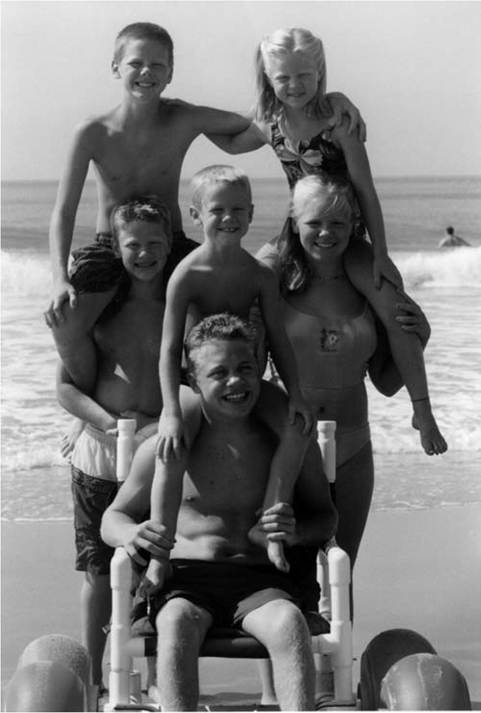
Figure 5.2 Many public facilities have wheelchairs available for rent or use that are designed for use on the beach.
the assistance or guidance of rehabilitation professionals. Organizations such as BlazeSports (www. blazesports.org) have developed programs throughout the United States. The bedrock of BlazeSports America is made up of the community-based, year- round programs delivered through local recreation providers. It is open to youth with all types of physical disabilities. Winners on Wheels “empowers kids in wheelchairs by encouraging personal achievement through creative learning and expanded life experiences that lead to independent living skills.” Chapters exist in many cities across the United States and incorporate physical activity into many of the activities they sponsor.
The American Association of Adapted Sports Programs (AAASP) employs athletics through a system called the adaptedSPORTS Model. “This awardwinning model is an interscholastic structure of multiple sports seasons that parallels the traditional interscholastic athletic system and supports the concept that school-based sports are a vital part of the education process and the educational goals of students” (www.adaptedsports.org). The sports featured in the adaptedSPORTS model have their origin in Paralympic and adult disability sports, and are cross-disability in nature. The program provides standardized rules for competition, facilitating widespread implementation. Application in the primary and high school levels can help students develop skills that can lead to collegiate-, community-, and elite-level competition.
In some communities, AB teams or athletes have partnered with groups to develop activity-specific opportunities. Fore Hope is a nationally recognized, nonprofit organization that uses golf as an instrument to help in the rehabilitation of persons with disabilities or an inactive lifestyle. The program is facilitated by certified recreational therapists and golf professionals (www.forehope.org). A similar program known as KidSwing is available to DA children in Europe and South Africa (www.kidswing-international.com). Several National Football League (NFL) football players have sponsored programs targeting disabled and disadvantaged youth. European soccer team players have paired with local organizations to promote the sport to DA children.
Financial resources are also becoming more available. The Challenged Athletes Foundation (CAF) supports athletic endeavors by providing grants for training, competition, and equipment needs for people with physical challenges. Athletes Helping Athletes (www.athleteshelpingathletes.org) is a nonprofit group that provides handcycles to children with disabilities at no cost. The Golden Opportunities fund (www. dsusa.org) provides support and encouragement to DA youth in skiing. More resources can be found at the Disaboom Web site (www.disaboom.com).