PHYSIOLOGY OF IMMUNIZATION
Primary objective of immunization is to develop and sustain a disease-specific antibody titers above the protective threshold, by exposing the host-immune system to a deliberately introduced antigen, devoid of its pathogenic properties, i.e.
vaccine. Vaccine-induced antigenic exposure, like natural infection, initiates various host-immune responses, e.g. specific immunoglobulin production (humoral response) or T-cell activation (cellular response). Complex interaction of these responses has been discussed in Ch 8.1.Development of protective immunity after vaccination may be considered as a two-step process—primary response and secondary response (Fig. 9.1).
Primary response: After the first dose of vaccine, there is a lag period of several days before antigen-specific antibodies appear in the serum. However, these antibodies are mainly of IgM class with short life-span (21-28 days) and have no long-term protective value. On the other hand, IgG titers start rise after 2-3 weeks and remain high for many months before gradual decline. The most important event during primary challenge is the sensitization of B-cells, some of whom develop as antigen-specific memory cells and persist throughout the life.
Secondary response: When a sensitized host is re-exposed to the same antigen by subsequent vaccine-dose or natural infection, pre-existing memory cells activate a more rapid and pronounced IgG response, along with the short-lived IgM response. Antibodies titers, achieved during this phase, are much higher than that during the primary response (anamnestic or booster response) and remain protective for many years or throughout life.
Thus, the development of adequately protective antibody levels after vaccination requires at least two exposures at different time intervals, necessitating multiple doses, specially for inactivated vaccines. However in case of live vaccines, in vivo replication of organisms provides a sustained source of antigen, leading to merger of primary and secondary responses. Hence, usually single dose is enough for live vaccines.
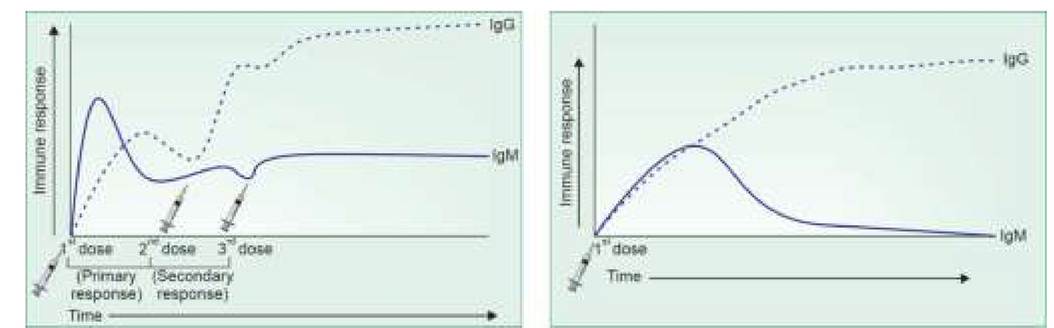
Fig. 9.1: Immune response following immunization with (A) Inactivated vaccines; (B) Live vaccines.
9.1.2