Training
The preprosthetic period for the lower limb is mainly focused on addressing the information needs of the parents. In addition, an assessment of strength, coordination, joint range of motion, skin condition, and sensation should be performed.
Each child must be assessed as an individual, with consideration given to the child's age (both developmentally and chronologically), physical abilities, interests, and activities. The goal of physical therapy is to develop a normal pattern of gait, including stride length, step length, and velocity. The normal child does not establish heel-to-toe gait until about 2 years of age. At about 20 months, the normal child can stand on one foot with help; at 3 years, on one foot momentarily; at 4 years, for several seconds; and at 5 years, for longer periods. Toddlers tend to stand and ambulate with a wide-based gait, with their lower extremities externally rotated, abducted, and flexed. As their gait matures, these characteristics change to a more narrow-based, upright fashion (141). The prosthesis should incorporate these features in order to allow for normal gait development. Because the goal of physical therapy is symmetry of posture and movements during developmental activities, proper alignment, controlled weight shifting, and balance activities are emphasized for children with lower limb prostheses. Use of a polycentric knee unit (Fig. 13.23) allows a more normal cadence. Kinematic studies are demonstrating that co-contractions of the limb are reduced and may result in joint instability, so strengthening both agonists and antagonist muscles about the joint is important (142).
Functional goals for the child with bilateral lower-extremity amputations should be optimistic. Functional outcomes measured for the child with a lower-extremity prosthesis with the Pediatrics Outcomes Data Collection Instrument (PODCI) reflect excellent acceptance and use for both congenital and acquired amputations (143).
As long as children have arms with which to balance, they should be expected to walk independently (144). Step-in-place training is appropriate pregait training for children (139). Weight control is a concern for the child with lower- extremity amputations. Dietary instruction should be emphasized early and often. Gait analysis has been performed on adults with amputations. Crutch walking, with or without a prosthesis, increases energy expenditure during gait. In groups of traumatic amputations, the oxygen cost progressively increases with each h igher-level amputation. Amputees preserve their energy expenditure by decreasing their chosen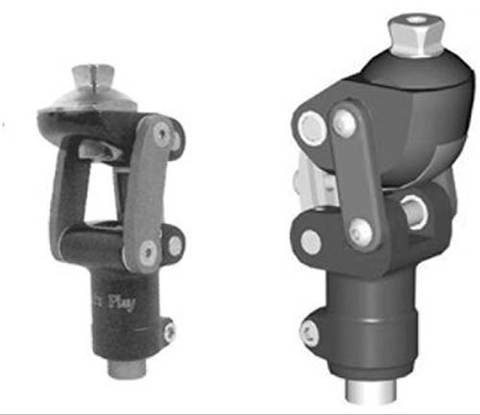
Figure 13.23 Polycentric knee units from Seattle Limb Systems and Hosmer-Fillauer.
walking speed. Children's effort levels have been reported for transtibial amputations between crutch walking, SACH foot, and the Flex-Foot. Chosen walking speed was higher for the children using the FlexFoot, approaching normal. This study only involved five children, so statistical significance could not be determined. A slightly higher oxygen consumption occurred for children using SACH feet (115). The Carbon Copy II prosthetic foot and Seattle Foot are energy-saving designs that permit the athlete a more natural gait. The energy-storing feet are available for children (Fig.13.24).
Training Following Amputations
Following surgery, the remaining leg must assume the dominant role in all transfer and locomotor activities. Therefore, the sound leg should be evaluated for strength and, if necessary, an appropriate exercise program developed. It is difficult to instruct the young active child in specific exercises and positioning due to limited comprehension and attention span. If specific exercises are indicated, a therapist often needs to be creative with games and use of equipment to get the desired responses, such as using a prone scooter to maintain or work on hip extension (90).
Edema control is accomplished using one of several options, which include Ace bandage wrapping, elastic shrinker socks, layers of elastic stockinettes, rigid dressing, and removable rigid dressing. It is important that the parent and child understand the proper technique for use of the edema control system. The edema control system should be worn 24 hours a day, only being removed for wound care and hygiene (145).To avoid increasing the patient's anxiety level, the therapist should not dwell on phantom pain, but the patient should be made aware of the normal
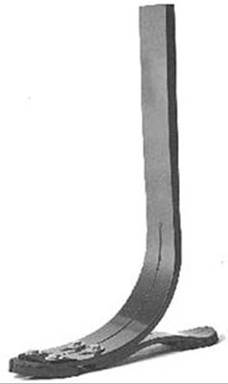
Figure 13.24 Ossur Modular Flex-Foot.
postoperative discomfort that is to be expected. The adaptation to prosthetic ambulation is dependent on the fit and comfort of the residual limb and socket/ suspension. The therapist, working closely with prosthetist at this point, can identify the fixable and ensure continued use for the child to gain confidence and competency.
Play is the primary motivation for desired movements and activities. Parents should be instructed on how to care for the prosthesis and encouraged to maintain contact with the prosthetist for routine adjustments and follow-up. Often, the first sign that an adjustment is needed is noted when the child reduces wearing time or begins to limp.
Adolescents widen their sphere of mobility to include the community by using public transportation or by driving. The site of the amputation or limb loss will determine the degree of difficulty an amputee will have driving standard vehicles. In most cases, the person with a partial or full amputation of a limb will require adaptive driving equipment to compensate for the loss of ability to reach and operate driving controls. Most amputees are able to independently get into and out of a standard-size sedan. Current driving aids are available for the driver who has normal strength and mobility of upper extremities.
Control systems used include push-pull control, push-right angle pull control, and push twist. Each has the acceleration and braking system connected to usable upper-extremity function. State licensure for driving and installation of equipment varies. Physicians should be aware of their responsibility in certifying the capabilities of a potential driver. The evaluation for driving potential as well as specific equipment modifications should be discussed and made available for the individuals with multilimb and complex limb deficiencies.For children with amputations secondary to tumors, return to school may be difficult. In a study concerning the adjustment post-tumor amputation, 67% could not keep up in their classes (60,136). In addition to direct intervention for psychological support, many family support systems are available to the families and children with limb deficiency. Many clinics provide opportunity for the interaction and peer support of their population. Frequently, the parent-to-parent or child-to-child interactions surpass the effect of professional input for education, information, and resources (105,146). Resource guides are available and provide pragmatic information for the child and parents (106,107).
Children with complex limb deficiency, such as tetraphocomelia, benefit from the early introduction of power mobility. Movement provides a sense of independence and competence derived from exploring one's environment. When exploration is restricted, there is a diffuse and long-lasting impact. Motorized wheelchairs traditionally have been used when a child is 5 to 6 years of age. Innovative seating systems have been developed for the 1- to 3-year-old child. Salient features include the following:
■ A powered device
■ Proportional control drive with an adjustable joystick used with the head, chin, or lower or upperextremity buds
■ Adjustable positioning seating in an upright frame into which inserts can be attached for growth
■ Compactness, durability, portability, reliability, and safety
■ Low profile with mounting potential for children to interact on a peer level
In addition to power mobility, other adapted mobility devices are available that are child- and environment-friendly.