FORENSIC ASSESSMENT INSTRUMENTS
The earliest, comprehensive effort to develop a specialized instrument for use in evaluating a legal competence—competence to stand trial—appeared in the early 1970s in the work of an interdisciplinary research team headed by a psychiatrist, A.
Louis McGarry (Laboratory for Community Psychiatry, 1973). They proposed that legal criteria for competence to stand trial could be "accurately translated into psychological and clinical terms and retranslated into relevant legally oriented data" (Laboratory of Community Psychiatry, 1973, p. 4). Reviewing the law, they arrived at three broad classes of abilities and capacities of defendants that were relevant for determining competence to stand trial. They translated these legal concepts into 13 psychological "functions," or cognitive, attitudinal, and ability constructs that were believed to be important factors for describing the defendant role in trial settings (e.g., "Quality of Relating to Attorney," "Understanding of Court Procedure"; see Chapter 4 for a listing of the 13 functions). These functions were then used to create the content for two assessment instruments (reviewed in Chapter 4): the Competency Assessment Instrument and the Competency Screening Test.The instruments were not intended to predict defendants' later functioning in trials, but rather to describe trial-relevant abilities at the time of the assessment itself. Further, the research team did not intend for the instruments to replace other clinical methods for assessment that might clarify pathological states or cognitive characteristics. These new instruments were to be used in conjunction with other clinical methods of assessment, especially in order to define and clarify the relation between "psychological and clinical terms" and "legal criteria for competence" (Laboratory for Community Psychiatry, 1973).
The efforts of that research group provided the earliest example of a systematic approach to assessment of abilities specifically relevant for a legal competence construct. During the 1980s, other researchers employed a similar logic to develop instruments for use in assessments related not only to competence to stand trial, but also to other legal competencies. For example, Grisso (1981) developed several instruments to assess juveniles' and adults' capacities to waive rights in police interrogations, and Weithorn (1980) and Roth et al. (1982) researched methods for evaluating competence to consent to treatment.
Each of these test developers employed a somewhat different approach to the task than did the pioneering Harvard group. Yet all of
them had a similar purpose—to develop standardized, quantitative methods with which to observe and describe behaviors of direct relevance to the law's questions about human competencies and capacities. Recognizing that the law's questions about competencies usually cannot be answered by psychiatric diagnoses or personality descriptions alone, researchers and practitioners alike have sought instruments that assess functional abili- ties—what people know, understand, believe, or can do—related to specific environmental contexts to which legal competencies refer.
These instruments, whether developed specifically for legal purposes or adapted from other fields of psychology, were first grouped conceptually as a class of instruments in the first edition of EC, wherein they were referred to as "Forensic Assessment Instruments" (FAIs).
Objectives of Forensic Assessment Instruments
Test developers and forensic examiners seem to have perceived a need for FAIs in order to meet conceptual objectives and procedural objectives.
Conceptual Objectives
FAIs may improve our ability to conceptualize the relations between legal definitions of abilities and psychological constructs associated with human capacities.
This objective is clarified in Figures 1 and 2, to which the following discussion refers.In Figure 1, A represents any legal competence construct. In Figure 2, which applies the model to Competence to Stand Trial, A is stated as the Dusky v. U.S. (1960) standard for competence to stand trial (i.e., "rational as well as factual understanding of proceedings... and sufficient present ability to consult with his lawyer with a reasonable degree of rational understanding"). A also would include interpretations and refinements of the Dusky construct, as applied and explained in subsequent legal cases.
Traditionally, mental health professionals employed general psychological theories and constructs (such as intelligence, reality testing, defense mechanisms, or psychiatric symptoms) as the conceptual basis for their assessments related to legal competencies. These clinical constructs, represented as B in Figure 1, often are defined operationally by clinical assessment instruments or methods, designated B', that are designed to assess the clinical and personality attributes. Yet mental health professionals frequently were able to establish only a vague conceptual link between psychological theories (B) or data (B') on the one hand, and legal competence constructs (A) on the other. Thus clinical data about psychological traits and states, no matter how reliable and valid, were difficult to employ when relating findings to the questions of legal competencies.
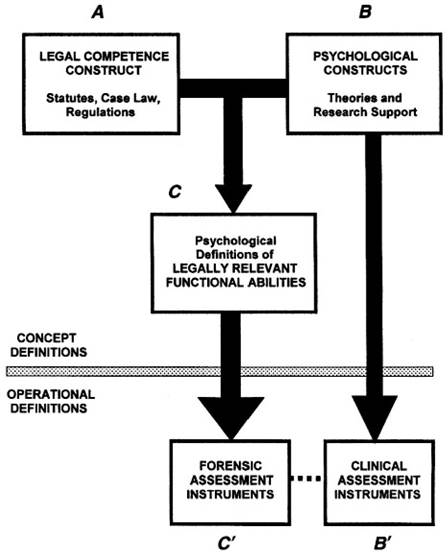
Figure 1. Conceptual and Operational Definitions for Forensic Assessments.
In Figure 1, C represents psychological definitions Offunctional abilities that have been derived logically from an analysis of a legal competence construct. For example (see Figure 2), the construct representing competence to stand trial (A) may be considered to include a number of functional ability concepts (C), one of them being "Capacity to Disclose to Attorney" (one of the 13 functions by Laboratory of Community Psychiatry, 1973).
This legally relevant ability in turn is conceptualized as related to basic psychological constructs (B) such as "intelligence," "memory," and "interpersonal honesty and trust." The functional ability concept (C), therefore, acts as a conceptual link between the legal standard (A) and basic clinical or psychological constructs (B).A forensic assessment instrument (C') is an operational definition of a legally relevant functional ability concept (C). Therefore, FAIs are intended to provide data that can manage the conceptual gap between legal constructs and psychological constructs. In addition, the dotted line in Figure 1 represents potential relations between FAI data (Cr) and information from
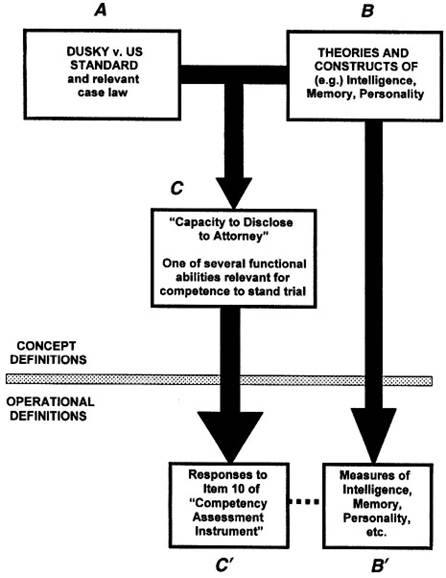
Figure 2. Conceptual Model Applied to Competence to Stand Trial,
traditional psychological tests and psychiatric methods (Br) that operationally define psychological constructs. These relations provide a data base for making causal inferences relating psychological constructs (B) to legally relevant functional abilities (C). Figure 2 demonstrates these conceptual relations for one of the functional abilities in competence to stand trial.
These conceptual purposes of FAIs and functional ability concepts have an important limit. They are not intended to define the legal competence construct as a whole. They define only the human abilities and capacities to which the legal construct is believed to refer. Nevertheless, FAIs offer several logical benefits for forensic assessments.
First, they provide structure for the examiner. From the outset, FAIs make it clear to the examiner what it is that the law wants to know about human capacities, because these capacities are part of the structure of the FAI itself. Thus they can assist the examiner in arriving logically at data and inferences consistent with the purposes of forensic assessments outlined in Chapter 2.
Second, FAIs may improve communication in legal settings. FAI data in expert testimony clarifies for the judge and jury the relation between functional abilities and the legal competence construct. Data that are "face valid" in relation to the competence construct require less complex inferential processes than when one attempts to relate psychiatric symptoms or general personality traits to the legal competence construct. Therefore, expert testimony may be more understandable and useful. Judge and jury might find it possible to participate in the process of inference, rather than relying solely on the expert to manage esoteric and speculative relations between general psychological constructs (B) and legal competence criteria (A).
Finally, FAIs facilitate empirical research on the associations between legally relevant functional abilities (operationally defined by FAIs) and the constructs of psychiatry and psychology (operationally defined by more traditional, clinical instruments). These research findings produce an empirical basis for mental health professionals to employ when interpreting individual cases, thereby decreasing the necessity to rely on theory and speculation alone.
Procedural Objectives
FAIs can improve the quality of forensic assessments by providing relatively standardized and quantitative procedures for acquiring legally relevant assessment data. Unlike unstructured interviews or professionals' individualized approaches to assessing functional abilities, FAIs can offer procedures that are more replicable. That is, they can be repeated in approximately the same manner from one examiner to another and for various examinees. Further, examinees' abilities can be expressed in a uniform manner, using the instrument's methods for classifying or quantifying examinees' responses.
These procedural features of FAIs may have several possible benefits. First, uniform definitions and procedures for assessing legally relevant functional abilities serve to reduce error and bias.
Some degree of error is inherent in any professional assessment, but generally it is decreased by standardization of procedure.Second, uniform procedures for assessment promote meaningful comparisons across time. FAIs offer the potential to compare an examinee's functional abilities at two different times: for example, to assess the degree of gain in a defendant's abilities relevant for competence to stand trial after a period of treatment. Pre- and post assessments of this type are meaningful only to the extent that procedures for assessing functions are similar at the two times, which is possible with standardized methods using relatively objective ratings or scores.
Third, standardized, quantitative assessment methods allow collection of data on normative samples, which promotes the interpretation of examinees' performances by comparison to norms. Comparisons of this type are less meaningful when data have been collected with unstandardized interview or social history methods. Comparisons to norms offer considerable benefits in the inferential logic employed in interpreting individual cases.
Fourth, FAIs can facilitate comparisons between examiners. In forensic assessments, it is common for two examiners (testifying on opposing sides) to arrive at different conclusions or opinions about an examinee. Often this may be due to differences in their interpretation of data, but it can also be due to differences between the data bases about which they are making interpretations. If both examiners, however, have used the same standardized methods for obtaining data, it is often possible to determine whether differences in their opinions are due to differences in functional ability data manifested by the examinee, or whether instead the examiners arrived at different conclusions based on essentially the same data. Such comparisons may be difficult when the two examiners have obtained data in very different (unstandardized) ways.
Finally, FAIs make possible programs of research on the empirical reliability of forensic examiners' methods for assessing legally relevant functional abilities, as well as research on the validity (empirical meanings) of their assessment data. Without standardized methods for assessing legally relevant abilities, there is no way to demonstrate the consistency or dependability (reliability) of the expert's observations. Further, less standardized approaches severely limit our ability to engage in research to demonstrate that the examiner's methods "measure what they claim to measure," that is, that they are empirically valid indicators of the relevant ability concepts.
In summary, FAIs provide operational definitions for functional abilities that are related conceptually to legal competence constructs as well as our psychological and psychiatric constructs. Therefore, they offer two main potential benefits. One is to assist examiners in constructing assessments with conceptual relevance to legal criteria. The other is to contribute data to forensic assessments in a manner consistent with scientific standards for the reliability and validity of assessments.
The Need for Evaluation of Forensic Assessment Instruments
The qualities of FAIs that offer potential benefits for competence assessments also constitute a potential for their misuse and misinterpretation. Thus we must approach FAIs with caution and careful scrutiny.
The conceptual relation of FAIs to legal standards could promote inappropriate attribution of meaning or legal relevance to FAI data solely on face value. The mere fact that an instrument possesses scale labels and content based on an analysis of legally relevant functional abilities does not allow us to assert that the instrument provides the law with a more objective, accurate, or meaningful definition of those abilities. This conceptual logic is an appropriate start, of course, and it greatly increases the potential for more useful forensic assessment data. Yet one must have evidence that the instrument can fulfill that potential, rather than reifying the results of FAIs merely on the basis of their appearance of conceptual relevance.
The standardized and quantitative nature of FAIs likewise may lead to premature optimism or misinterpretation. Merely standardizing our procedures does not necessarily mean that we have standardized our assessments. The latter depends on whether or not we employ procedures and instruments in the manner intended. Merely assigning scores to responses does not guarantee that they are more accurate or objective than nonquantified observations. Their accuracy depends in part on demonstrating with empirical research that quantification produces these qualities.
One must not assume that FAIs' psychometric properties replace the need for less standardized or nonquantitative methods in forensic assessments. No interpretations should be based on any single measure or index alone, no matter what level of reliability or validity may have been demonstrated for it. At best, FAIs must join other measures and methods in a multimethod approach to assessment.
Therefore, if the conceptual and procedural objectives of this new type of instrument suggest certain benefits, they also contribute to the possibility that FAIs will be misconstrued and misused. Their potential benefits can be maximized, and their misuses possibly avoided, if we carefully scrutinize the nature of these specialized instruments. That is one of the major objectives of the reviews of FAIs in subsequent chapters.
The review of this class of instruments is guided by three more specific purposes, associated with their development, their forensic application, and their use in legal settings.
One purpose for examining existing FAIs is to provide test developers with information that can assist them to improve existing FAIs, and with principles that can guide the development of new instruments in the future. Subsequent discussions will show that the development of FAIs offers challenges and potential pitfalls, many of which are related to their intended use in legal settings. The special demands of law, legal process and legal systems raises certain test construction issues that may be unique to this area of test development. This does not mean that general principles of test construction will not apply to the development of FAIs. Yet the application of these principles to FAIs offers new challenges.
A second purpose for evaluating FAIs is to provide guidelines for examiners who wish to use and interpret them. Examiners are responsible for understanding the limits of the methods that they employ. Further, they must stay abreast of new methods that might improve the quality of forensic assessments.
A third purpose is to clarify for members of the legal profession the nature of the assessment methods used by mental health professionals in forensic assessments. Judges and lawyers are responsible for both using and challenging the methods of forensic examiners. They should be sufficiently familiar with the mental health examiner's assessment methods to be able to scrutinize the examiner's choice of certain methods, the logic of the examiner's interpretation of data, and the soundness of the data base for the examiner's inferences. Their understanding of the values and limits of FAIs should improve their ability to meet these responsibilities and to make effective use of assessments for legal competencies.
Chapters 4 through 9 will evaluate FAIs for the three purposes just noted. The following section examines more closely some of the practical and scientific standards that must be met in the development and use of FAIs.