BTB Control in Cattle in South Africa
Tuberculin skin testing of cattle for BTB was instituted in the Cape Colony in 1905, until which time the disease was believed to have been absent from South Africa. The Cape Act (No.
16 of 1906) that replaced the Animal Diseases Act of 1893 made provision for extensive tuberculin testing and the payment of partial compensation for cattle destroyed because of BTB and was incorporated in the subsequent Union of South Africa’s Disease of Stock Act in 1911. The control of BTB at that time was voluntary, and because of the high herd infection rates and the poor compensation paid for infected animals that had to be destroyed, dairymen cooperated poorly with the national veterinary authorities to control the disease. This situation prevailed until 1969 when a comprehensive Bovine Tuberculosis Control and Eradication Scheme focusing on commercial cattle was introduced under the Animal Diseases and Parasites Act (Act 13 of 1956). The regulations dealing with BTB were later incorporated in the Animal Diseases Act (Act 35 of 1984) (South African Government 1984; Department of Agriculture Forestry and Fisheries 2013) with the aim of eradicating BTB from the national cattle herd. These control measures provided for compulsory notification of a diagnosis of BTB in herds, compulsory testing of herds in which the disease was suspected to be present, and application of control measures such as quarantine, slaughter of infected animals, INH treatment, and the disinfection of premises to contain and eradicate the disease.The Animal Disease Act (Act 35 of 1984), in conjunction with the Animal Disease Regulations (R2026 of 1986 as amended), and the Bovine Tuberculosis Scheme Regulations (R1953 of 1988) (South African Government 1984; Department of Agricultural Economics and Marketing 1986; Department of Agricultural Economics and Marketing 1988), regulated the control of BTB in cattle in South Africa from 1984 until 2002 when Act 7 of 2002 (the Animal Health Act) was promulgated and replaced Act 35 of 1984.
Under the various Acts, a number of testing programs were introduced in an attempt to eradicate BTB. These included:
• An accreditation scheme that aimed to create a growing nucleus of BTB-free cattle
• A maintenance scheme in which accredited herds were retested every 2 years
• A diagnostic herd scheme
• Ordinary diagnostics
• Infected herds
• Import
• Export
The testing schemes were voluntary, and only approximately 10-20% of the country’s cattle population was part of the program. It was thus not possible to determine the prevalence of BTB in the national cattle herd and to assess the effectiveness of the BTB control schemes. Nevertheless, the herd prevalence in the participating commercial herds was reduced from an average of 11.9% in 1971 to 0.4% in 1995, at which time BTB in cattle was on the brink of being eradicated from the commercial herds.
Following the election of a democratic government in South Africa in 1994 and the subsequent fragmentation caused by the provincialization of the South African state veterinary services, the Accreditation Program was revoked as compliance was considered to be too low. The existing “Annual Diagnostic Program” was amended to address the needs of controlling BTB in the country. Once-off diagnostic testing of herds or individual animals, including those for the purpose of importing and exporting cattle, was implemented.
Following provincialization of the veterinary services, the number of tuberculin tests performed declined dramatically from the early 1990s onward because of various reasons including a shortage of human resources, lack of funding, changes in the farming systems that caused a reduction in the number of dairy herds, and an increase in the number of game farms. In 1991, 1.1 million cattle were tested using the comparative cervical tuberculin skin test (CCT) reflecting a BTB prevalence of 0.04% (DepartmentofAgriculture, Forestry and Fisheries 2016a, b), but unfortunately, from 1986 to 1996, the number of tuberculin tests performed decreased by 75%.
Currently, testing for BTB in South Africa is not compulsory and the national prevalence of the disease in cattle is unknown. Sporadic outbreaks continue to occur in all the country’s nine provinces (Michel et al. 2008). From 2000 to 2014, 103 outbreaks were reported to the National Department of Agriculture, Forestry and Fisheries, Directorate of Animal Health, and the OIE (Figs. 19.1 and 19.2)
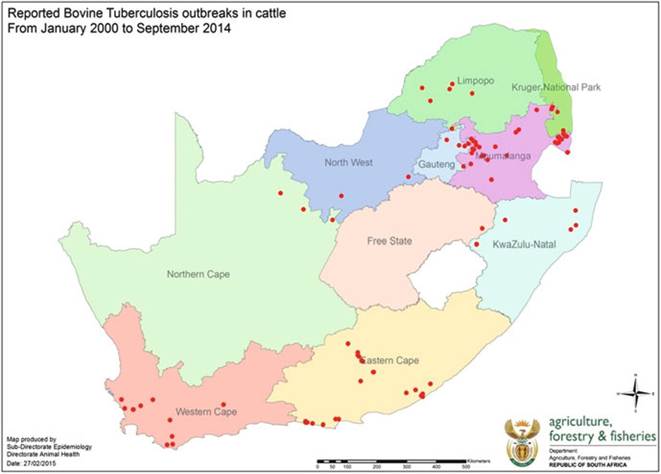
Fig. 19.1 Bovine tuberculosis outbreaks in cattle in South Africa between 2000 and 2014
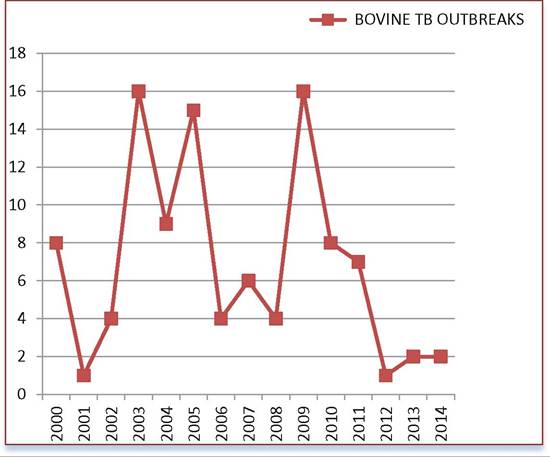
Fig. 19.2 Number of BTB outbreaks in South Africa from 2000 to 2014 (DAFF 2015)
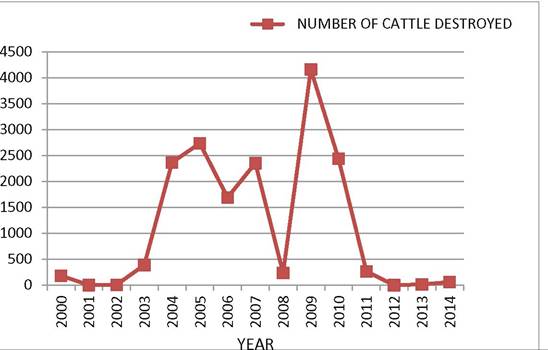
Fig. 19.3 Number of BTB-infected cattle destroyed per annum from 2000 to 2014
(Department of Agriculture, Forestry and Fisheries 2015). During this time, 16,881 head of cattle with a market value of approximately US$ 14 million were culled as part of the National Bovine Tuberculosis Scheme (Fig.19.3). The decline in the recorded number of culled animals from 2010 onward cannot be explained but does not appear to be the result of the control program and is more likely the result of insufficient funding to sustain the surveillance programs. The number of cases given in Figs. 19.1 and 19.2 may therefore be an underestimation of the actual prevalence of the disease in South Africa, and it may be substantially higher than anticipated.
19.3