THE BALANCE OF DISEASE
As we have described the types of infectious agents and the physical and immune defence mechanisms of the animal, their interaction can now be examined and related to the production of disease.
Take a case of human typhoid. The disease itself does not matter and the figures used are not accurate, but it serves to illustrate the point very well. Putting one typhoid bacterium on the tongue of a healthy person would probably have no effect on him at all. Give him a hundred bacteria and he may feel rather off-colour and would probably get diarrhoea. Using a dose of a thousand bacteria, our ‘guinea-pig’ would develop a severe illness, with sickness, diarrhoea and generalised symptoms.Now if this particular man had been drinking heavily, had lost his way home and had spent 24 hours in the cold without food and was suffering from exposure, in this case we would expect different results. Possibly one bacterium would cause mild diarrhoea, a hundred would cause a severe illness and a dose of a thousand would be fatal.
This simple example serves to illustrate two extremely important points, namely that the severity of a disease is dependent upon:
• the dose of infection received
• the state of health of the infected animal
This is extremely common in animal disease, where there is often a multiplicity of factors affecting the severity and spread of a condition. It is more easily understood by saying that health and disease are on each side of a balance, with the animal acting as the pivot of that balance. One of the best diseases to illustrate this point is enzootic pneumonia (sometimes called virus pneumonia) of calves, although E. coli and the other causes of environmental mastitis would serve as an equally good example. This is illustrated in Figure 1.7. Along each arm of the balance can be ‘hung’ various items which will either boost health or exacerbate disease. Provided the animal can be maintained with the balance in the level position, it can cope quite happily with infection, living with it but suffering relatively few adverse effects. This is the basis of preventive medicine. There is a risk of certain diseases occurring on every farm, and so it is necessary to take various husbandry and other preventive measures to minimise those risks.
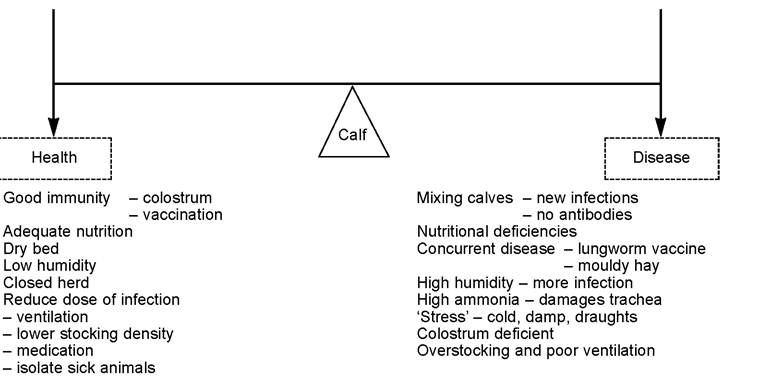
Figure 1.7. The balance of disease, using calf pneumonia as an example.