Zoonotic Tuberculosis in Zambia
Zambiahas an estimated human population of 13 million (Malama et al. 2014), and the World Health Organization (WHO) estimates that the incidence of all forms of tuberculosis here is 444/100,000 people (Phiri 2006; UKaid 2011).
The WHO reported in 1998 that 3.1% of human cases of TB worldwide are attributable to infection with M. bovis and that 0.4-10% of isolates from the sputum of patients in African countries could be M. bovis.The situation in respect of zoonotic BTB in Zambia is unknown, as data on the prevalence of human disease due to M. bovis are limited, owing to the technical problems limiting the ability to identify the organism, such as the lack of trained personnel, and inadequate microbiological diagnostic laboratory facilities in the country (Cook et al. 1996; Moda et al. 1996). In Zambia, generally only Ziehl- Neelsen staining as a diagnostic technique is performed on sputum samples to detect acid-fast bacilli (AFB), and this technique cannot distinguish between the different Mycobacterium species (Grange et al. 1996) that may cause tuberculosis in humans. In Zambia, M. bovis has been isolated from human sputum samples, indicating that the infection, once thought to mainly cause extrapulmonary tuberculosis in humans, has the potential of being transmitted by droplet infection between humans (Michel et al. 2010; Malama et al. 2013a, b, c). Given this situation, zoonotic tuberculosis is now receiving increasing attention in Zambia as a public health issue that is enhanced by the risky practice by pastoral communities of consuming raw, unpasteurized milk. In the Kafue basin, consumption of raw and soured milk is a common practice (Fig. 23.3), and it poses a health risk when milk obtained from M. bovis-infected animals is consumed (Grange and Yates 1994).
Zambia’s dairy sector consists of three types of producers: commercial farmers, emergent farmers (smallholder), and traditional/small-scale dairy farmers owning, respectively, 5%, 15%, and 80% of the cattle (UKaid 2011).
Of the about 300 million liters of milk produced in the country, 25% is supplied by commercial farmers, 13% by smallholders, and 62% by traditional cattle farmers (Pandey 2014). Of this, only 95 million liters are processed and pasteurized, and the rest, mainly produced by the traditional farmers, remain in the informal market, or are retained for home consumption. This situation emphasizes the extent of the zoonotic risk posed by BTB and the importance of controlling milk-borne zoonoses such as BTB by encouraging pasteurization. In addition, physical contact with cattle and sharing shelter/space are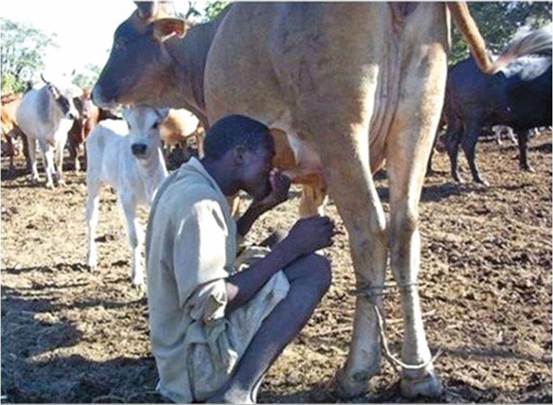
Fig. 23.3 A boy drinking milk directly from a cow’s udder
other common practices of the people in this area, and this also constitutes a substantial risk of contracting the disease.
Kafue lechwe, a known maintenance host of BTB, are hunted for meat, trophies, and hides. Lechwe are the most hunted antelope for human consumption in Zambia (Siamudaala et al. 2005a), and it is estimated that about 80% of lechwe carcasses hunted for meat could be infected with BTB. Additionally, the number of lechwe poached is about 50% of the official annual hunting quota (Siamudaala et al. 2005b), and this large number of potentially BTB-infected carcasses increases the risk for humans to contract zoonotic tuberculosis. Molecular epidemiological studies conducted in the Namwala district, located in the Kafue Basin, have shown a close relationship between the M. bovis strains isolated from humans and from cattle. Based on spoligotyping and the 9-loci MIRU-VNTR results, M. bovis isolated from humans and cattle are closely clustered and highly homogenous and are circulating in both cattle and humans in the district. These findings confirm the zoonotic significance of M. bovis in this area (Malama et al. 2014). Isolates from other districts of Zambia are similar to those isolated in the Kafue Basin, indicating that the SB120/ SIT 420 spoligotype is highly conserved in Zambia (Malama et al. 2014).
23.4