CBRT, at the Center of Actions
As for the Turkey’s economy, a significant improvement was recorded in macroeconomic indicators, and the Central Bank of the Republic of Turkey (CBRT) cut the policy interest rate by 125 basis points in January and February by taking into account factors affecting the inflation outlook.
By March, in order to reduce the effects of the pandemic on economic activity, the CBRT took a series of measures in the monetary policy channel to ensure efficient working of credit channel and that the uninterrupted and smooth running of cash flow of companies.In this scope, the CBRT advanced, for the first time, the Monetary Policy Committee meeting, which was initially scheduled to convene on 19 March, by two days and convened extraordinarily on 17 March, and the policy interest rate was cut by 100 basis points to 9.75%. In addition to this decision, the measure packages taken to limit the economic and financial impacts of the coronavirus were shared with the public on 17 March, 31 March and 17 April (www.tcmb.gov.tr).
The measures focusing on four main objectives were listed as: providing flexibility in banks’ TL and foreign currency liquidity management and increasing predictability, ensuring credit flow to the real sector and supporting exporting companies, supporting the cash flow of exporting companies with rediscount credit arrangements and supporting the Government Domestic Borrowing Securities market (www. tcmb.gov.tr) (Fig. 10.1).
Evaluating limiting the negative impact of the pandemic history of the pandemic on Turkey’s economy, keeping the credit channel open, and smooth continuing of firms’ cash flows and downward risks in the inflation outlook, CBRT kept reducing the rates until May. Thus, the CBRT reduced the policy rate by 300 base points since the beginning of 2020 and by 150 basis points since March, when the effects of the coronavirus began to be felt (www.tcmb.gov.tr).
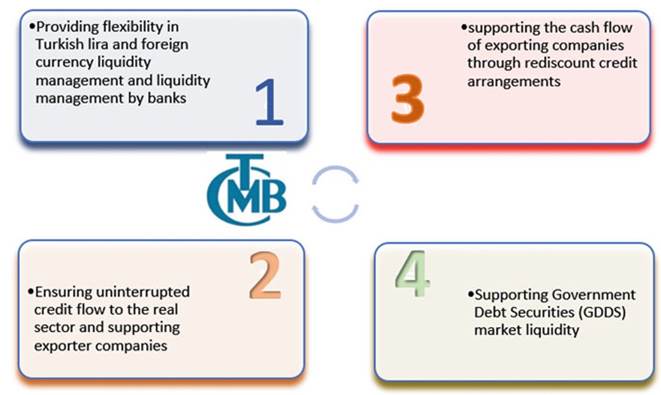
Fig. 10.1 Package of measures taken to limit the economic and financial effects of the coronavirus. Source (Central Bank of Republic of Turkey 2020)
Due to the pandemic, economic activity decreased significantly around the world, while the supply and demand side decreased significantly. For this reason, this period enabled implementing unique preventive policies.
Implementing a lot of actions and measures in the process, CBRT amended swap agreements signed earlier with Qatar and China to meet Turkey’s short-term foreign currency need arising from sharp decline in exports and tourism, country’s important foreign currency income channels, and thus, took the amounts to a higher level. With the amendment made with the Central Bank of Qatar on 17 August 2018, the amount of the swap agreement was increased from USD 5 billion equivalent of Turkish lira and Qatari rial to USD 15 billion equivalent of Turkish lira and Qatari rial.
The first usage of the Chinese Yuan (CNY) funding under the swap agreement signed between the Central Bank of the Republic of Turkey (CBRT) and the People’s Bank of China in 2019 had been realized on 18 June 2020. In this way, similarly, within the framework of the swap agreement renewed in 2019 between the CBRT and the PBoC, the first usage of yuan funding was made on 18 June 2020. In this way, Turkish companies in various sectors paid their import bills from China using yuan through relevant banks. In the statement made by the CBRT regarding the swap agreement, it was stated that the use of swap agreement resources was important in terms of the use of local currency in international trade payments and access of Turkish companies to international liquidity, and should also be considered as a step to strengthen financial cooperation between both countries (www.tcmb.gov.tr).
Although the global pandemic caused long-lasting damage to the economies, intense efforts were made to limit these effects by means of the extraordinary measures repeatedly announced by the central banks. The CBRT took part at the “Center” of actions with nearly 50 measures as of 16 March in coordination of economy management, together with the Banking Regulation and Supervision Agency.
10.8