ASSESSING CONFLICT MANAGEMENT OUTCOMES
Much of the existing scholarship defines successful conflict management as the establishment of an agreement. Similarly, it is common to assume the goal of a management effort is to resolve the conflict by making it “too costly for combatants to continue fight- ing”(Regan 1996, 341).
However, concluding that a conflict management effort is successful necessitates having knowledge of the goal of the effort, which is especially problematic when third parties are involved. Territorial acquisition, regional stability, protection of interveners’ diplomatic, economic, or military interests, ideology or the upholding of human rights are all possible goals of management activities (Pearson 1974). States frequently pursue more than one goal with their foreign policies (Morgan and Palmer 2000; Palmer and Morgan 2006). It is therefore necessary to disaggregate further the outcomes of conflict management to examine them critically.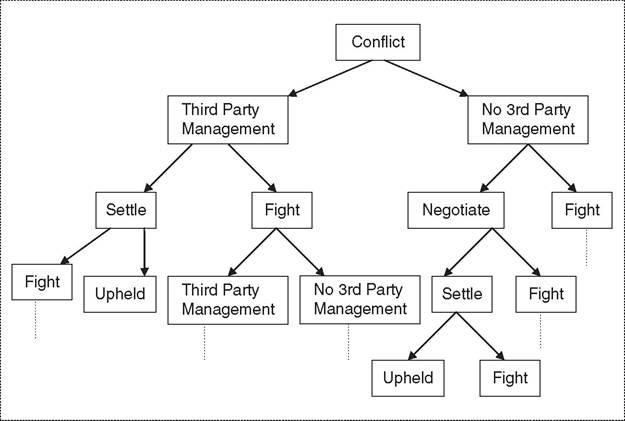
Figure 29.1 The interaction of third party and disputant choices
Scholars have examined the type of agreement established as a way of further disaggregating conflict management outcomes. For example, achieving a ceasefire, however temporary and ill designed, may represent a successful and effective management effort (Bercovitch and Gartner 2006b). One can think of the numerous temporary ceasefires in the former Yugoslavia, each of which gave the parties the opportunity to feed the hungry and care for the wounded before fighting resumed. Achieving a limited agreement in a previously intractable conflict may be no less significant than the achievement of a full settlement in a more tractable dispute. Arguing that mediation is unsuccessful where it does not produce a full settlement thus represents a failure to appreciate the full complexity of conflict, the different outcomes that may bring a conflict to an end, and the decision processes underlying the entry or exit of a mediator.
Although a short ceasefire may represent relative progress, a truly effective management effort must allow peace to consolidate so that a political settlement takes root (Kissinger 1996). Many management efforts result in ceasefires that last only a few hours and do not enable true resolution. In the recent Yugoslavian case, there were 91 mediated settlements, almost half of which lasted one week or less (Gartner and Bercovitch 2006). Disputants may sign agreements without the intention of upholding them.Agreements such as ceasefires may actually be strategic - providing one side with an opportunity to improve its military position and fight longer. These realities suggest that effective conflict resolution involves “removing the causes as well as the manifestations of a conflict between parties and eliminating the sources of incompatibility in their position” which, represents “a long-term proposition”(Zartman 1997, 11). Examining how long peace agreements last after they are agreed upon, rather than focusing solely on whether an agreement was reached, provides a clearer understanding of the conflict management process and can help generate more effective prescriptions for resolving international disputes.
An agreement can provide a brief time period that allows for political changes to occur that lead to a permanent peace, or it can fail to address sufficiently the issues underlying the dispute and conflict can break out again. Change can only occur if there is a period of peace following an agreement. Agreements that last only a brief time fail to provide sufficient opportunity for effective political change since they fail to provide the political space necessary for new institutions and policies to gain traction and lead to lasting peace (Gartner and Bercovitch 2006). Thus, a critical aspect of the peace process is to “make it over the hump” and allow dispute settlements to take effect and alter the underlying political situation fueling the dispute. As the period immediately after a settlement is implemented poses a high risk of the return to conflict, Rothchild calls this period the “treacherous transition period”(2002, 3).
Almost half of all agreements fail to last two months (Gartner and Bercovitch 2006). These short-lived agreements failed to provide the “space” necessary for an agreement to shift political conditions (Rothchild 2002). While short-lived agreements clearly represent a failure of the agreement, they capture a different type of failure than if the terms of the settlement are implemented and conflict breaks out again. Both types of failure are important (Bercovitch and Gartner 2006b). Yet most studies ignore the problem of shortlived agreements, instead defining outcomes such that reemerging conflicts are new disputes.
Recent developments
In refining our approach to analyzing conflict management outcomes, some scholars focus less on the determinants of successful management and more on the durability of management outcomes. Only long-lasting agreements can truly allow for conflict resolution.Authors have begun to converge on two determinants of why agreements hold or fail (Gerner and Schrodt 2001; Fortna 2003b, 2004b; Bercovitch and Gartner 2006b). The first, what Fortna terms the baseline prospects for peace (called selection effects by Gartner and Bercovitch, and contextual effects by Gerner and Schrodt), are characteristics of the situation over which actors in the present have little control, such as the issue in dispute and history of the conflict. The second involves actors' deliberate attempts to enhance the durability of peace.
Baseline prospects for conflict resolution
Contextual variables distinguish ex ante the cases that are hard to terminate and likely to have a fragile settlement from those that are more amenable to settlement and likely to remain peaceful (Gerner and Schrodt 2001; Bercovitch and Gartner 2006b). These consist of situational or structural factors that exist at the time of an agreement. Examples include the outcome of the conflict, the number of disputants and their relationship, and the cost of the dispute. These variables capture the underlying factors that characterize a conflict and its attendant agreements; they do not represent a variable easily changed through conflict management.
The nature of the dispute, the issue involved, the dispute's intensity and violence, and the nature of the disputants affect the likelihood of a settlement having a short duration. Evidence suggests that agreements reached in conflicts over certain issues (e.g. territorial) are less likely to hold (Hensel 1994; Huth and Allee 2002). We must therefore consider the sources of the conflict carefully (see Vasquez and Valeriano in this volume; Gopin in this volume; Kinsella in this volume). Other studies have linked outcome durability to power capabilities (Werner 1998, 1999; Dixon and Senese 2002; Quinn et al. 2006). Belligerents and third-party managers have little control over these contextual factors. At most, they can only make an effort to account for them and limit any negative effects they may have on the life of the agreement.
Proactive measures for conflict resolution
The second type of factors that determine the durability of a peace agreement are direct attempts to form a strong and lasting agreement (or process effects). Variables that directly influence the likelihood of a settlement also alter the latent mechanism that affects the duration of a settlement. These steps account for the problem that led to conflict and try to create a long-lasting settlement. Such measures include creating demilitarized zones to separate troops, monitoring by international observers, and third- party guarantees. Thus, the nature of the settlement and its resulting changes influence the likelihood of a settlement being shortlived. We break process effects into two parts: the method used to manage the conflict and the provisions within the agreement.
Conflict management method The nature of the conflict management process affects the durability of agreements. There are many methods used to manage conflict (Bercovitch and Regan 1999). The different methods of managing a conflict may work together, as more than one method is often used in the same conflict.
The choice of strategies is dynamic and dependent upon the reaction of the disputants (Maoz and Terris 2006). Negotiation involves direct conflict management among the disputants without third-party assistance, whereby two parties seek a mutually acceptable agreement through compromise (see Zartman, in this volume). Vocalization involves public third- party appeals or demands for the disputants to negotiate, agree to a ceasefire, or withdraw troops and are common initial reactions of the international community to a dispute. Economic sanctions formalize intermediary demands by limiting financial interaction with the disputants. Mediation involves third-party assistance in finding a mutually acceptable agreement (see Bercovitch, in this volume). Positive inducements include economic and military aid, support in international organizations, and assistance with civil administration. These are the carrots of conflict management. Adjudication and Arbitration use the international legal system to manage the conflict by generating a binding decision to which the disputants must adhere (see Cede, in this volume). Noncombatant troops act as peacekeepers, humanitarian protectors, military observers, or help to clear minefields. Direct Military Intervention includes the use of troops across borders with the intent to stop an ongoing conflict (Holzgrefe and Keohane 2003). The method of management a third party employs has substantive implications for the outcome of the management effort and the durability of any settlement achieved (Regan 1996).Third parties become involved in the disputes that are amongst the most difficult to resolve. These disputes are thus more likely to result in short-lived outcomes. However, this is because third parties get the tough cases, and not because third parties have a negative effect on agreements (Gartner and Bercovitch 2006). Rather, the presence of a third party as a guarantor actually increases the likelihood of an agreement, more than would otherwise be the case for these challenging, hard-to-resolve conflicts (Fortna 2004b).
To understand fully the effects of third-party actions therefore requires that we control for the baseline prospects for peace and examine the entire management process (Bercovitch and Gartner 2006b; Melin et al. 2006).Which third-party actions are the most effective in resolving conflicts? Only a few studies that compare third-party actions exist; Regan analyzes the success of third-party diplomatic, economic, and military efforts (Regan 1996). He finds that a mixed strategy is best for determining intervention success rather than a focus on just economic sanctions or military force. Frazier and Dixon examine the efficacy of different third-party actors and conflict management techniques (2006). They find that international governmental organizations (IGOs) are the most effective in reaching a negotiated settlement. They also conclude that mediation is an effective technique to produce settlements but that military actions, such as peacekeeping, are more successful.
Agreement provisions Mechanisms within the agreement can also promote peace by altering the incentive structures of the disputants to raise the cost of attack, reducing uncertainty about actions and intentions, and preventing accidents that could lead to war. Provisions made within agreements matter and can lessen the risk of further war. Precautions included in agreements, such as demilitarized zones, dispute resolution commissions, peacekeeping, and external guarantees, can establish a durable peace (Fortna 2004a; Greig and Diehl 2005). Note that there is an underappreciated negative effect: sometimes the factors that increase the likelihood of the disputing parties agreeing to a settlement, such as power sharing, can decrease the likely duration of that same agreement (Rothchild 2002).
The importance of third-party guarantors is a consistent theme in studies of peace durability. Hartzell, Hoddie, and Rothchild examine the stability of civil war settlements (2001). They control for situational characteristics, such as international system structure, nature of the previous regime, conflict duration, conflict issue, and conflict intensity. They find that territorial autonomy and third-party guarantors are important keys to establishing stability. This study was replicated by Pearson, Lounsbery, Walker, and Mann with a broader definition of conflict (2006). The results differ in that territorial autonomy is not as important, but third-party guarantors are still central for a durable peace.
The importance of third-party involvement and assurance is also a focus of Walter (2002), who argues that combatants must design credible guarantees on the terms of agreement for peace to take hold, which necessitates outside assistance. She confirms the critical nature of third-party security guarantees and the importance of effective power-sharing pacts, and finds that adversaries do, in fact, consider such factors in deciding whether to negotiate or fight. Peacekeeping efforts have also been shown to have important effects on the duration of peace in both interstate wars (Fortna 2003a; Smith and Stam 2003) and in intrastate wars (Doyle and Sambanis 2000; Hartzell et al. 2001). Scholars consistently find that while the involvement of third parties as conflict managers signals the difficulty of establishing a lasting peace due to the baseline characteristics of the conflict and disputants, the presence of third parties make it more likely that these agreements last than if no third party were present in the same case.