Challenges to Dialogue
In the previous sections, the argument was made that dialogue is an important means for promoting a culture of peace, and the contributions it can make toward this goal were explicated.
But building a culture of peace is a lengthy and difficult road, requiring the societal infrastructure to evolve from an “ethos of conflict” toward an “ethos of peace” (Bar-Tal, 2009). It takes a long time to penetrate the underlying social fabric and infuse it with a new set of guiding beliefs and ideals, and there are many obstacles that confront those who take up this journey. This section focuses on those challenges that specifically relate to the impact of intergroup dialogue initiatives.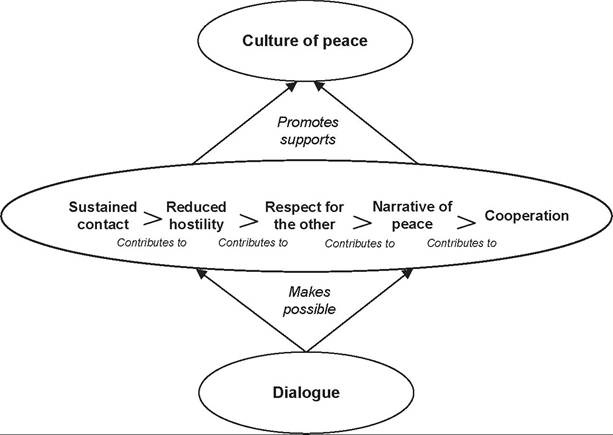
Figure 28.1 Building a Culture of Peace Through Dialogue
First, it is important to keep in mind that, as desirable as it might seem, dialogue may not always be possible. Unequal social, economic, and symbolic conditions give rise to inequities, and the resulting social asymmetries alter the dynamics of dialogue. They can prevent people from coming together in the first place, and they can make it very difficult for either side to move past their preconceptions and unhealthy communication patterns that resulted from so many years of differences. Those at the top of the power hierarchy may even believe that entering into dialogue with lower status individuals is a threat to their privilege and position. Additionally, we must remember that dialogue depends on reciprocity. Dialogue is a cyclic process, and when one side is still trapped in the vicious cycle of conflict and not ready for meeting the other, dialogue is not possible.
Second, even after bringing participants together in the same physical space, the willingness, or even a strong desire, to engage in dialogue is insufficient for it to actually happen.
It requires both a strong commitment and a particular attention to the design of the dialogue. Without a concerted, steadfast effort to continue the dialogue when difficulties arise, and a corresponding commitment to embrace the other as a partner in the process, dialogue might not happen. Even if dialogue sessions are started, they might not continue. Special care must be taken to select the suitable forum as well as design the appropriate structures for dialogue, ensuring that all voices can enter the discussion in a meaningful way. If the proper circumstances exist, however, and if the interaction setting can be correctly designed, then dialogue has the capacity to change the very conditions that made it unlikely in the first place.6Third, dialogue groups are susceptible to the changing context of the conflict. While the ultimate aim of dialogue is to change the conflict dynamics, dialogue is certainly not isolated from them. Instead, the dynamics of the conflict will act as constraints and impose limitations on what is realistically feasible. Societal, regional, and even international events can significantly alter the course of dialogue. It is much easier for individuals and groups engaged in dialogue to succumb to the fear, hostility, and hate brought on by renewed violence than it is to safeguard and protect the trust, cooperation, and respect they have developed in the group. Even if they manage to keep their own group intact and on a positive course after new events have raised the level of hostility in the larger society, participants will face increased pressure from neighbors, colleagues, the media, and others who were probably already skeptical or antagonistic to their involvement in peace efforts. If their dialogue group does not fall apart because of the blow to their perceived legitimacy, it is certain that their discussions will be much more difficult and may take months to get back on track after traumatic events outside the group.
Although this danger is greater during the earlier stages of the group’s work, it remains a threat always, and it is only through a strong commitment and determination that most individuals and groups are able to get past the occurrence of new tragedies.Fourth, one of the more difficult, yet highly important, challenges for the overall success of intergroup dialogue is to expand its positive impact to affect a larger segment of society. Of course, large-scale social change almost always begins with a small minority, but the attitudinal, emotional, and behavioral changes that occur in the dialogue groups do not automatically transfer to those outside the small circle of dialogue groups, and there is no clear path to ensuring that this happens. It is not necessary for everyone in the larger society to participate in a dialogue group, but it is important to recognize that a culture of peace will not be established until there is large-scale support for the goals of dialogue. Crucially, peace-building efforts need support from both top and bottom simultaneously. Within civil society, there is a need to cultivate credibility and minimize negative perceptions against dialogue by the general public, who may be still ingrained in the hostility and hatred that developed during the violent stages of the conflict. At the top level, dialogue groups need connections and even allies with policymakers. Unfortunately, officials are not always supportive of dialogue efforts. In fact, unofficial intergroup dialogue initiatives often provoke opposition from officials who, unwilling to discard the right to control the agenda for managing the conflict, fear that their positions will be undermined by civil society dialogue groups. Additionally, the ability of dialogue groups to sustain their discussions over a long period of time is tied, at least in part, to a sense of progress on the political level. If there are no positive developments to encourage the group, it is easy to become discouraged and lose enthusiasm for the effort.
Overall, in the absence of acceptance by the larger society, including support from the top, and without noticeable progress in the official arena, civil society dialogue initiatives may have only limited impact on the conflict situation, perhaps restricted to the changes experienced by participants themselves.Fifth, even in cases where dialogue groups have achieved legitimacy in the larger society, or more rarely, when they actually receive support from officials, there are limitations to the impact that dialogue can have in the face of institutionalized inequities and discrimination. Structural inequality may have been one of the drivers of the conflict in the first place, and sometimes the existence of dialogue groups can be used by officials to create a false sense of normalcy, while structural barriers are still in place. In some cases, one of the parties in the conflict may actively discourage participation in dialogue groups precisely because they fear that these groups will be used by the other (more dominant) side to further the status quo and delay the structural changes that are necessary to truly address the underlying reasons for the conflict. Even with the best of intentions, dialogue groups may be unwittingly “used” by more powerful interests, and thus may actually work against the aims of reducing prejudice and promoting equality. Hopefully, this is not often the case, but it is a danger that should be given attention by anyone promoting dialogue in the face of intractable conflict.
Sixth, dialogue must confront the question of how cultural differences, widely recognized as a significant factor in conflict (see other chapters in this section), can have an impact on interaction and perception during the dialogue process. Historically, there was surprisingly little attention given to questions of culture by those who pioneered the problem-solving approaches to dialogue. Even though culture is dealt with more explicitly by contemporary scholars and practitioners, there is still insufficient in-depth discussion of culture and dialogue.7 Cultural assumptions of current practice need to be examined, as does the applicability of the transfer of approaches across different cultural contexts.
Three of the main issues that need to be addressed in relation to culture and dialogue are the following:1. Dialogue methodologies are generally consensual in their assumptions and prescriptions, opening questions about their appropriateness in societies with more authority-based or hierarchical cultural forms of communication.
2. Most approaches to dialogue are based on the Western notion of an “active dialogue” open forum “talk” approach, which may be more appropriate in some cultural settings than in others.8
3. Dialogue groups facilitated by Western academics usually use English as the language of discussion, posing potential limitations in expression for participants for whom English is a second language, or when an interpreter is employed, translation can lead to misunderstanding (or a false sense that understanding has actually occurred when it has not).
Additionally, there is a need to examine a wider range of cultural approaches to dialogue. Most societies have developed methods of dialogue that were used traditionally for resolving disputes at the local level, and while changing times and conditions have affected their direct application to contemporary problems, there is much that can be learned from studying traditional techniques for conflict resolution. Even though it may not be appropriate to simply apply, uncritically, local or traditional dialogue techniques in the context of more complex conflict situations, there is more that can be done to integrate them within contemporary approaches to dialogue.
Seventh, and perhaps the greatest challenge for dialogue initiatives, is the question of how the dialogic process itself, as well the practical measures that may have resulted from the discussions, can be institutionally anchored. Without adequate incorporation of dialogue in everyday practices, there is the very real danger that dialogue groups will remain on the fringe of the playing field, or that they will eventually run out of steam, discontinuing or significantly diminishing efforts to change the culture of conflict.
Institutionalization of dialogue can take many different forms, including steps such as the following: making curricular changes in the education system; appointing semigovernmental commissions and joint task forces; founding multiethnic NGOs; developing community-based dialogue groups; building academic degrees and certificates; setting up cooperative exchanges; encouraging cultural mechanisms for promoting peace, such as literature, films, and theater; changing the mission and focus of mass media so that it is less adversarial; and even designing, within some of the government departments and ministries, official units for the application of dialogue to designated situations.9 Whatever the form, the primary purpose of institutionally anchoring dialogue is to shape and solidify peaceful relations so that dialogue will happen naturally in response to conflict and that dialogue will be used as the means to design an appropriate infrastructure for peace.In summary, it is difficult to control both the possibilities for dialogue to happen and how it will unfold as it takes place. Even when it is possible to bring people together, the group may not be able to get past the initial suspicions or overcome disruptions or events that stop progress. If the dialogue groups themselves are successful, questions arise about how to expand the scope of impact and how to achieve legitimacy in the larger society. Insufficient attention to cultural variables can easily derail dialogue, and it is a constant struggle to find the appropriate balance of local and imported dialogic methods. And until dialogue practices become firmly part of the infrastructure of society, questions will naturally arise about the extent to which dialogue has contributed toward the ultimate goal of building a culture of peace.
For the countless thousands of individuals who have dedicated their lives and made great personal and professional sacrifices toward promoting dialogue, it is not always necessary to have definitive proof about the impact of dialogue on the larger society. It is the process of working toward that ultimate goal that provides the impetus to continue, sometimes in the face of seemingly impossible odds toward what some would view as unattainable ends. Fortunately, in addition to the challenges and the setbacks that are likely to occur along the way, there are usually meaningful steps forward as well, and sometimes it is these small indications of progress that keep alive the hope for eventually reaching that seemingly elusive goal of building a culture of peace.