Conflict is ubiquitous in human affairs.
It is the quality that makes stories, movies and other media productions, relationships, and workplaces interesting, daunting at times, problematic, and open for change. In most situations, conflict can be defined as “a particular type of social interaction, characterized by opposite goals, interests, or values,” although one party’s perception of the situation as incompatible is enough to give rise to conflict even when parties are not truly in opposition (Putnam, 2009, p.
211). Conflict stems from misunderstandings and disagreements over perceived and actual resource allocations (Putnam & Poole, 1987) that are not resolved easily because of parties’ interdependences and struggles. Scholars have offered different theories and strategies to understand, predict, explain, and resolve conflict (see Deutsch, Coleman, & Marcus, 2006). However, conflicts that are prolonged, detrimental, and self-sustaining—namely, intractable conflicts—defy usual interventions (see Gray, Coleman, & Putnam, 2007; Vallacher, Coleman, Nowak, & Bui-Wrzosinska, 2010).In quantitative research, scholars design and test theories by establishing scales and observational experiments with precise conceptual and operational definitions and hypotheses. The goal of conflict research in this tradition has been to create “general and abstract social science theory, which entails prediction as well as prescription” (Fink, Cai, & Wang, 2006, p. 34). Much quantitative research in conflict has used approaches such as game, social exchange, and system theories with topics ranging from intrapersonal conflicts involving anger, jealousy, and aggressiveness; to family and marital conflicts related to relational maintenance, sibling hostility, and divorce; to interpersonal conflicts such as interpersonal conflict style and management; to hostage negotiation and organizational disputes; and to interethnic and cross-cultural conflicts (for overviews, see Oetzel & Ting- Toomey, 2006, and this Handbook).
Indeed, this methodological research tradition on conflict has expanded communication scholars’ knowledge on analyses of and findings about conflict within and across communication contexts (Fink et al., 2006). These studies have provided theoretical understandings ofAUTHORS’ NOTE : Both the authors contributed equally to the chapter.
and productive strategies for conflict resolution. However, as Figure 3.1 displays, many of the associations on the concept map of conflict communication scholarship captured by the Communication Institute for Online Scholarship’s (CIOS) Visual Communication Concept Explorer are negative: aggression, anger, coercion, confrontation, disagreement, verbal aggressiveness, violence, and war.
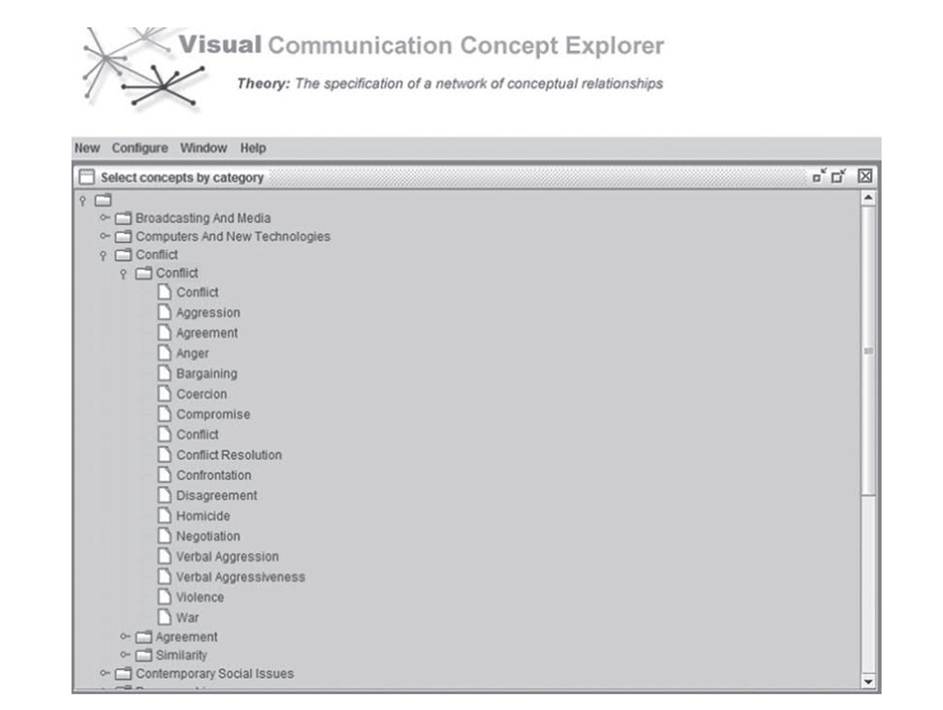
Figure 3.1 The Communication Concept Explorer for “Conflict” in ComAbstractsa
NOTE: This figure displays concepts most related to conflict. Once the visual explorer opens up, “conflict” is listed as the third major category. A click on the “conflict” folder icon brings up a list of the most frequently researched concepts related to “conflict.”
a. Visual Communication Concept Explorer is a free visualization tool provided by the Communication Institute for Online Scholarship (CIOS), accessible at http://www.cios.org. This interactive tool helps visualize relationships between various communication-related concepts. For specific details about how the Visual Communication Concept Explorer works, please visit the CIOS’s website for the Explorer’s user guide. According to the user guide for the Explorer (as of April 15, 2011), concepts were identified through a statistical analysis of the frequency of occurrence and co-occurrence of core terms appearing in the titles of 37,000 articles from the primary scholarly journals of the communication discipline. These data are provided by the CIOS’s ComIndex database.
Similarly, qualitative research on communication and conflict also aims to provide understandings and potentially transferrable strategies for resolution in many of the same contexts and topics.
Here, researchers often consider how conflict associations are both negative and simultaneously beneficial or productive. Perhaps, one reason for this difference is, as we have found, that much qualitative communication scholarship about conflict is not named as such by researchers. They may not label their studies as conflict per se because their theoretical, epistemological, ontological, and methodological bases for qualitative inquiry presume contradictions, tensions, and social interactions predicated by misunderstanding and resource allocation disagreements. Questions they ask would examine what was happening in different venues when people “do,” perform, and talk about or within conflict exchanges or contexts. Qualitative conflict researchers may invoke metaphorical schema, fantasy themes, and cultural formations to more fully account for the deep and rich processes of everyday conflict. Their findings both dovetail with and can be quite different from what and how scholars traditionally examine conflict. For instance, in Bormann, Pratt, and Putnam’s (1978) classic fantasy theme analysis of mixed- gender small-group communication, the evidence and intensity of conflict between class members could be ascertained readily by using conflict scales or other measures. However, the deep and abiding fear of powerful women (“black widow spiders”) would only have come about with examination of discourse chaining through fantasy theme analysis. Similarly, Ellingson’s (2005) multiyear ethnography of an oncology unit might not be characterized as a conflict study, in the traditional sense, but the power differentials and their communicative consequences among health care professionals provide insight into professional and gendered hierarchies as well as difficulties in multidisciplinary teamwork. Misunderstandings, status, and resources differences based on titles and interactions indicating differing opinions about treatment protocols might ensue. When qualitative research, such as these examples, probes into the bases and manifestations of conflict, it often delves into the diverse social constructions that make people so interesting, creative, and resilient. Qualitative research uncovers human conflict processes in particular times and places and for specific individuals and collectivities with potentially transferrable findings. It pulls researchers and practitioners into the world of participants to uncover the ways and extent to which conflict figures into their lives. Findings provide insight into the communicative construction of different kinds of conflict processes and possible interventions or conflict management strategies, such as changing linguistic choices, shifting levels of abstraction and stories, framing and reframing issues, and developing collective memories that can transform the nature of conflict (see Putnam, 2009, 2010).With these thoughts in mind, we focus on the following areas to organize our chapter: (a) qualitative approaches used in conflict research and (b) building on the unique contributions of qualitative communication inquiry for the study of conflict. We devote most attention to the first question but incorporate different contexts and levels into our responses for both. Not surprisingly, for the field of communication, the contexts range from interpersonal to groups or organizational to global. This means that conflict research covers micro, meso (organizational and institutional), and macro contexts. We note that scholars such as Oetzel and Ting-Toomey (2006) point out the benefits of multilevel theorizing and social ecological frameworks of analyses as ways of uncovering productive communication processes and outcomes.
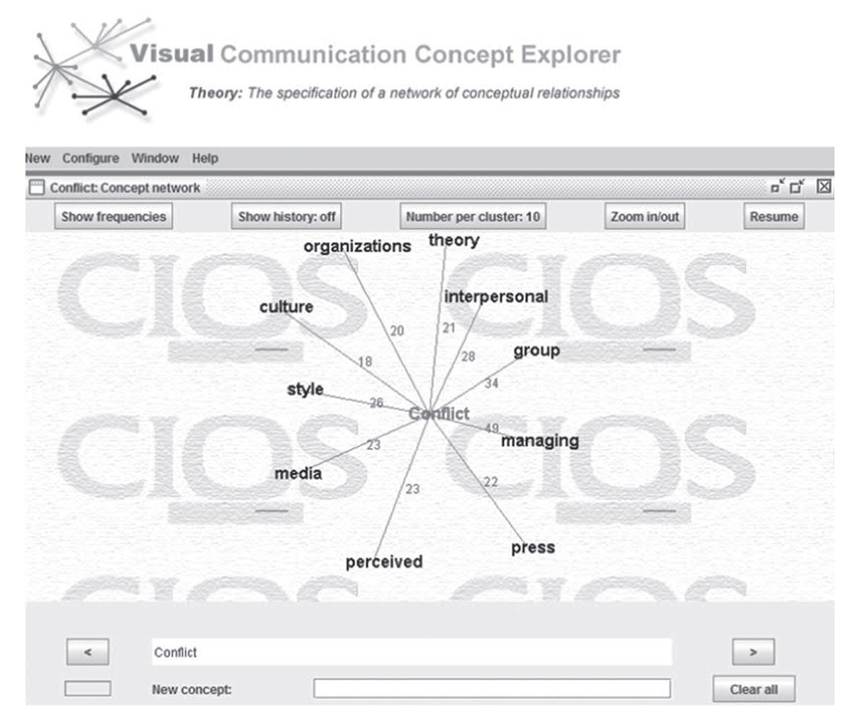
Figure 3.2 How Conflict Concurs With Other Key Concepts With Frequency Counts
NOTE: According to the user guide provided for the Visual Communication Concept Explorer, orbiting the central concept (“conflict”) are other concepts from the communication literature that co-occur most frequently with the concept featured at the center. The shorter the link, the more often the two concepts co-occur (e.g., “conflict” and “managing” had co-occurred 49 times when we captured the graph on April 15, 2011).
Multilevel and ecological frameworks as well as attention to modes of inquiry can transcend contexts and lessen the unequal emphases on particular contexts (e.g., interpersonal and organizational) and research programs (e.g., styles), which are displayed in Figures 3.2 and 3.3, from CIOS’s Visual Communication Concept Explorer (2012).
We also note that there are varied metathe- oretical traditions and theories in communication, such as phenomenological, interpretive, cultural, critical, feminist, postmodern, postcolonial, and endless combinations, that could be utilized to organize this review (for overviews, see Carbaugh & Buzzanell, 2010; Craig, 1999). Many of these traditions and theories align with particular methods. Methods surveyed in different qualitative handbooks include narrative, ethnography, case studies, grounded theory, fantasy themes,
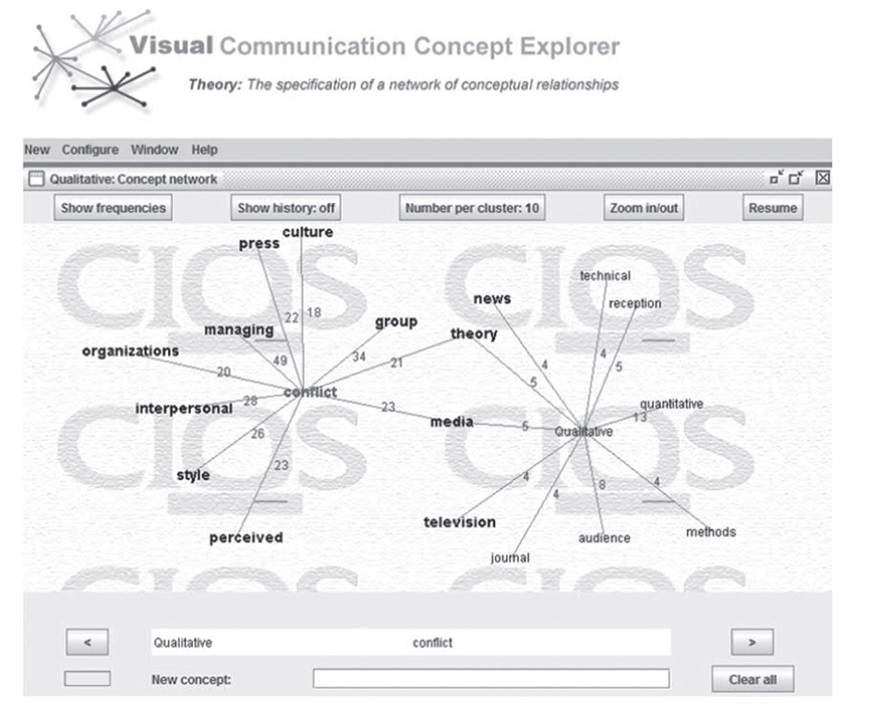
Figure 3.3 The Concurrence of “Conflict” and “Qualitative” as Concepts in Communication
NOTE: This graph is rendered when “conflict” is imported as a new concept into the Concept Explorer for the concept “qualitative.” The two concepts do not seem to have a lot of overlapping except through “theory” and “media.”
life history, and crystallized lenses that integrate and/or layer (mostly) different qualitative approaches (e.g., Denzin & Lincoln, 2011; Ellingson, 2009).
Given this vast array, we employed the following decision criteria to narrow our scope. First, because we emphasize communication, we focus on discourse, interaction, and macro discourses—not personality variables or intrapsychic processes—with the caveat that we sometimes include studies that report recollected interaction such as in narrative, autoethnography, and textual accounts. Following Fink et al. (2006), we emphasize the data collection and interaction angle to exclude studies that are solely or primarily rhetorical. Second, we include mixed-methods (qualitative and quantitative) investigations. We stipulate that these studies need to fully incorporate qualitative inquiry into the design, implementation, and findings rather than simply analyze open-ended survey questions to supplement quantitative findings. To this end, we take issue with Fink et al.’s (2006) reference to qualitative research only as “precursors” to, and lacking the rigor of, quantitative studies (p.
34). Third, we do not provide an overview of theoretical or “think pieces” that develop conceptual frameworks and advance theorizing about conflict in our corpus of studies for examination in this chapter. Fourth, we did not include models of practice (see Deutsch et al., 2006) but note that pragmatic implementations as derived from qualitative studies are important contributions of such work. Finally, we include both classic conflict studies and new studies that emerged around 2005 to 2006 when the last edition of this Handbook was being finalized. Where possible, we focus attention on studies published since 2005. This cutoff date aligns with the publication of Putnam’s (2006) chapter in the first edition of this Handbook outlining different approaches, data gathering and analytic techniques, and agendas for future research.To adhere to our decision criteria, we searched databases on multiple occasions and delved into individual communication journals, as well as interdisciplinary publications featuring communication scholarship, for appropriate materials. Specifically, we used ComAbstracts, Communication & Mass Media Complete, Academic Search Complete, search capabilities associated with publishers of International Communication Association and National Communication Association journals, and Sage Journals Online.1 Despite these searches and the need for more qualitative inquiry in conflict communication studies, there still is relatively little conflict research driven by communication and using primarily qualitative methods (see Figure 3.3). As a result, we present representative studies with emphasis on more recent publications when available.