Distributive Strategy
As noted, distributive strategy aims to maximize a negotiator’s own gains. According to Walton and McKersie (1965), distributive bargaining includes any and all efforts to persuade a counterparty to make concessions (e.g., making threats or positional commitments, or withholding information about preferences).
Similarly, Pruitt and colleagues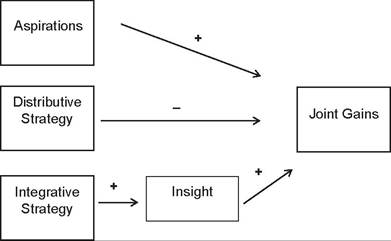
Figure 11.1 Model of Negotiation Strategy and Joint Gains
SOURCE: Teucher, Brett, and Gunia (2009).
described pressure tactics like threats, positional commitments, arguments, and status bolstering as indicative of a distributive orientation (Pruitt & Carnevale, 1980; Pruitt & Lewis, 1977). A long line of research documents that distributive strategy used primarily, or in isolation, has a negative impact on joint gains (Carnevale, Pruitt, & Briton, 1979; Carnevale, Pruitt, & Seilheimer, 1981; Kimmel et al., 1980; Lewis & Fry, 1977; Pruitt, 1981; Pruitt & Lewis, 1975; Schulz & Pruitt, 1978).
Subsequent empirical research on distributive strategy grouped the underlying behaviors into two major sets: substantiation (e.g., persuasion and influence) and offers (Gunia, Brett, Nandkeolyar, & Kamdar, 2011; Pruitt, 1981; Weingart et al., 1990). For short, we refer to these behaviors, which early behavioral research thought to form distributive strategy, as “S&O” (substantiation and offers;
Teucher et al., 2009). Substantiation includes all forms of justification, rational and emotional appeals, arguments, and threats to support a party’s own position and reject the other party’s position (Olekalns & Smith, 2005). The goal of substantiation is to motivate the other party to honor those demands by making concessions. Commonly, parties use substantiation in combination with their own offers, justifying their position while translating that position into terms on the negotiable issues. Thus, S&O are empirically as well as theoretically linked (Weingart, Brett, Olekalns, & Smith, 2007; Weingart, Hyder, & Prietula, 1996).