Emotion and Conflict Are Goal Related
Emotions occur in reaction to a specific stimulus or precipitating event that interrupts, prevents, or facilitates an individual’s ability to reach desired goals (Berscheid, 1983; Frijda, 1987).
Positive emotions, such as joy and love, occur in response to goal-enhancing events (e.g., Kevin wants a baby and finds out that Kate is pregnant). Negative emotions, such as anger or sadness, typically occur in response to goal-impeding events. For example, Kate might become angry if Kevin calls her “forgetful” and “disorganized” because she wants to be seen as capable.The fact that conflict involves incompatible goals necessitates that emotions are part of the conflict process. Indeed, incompatible goals lead to conflict because two people are at cross-purposes, but they also lead to emotion because they impede or interrupt one’s progress toward getting what one wants (see Figure 4.1). Jones (2000) took this argument further by suggesting that the event that triggers conflict also triggers emotion and that people do not realize they are in conflict until they react emotionally. So Kate may do more than the majority of housework for several weeks without complaining. However, when she notices Kevin watching television all day, she may feel frustrated because she never has any free time for herself. A conflict over the seemingly unfair division of labor may then ensue as a result of Kate’s frustration.
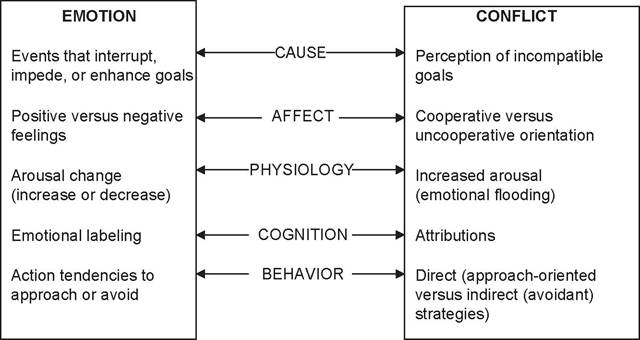
Figure 4.1 Similarities Between Components Related to Emotion and Conflict
Goals are also a defining feature in many conceptualizations of conflict styles. For example, Rahim (1986) identified concern for self versus others as a primary dimension distinguishing between conflict styles. Concern for self involves trying to reach one’s own goals, whereas concern for others entails considering the partner’s goals. When people are concerned about the needs and feelings of other disputants, they are more cooperative. In contrast, when people are focused exclusively on their own goals, they are more competitive.