INTERDEPENDENCE OF CONFLICT RESOLUTION AND HUMAN RIGHTS
Conflict resolution and human rights are complementary. There is no full expression of human rights without the freedom to engage in conflict, nor is conflict resolution constructive if human rights are negated during conflict.
Human rights are inherent in each person by virtue of being human and they are an entitlement today, irrespective of the capacity of local, national, and regional bodies to recognize, uphold, and fulfill them. Moreover, human rights cannot be taken away, although they can be disregarded, violated, and denied. The most eloquent expression of this entitlement of each human person was given through the Universal Declaration of Human Rights. The emergence of human rights movements is one of the greatest gifts of the last half of the twentieth century and clearly has a primary expression in the UDHR.The Declaration is seen by many as a point of departure for future developments in the field. It is true it was certainly a fundamental energizing moment for a movement that in a few years was able to shape the life of billions by transforming the way states interact with the citizens and citizens among themselves. The growth of human rights activism is so extraordinary that there are now thousands of organizations dedicated to human rights advancement, while millions of people are involved in global organizations such as Amnesty International and Human Rights Watch. Even so, many do not recognize how conflict resolution has been instrumental in bringing the Universal Declaration of Human Rights to life and how conflict resolution can further contribute to the development of the field of human rights and vice versa.
After millions of deaths, countless wounded, and unspeakable suffering, the United Nations (U.N.) Organization was formed in 1945 to offer an institutional setting that could help maintain peace by resolving conflict.
In addition, the very aspiration that led to the creation of the U.N. was the hope that it could help nations to resolve their conflicts constructively. Although the systematic study of conflict resolution as an academic or professional discipline is relatively new (see, for example, Zartman and Rasmussen, 1997, Introduction and Chapter 2), the capacity to resolve conflict constructively is human by nature, as is the capacity to resolve differences violently.Conflict is a fundamental human choice that has been materialized in countless forms throughout history. What the conflict resolution field is offering today is a clearer, deeper, and more methodological understanding of how these choices come about, what the best conditions for them to come into view are, and why humans involved in conflicts end up using the more violent and destructive alternatives.
Against this backdrop, while descriptive work regarding the emergence of the Universal Declaration of Human Rights has been produced extensively, rarely have those readings portrayed it as a conflict resolution process. However, if we move from the first secretarial draft of June 1947 to the final draft of December 10, 1948, we see the emergence of a wonderfully productive conflict resolution process that would strongly support the intimate connection and complementarity of the two fields.
The language used in the actual Declaration ratified was not the only possible one. There were several drafts (Humphrey Draft, Cassin Draft, Geneva Draft). The abundance of previous drafts was due to “struggling” to find the language that could express what had never been expressed before by an international body in those terms. The problem that the drafters were addressing was a fundamental human dilemma, giving expression to the unknown.
There was among the members of the Commission a shared sense that something inherent was linking them with the entire human family. Indeed, the idea that dignity was to be identified in the Preamble of the Declaration, to represent all humans, individually and collectively, was not obvious at that time.
In other words, the responsibility toward future as well as current human generations was of paramount importance. Also, the same dilemma was emerging at every turn, every word, and every expression. Who could decide who was speaking on behalf of everybody? We know that, although questioned by some, the diversity of the drafters was certainly an issue that led to a group of experts who attempted to represent a broad range of philosophical, legal, cultural, and religious backgrounds. The Universal Declaration of Human Rights emerged as a successful outcome of a conflict resolution process that brought together a group of many to express the unknown. But, was this condition only true in 1948 or is it also valid today? In many areas, including human rights, we are still collectively facing many unknowns. How we are going to address them collectively is an essential question. As a field, conflict resolution has much to contribute in helping further developments to be addressed constructively.One of the key premises of the conflict resolution field is that development occurs in conversations. This was certainly true throughout the process that led to the final text of the Universal Declaration, but it is also true in countless areas of further development of human rights. If we look at social, economic, and cultural rights, for example, we can see how debates are open and vibrant, indeed conversational. In particular, if we pay attention to the dynamics of dimensional
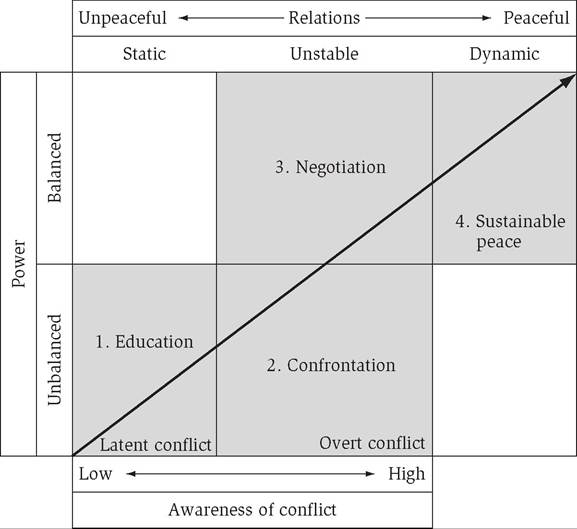
Figure 27.1 The Progression of Conflict.
Source: A. Curle, Making Peace, London: Tavistock Press, 1971
development as it applies to both human rights and conflict resolution, we have a glimpse at the importance of the interconnection of the two fields.
As the conflict moves from low to high awareness, the relations become unstable. Countless negotiations fulfilling the developmental potential must take place in order to move toward a sustainable peace, as a dynamic system of respectful human interaction.
Under this spectrum, human rights have a central role, divided into three phases: (1) in raising awareness of injustice; (2) in offering the basis for action to address those injustices; and (3) in articulating the system of reference to evaluate both awareness and injustice (see Figure 27.1).Therefore, it should be stressed that the negotiations in the third phase do not pertain to the human rights intrinsically. Experts of conflict resolution would agree that the articulation and implementation of them must infuse political realities through negotiations. No expert in the conflict resolution field would advocate or imagine a sustainable peace built against human rights such as systematic disrespect and abuses. On the contrary, conflict resolution literature considers human rights as the conceptual framework for any lasting and peaceful resolution of conflicts, especially the most violent ones.