Prevention and Treatment for Family Conflict and Mental Health
Without placing blame on family members for mental illness, it is important to recognize that families do play a large role in the environment in which we live. It is necessary to recognize the influential relationship that family members hold.
As illustrated in the sections above, regardless of genetics, families can support and also hinder mental wellbeing. The beauty of the role of the family is that they can contribute in a major way to prevention and treatment of mental health. However, family members are often at a loss for how to help their loved ones when dealing with mental illness. Resources are scarce, they do not know who to ask for help, and they fear creating more distance between themselves and the individual who needs support. Furthermore, because of evidence that demonstrates the importance of family environment, and in an effort to address the critical and harmful responses from family members, treatment programs for families include psycho-educational training in effective communication and problem-solving skills (McFarlane et al., 1995). This section discusses numerous studies that identify waysBox 9.4 It Happens in Real Life: Families Dealing With Mental Health Disorders
The accused killer's family knew that things were wrong-very wrong, in fact. Up until this August day, the accused killer never had a violent episode in his life. He was a standout high school studentearning scholarships that would allow him to attend any college in the country. He was a very high- functioning member of society-caring for his frail mother, attending his medical appointments, and volunteering at the hospital to support other people with the same diagnosis. His younger brother said that things began to unravel 10 months prior to the killing spree. His psychiatrist changed, his diagnosis changed, his medications changed.
One morning, his brother and his brother's girlfriend woke to each of their cars having a slashed tire-from a knife. On another occasion, the accused cut the brakes in his brother's car. And, on yet another occasion, the accused locked his severely arthritic mother in her house. The police were called, and they responded to each of these situations. At the time, to those who didn't know him best, he seemed stable and didn't sound any alarms. The accused killer wrote an open letter to the hospital pleading for a new psychiatrist and new medications (it is unknown if he ever sent the letter). His family wrote letters to the psychiatrist treating him, they made numerous phone calls. The accused was becoming more agitated, more bizarre as the days and months went on. He began asking for guns and weapons. Finally, in April, the hospital agreed to an evaluation. He was held for 4 hours at the hospital and then released. The hospital staff told the family that there was nothing to be done: "We are going to have to wait until he escalates.” "We did not know what to do,” his younger brother said during an interview.in which families can be involved in prevention as well as the process of treatment of mental health illnesses organized around the four diagnoses.
Figure 9.2 illustrates the essential aspect of families in the prevention of and treatment for mental health disorders. It also illustrates the complex—and unanswered—dynamics between family conflict, mental health disorders, and substance abuse. Specifically, the treatment and prevention of poor mental health outcomes should happen within the family context. Given the overlap of family conflict, mental health outcomes, and substance abuse, the family dynamic must be integrated within treatment and prevention methods. Individually focused prevention and treatment models (e.g., individual therapy) do not effectively address the problems in a holistic, comprehensive manner, as demonstrated in the BMD.
Thus, the center of the figure represents the important roles of family inthe prevention and treatment of poor mental health outcomes. While there is substantial
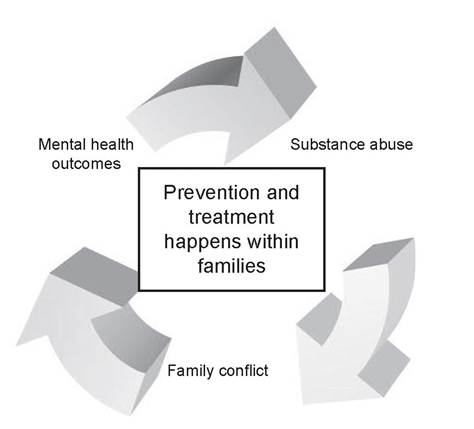
Figure 9.2 Prevention of, and Treatment for, Mental Health, Substance Abuse, and Family Conflict
evidence that excessive family conflict negatively affects mental health disorders and substance use, we lack knowledge about specific pathways (find more discussion on this point in the Future Directions section, below). Thus, the arrows connecting family conflict, mental health outcomes, and substance abuse are designed to illustrate a co-occurrence and not a linear progression.
A review of the literature divulges that both prevention and treatment models for each of the four mental health diagnosis categories discussed in this chapter (depression, anxiety, substance abuse and dependence, and schizophrenia) are all strikingly similar. They all conclude that family interventions are more successful than other interventions (e.g., individual, group). Therefore, as opposed to discussing prevention and treatment in all four domains of mental illness discussed in this chapter, the discussion below will highlight some of the commonalities of specific aspects of prevention and treatment models used to address these areas of mental health.
Prevention and treatment models for depression, anxiety, substance abuse, and schizophrenia all consider the challenges and needs of engaging in family therapy. These models define the roles that family members have in supporting prevention, treatment, and recovery processes. For more than two decades, researchers have realized that environmental factors, such as family, are critical in terms of recovery from substance abuse and posthospitalization for a person with schizophrenia. Family has also been identified as a critical, necessary component of the treatment of depression and anxiety (Hughes & Asarnow, 2011; Maid, Smokowski, & Bacallao, 2008).
The goals of prevention and treatment programs center on improving various interaction skills to better manage family conflict in order to avoid mental health problems. For example, the intentions of many of the programs are the following: (a) prevent initiation of disorders by identifying subclinical symptoms, (b) increase resiliency in children, and (c) improve skill building for families. Specifically, these interventions increase the parents’ awareness of the impact of poor mental health on children and their spouses and improve communication skills within the family (Gladstone & Beardslee, 2009).
To achieve these intentions, prevention and treatment programs use a variety of approaches. Communication skill building is an effort to allow families to better understand the experiences of depression and to assist children in reducing self-blame for parental symptoms and ancillary behaviors (Gladstone & Beardslee, 2009). Commonalities across these successful interventions include “social support, detailed education on clinical aspects, direct guidance, and training in coping skills” (McFarlane et al., 1995, p. 679). The notion of many intervention and prevention studies in schizophrenia is to reduce family conflict, increase family warmth, improve family communication through communication training, and improve problem-solving skills (Lopez et al., 2004; McFarlane et al., 1995). Furthermore, high levels of family warmth seem to have positive implications for the prevention of relapse in people with schizophrenia. “Identifying family behaviors associated with warmth may contribute to identifying family strengths” (Lopez et al., 2004, p. 437).
Given that family conflict and dysfunction is often a major factor contributing to the disorders discussed (anxiety, depression, substance abuse and dependence, and schizophrenia), treatment modalities that include the family can be challenging. However, several rigorous, clinically based interventions have demonstrated that family-based treatment (a) increases treatment retention and attendance (over other types of standard treatments in substance abuse and dependence treatment), (b) increases engagement by heavy-using and resistant adolescents into treatment, (c) increases engagement of homeless and runaway youth (Rowe & Liddle, 2003), (d) reduces substance abuse compared with other treatments (Waldron, 1997), and (e) reduces substance abuse during the course of treatment (Waldron, Slesnick, Brody, Turner, & Peterson, 2001).
In addition to recognizing that families have a critical role in inhibiting and preventing mental health disorders, these interventions have also demonstrated that family relationships, in both adolescent and adult treatment processes, are vital to enhancing treatment outcomes (Heath & Stanton, 1998; McCrady & Ziedonis, 2001). Because family engagement in substance abuse treatment has shown so much promise, researchers continue to observe clinically sound ways to improve a wide variety of treatment outcomes. Furthermore, investigations of family-based treatment of comorbid substance abuse and other mental health issues, including school attendance and performance, have provided evidence of the importance of family intervention (Rowe & Liddle, 2003). Family functioning, in terms of this literature, includes a decrease in family conflict, an increase in family cohesion, and an improvement in parenting styles (Rowe & Liddle, 2003; Waldron et al., 2001). Additionally, family-based interventions decrease the risk of relapse with people recovering from hospitalization for schizophrenia (McFarlane et al., 1995). In fact, family-based psycho-educational models have been shown to be more effective than either individual treatment or medication alone (McFarlane et al., 1995).As with each of the mental health illnesses discussed in this chapter—anxiety, depression, substance abuse, and schizophrenia—poor family functioning (e.g., high conflict, poor communication, abuse, and permissive parenting) seems to be a risk factor for the initiation and maintenance of the disorder. At the same time, the strengths of the family have the capacity to prevent these same disorders and/or are part of the treatment process. There is likely no other single prevention or treatment entity that can encompass the power of the family.
Specifically, family-based interventions such as multisystemic family therapy (MFT) offer a high level of individualized family- and homebased treatment options that address multiple layers within the context of the individual.
These treatments address the individual, the family, the community, and societal aspects that influence development and behavior (Bronfenbrenner, 1989; Henggeler, Melton, & Smith, 1992). Functional family therapy (FFT) also addresses individual problem behavior within the context of the family. The central notion of FFT is to impact individual dysfunctional behavior by improving family relationships and changing family interactions (Alexander & Robbins, 2010). FFT and MFT are similar to one another in that they are both systems approaches that take biological, social, and ecological contexts into consideration. These two frameworks offer intervention strategies that match the BMD's framework of mental illness. Furthermore, the interventions are solidly grounded in the belief that addressing family functioning and family conflict will substantially improve mental health outcomes.