The level of attention toU.S. health care by the public, politicians, and the media makes the charge of writing an overview of conflict in health care somewhat daunting.
Conflict is present throughout the health care system due to its complex structure and ambiguous lines of authority and the large number of stakeholders involved (Marcus, Dorn, Kriteck, Miller, & Wyatt, 1995).
In fact, it has been argued that the term health care system is a misnomer, as a system implies a “coordinated, planned, and connected set of people, organizations, and functions... [while] no single, coordinating entity governs health care in our country” (Miller, 1995, p. 151). The very nature of health care, composed of multiple public and private organizations, including hospitals, health maintenance organizations, insurance companies, and independent providers, often with divergent or competing interests, creates fertile ground for conflict. It is no surprise that communication scholars have devoted significant time and attention to studying conflict management in this context. Our goal in this chapter is to summarize the contributions of (primarily) communication scholars to our understanding of and approaches to conflict and its management in health care delivery at three, often overlapping, levels of analysis: (1) inter- personal/dyadic, (2) group, and (3) organizational (see Figure 16.1).Recent literature reviews on conflict in health care settings indicate that the majority of articles focus on conflicts between health care providers and patients or their family members or conflicts among health care providers (such as doctors and nurses) (Brinkert, 2010; Shin, 2009). These reviews reported lack of collaboration and/or effective communication to be a dominant theme in conflict management with consequences ranging from poor working conditions to economic and social problems along with the more commonly recognized outcomes such as poor health care decisions, medication errors, patient injuries, and death. While conflict may also be present in health prevention and promotion research focusing on health
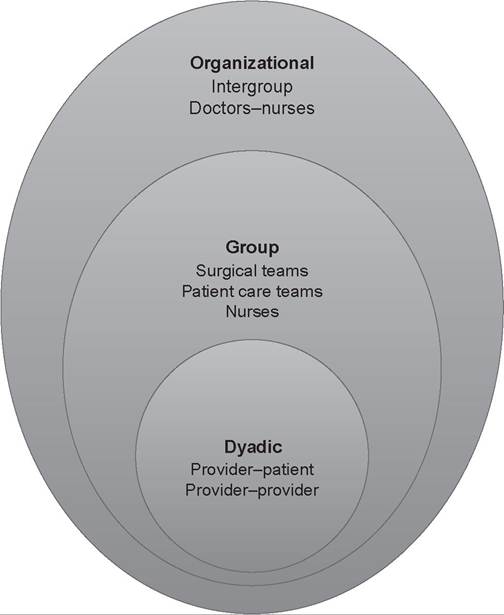
Figure 16.1 Levels of Conflict in Health Care
NOTE: For the sake of parsimony, the figure represents a hospital, yet this could represent any health care facility.
communication campaigns, media coverage of health care, and in issues related to health policy, the scope of this chapter is limited to conflict at all levels of health care delivery. The chapter is organized into three major subsections: (1) conflict management between health care providers,1 patients, and their families; (2) conflict management among health care providers; and (3) the prevention and management of conflict in health care.