The Styles Approach for Assessing Conflict Communication
A styles approach to managing conflict was a hot topic in the 1970s and 1980s, and it remains popular today. A person’s conflict style represents that individual’s propensity to engage in the same conflict behavior across situations.
A style is typically determined by the extent to which a person is concerned with self and concerned with other. The combination of these two concerns is said to lead to one’s conflict management styles. An important measurement tool of conflict styles approach has been the Management of Differences Exercise (MODE) instrument developed by Kilmann and Thomas (1977; Rahim, 1983), which labels the five styles as competing, collaborating, compromising, avoiding, and accommodating. Figure 2.1 represents the styles approach, indicating where each style is placed given its concern for self and concern for other.It would be informative to examine the items that are used to measure these styles. For this exercise, we used items from Rahim’s (1983) measure. For each item, you would be asked to write the name or the role relationship of the other person (e.g., “my supervisor”). Collaboration refers to having a high concern for
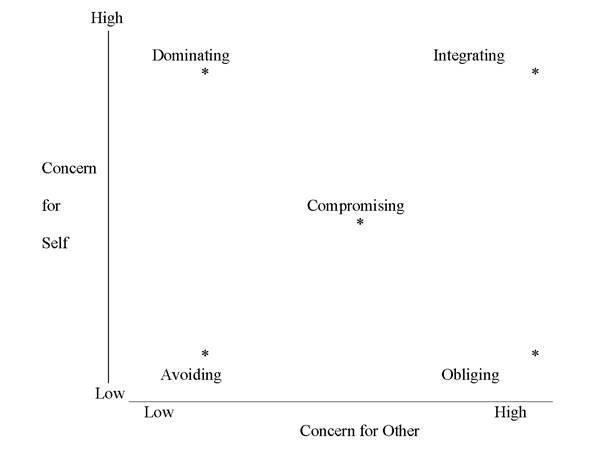
FIGURE 2.1 Styles of Managing Interpersonal Conflict
self and a high concern for others. It is measured by items such as “I try to work with my to find solutions to a problem which satisfy our expectations,” and
“I exchange accurate information with my_______ to solve a problem together.”
Avoidance means having a low concern for both others and self. Example items include, “I usually avoid open discussion of my differences with my_______________________________,” and
“I try to stay away from disagreement with my______.” Dominating reflects hav
ing high concern for self but a low concern for others, as seen in such items as “I use my influence to get my ideas accepted,” and “I use my authority to make a decision in my favor.” Next, Obliging refers to having low concern for self but a high concern for others. Obliging items include “I generally try to satisfy the needs of my ” and “I usually accommodate the wishes of my______________________________________.”
Finally, a moderate amount of concern for self and other indicates a compromise style.
Example items for Compromise are “I try to find a middle course to resolve an impasse,” and “I usually propose a middle ground for breaking deadlocks.”The styles approach is memorable, easily testable, and interesting for people’s self-assessment of how they normally behave. Pros and cons of each style offer topics for discussion. However, in our view, the styles approach is not very useful in representing people’s actual strategic decisions and behaviors. With the same individual, you might avoid conflict in one situation but confront that person in a different time and space. In addition, the styles approach assumes that conflict messages are linked to caring for self and caring for the other person. Avoidance in this research reflects low care for self and low care for others. But such is not the case. Avoidance can instead reflect a high care for others and high care for self For example, not saying something in anger implies caring for the other person and yourself. Moreover, people often prefer to be left alone than forced to discuss problems that are better left for a different place and time. In such cases, avoidance would be a smart and a considerate strategy.