Exploring the territorial dynamics of SHD processes through the STEHD framework
Building on the previous section, an analytical framework for breaking down the dynamics related to the creation of the enabling and disabling factors that characterize and shape different pathways to development in a territorial society is presented.
As discussed, the rationale behind this focus is that each territory is characterized by different endowments, stakeholders (e.g. enterprises, universities, municipalities, associations and NGOs) and structures of living together (e.g. institutions), which affect local development processes and, at the same time, are central for the expansion of people's freedoms in that territory. Investigating structures of living together requires an evolutionary and historical perspective, as they are, according to Deneulin (2008, p. 115), ‘not only responsible for the conditions of life of individuals today but have also affected past generations and will affect future ones' and it is crucial to assess ‘whether they promote the collective structures which help individuals to flourish' (ibid.).In order to capture the complexity of evolutionary paths, the territorial focus of the STEHD framework again stresses the role of feedback loops among the constituent elements in fostering development dynamics, including institutional changes and governance mechanisms. It is framed within an evolutionary economic geography discourse, as most of the elements are dynamic and produced by different systemic, interactive and non-linear forces within place-based and path-dependent processes. The STEHD framework embraces three characteristics of evolutionary models identified by Boschma and Martin (2007): it is dynamic, it deals with historically determined processes and it emphasizes the impact of novel factors on economic - as well as social, political, institutional and legal - transformation based on ongoing cognitive, creative and learning processes (Storper, 1997).
The STEHD framework is also conceived as a multilevel, multidimensional diagnostic tool, able to identify tailored policy options and locally suited solutions (Crescenzi and Rodriguez-Pose, 2011; Martinez-Fernandez et al., 2011) consistent with the expansion of agency, empowerment and capabilities, both individual and collective. In addition, the STEHD framework is adaptable to different territorial systems and contexts with distinctive social, economic and cultural features, including different institutional settings and geographical characteristics, notwithstanding the connections to micro and macro processes. The territorial dynamics of SHD are presented in Figure 2.4. The diagram develops the left part of Figure 2.3, placing at the centre an ideal type of LDS or territory within a certain region. It is necessary to start with local communities in order to explain their evolution and impact on the socio-economic structure (Sforzi, 2010). For theoretical and explanatory purposes, however, it is not necessary to focus on a specific territorial level (region, province, county, etc.) or to strictly define an LDS in terms of precise functional boundaries. Instead, LDSs can be regarded as complex population systems where multiple entities: (i) interact with their environment and each other (Ceriani Sebregondi, 1953a); (ii) face resource constraints and seek to survive through conflict or cooperation; and (iii) adapt and pass on information to others, through replication or imitation (Hodgson and Knudsen, 2010, p. 26). What is important is to embrace the complexity of the system under analysis together with its time-dependent parameters (i.e. the combination of agents, values, properties, functions, flows, activities) and to position it within a broader general context, in order to integrate horizontal and vertical perspectives of multilevel governance.
The process of SHD at the LDS is characterized by enabling (e.g. trust, consensus, dialogue and cooperation between agents) and disabling (e.g.
social conflicts and insecurity, limited availability of BSS) factors derived from the interaction of endogenous and exogenous resources, barriers, institutions and capacities within the local system. Firstly, in order to sustain trajectories of SHD, the LDS deals with endowments and barriers within its own systemic institutional structure and causes. In general, local resources and barriers have distinctive and evolving features in terms of magnitude, accessibility and distribution, which interact with an array of local institutions (formal and informal) involving universal or non-universal entitlements and balanced or skewed power structures.Secondly, the left-hand side of the diagram points to the role of extra-local interconnections and governance levels11 in terms of political influence, institutional structure and resources flows, which add to local endowments and barriers. Nowadays, local systems cannot be isolated from the rest of the world.12 Places evolve due to the continuous dynamic interaction of local features characterizing the uniqueness of each territory with a multiplicity of external structures (e.g. markets, institutions, social spaces) (Sforzi, 2005; Goldin and Mariathasan, 2014). Recognizing this fact implies that
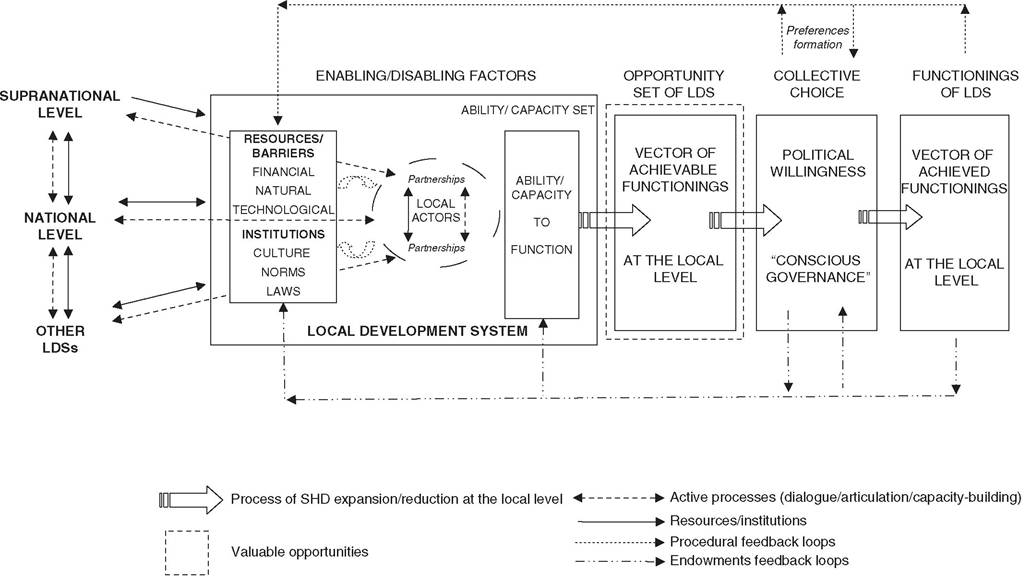
Figure 2.4 The STEHD framework: The territorial dynamics of SHD processes Source: Authors.
connections with other territories and levels facilitate processes of dialogue, (dis)articulation and capacity building, which impacts upon the internal interactive evolution of the LDS.
Thirdly, such dynamics refer to systemic and non-linear relationships between local stakeholders, which can be based on different kinds of proximity (cognitive, organizational, social, institutional or geographical) and different levels of frequency and institutionalization (occasional, stable, informal, personal, contractual, formalized, etc.).
In other words, the LDS is centred on a local community of practice, knowledge and governance.Finally, individual agents' and social groups' abilities and skills constitute an evolving territorial capacity to function and realize valuable potential functionings, adding value to the other elements of the framework.
Overall, an LDS, given its resources, barriers, institutions, relations and capacities (as well as the interaction among these and their distribution among different stakeholders) can function in different ways. The "working potential performances” of LDSs can be represented through a vector of achievable functionings or opportunities to function.13 This is the opportunity set from which potential functionings at the LDS level (not directly observable) and achieved functionings (observable, measurable and comparable) will be determined in light of collective choices, policy processes and LDS performance. Collective choice, based on local and shared visions of development (if there are shared visions), is crucial at this stage. For instance, the selection of valuable functionings to be attained through dedicated efforts should be based on a collective decision, which is influenced by a wide range of factors including political commitment, the participation of civil society in public scrutiny and debate, the lobbying power of social groups and economic agents, and international development debates. Often the shared capacity (or incapacity) to imagine and pursue feasible paths of local SHD through "conscious governance” can make a decisive difference to the relative performance of LDSs.
It is important to recall that from an SHD perspective at the local level, the final outcomes of an LDS correspond to potential goods and services as well as to conversion factors at the individual level (as conceived of in the standard CA). In other words, territorial achieved functionings (e.g. equal access to social services and credit opportunities, a pollution-free environment) are seen as conditions that enable the expansion of individual and collective capabilities.
In addition, as discussed in the Chapter 1, the influence of individual actions and agency adds to LDS in the form of collective forces of innovation, change and transformation.The creation and enhancement of enabling and disabling factors is sustained by several dynamic processes. Feedback loops show the non-linearity of path-dependent evolution, and how structural change or inertia influences economic and social transformation (i.e. path creation and path destruction), which in turn affects the dynamics of the whole territorial system.
For instance, some processes can polarize horizontal inequalities and class struggle, although conflicts are related not only to distributional mechanisms but also to procedural aspects of social justice (Stewart, 2001),14 which cannot be bypassed at the territorial level of analysis. However, if the local system functions effectively, facilitating access to services and resources and reducing barriers to participation in decision-making processes, it will increase individuals' well-being through the expansion of their opportunities and capacities. In this case, the procedural feedback loops would lead to an increase in stakeholders' commitment to territorial development and promote "agency at the local level”, seen as the social capacity to affect the processes at work in the territory or the formation of rules in the national and international arena through dialogue, cooperation and alliances.
In general terms, the evolution of an LDS along SHD trajectories entails the transformation of its parameters (e.g. shared values), replacing some old characteristics with new ones and reproducing different local enabling factors. The existence of multiple potential trajectories for local development and the fact that no unique or ideal pathway is readily identifiable relates to the many possible combinations and dynamic forms through which organizational arrangements, tacit and codified knowledge and policy actions affect local capacities and values (Sforzi, 2005).
Moreover, such transitions, which are themselves a consequence and spur of developmental processes, are often the results of path dependence, path destruction and path creation processes (or of some kind of interaction between the three). In other words, processes of "continuity with change” - where the past partially bounds and frames the future (Helmsing, 2001, p. 5) - may overlap with the abandonment of "locked-in” paths. New paths may emerge through adaptation, incremental change or reaction to scenarios of conflicts or crisis, deriving from internal mutations in prevailing habits or behavioural dispositions or from externally induced shocks (MacKinnon et al., 2009). For instance, the adaptation of the system to changing information flows (in terms of typology, origin, access, cognitive understanding and diffusion) is a key factor in similar processes, where the role of strategic players (e.g. knowledge gatekeepers) as catalyst of different sources of information is crucial and leads the system's parameters evolve in line with the surrounding landscape (Lombardi, 1994 and 2003; Lombardi and Randelli, 2013). In addition, such "animators” within policy networks may hold ‘the capacity to transform the potential of individual willingness into the political mobilisation of a locality or region' (Sepulveda and Amin, 2006, p. 325) and to allow effective adaptation to change that preserves equity and diversity (Essletzbichler, 2007).These arguments also apply to processes of technological change and their ‘uncertain, groping, disorderly, and error-ridden character' (Nelson and Winter, 1982, p. vii), particularly in the current Global Digital Age. Today, several policy areas with central importance for SHD at the local level are continuously affected by the opening of new opportunities, as well as the emergence of new threats, derived from ICT applications. These policy areas include strategic planning, service provision, management of local public goods, community empowerment, social media, public information, data collection and monitoring. Thus, the overall capacity of an LDS and of its strategic players to take advantage of ICT as a concrete tool for integrated territorial development (Bass et al., 2013) is essential in order to nurture local creative intelligence, and to encourage the LDS to evolve along paths characterized by greater voice, accountability and transparency capacities.
To conclude, the STEHD framework embraces the essence and complexity of development and its multidimensional and evolutionary character, while maintaining a constant reference to capability expansion and reduction processes at the individual level. The next step is to discuss the scope for potential applications, taking into account its boundaries and flexibility as a tool for research and policy purposes.
2.4