The STEHD framework
As stated in the previous chapter, several components of the STEHD framework are derived from the CA and the SHD paradigm, while other elements are taken from the literature on local development and, in particular, from economic geography and work on industrial districts.
However, it is important to emphasize that this framework is fully embedded within the SHD paradigm and, being a place-based and a people-centred development model, complements the “standard” CA through strong theoretical linkages, as well as significant interpretative differences.The constituents of the STEHD framework in a static perspective
The first element of the model derived from the CA and SHD paradigm is the distinction between means and ends, which is relevant at all levels of analysis - from micro to macro, including the meso level. Indeed, the capability perspective shifts primary attention away from means (inputs) to ends (final outcomes) that people have reason to value (Sen, 1999, p. 90; Alkire, 2005; Clark, 2006a), giving salience to the opportunities as well as individual and collective experiences and values. Therefore, the STEHD framework, following the CA, can be viewed as an opportunity-based model (Robeyns, 2005), where agents' efforts strive to enjoy those opportunities prioritized by territorial values, culture and socio-economic circumstances (Ceriani Sebregondi, 1953a).
The second element relates to the multidimensionality of the embraced development vision, shifting the analytical metric from a mono-dimensional informational base focused on income and growth to the multidimensional capability space (Sen, 1985a; 1992). Such a perspective implies that (i) analytical and policy accounts of well-being should focus on what people are able to “do” and to “be” (Sen, 1985a) and what they have reason to value, including immaterial aspects of their life (Sen, 1999); and (ii) local development applications should integrate economic analysis with social, cultural, political and environmental assessments.
“Hard” developmental factors (e.g. infrastructure, technology and R&D) are comprehensively framed together with soft and relational factors (e.g. Alfred Marshall's “industrial atmosphere” and “local spirit”, social capital, knowledge flows). Therefore, embracing the CA's argument that social arrangements - broadly defined - should aim to expand people's capabilities, implies that a multidimensional perspective at the meso level has to be taken into account.The third element of the framework concerns the centrality of collective realms of participation, political willingness and governance, which are common elements of the CA and the local development literature. Sen's (1999) emphasis on what a person “has reason to value” opens up space for a democratic and non-paternalistic discourse on development visions, choices and strategies (Clark, 2002; Alkire, 2005; Clark and Qizilbash, 2008; Biggeri et al., 2011a), with people conceived as active citizens rather than simply as consumers/beneficiaries. In Sen's (1999, p. 53) words, ‘people have to be seen, in this perspective, as being actively involved - given the opportunity - in shaping their own destiny, and not just as passive recipients of the fruits of cunning development programs.' It entails also the importance of integrating bottom-up and top-down policy perspectives (Crescenzi and Rodriguez-Pose, 2011) through participatory and deliberative processes involving all local and external actors, thus building on embedded local knowledge and values, a sense of community and commitment, as well as on influences and impartial accounts from outside (Barca et al., 2012). The enhancement or lessening of “conscious governance” and democracy thus constitute a crucial node of SHD processes at the territorial level.
The fourth element of our STEHD framework is closely related: the recognition that SHD at the local level is not just a question of identifying and opening up multiple opportunities, but also that, among a set of limited and achievable choices, individuals may develop their agency and capability to aspire through their involvement in the decision-making process (Biggeri et al., 2011a).1 This lets us consider the framework as agency- oriented.
Indeed, agency is essential to encourage participation and enable agents to shape their own behaviour by defining a series of operations, which help them reach potentially desired conditions (Ceriani Sebregondi, 1953b). Information, spaces for dialogue and public scrutiny, individual and collective agency, as well as individual and social empowerment, are all central for participation and democratic processes in territorial societies (Crocker, 2008; Frediani et al., 2015, forthcoming).The fifth and final element is defined by the central role of conversion factors, which, as already pointed out, can be classified as individual, social and environmental (Robeyns, 2005). Conversion factors interact with entitlements to goods and services for individuals and other agents (e.g. families, associations, firms), "transforming them” into achievable functionings. At the same time, conversion factors are interrelated with the territorial setting where agents are embedded, and thus influence their behaviour in the process of choice. Indeed, the subjective, cognitive and reflective position of people (e.g. in terms of resources and income) needs to be understood in view of the actual constraints and opportunities within their domestic, cultural, social, economical and political environments (Biggeri and Libanora, 2011).
Robeyns (2005) systematically links these concepts in a stylized nondynamic representation of a person's capability set and their personal/social context (Figure 2.1).
This diagram has guided academics, policymakers and practitioners to conceptualize and operationalize the CA by explicating the transformation of goods and services into people's capabilities and achieved functionings, through conversion and choice mechanisms, given the influence of the broadly defined social context and of collective, as well as individual, preference formation and decision-making processes.
With regard to the SHD perspective at the local level, this diagram shows that individual freedoms and agency are qualified and constrained by social, political and economic opportunities, and are also inextricably linked to the existence of social arrangements (as recognized by Sen, 1999).
As Osmani emphasizes, Sen's 'reconceptualisation of well-being has a profound impact on how one views the goodness of social arrangements' (Osmani, 2009, p. 20). Therefore, what opportunities people enjoy today and will enjoy tomorrow, in line with what they can reasonably expect, is a matter of economic transformation, agents' cognitive and creative processes and publicSocial context :
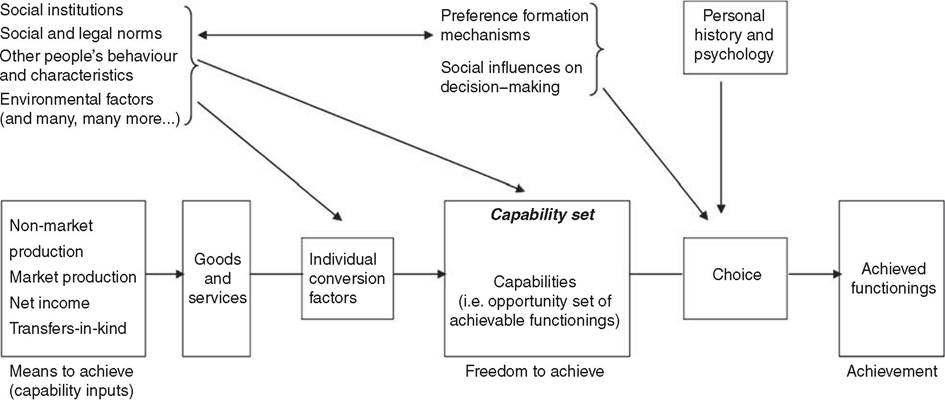
Figure 2.1 A stylized non-dynamic representation of a person's capability set and social/personal context Source: Robeyns (2005, p. 98).
policy, all of which involve a great number of stakeholders and agencies within a multilevel framework.
Although the standard CA and HD paradigm bring new perspectives and insights to many socio-economic and policies issues (Frediani et al., 2014), some elements that are central to political economy are partly, if not fully, neglected. Here again emerges the need to disentangle the unresolved conceptual tension within the CA - identified by Deneulin (2008) - between the individual and the surrounding society or ecosystem. As Bronfenbrenner (1979, p. 41) argues, ‘the properties of the person and of the environment, the structure of environmental settings, and the processes taking place within and between them must be viewed as interdependent and analyzed in systems terms.'
For instance, why is it that the same person may flourish in one territory but not in another? How does an individual's achieved functionings impact - singularly or collectively - upon the socio-institutional context itself, as well as on the territorial provision of goods and services? How are an agent's behaviour and values shaped by territorial conversion factors (e.g. in terms of proximities, actor-network rationality, geographical conditions)? How is individual agency influenced by contextual socio-historical conditions? In other words, how is it possible to simultaneously frame the individual, collective, territorial and multilevel dimensions of human development processes?
This chapter aims to address these interconnected questions by proposing a complementary interpretative framework for analytical purposes, policy design and assessment.
Building on the above elements and Robeyns's (2005) stylized representation of the capability set, the distinctive features of the STEHD framework combine some core conceptualizations of the local development literature with key arguments that have emerged within the human development and Capability Approach, as well as in practitioners' experience and reports.2The first defining feature of the STEHD framework is the centrality of SHD dynamics at the territorial level and the role local polity, politics and policy domains play in shaping the development process and final outcomes for individuals, social groups, local communities and (through trans-territorial relations) nation-states. Indeed, the distribution of resources and power at the local level, the availability of space for public scrutiny and deliberation, the evolution of formal and informal institutional structures and the dynamics of relations of proximity3 are context-dependent elements of any development process. Building on local endowments of resources (endogenous and exogenous), territorial conversion factors shape the capability space of individuals (Frediani, 2010) and can be seen as enabling or disabling factors of SHD for local society. In particular, they can relate to the characteristics of the local system; the resources and facilities of the LDS; the local institutional (formal and informal) and political
structure; power and political struggle; market mechanisms; the acquired capacities to function; and other factors which are typically controlled at national and global levels. Therefore, in order to understand the mechanisms that enable or disable harmonious economic development (Ceriani Sebregondi, 1953a and human flourishing (by interacting with individual conversion factors and influencing the process of choice), attention needs to shift from the agent (the individual, firm, etc.) to the local level where socio-institutional and environmental conversion factors are forged.
This perspective is complementary to the SHD paradigm and strongly linked to the territorial place-based approach, allowing us to explore the conversion factors from the "production side”, as well as the "intermediate outcomes” that expand individual capabilities. The model therefore builds on the processes of collective choice and policymaking, based primarily on local and extra-local political willingness, struggle for power and (un)conscious governance.The second distinctive feature of the STEHD framework relates to the collective and associational essence of local SHD processes. Having previously discussed the central role of collective capabilities and agency (Stewart, 2005; Ibrahim, 2006; Deneulin, 2006; Binder, 2009; Dubois and Trani, 2009; Trani et al., 2011) and of associational form of participation among economic and social agents, it is important to stress the local dimension and determination of these experiential domains here. As they are crucial for individual agency, the capability to be educated, to express one's own opinions, to gather together and associate (among other things), they should be analysed to ensure that the local context constitutes an enabling environment to enhance these opportunities and facilitate virtuous circles of social cohesion and institutional change. Therefore, together with the relevance of individual capabilities and achieved functionings as final outcomes, the framework focuses on non-individual outcomes (such as collective and external capabilities4) and functionings achieved at the territorial/local level as "intermediate outcomes” for individuals and other agents' capabilities.
The third feature of the STEHD framework, which is especially relevant for policymakers and practitioners and analytical accounts of SHD, is multilevel dynamics. The environment surrounding and enabling human flourishing is not limited to a single, immediate setting, but is extended to incorporate trans-territorial interconnections between settings and external influences emanating from upper levels. The complexity, determinants and mechanisms characterizing SHD processes and territorial performances (including socio-economic activities and agents' potential flourishing) are inexorably related to multilevel governance relations and trans-territorial flows, which can affect local endogenous processes. Analysing the coordinates of vertical and horizontal (dis)articulation is therefore essential for understanding systemic relationships of influence, knowledge transfer, learning and the exchange of resources among different stakeholders. For the sake of simplicity, the vertical interrelation among levels is considered to affect the whole territorial and individual dynamics.
These three features are introduced in Figure 2.2, where a stylized diagram of a non-dynamic framework for SHD at the territorial level is delineated. The main difference with the previous diagram (Figure 2.1) lies in the explicit representation of the territorial dimension and mechanisms on the lefthand side of the figure, while multilevel governance relations are vertically sketched at the top of the figure (distinguishing between local governments, national government and supranational institutions). In addition, agency and choice processes are depicted both at the individual (right-hand side) and the collective (left-hand side) levels, along with individual (final) outcomes and territorial (intermediate) outcomes for the capability expansion (i.e. functionings) of different agents.
Finally, the centrality of the socio-institutional context is not only related to the individual conversion factors, capability set and choice behaviours through preference formation and decision-making mechanisms (Robeyns, 2005) but also to the territorial dynamics preceding and shaping the individual processes (Stewart, 2013). For instance, the territorial opportunity set of achievable (as well as non-achievable) functionings is related to cultural traits, social norms and values that characterize local institutional structures. In addition, collective choice and policy decisions are linked to the formal organization and power struggles characterizing territorial society. An interesting example concerns the drivers of social exclusion: what makes people socially excluded is the interaction between individual characteristics and social structures and institutions, resulting in socially included or excluded statuses in terms of economic life, social services and civic participation (among other domains of life). Special emphasis is placed on the role of firms and related outcomes (in terms of profits, wages and environmental actions) in Chapter 6.
The features of the STEHD framework within an evolutionary perspective
Despite its capacity to illustrate more fully the integration between SHD processes at the territorial and individual level, the framework in Figure 2.2 is still based on a static perspective, thus overlooking the feedback loops and interactions that occur within and between each analytical component focusing on the HD of agents, social groups and communities. Integrating the key pillars of an evolutionary perspective (including novelty, complexity, qualitative change, undersigned order, diversity/pluralism) is fundamental to understand the ‘interplay between change and persistence, between the predictable and unpredictable' (Holling et al., 2002, p. 6) that drives the structural transformation of social, economic, ecological and institutional
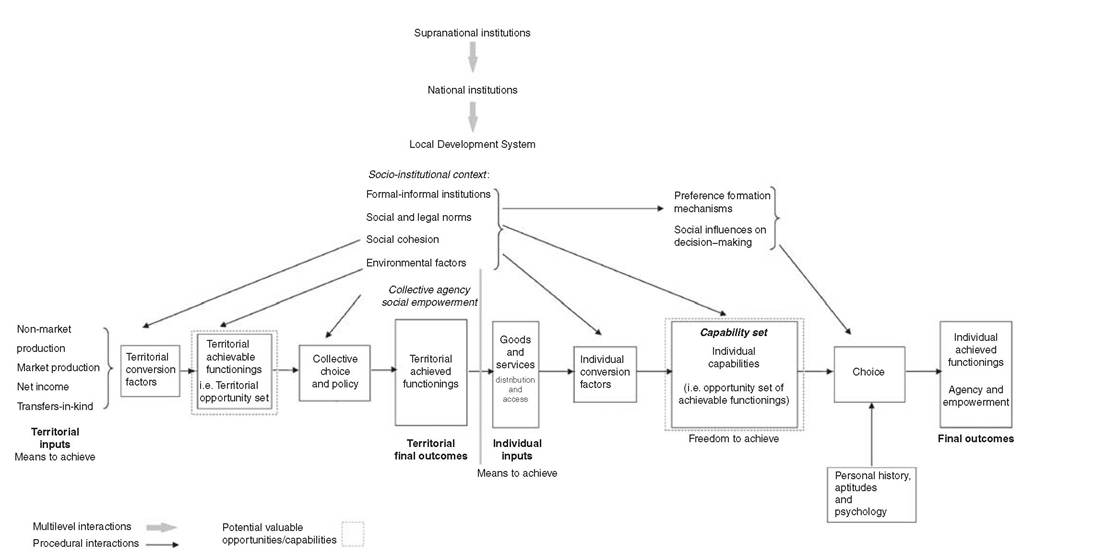
Figure 2.2 A stylized non-dynamic framework for SHD at the local level
systems.5 Nelson and Winter (1982, p. 10) describe the features of this perspective:
The broader connotations of “evolutionary” include a concern with processes of long-term and progressive change. The regularities observable in present reality are interpreted not as a solution to a static problem, but as the result that understandable dynamic processes have produced from known or plausibly conjectured conditions in the past - and also as features of the stage from which a quite different future will emerge by those same dynamic processes.
Such a perspective allows us to overcome the intellectual autarky and indifference to historical and geographical contexts characterizing orthodox equilibrium-based models,6 by engaging with the structural complexity of human societies and by living comfortably in space and time (Vega- Redondo, 2007; Hodgson and Knudsen, 2010).
In order to understand the mechanisms behind overall SHD processes at the local level and to avoid undermining the role of individual and collective agency for socio-economic evolution, it is necessary to take account of the transformative and dynamic processes derived from the achievement of functionings at both the individual and territorial levels. In this respect, Ballet et al. (2011) have developed the concept of “evolving capabilities”. This notion tries to capture the dynamics among three components that underlie capabilities: the capacity/ability concept, the opportunity concept and the agency concept. The dynamic core of evolving capabilities is expressed as feedback loops that reshape the potential capability set of a person and enhance or reduce their agency. These dynamics are central for policy purposes, because they highlight the relation between “potential capabilities” (i.e. valued on the basis of aspirations7), “real capabilities” (i.e. the capability set) and “non-achievable opportunities” (i.e. valued but still not real)8 (Gasper, 2002 and 2007; Biggeri and Bellanca, 2010). Biggeri and Ferrannini (2014) define this last category as the O-Gap (opportunitygap). Building on this conceptualization, the evolving capabilities process can be transferred to the territorial level, where a distinction is made between potential non-attainable functionings and attainable functioning within the territorial society at a certain time.
A fundamental connection with research strands on evolutionary economics and evolutionary economic geography is worth emphasizing. Evolution is defined as ‘an ongoing never-ending interplay of path dependence, path creation and path destruction that occurs as actors in different arenas reproduce, mindfully deviate from and transform existing socioeconomic- technological structures, practices and development paths' (Martin and Sunley, 2006, p. 408). In this regard, evolving capabilities relate to (i) historical evolutionary phases of expansion or reduction through paths of adaptation to changing conditions; (ii) the impact of novelty, knowledge creation and learning processes on economic transformation; (iii) the recognition of innovation in broad terms (social, economic, organizational, procedural, institutional, political, etc) as an engine of development; and (iv) the path dependency and place-based character of most conversion factors (Hodgson, 2001; Chang, 2003b; Boschma and Martin, 2010).
In Figure 2.3, we build on the static model described above by drawing on the evolutionary perspective of SHD at the local level. The STEHD framework emphasizes the main non-linear feeback loops (numbered 1-9) that impact on its different elements.
The first group of feedback loops (1, 2, 3a and 3b) move from local dynamics of basic achievement of territorial functionings (through the conversion of resources and inputs) to the territorial opportunity set and through the collective choice processes and policy decisions, overall influenced by multilevel interrelations of the local system. In particular:
• Arrow 1 depicts how the achievement of specific territorial functionings for local society as a whole boosts processes of socio-institutional changes in the local context, thus modifying the organization of society and the polity, itself.
• Arrow 2 describes the transformation from territorial achievements to the expansion (or reduction) of local resources and services at the disposal of individual agents (people, families, firms, associations, etc.), and how changes in terms of distribution and accessibility add intertemporal and continuous feedback loops.
• Arrows 3a and 3b reflect the impact on inputs and conversion factors following the realization of specific systemic outcomes (e.g. infrastructural development in an industrial cluster). Specifically, Arrow 3a represents the increase (or decrease) in inputs as "means to achieve” for LDS as a whole (e.g. more roads for production and distribution purposes), whereas Arrow 3b denotes the evolution of territorial enabling or disabling factors (e.g. increasing proximity among local agents or accessibility to distant services) that govern the conversion of resources into achievable opportunities.
The second group of feedback loops (4, 5a and 5b) concern the influence of the individual dynamics of capability expansion and achievement of functionings on the collective dimensions of agency, preference formation and institutional change. This derives from the recognition that the individual ‘is viewed not merely as a tabula rasa on which the environment makes its impact, but as a growing, dynamic entity that progressively moves into and restructures the milieu in which it resides' (Bronfenbrenner, 1979,
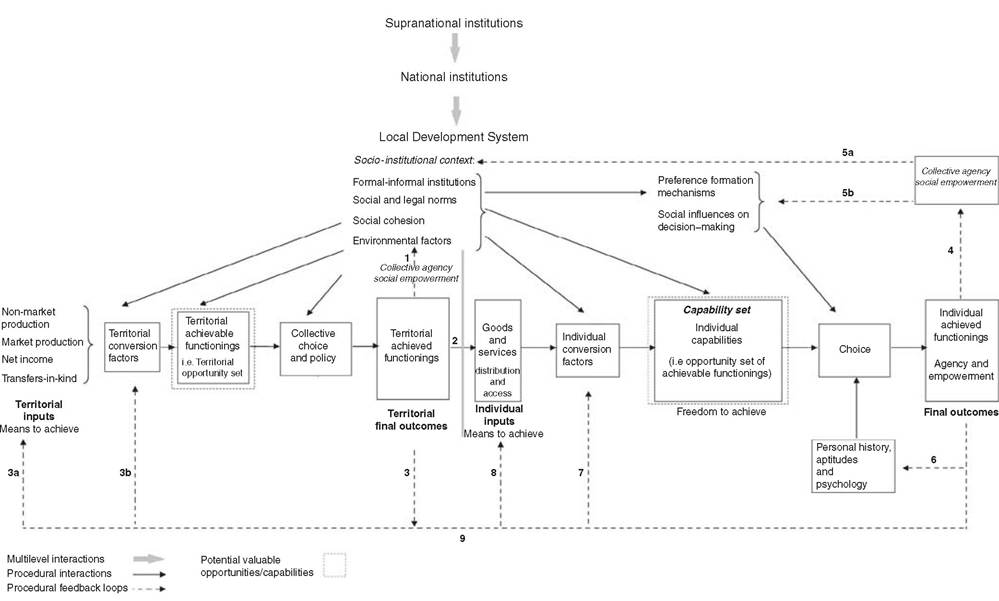
Figure 2.3 The STEHD framework: A stylized evolutionary framework for SHD at the local level
p. 21), with a bidirectional and reciprocal interaction between the individual and local ecosystem. Specifically:
• Arrow 4 shows the possible contribution and value added of people's achieved functionings and heightened agency on other people's capabilities and on collective actions, thus expanding or reducing the collective agency and social empowerment of the groups the agent engages with.
• Arrow 5a depicts the direct feedback of modified collective agency on the socio-institutional context (e.g. in terms of changing social norms and cohesion). For example, an increase in active citizenship within local communities (e.g. fostered by individual educational achievements through enhanced provision of BSS and local public goods, or by the establishment of new community values in places characterized by the widespread presence of organized criminal groups (Natale et al., 2013)) may affect the demand-supply interaction of local public goods and services or may boost the democratization of governance and participation processes.
• Arrow 5b illustrates feedback loops from transformed collective agency and social empowerment on local power relations, preference formation and decision-making processes, opening up possible changes in individual behavioural choices relating to achieved functionings (Klandermans, 1997).
A fundamental connection between these first two groups lies, for instance, in the interaction between the supply and demand of BSS and local public goods (Sforzi, 2003; Bellandi, 2009). Indeed, individual achieved functionings transform - through modified collective agency and social empowerment - preferences and values at the territorial levels, leading to changes in local demand for services and public goods, and thus, if supported by collective policy choices, to the respective adjustment in local supply, which constitutes a territorial functioning and positive feedback loop. For instance, Birchall (2011) and Mori (2014) emphasize the role of community cooperatives in building new models of active citizenship and democratic participation in public services provision.
The third group of feedback loops (6, 7 and 8) relate to the linkages within individual dynamics:
• Arrow 6 describes the feedback of each agent's achievement on his/her personal history, aptitudes and behavioural rationality, through a continuous process of experiential personal evolution, which can be linked to the behavioural economics research stream concerning human judgement and decision-making in contexts of uncertainty (Kahneman and Tversky, 1979).
• Arrow 7 illustrates clear and significant impacts of people's achievement and empowerment on their own conversion factors (e.g. increasing learning capacity through education, increasing the mobility of people with disabilities due to achieved health services and so on), opening up expansion and reduction processes that govern the individual's capability set.
• Arrow 8 shows the increasing or decreasing effect of individual achievements and (dis)empowerment on personal and territorial goods and services the agent has the entitlement to.
Finally, Arrow 9 depicts the overall contribution of the individual dynamics of evolving capabilities and empowerment (Arrows 6, 7 and 8) on the local processes of SHD, which are pushed forward by feedback loops (Arrows 3a and 3b) facilitated by territorial achievements. Therefore, the framework has the capacity to keep together the transformative role of both individual action (Hodgson, 2007b) and collective behaviours (Brown, 2007), identified by Volpi (2014) as central strands of thinking regarding the interaction among social structures, institutions and human action.
Notice that these feedback loops for individuals and their communities correspond to what Nelson and Winter (1982, p. 400) refer to as the ‘three basic concepts for an evolutionary theory of economic change.' These concepts consist of organisational routine (set of ways of doing and determining what to do), search (those activities associated with the evaluation of current routines, leading to modification, fundamental change or replacement) and the selection environment (considerations affecting the well-being of an entity). While the concepts of organisational routine and search are mainly depicted on the right side of the diagram, processes relating to the selection environment are mostly represented on the left side.
At this point, it is important to emphasize that not all the feedback loops described above are necessarily active, with different temporal lags and conditions governing their influence on overall dynamics. For example, it is likely that a specific person, following their achievements, will not contribute to any expansion of collective agency and social empowerment; however, their inputs, conversion factors, capability set and choice processes can still be influenced by the modified collective agency of other individuals as well as through feedback on their preference formation, decision-making and participation in collective action. It is also clear that both fast and slow processes account for change and evolution, depending mostly on institutional sedimentation or reflexivity.
Five simple examples can help clarifying the discussion. Firstly, a healthy girl living in the Taleban area of Swat has almost no chance of being able to go to school, despite her willingness to be educated and to further her participation and agency. In theory, schooling is available, but social norms and fear of the Taleban prevent her from enrolling or attending class (and discourage other women from teaching). The girl is effectively deprived of the capability to be educated; it is not a feasible functioning, although it is considered of high value by the girl herself and by many in the community. Moving from a static to an evolutionary perspective, the activation of several feedback loops (e.g. educated girls and women fighting collectively to change preference formation, social norms and decision-making) and multilevel interrelations (e.g. tailored actions at the local, national and supranational level to increase individual and collective agency) can - either gradually or drastically - foster institutional and cultural change, breaking down deterministic views and building path-dependent and place-based process to promote SHD.9
A second example relates to the living conditions and capability deprivation of people living in territory influenced by the productive performance of a large industrial firm or group of firms (e.g. an industrial cluster). As Bagchi (2011, p. 34) observes, it is necessary ‘to illuminate the ways in which productive forces shape human relations and are in turn shaped by them. Whether this relation is harmonious or conflictual depends on the historical context.' For example, moral concern for environmental protection does not stop at the agent level, but extend to collective cognitive and behavioural processes, which in turn crucially depend on path-dependent class and power struggles. On the one hand, an economistic short-term pollution strategy (concerned with capability deprivation) has no difficulty in being supported within a local system when asymmetric power structures and vested interests trump local well-being and affect local or extra-local economic activity and politics. On the other hand, when power structures are more symmetric, and benefits as well as costs are shared by the whole community, it is more likely that environmental friendly production will take place and generate SHD at the local level (De Marchi et al., 2010).
The third example concerns the substantial modification to territorial health care services required by a people-centred approach that seeks to empower individuals. For instance, Community-Based Rehabilitation (CBR) programs for persons with disabilities (PwDs) in emerging countries can allow for the tailored provision of services based on each individual's needs, rather than standardized supply irrespective of personal characteristics and the local context (Trani et al., 2011; Biggeri et al., 2011b).10 If institutionally supported, a similar health system can lead to wider achievements of individual functionings, as derived, for instance, from a renewed inclusion of PwDs in the local labour market. This would enhance agency and empowerment at the individual and collective levels and also feed back on social norms and cohesion (by reducing stigma, for example). It would also free and expand the availability of resources for market production through greater efficiency of health services and increased productivity of PwDs in the workplace.
A fourth example relates to what Ramazzotti (2010) identifies as the central feature of industrial districts (IDs): that is, social cohesion, defined as ‘the ongoing process of developing a community of shared values, shared challenges and equal opportunity... based on a sense of trust, hope and reciprocity among all [members of that community]' (Jenson, 1998, p. 29). Development processes leading to the achievement of certain territorial functionings, to the expansion of people's capability set, and the enhancement of firms' opportunities, lead to modified preference formation mechanisms and expectations, which in turn may create inconsistencies between the two sub-systems of IDs: the community of people and the population of firms (Becattini, 1990). This may also occur if systemic institutional causes and rigidities prevent IDs from adapting their economic and social environments to changed external conditions (e.g. global competition, technological breakthroughs, aggregate demand). Whether or not these inconsistencies disrupt the district system relate to how far IDs are able to switch to "strategic rationality” (Lombardi, 1994) and social innovation processes, where it is ensured that the enhancement of opportunities for economic growth go hand in hand with the reproduction of social cohesion and the quality of life (Ramazzotti, 2010). Overall, the way that individuals and firms convert IDs' values, knowledge, behaviours and institutions (Becattini, 1990) into social cohesion is crucial for evolutionary paths of SHD at the local level.
The fifth example refers to social exclusion (SE) and the impact of relational features and institutions on deprivations (Sen, 2000b), particularly when SE is treated as a process rather than as a state. Within a meso-level perspective, horizontal inequalities and multi-discrimination (active/passive, formal/informal, actual/past) are strictly related to feedback loops stemming from the achievement of specific territorial functionings and the capabilities of certain individuals and groups. In fact, individuals belonging to disadvantaged groups may be systematically excluded by expanding opportunities, unless gradual processes breaking social exclusion circles are nurtured through collective agency and social empowerment for these groups, together with external influences on the socio-institutional context (e.g. civil rights for gay people in several European countries and for indigenous populations in Latin America).
Finally, notice that feedback loops are not positive or negative by themselves. They may lead LDSs to evolve in line with the surrounding landscape or isolation from the environment they are embedded in. For instance, if a consistent adaptation does not take place, the system may see a depletion of capabilities and a limitation of functionings, in addition to leading to an impoverishment of human and social capital that could also end up putting productivity in crisis (Picchio, 2013). Also, if decisions by strategic actors trigger processes of rupture in territorial economic integration and in the social identity of entrepreneurs, the LDS may undermine collective capacities and identities, replication of perverse mechanisms of "adverse incorporation” and the enhancement of social conflicts among territorial stakeholders.
To conclude, the STEHD framework captures the dynamic character of individual capabilities and territorial functionings through the evolving interaction among resources, conversion factors, agency and achieved functionings at both levels. Nonetheless, the territorial dimension deserves more detailed analysis in order to disentangle how enabling and disabling factors for local development and human flourishing are created, reproduced and enhanced.
2.3