Structural elements of SHD at the local level
At this stage, it is useful to introduce a representation (Figure 1.1) of the four main coordinates (i.e. structural elements) that can support or hamper processes of SHD at the local level: local institutional structure,
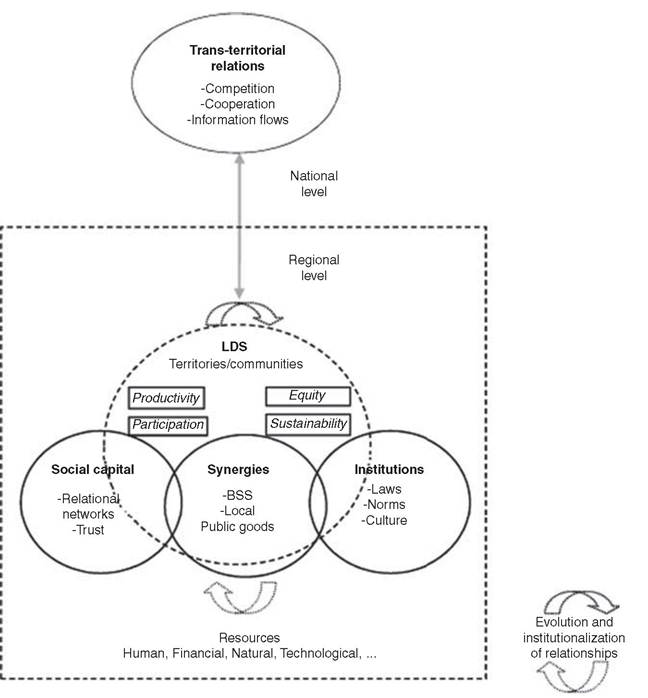
Figure 1.1 Structural elements shaping SHD at the local level
local social capital, synergies among different dimensions of development and trans-territorial linkages.
These elements relate to each specific Local Development System (LDS), defined as a nucleus of social, cognitive, cultural and productive relationships, ‘which are closely linked to the territory and capable of reproducing themselves in the future' (Becattini, 2001, p. 18).In particular, these elements shape the system's interactions among its units, as well as its evolving features and parameters, driving its adaptation and anticipation to changing circumstances in the surrounding environment. The resilience, versatility and capacity of individuals ‘to adapt to, tolerate, and especially create the ecologies' (Bronfenbrenner, 1979, p. xiii) in which they live and flourish is therefore conceived in complex systemic terms (Ostrom, 2010).
A similar stylized diagram is applicable to different territorial systems, not as a one-size-fits-all model, but rather as starting point for a more comprehensive diagnostic tool focused on the geographical, social, economic, institutional and cultural characteristics of each context as primary determinants of an endogenous development process. Assessing these structural elements is essential in order to progressively ‘identify policy targets and locally suited remedies' (Crescenzi and Rodriguez-Pose, 2011, p. 776) consistent with the expansion of empowerment and capabilities, both individual and collective, of local agents and social groups.
Although obviously simplified, such a model takes some steps forward to embrace the complexity of SHD processes at the local level, linking together the four different structural elements analysed below. Although the first three elements are mainly endogenous, and the fourth is strongly transterritorial, they affect and complement each other, articulating both the local and the global dimensions of development.
Local institutional structure
The local institutional structure - composed of instituted interactions (behavioural rules, social norms, cultural customs and trust relationships), organizations, legal frameworks and agents with a certain degree of interconnectedness - is the first structural element of analysis. It plays a crucial role in the evolution of each socio-economic territorial system. It shapes the complex system of incentives and rules - both formal and informal - that govern the interaction between economic and social actors (Nugent and Lin, 1995), and mould individual and collective habits, values, preferences, interactions and actions (Ostrom, 2005).21 According to Hodgson and Knudsen (2010, p. 227), ‘habits are elemental social replicators and form a basis for other social replicators at higher, organizational levels.'
Institutional evolution (Acemoglu et al., 2004; Hodgson, 2007a) implies explicit and direct effects at local level on the behaviour of individuals and social groups, and thus on local development trajectories. This argument is well depicted by Amin (1999, pp. 367-368): the ‘economy emerges as a composition of collective influences which shape individual action and as a diversified and path-dependent entity moulded by inherited cultural and socio-institutional influences.' In addition, ‘prevalent social institutions, together with individual capabilities and interactions, influence the development of social institutions and consequently future possibilities' (Stewart, 2013, p. 10).
Similarly, HD scholars have acknowledged the crucial influence of institutions on people's choices and outcomes, and therefore on the expansion of freedom and on the effectiveness and sustainability of development strategies (Sen, 1999; Dreze and Sen, 2002; Stewart and Deneulin, 2002; Ibrahim, 2009; Deneulin, 2008; Chopra and Duraiappah, 2008; Chiappero-Martinetti, 2009; Stewart, 2013).
In this regard, Sen (1999, p. 142) acknowledges that ‘Individuals live and operate in a world of institutions. Our opportunities and prospects depend crucially on what institutions exist and how they function' and Dreze and Sen (2002, p. 20) argue that ‘a freedom-centred view calls for an institutionally-integrated approach. [There is a] need for thinking in terms of a multi-institution format.'Therefore, we advance an institutional perspective (Amin, 1999; Dreze and Sen, 2002; Rafiqui, 2009; Stewart, 2013) in order to investigate whether the quality of local institutions enables the flourishing of individual and collective capabilities. In particular, it is important to consider how:
• Societal institutions and norms affect the choices people make within any capability set and the behaviour of individuals towards others, thus affecting other people's capabilities (Stewart, 2013, p. 4);
• Institutional mechanisms facilitate associational forms and collective action (Ibrahim, 2006; Anand, 2007) and affect the power and influence of particular groups at different levels;
• The emergence of private and collective incentives aligns interests and strengthens the commitment of local actors;
• Communities anticipate and respond to changing external circumstances;
• Social institutions improve the provision of collective or public goods (Streeck, 1991);
• Local forms of multiculturalism, typical of modern societies, frame human well-being and capabilities (Clark and Hodgett, 2015, forthcoming);
• Institutional reflexivity, learning potential, and social creativity feed and complement each other in virtuous circles (Amin, 1999).
The importance of an "institutionally-integrated approach” (FAO, 1998; Dreze and Sen, 2002) and an enhanced understanding of the role of systemic institutional causes in economic growth and development (Hodgson, 2007a) is therefore primarily important at the local level within a people- centred and opportunity-oriented theoretical perspective.
For instance, social norms are critical in determining behavioural choices - for example, giving symbolic values to certain statuses - which in turn affect capability sets (Stewart, 2013).Social capital in territorial systems
The second structural element of analysis is related to the array of social relations based on reciprocity, cooperation and trust, where these relational networks can either represent an important resource for individuals and social groups or result in perverse mechanisms of clientelism, "adverse incorporation” or discrimination leading to social exclusion. At the community level, the sum and overlap of individuals' relational and experiential networks - built daily within a given society - can represent a crucial asset in solving collective problems, by establishing cooperative practices and reciprocal interchanges able to reduce transaction costs and widen socioeconomic cohesion and trust between local actors (Bellanca et al., 2010). Hirschman (1984) argues that social capital is the only resource that does not diminish or lose value with use; instead, it has the potential to increase continuously, often in an intangible manner.
For example, as Barca et al. (2012, p. 147) observe,
the sense of community is a form of social capital which determines the institutional environment in which development takes place (Streeck, 1991), the capacity to generate consensus and trust, to resolve conflict and to mobilize resources (Rodriguez-Pose and Storper, 2006), the level of provision of public goods (Tabellini, 2010), and, last but not least, the local willingness to pay for development (Bolton, 1992).
Setting aside some of this work and a deeper analysis of different concepts and interpretations of social capital,22 we merely emphasize that social capital has a crucial influence not only on the competitiveness of local economic systems but also in terms of SHD evolution at the local level. Of crucial importance here is Storper's (2005) focus on the interaction between two components of social capital (Putnam, 2000): bonding among similar persons within communities (e.g.
based on ethnicity, religion, class) and bridging between different groups across local society.23 How bonding and bridging interact and change at different spatial and temporal scales in any given economy is ‘what define the substance of the contexts in which actors find themselves' (Storper, 2005, p. 50).As long as it is not directed towards perverse mechanisms of exclusion, discrimination and the protection of rent-seeking interests, social capital appears fundamental in strengthening the empowerment of social groups, favouring the emergence of institutional actors and practices that are able to support SHD at territorial level, and sustain a virtuous and synergic circle of economic growth and social progress. In this respect, social capital represents a strategic asset in promoting multilevel deliberation in public planning and policies (Trigilia, 2001). It may also involve vulnerable social groups in these processes and help to expand their effective economic and social opportunities. Within contexts of non-linear and adaptive interactions among agents and between agents and the environment, it is therefore fundamental to assess whether local social capital facilitates pro-development actions or the replication of perverse mechanisms and the protection of vested interests.24
Synergies and feedback loops between economic and social dimensions
The third structural element is based on the recognition of the existence of an articulated system of synergies and interrelations between arrays of capabilities considered valuable - both intrinsically and instrumentally - by each local community (Streeten, 1994; Haq, 1995). Indeed, in Sen's (1999, p. 37) words, ‘The effectiveness of freedom as an instrument lies in the fact that different kinds of freedom interrelate with one another, and the freedom of one type may greatly help in advancing freedom of other types.'
Consider the social and economic dimensions of well-being. It has been argued that economic progress, intended as real command over resources, can provide the means to sustain a net improvement in HD indicators, while good performance in social outcomes can support and sustain economic growth.
The interaction between these mechanisms can be viewed as a process of feedback loops, which boost virtuous or vicious circles of development for country-level or territorial systems (Ranis et al., 2000; Ranis et al., 2006). Similarly, when looking at basic social services (BSS), it is now widely acknowledged that their complementary interaction (understood as a complex system of interrelations and mutual feedback mechanisms) implicitly operates when each singular intervention is realized (Mehrotra and Delamonica, 2007). Moreover, HD outcomes entail significant feedbacks on BSS provision, as higher opportunities in one dimension (e.g. access to water and sanitation) may enhance the effectiveness of education and health policies and vice versa, with greater corroborative evidence at the local level (Mehrotra and Biggeri, 2007).Analysing the strength of these interrelations and the intensity of the mutual reinforcement process between HD and economic growth in general terms, and between economic and social opportunities, at the meso level appears to be necessary for developing coherent holistic policies to promote individual and collective well-being. The crucial analytical question relates to the capacity of the local system to foster synergies and virtuous feedback circles between social and economic outcomes and between BSS for the sake of creating territorial enabling factors for capability expansion. Obviously, it should be remembered that these processes and synergies generally show their effects in the medium- and long term, with stronger impacts on future generation, depending on the quality of intervention and on the ability of local policymakers and stakeholders to boost virtuous circles.
Trans-territorial relations of LDSs
The increasing economic and social interdependence among territories has a crucial influence on local development strategies and outcomes, which may be affected by external decisions (e.g. MNCs investments), and regulations and standards. These factors are increasingly dependent on external interactions beyond local borders. Indeed, the development of a local system is also based (through links and flows between sectors and territories) on initiatives and actions taken in another place, or by external institutions and agents affecting the system itself.
The fourth structural element of analysis therefore focuses on the influence of the trans-territorial relations within each local system, whose polity (state structures), politics (political mobilization) and policy (policymaking arrangements) are inexorably interconnected to the national and international domains.
First of all, it is crucial to analyse how key features of the globalization process (e.g. delocalization of manufacturing, FDI flows and investment in R&D) produce significant effects on short- and medium-term collective efficiency (the interaction of cooperation and competition) and social outcomes, leading to potential substantial deviations in the trajectory of SHD of LDSs. Indeed, the acceleration of change driven by globalization and the modification of territorial production organizations due to external linkages within global value chains (Belussi and Sammarra, 2010; Goldin and Reinert, 2011) shape contexts with different endowment characteristics (institutions, resource endowments, human capital) and economic and social structures. In short, they produce distinct outcomes for different territories and specific groups of the population.
In addition, we need to consider the strong interconnections among close as well as distant territories in terms of flows of human capital, information and knowledge, financial resources and culture and so on. No territory nowadays is completely isolated and self-sufficient, as trans-territorial interactions, global communities of practice and knowledge communities (Coe and Bunnell, 2003; Bathelt et al., 2004) shape local endowments as well as territorial conversion factors within the processes of knowledge creation, innovation and capability expansion.
The four structural elements at work
Overall, analysing SHD at the local level involves comprehensively assessing whether the use of local endowments of resources in supporting SHD is fostered or hampered by the local institutional structure, local social capital and territorial feedback loops among different dimensions of development with trans-territorial linkages (Figure 1.1). This perspective is necessary to disentangle some issues that are central for a place- and people-based approach to local development policy and intervention (Barca et al., 2012).
The overarching policy objective derived from this perspective is to enable local systems function adequately to promote well-being through the expansion of capabilities (opportunities and capacities), including access to resources and services, the reduction of barriers and social disparities and participation in public scrutiny and deliberation processes. The rethinking of policies along these lines entails a real process of institutional change, which involves gradually removing the most binding institutional constraints to economic growth and social progress (Hodgson, 2007a) and reshaping the incentives favouring a more efficient use of local resources through cooperative mechanisms, social capital enhancement, valorization of relational networks and mobilization of collective actions (Tarrow, 1994; Bellanca, 2007).
In this regard, Dei Ottati (2005, p. 266) calls for "conscious governance” as ‘the capacity to imagine a new feasible path of local development and [... ] the ability to organise a consensus between the various local actors.' This constitutes a sort of "extraordinary concertation” (Dei Ottati, 2002 and 2005) that can lead to institutional innovation, mediation of local conflicts and the reinforcement of a common sense of identity (Ceriani Sebregondi, 1953b). Moreover, the potential commitment of local governments and other local actors can help translate national plans and sectoral priorities into local realities that improve public services and reduce socio-economic differences, thus contributing to more even development processes and to more equal and socially cohesive territorial societies (Harvey, 2000). This argument is undoubtedly related to Evans's (1995) idea of "embedded autonomy”, which Trigilia (2001, p. 439) defines as ‘the autonomy of political action that is at the same time socially embedded at the local level' and considers crucial for contributing to local development. In this view, the high road to competitiveness is not the outcome of the market mechanism, but of a combination of the market and concerted collective action among representatives of the local society. It follows that broad-based forms of local "institutional thickness” include enterprise support systems, political institutions and social citizenship (Amin and Thrift, 1995).
In addition, the notion of synergy implies the need to maintain a holistic and systemic policy approach, separated from the fragmentized and sectoral views of the economic and social territorial context. Although this approach may demand greater effort and multidisciplinary working groups, it potentially leads to better responsiveness of development strategies to the effective needs of local communities, where the consistent interrelation between different dimensions, sectors and actions is central.
The four elements inevitably work on the structural factors governing the pillars for SHD, thus facilitating conversion factors for a people-centred approach based on the following:
• Equity, in terms of political, economic, social and cultural opportunities, as well as distribution and cohesion;
• Participation/empowerment, being an active agent of one's own future;
• Sustainability, concerning equal intergenerational opportunities in environmental, social and economic terms;
• Productivity, making an efficient use of local resources within the production systems.
Equity is, for example, fundamentally shaped by the contextual polity and politics in terms of state structures, power relations, access to resources among stakeholders, institutional architecture, development visions and those territorial “permanences” (Harvey, 1996) constructed out of social and political processes.
Within this view, the classical policy areas of local development scholars (infrastructural development, the upgrade of skills and technology, job creation and systems of innovation, among other things) are not underestimated or marginally supported, but rather interpreted in a different way. For instance: (i) infrastructure development can be fostered in order to ensure equal opportunities for accessibility to services, resources, knowledge and markets to all communities and social groups within territories; (ii) the upgrade of skills and technology can be interpreted in connection with the valorization of traditional skills, capacities and production methods of the local economy; and (iii) connections within territorial systems of innovation can be reinforced by broadening the vision of innovation as context based, and not necessarily technological, in order to include innovative solutions to social and environmental problems of the local society (Bajmocy and Gebert, 2014).
Finally, rethinking policies within this perspective embraces the multilevel dimension and character of development processes. Thus, it calls for strategies to direct the trans-local system of relations and flows towards the enhancement of local capacities, the consolidation of territorial partnerships and the promotion of co-development initiatives.
1.5