Economic Analysis
The course Samuelson taught in economic analysis provides the first evidence of how he approached the subject when he taught it to students who were neither economics graduate students nor specialists in mathematics.
It was a course he had inherited, described in the MIT catalog as:Ec. 17. ECONOMIC THEORY (A). A brief historical review showing the interdependent growth of theory and fact, followed by the general theory of equilibrium under price competition and price monopoly from which will be determined, under the given conditions, wages, rents and interest. Findings will be revalued under conditions which more closely approach reality.50
After Samuelson took over, its catalog entry was modified so that, together with the course he took on in 1942, it was described as:
Ec. 17, Ec. 18. ECONOMIC ANALYSIS (A). A review of the interdependent growth of theory and fact, followed by a study of the general theory of equilibrium under competition and monopoly. Findings will be revalued under conditions which more closely approach reality.
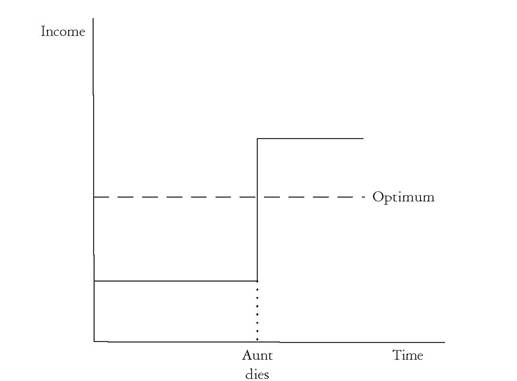
He had changed theory to analysis—the term he was to use in the published version of his doctoral thesis and in his introductory textbook.k A term that—suggestive of a less abstract approach and potentially engaging with the real world and that resonated with the operationalism of Samuelson’s thesis—“economic analysis” was becoming increasingly frequently used in the 1930s and I94os.[35] [36] Though it was a phrase Samuelson inherited from his predecessors, his description of the course as covering the “interdependent growth of theory and fact” reinforced the implication that the ideas under discussion were of practical relevance. Samuelson no longer offered “a historical review,” but his reading list makes it clear that, like Schumpeter, he taught economic theory as a cumulative discipline in which students could learn from the classics, as well as from contemporary writings. Similarly, his coverage of consumer theory began with Adam Smith and the paradox that diamonds cost more than water, even though water is more important for life, failing to point out, as he had done with Marshall, that Smith's ideas on this topic were not original. The confusion he attributed to Smith was resolved with the idea of marginal utility, on which he cited the late-nineteenth-century economists Gossen, Walras, Jevons, Marshall, and the Austrians. The use of a logarithmic utility function was associated with the eighteenth-century writer Daniel Bernoulli; and the distinction between cardinal and ordinal utility, the concept of indifference curves, and the integrability problem were associated with Edgeworth and Pareto, both writing around 1900. He recommended material by his contemporaries Hicks and Allen—including Hicks's Value and Capital (1939b), augmented by Slutsky's recently rediscovered article from 1916, Leontief (on international trade), and Alan Sweezy and Georgescu-Roegen (on integrability). Marshall's Principles of Economics (1920) occupied a prominent place on the reading list, with the whole of Book 3 (“Wants and Their Satisfaction” being assigned, along with five chapters from Book 5 (“General Relations m. Samuelson's course can be described in detail because one of his students in 1943, Elizabeth Ringo, preserved her detailed notes on his lectures. Ringo, a graduate of Swarthmore College, was studying for a master's and, supported by strong references from Samuelson, became an instructor at Wellesley College in 1944. Page references are not provided because I am working from a transcript, in the form of a word processor file, kindly provided by Irwin Collier. of Demand, Supply and Value”) and several notes from the mathematical appendix. The striking feature about Samuelson’s recommendations from Book 5 are the chapters to which he did not direct his students. He omitted from his suggestions the chapters, considered by many commentators to outline the heart of Marshall’s economics, on equilibrium of supply and demand over different time periods, in which Marshall sought to explain his ideas on “normal” values.51 If they confined their reading to the assigned chapters, Samuelson’s students would not learn about the difference between the short and long periods, something to which Marshall attached great importance. They would get a simplified treatment in which problems that could be discussed using algebra were more prominent." Despite the reference to “fact” in the catalog description, it was predominantly a course in economic theory, though it contained some empirical material. The reading list, used for more than one year,52 contained references to The Theory and Measurement of Demand (1938) by Samuelson’s former teacher Henry Schultz, which attempted to measure and test the theory of consumer behavior. Samuelson also recommended an article by the Oxford economists Robert Hall and Charles Hitch (1939), which used data on companies’ behavior to challenge the notion that profit maximization could explain companies’ pricing policies in the very short run (where it was not even clear what it would mean to maximize profits), and a paper by Horst Mendershausen (1939) on the relationship between family income and saving.o Perhaps the most thoroughly empirical reading was a section from the proceedings of the Temporary National Economic Committee on the concentration of economic power. n. Marshall used algebra sparingly because many of the problems to which he attached great importance were too complex to be amenable to such analysis. o. This was directly related to the research on consumer spending that Samuelson was undertaking in Washington, discussed in chapter 19 this volume. concepts that one might have expected to occur, such as basing point pricing and transport costs. One conclusion he drew from such evidence was that marginal and average variable costs were horizontal up to full capacity, and then rose sharply—the “Reverse L-shaped Cost Curve. He told his students, “Empirically, this [constant costs up to full capacity] may be important, since you get MC from AVC which you do know.” The last remark suggests that Samuelson was emphasizing the need to construct “operational” theories—and that he was paying attention to the problem of measuring costs. His lecture on what happens when the demand curve shifts would have provided a natural occasion to discuss operationalism and testability, on which he had assigned readings that included Percy Bridgman’s The Logic of Modern Physics (1927).54 The normal way to present the material would have been to assume that companies maximized profits, and then to deduce that the demand curve rose. Samuelson’s lecturing style was informal: after discussing pure competition, he said he was going to cover other market structures, but he did not get around to them. And he was clearly not focused on making sure that students were able to get the details correct in their notes. The classes appear to have started with the case of pure competition, after which the discussion diverged into a discussion of operationalism, whereupon Samuelson listed three methodological texts where they could follow up on these ideas. Robbins was presumably cited as exemplifying the alternative view, with Bridgman and Hutchison (who argued for the testability of economic theories) representing his own position.p Even though he provided extensive empirical readings and stressed opera- tionalism, Samuelson’s emphasis was overwhelmingly on economic theory. He presented the theory using algebra and diagrams. Though he referred to more advanced mathematics, the algebra necessary to follow the course was p. Hutchison 1938. The garbled way Ringo noted the title of Hutchison’s book, “Hutchinson. Postulational in or. Ec,” makes it clear that Paul must have mentioned it quickly, with no concession to the students, such as writing it on the blackboard. He cited the first edition of Robbins (1932), even though a second edition, which might have appeared marginally less uncongenial to Samuelson’s operationalism, had appeared in 1935. confined to differential calculus, with the occasional appearance of integrals.[37] The course drew on Robinson’s (1933a) diagrammatic exposition of the theory of the firm, and discussed a number of her ideas, such as her coverage of exploitation, as well as on Chamberlin’s (1933) theory with its focus on factors such as product differentiation and advertising, not covered by Robinson. The reading list for the second course on economic analysis included still more applied readings, including two articles on agriculture and one on basing point pricing (a techni4ue used by companies to price products when faced with significant transport costs).r He included John Maurice Clark’s “Toward a Theory of Workable Competition,” perhaps citing the date incorrectly because he remembered hearing Clark deliver it at the meeting of the American Economic Association the year before it was published.55 Significantly, the most applied articles, on the cement industry, railway rates, pricing policies, and a Temporary National Economic Committee monograph were listed only as “optional reading.” Students were also advised to read Clark on the economics of overhead costs, articles on the location of industry, and something on the shoe industry. The added references to Henry Simons’s A Positive Program for Laissez-faire (1934) and to Simons’s review of Hansen’s book on fiscal policy may indicate that Samuelson allowed himself to wander from the syllabus and discuss broader issues of topical interest. Samuelson’s discussion of dynamic problems illustrates his willingness to discuss problems that could not be analyzed using mathematical methods. Companies would know that demand fluctuated during the business cycle and uncertainty about future demand conditions might cause them to operate at less than maximum efficiency. For example, companies might choose not to build enough capacity to cover their peak level demand because doing so would mean that some of their capacity would stand idle most of the time. The result of this investment strategy would be shortages, fueling speculation, but it was nonetheless rational for companies to limit their activity in this way. Samuelson was arguing that there was a speculative element involved in monopoly, the operative factor being fear of underutilized capacity. When he turned to General Motors, he argued that average variable costs were considered constant and that a markup of 30 percent on the book value of the plant was added to cover overhead costs. This shows that Samuelson was incorporating in his lectures ideas about cost structures and company behavior that reflected empirical work being undertaken in the United States and, to a lesser extent, in Britain, even though they conflicted with conventional theories of the firm as expound by Robinson and Chamberlin. Companies did not operate in a world of the U-shaped average cost curves described in many textbooks. Given the importance of the topic in economics after the Second World War, it is significant that Samuelson covered general competitive equilibrium. His reading list included Gustav Cassel's Theory of Social Economy (1923), the book that contained a simplified version of Walras's general equilibrium system, to which Aaron Director had introduced him when he was an undergraduate. He also recommended George Stigler's Production and Distribution Theories (1941), a book on late nineteenth-century economics, based on the dissertation he had been writing when Samuelson had been in Chicago. Perhaps more significant, he cited the German-speaking economists who had sought to provide rigorous proofs of the existence of general equilibrium in systems that were based on the one provided in Cassel's textbook, mentioning Abraham Wald, John von Neumann (with whom he had clashed at Harvard the year before), Heinrich Stackelberg, Karl Schlesinger, and Oskar Morgenstern. It is not clear how much students would have been expected to read of these, in that much of this literature had not been translated. Citing Oskar Morgenstern's (1941) review of Value and Capital, Samuelson made the point that taking account of this German literature might have saved Hicks from several errors, including the claim that having the right number of equations ensured that a system had a solution—a point on which he cited both Wald and von Neumann. Samuelson exposed the students to a range of methodological views. He started with Jacob Viner, who was skeptical of the use of mathematics and who, echoing Marshall, saw economics as being like biology rather than mechanics. In expressing such views Viner would have been echoing Marshall. He gave three reasons why economists might hold Viner's view: people were fascinated by psychology, which caused them to become cranks; the social sciences deal with life and therefore need different methods; and different methods are needed because society is “organismic.” In contrast, Samuelson’s own view was that biologists used roughly the same methods as those in other disciplines, though they were perhaps less exact. In expressing this view he would perhaps have been thinking of the work of Lawrence Henderson and his recent correspondence with Alfred Lotka, who used mathematics to analyze population dynamics. One difference was that though biologists used the same methods, there was “more intuition, (cf. doctor-snap judgment) practical application, than theory.” In other words, though biologists (and doctors) might of necessity rely more on intuition, this was essentially rushing to conclusions and did not involve any fundamentally different method. Samuelson also covered capital theory, including Knight’s critique of the Austrians, talking in detail about production and factor prices, sometimes too fast for even a bright student to understand.56 Given its relation to Keynesian economics and the work he was doing on consumption, it is interesting to note that capital theory was the heading under which he discussed saving and consumption. Using a diagram (see figure 16.1), he illustrated optimal consumption for someone who had an uneven income stream, caused by an inheritance. The optimal strategy would be to borrow money that could be repaid on the aunt’s death, making it possible to have a constant lifetime consumption (with the marginal utility of consumption the same in every year). Figure i6.i Consumption over time. Samuelson went on to discuss what the consumer’s budget constraint would look like if it were possible to borrow and lend at a constant rate of interest, if it were possible to lend but not borrow, and to borrow but not lend. This was tied into a discussion of time preference (the consumer’s preference for present over future consumption) and whether the rate of interest could ever reach zero—topics that Knight and the Austrians had debated. In the 1950s, this view of consumption as smoothing an irregular income stream—associated primarily with Milton Friedman, Albert Ando, and Franco Modigliani—was to become an important element in macroeconomics, linked not to the theory of capital but to the Keynesian theory of income determination. Samuelson rapidly settled into his new academic home. The department was small but free of the animosities that made life difficult at Harvard. Though its focus was teaching, its research program was being developed and Samuelson was integrated into it from the beginning. For the first two years he appears to have been given a light teaching load, and though in 1942 he had to take on new courses, by then the nation was at war. Suffering from hypertension, and anxious for his health after his father’s death, he was convinced that if he were drafted he would be deemed medically unfit for military service. Concerned that he might not have long to live, and anxious to justify his draft status as someone in an occupation necessary for national defense, and not be classified as medically unfit for service, he threw himself into his work.s Not only did Samuelson teach a course that revealed familiarity with a very broad range of literature—a task that would have been enough to keep most new assistant professors fully occupied—his research also continued unabated. As one might expect from someone who espoused operationalism so forcefully, he turned to statistics, developing his knowledge of theoretical statistics and getting involved in data analysis. Simultaneously with that he became involved in working out what came to be known as “the new economics” (the theory of income determination)—work that made use of s. On June 9, 1941, his draft status was registered as 2B. His status changed back and forth between 2A (in necessary civilian occupation) and 2B (necessary to national defense), but it is hard to connect the dates to changes in his activities. Either there were changes in the way MIT employees were classified, or the changes to his classification reflected changes in his duties within MIT that have not been recorded, such as when he was or was not employed in training military recruits. His family have noted that he was desperate not to be classified 4F (physically, mentally or morally unfit for service). contacts he made by entering government service as a part-time consultant to the National Resources Planning Board. He also embarked on revising his doctoral thesis for publication. Given the level of his commitments, it is not surprising that this proved a long, drawn-out process that was not completed until the war was virtually over.