William Stanley Jevons
5.2.1. Logical calculus in economics
In 1874, after many years of work, Jevons published The Principles of Science, a powerful treatise on formal logic and scientific method destined to replace J.
S. Mill’s System of Logic (1843), a work Jevons attacked as ‘an extraordinary tissue of self-contradictions’. Even though, in the Principles, Jevons did not intend to concern himself with the applications to the social sciences, the ideas, and above all the logical-analytical tools, that he developed there constituted the spool around which the whole of his economic works are wound. It is possible, therefore, to read in the Theory that economics belongs to the class of sciences which ‘besides being logical, are also mathematical’ (p. 80), and that ‘our science must be mathematical simply because it deals with quantities' (p. 78).In the field of economics, Jevons explicitly linked himself to Bentham. He wrote in the preface of the Theory that Bentham’s ideas were ‘the starting point of the theory given in this work’ (p. 44) and later: ‘In this work I have attempted to treat economy as a calculus of pleasure and pain, and I have sketched out... the form which the science... must ultimately take’ (p. 44). These premises brought him to the conclusion that ‘value depends entirely on utility’ (p. 77), a point of view which is the opposite to that adopted by most of the classical authors. Here value stands for price. The starting-point for Jevons’s analysis is the exchange process. Only two characteristics define individuals as economic agents: that subjects derive utility from the consumption of goods, and that the economic agent acts on the basis of a rational plan aiming at the maximization of utility. ‘To satisfy our wants to the utmost with the least effort... in other words to maximize pleasure, is the problem of economics’ (p. 101).
Jevons considered utility not as an intrinsic quality of an object but as the sum of pleasures its use allows.
This meaning of ‘utility’ had begun to be fairly widely accepted quite a while before Jevons; it is even to be found in Bentham, who uses the term in the sense both of a physical and of a psychological attribute.It is difficult to say whether Jevons, who had a deep knowledge of Bentham’s works, was aware of this ambiguity; but it is a fact that, by giving an old term a new meaning, he contributed to the creation of a troublesome source of confusion. The confusion is particularly evident in the way in which Jevons faces the questions of the measurement and comparison of utility. On the one hand are assertions such as ‘I see no means by which such comparison can be accomplished.... Every mind is thus inscrutable to every other mind, and no common denominator of feeling seems to be possible’ (p. 85). On the other hand are several passages in which Jevons expresses the opposite view, that utility is a quantity which can be measured in a cardinal sense. We will see later which and how many problems were caused by this ambiguity.
Naturally, Jevons did not overlook production and the accumulation of capital; but when dealing with questions relating to these subjects he adopted the same conceptual apparatus and, above all, the same base orientation he had used for the theory of exchange. The essential element of his contribution to this subject is his special interpretation of the law of decreasing returns, an interpretation he put forward in his treatment of rent in Chapter 4 of the Theory.
In studying agricultural production, Ricardo had observed that on a given plot of land it is possible to employ alternative quantities of labour assisted by other inputs, agricultural equipment, fertilizers, and so on. Ricardo maintained that it was possible to vary the proportions in which land and ‘assisted labour’ (i.e. labour plus capital) are employed. In this way he reached the following law: the increases in production resulting from the use of successive doses of assisted labour on the same quantity of cultivated land will first increase and then decrease.
Jevons introduced two subtle changes into the usual interpretation of the law. First, he downgraded the distinction between the extensive and the intensive case, emphasizing the latter. The classical economists, who were rather more interested in the explanation of rent than that of the prices of goods, had focused more on the extensive case. The intensive case had also been considered by them, but not without reserve—for the simple reason that, while the different productivities of plots of different quality are directly observable, the marginal productivity of a dose of input implies a change in the situation to be observed, and therefore only represents a hypothetical increase in output.
Second, the shift of interest towards the intensive case also led to an important change in the method of analysis: the reasoning had to be undertaken in terms of hypothetical rather than observable changes, and this contributed to giving credit to the thesis of symmetry between land and the other inputs. Two notable consequences were derived from this thesis:
(1) The substitutability between land and assisted labour was extended from agricultural production to all types of production, even to those with no direct input of land.
(2) The substitutability was extended to all inputs, whereas for the classical economists the substitutability between land and assisted labour presupposed a strict complementarity between labour and equipment.
A final point should be mentioned. Jevons dedicated a great deal of attention to the problems of economic policy and, in particular, to the questions of social policy. In his last book, The State in Relation to Labour (1882), and in the collection of articles published posthumously in 1883 with the title Methods of Social Reform, he expressly indicated the principles that, according to him, should have guided State intervention in the economy. It is not surprising, given his starting-point, that Jevons arrived at the conclusion that the natural state of a market economy is social harmony and not class conflict.
‘The supposed conflict between labour and capital is an illusion’, he wrote in The State in Relation to Labour (p. 98); and then, appealing to a rather unclear notion of ‘universal brotherhood’, added: ‘we ought not to look at such subjects from a class point of view, [since] in economics at any rate [we] should regard all men as brothers’ (p. 104). Jevons admitted that ‘workers are not the capitalists of themselves’ and that this increases the complexity of the problem, since the capitalists ‘come to represent a distinct interest’. However, he maintained that competition would resolve the possible conflict of interests between the two sides, as it would cause capital to be solely remunerated at the market rate of interest, while the worker would receive, in the last instance, only ‘the value that he has produced’.Jevons’s attitude towards trade unions is interesting—a severely critical attitude but not thoroughly hostile. On the one hand, he approved of the idea of trade unions acting as friendly societies in the search for better conditions for their own members; on the other, he fiercely opposed any attempt to fix wages by collective bargaining, because this would have destroyed the competitive mechanism. It was the acceptance of these two principles that led Jevons to the naive conclusion that workers who wish to reduce their hours of work should also demand a lower wage.
Jevons obviously criticized the Ricardian theory of the inverse relationship between profits and wages as ‘radically fallacious’, wishing in this way to demolish the theoretical foundation of class struggle. The Theory is full of condemnations of Ricardo and Mill. For example: ‘that able but wrongheaded man, David Ricardo, shunted the car of economic science on to a wrong line—a line, however, on which it was further urged towards confusion by his equally able and wrong-headed admirer, John Stuart Mill’. On the other hand, the book is full of praise for Malthus, Say, Senior, and Bastiat.
5.2.2. Wages and labour, interest and capital
Jevons’s theory of the determination of the labour supply is also based on the utilititarian foundations of the theory of choice. This aspect of his analysis is one of his most notable achievements. And if it is true that it has contributed to placing Jevons in the top bracket of the ‘great’ figures of marginalism, it is also true that it has led to a certain undervaluation of his analyses of capital and interest, analyses which are often seen as a mere by-product of the ‘grand theory’ of choice. However, this opinion is, at least in part, unfounded.
The theory of the labour supply is based on the assertion that labour, both manual and intellectual, is an ‘unpleasant' activity for the individual, and is undertaken only because of the greater consumption it allows. This observation may hold a grain of truth, but even today it appears, to a disenchanted eye, anything but evident outside the utilitarian framework in which it was conceived.
In Jevons’s theory, the sign of the marginal utility of labour is very clear: work gives disutility or negative utility, and in particular a disutility increasing with the amount of labour supplied. Jevons added to this hypothesis another, equally strong one: the worker acts autonomously, works with his own means of production, and does not depend on the employer; which implies, among other things, that the amount of labour supply is perfectly divisible and not subject to discrete changes, as is the case with dependent labour, where a contract normally fixes the hours of work. The hypothesis of perfect divisibility is essential for the application of marginal calculus, which requires infinitesimal increases of the quantities. Well aware of the ‘power’ and the limits of his hypotheses, Jevons distinguished between the subjective productivity of labour, which is measured in terms of the ‘psychophysical potential’ used by the worker in his activity, and the objective productivity, measured in terms of the hours worked.
Obviously, the former allows for the qualitative differences of labour in terms of psycho-physical effort to be taken into account, but makes it impossible to measure them at an operational level; the latter, on the contrary, requires the qualitative uniformity of labour and has the advantage of measurability.On the basis of these hypotheses, the application of marginal calculus produces the result that the quantity of work supplied is that for which the marginal benefit derived from the remuneration of labour equals its marginal disutility. The most interesting case is the one in which an individual is able to produce more than one good. Here it is necessary that the individual earns the same marginal benefit from each activity, and consequently that he receives the same marginal disutility from each of these. But this implies that, at least in the long run, individuals will tend to exchange goods according to a ratio equivalent to that of the marginal productivities. In the long run these should level themselves out, so that all the individuals who are working in a certain trade continue to do so. Such productivities must also be expressed in subjective terms. In this, the condition of equal marginal disutilities in the different occupations becomes an important link between the utilitarian theory of exchange and the theory of labour supply.
The mere formal reference to the rules of marginal calculus is not enough to make Jevons’s theory a ‘marginalist theory’ in the deepest sense. It is known that the basic hypothesis under which marginal calculus is applicable to labour supply is that the level of utilization of all the factors of production other than labour is kept constant. Thus, it is necessary to clarify the role played by the other factors of production in Jevons’s system. By doing this, one may discover that the widespread idea that Jevons’s theory of capital is only a by-product of his theory of the labour supply is, in fact, unfounded.
Let us first consider the case of land, already mentioned in the previous section. Is it possible to determine rent as the remuneration of a productive activity, according to the marginalist principle, under the hypothesis of constancy of the level of utilization of the other factors? To be rigorous, the extensive case should be considered in which the amount of cultivated land is progressively increased. Jevons did deal with this case; but he focused more on the intensive case, in which the increasing amount of a given factor, labour, for example, is applied to a fixed plot of land. The intensive case represents a type of ‘proof ’ of the theory of the labour supply, in that it constitutes an application of it.
Now, as long as land has no alternative uses, Jevons’s theory works perfectly: the law of decreasing returns implies that labour will exhibit a decreasing productivity as a function of the intensity of its application. Since all labour is remunerated on the basis of the disutility of the last dose applied, a surplus will arise over the preceding doses, whose productivity is higher and disutility lower; and this surplus, to the degree to which the worker is also the landowner, is resolved in rent. In this way the theory appears to be coherent with the preceding one: intensive rent is explained in terms of the productivity of labour. But what happens when land has at least one alternative use?
In this case, the rent becomes an element of the cost of production, and this is in obvious contrast with the view of Ricardo and the other classical economists. In fact, in the preface to the Theory Jevons wrote: ‘but when land capable of yielding rent in agriculture is applied to some other purpose, the rent which it would have yielded is an element in the cost of production of the commodity which it is employed to produce’ (p. 70).
In other words, the opportunity cost of the use of land becomes an essential element in the definition of rent, and with this the theory of the labour supply is no longer sufficient to explain the level of rent. Another ‘piece’ of theory is necessary, one which is independent of the theory of the labour supply. And here the theory of capital appears on the scene.
Jevons considered capital, prima facie, as an aggregate of heterogeneous goods evaluated in monetary terms. But he then endeavoured to reduce it to a real magnitude. On the basis of his observation that capital consists in the subsistence fund necessary to remunerate labour during the production process, he tried to measure it in terms of the amount of time the fund is tied up in production.
Adopting the simple capitalization formula, he assumed that labour is invested uniformly over time, in other words, that the same amount of labour, l, is employed each year. By assuming that the production process lasts n years and that the wage is equal to 1, the amount of capital can be defined, in this approach, as L = ln, which coincides with the amount of labour employed over the entire investment period.
On the other hand, an average period of investment is defined as.
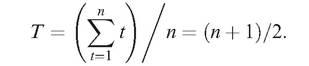
If, for example, the production process lasts n = 4 years, the average investment period is:

Jevons then calculated the investment amount, K, by multiplying the amount of capital by the average investment period 
He held that it is possible to increase production by increasing the amount of the investment, or by extending its average period. This is the first appearance of the concept of the marginal productivity of capital which was later taken up again by the Austrian school.
The ‘beauty’ of the concept is that capital is reduced to a homogeneous quantity measurable in terms of units of time. The production factor called ‘capital’ is reduced to the ‘time’ factor. In equilibrium, the interest rate, r, will coincide with the marginal productivity of capital and can be considered as the ‘just’ remuneration for the productive contribution of time. The reverse side of the coin is that this theory is valid only in the hypothesis of simple capitalization. If the compound capitalization formula is applied, as is correct in a capitalist economy, the amount of capital resulting from investing l units of labour n years ago is:
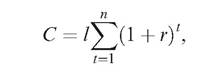
and cannot be considered independent of the interest rate. We could no longer refer to the marginal productivity of capital as a simple expression of the physical contribution to production of the time factor.
Jevons had perceived the existence of this problem, but was unable to arrive at the inevitable theoretical consequences, of which the most important is that the marginal productivity of capital cannot be determined independently of the interest rate, so that this cannot be accounted for as remuneration for the physical productive contribution of capital. Almost a century was to pass before economists came to accept this conclusion. The problem was finally solved only in the debate on capital theory in the ‘sixties of the following century.
5.2.3. English historical economics
The disintegration of classical political economy in the 1870s and 1880s is demonstrated by the fact that the marginalist criticisms of it were not isolated. In this period an increasing number of economists attacked the classical theoretical system, and this gave rise to a multiplicity of alternative theoretical directions: the socialists (of which we should remember, besides Marxism, Fabianism in England, ‘agrarian socialism’ in America, the ‘Christian socialists’ and ‘chair socialists’ in Germany), the institutionalists, and the historicists. Here we will focus on the last group. We will discuss Schmoller and the ‘young German Historical School’ later, when we will also show that the historicist polemic against Menger implied an attack on political economy tout court, rather than on the specific marginalist theoretical system. It was to economic science in general that the historicists attributed the vices of ahistoricity, deductiveness, abstraction, and one-sidedness.
It is interesting to note that in this period a similar attack was also taking place in England, the home of classical orthodoxy. The English historicists
were less involved en philosophe than the Germans, but their criticisms were no less profound or radical. Strongly influenced by the Comtian idea of a unified social science, the English historical critics not only produced an excellent critical-methodological literature, but also opened up interesting avenues towards other fields of social research, especially sociology and economic history. We have already mentioned Richard Jones, a historicist who was a contemporary of Ricardo. Here we will consider the three most important English historicists of the following generation: Thomas Edward Cliffe Leslie, John Kells Ingram, and William Cunningham.
Leslie greatly appreciated Smith’s use of the inductive method; however, he denied the universality of the so-called ‘natural laws’. He also criticized the tendency to base economics on the simple assumption that individual behaviour is solely motivated by the thirst for wealth. Finally, he argued, acutely, that the whole of classical political economy presupposed two badly understood, yet fundamental, hypotheses: those known today as the hypotheses of complete information and perfect foresight. The validity of the classical arguments with regard to the uniformity of the rates of wages and profits, and therefore the validity of their theory of natural prices, are based on these hypotheses.
Turning to Ingram, he had argued that classical political economy was based on a type of abstract reasoning that completely ignores reality, as well as on an incorrect deductive method. Deduction, according to him, should be used only to check the results of induction and not to produce general theories from arbitrary assumptions. If they had used the correct method, the classical economists would have realized that their theories were valid only for a specific historical period.
Cunningham’s criticisms of Marshall also took this direction. It is worth mentioning them here because they show a change of target from classical political economy to neoclassical economics. Obviously, the latter was much more deserving of historicist criticism than was the science of Smith and Mill. Cunningham simply accused Marshall of using economic history in an incorrect way: not for acquiring knowledge by observing facts, but only for surreptitiously confirming truths obtained in a speculative way from a priori premiss.
5.3.