Effective Advocacy
Most people would argue that central to an advocate’s role is their ability to construct arguments. However, as we have seen, an advocate’s skill set is diverse and argument construction is only one part of this.
An advocate will take a focused, measured and analytical approach to case preparation to lay down the foundations for their eventual appearance at court. Being able to effectively communicate that case strategy is imperative. Keeping an audience’s attention allows an advocate to impart information in a way that is understood by an audience and ensures key messages are picked up by that audience. A listener can be easily distracted and so keeping people engaged requires personable skills as well as adhering to certain formalities. In the next section we will consider some tips on how to communicate effectively with an audience in a court setting.3.5.1 Know Your Audience
It is important to adjust your presentation skills according to your audience. For example, the client will want information presented in a simple and clear way and for complex ideas or legal terms to be explained. A judge will expect legal arguments to be presented with reference to case law and other forms of legal authority. Whilst you can assume some prior understanding of the case by a judge you should always check whether the judge would like a summary of the facts or to be reminded of the facts of cases.
You may employ different questioning techniques when questioning witnesses to elicit important facts, acknowledgements and concessions that are important for your audience (judge/jury) to hear. Your style may depend on the issues in the case and the category of your witness. For example, are you questioning your own client, an opponent or a witness? Each may require a different approach.
As a general rule, questioning usually involves mixing ‘open questions’ (where the subject is allowed to tell their story freely) with ‘closed questions’ (designed to elicit a ‘yes’ or ‘no’ response).
See below for examples:Open Question - “can you tell me what happened on the night of the alleged rape?” Closed Question - “was the defendant there on that day?”
During a trial you will usually use a mix of open and closed questioning during your examination of witnesses.
You may, however, communicate through arguments rather than questioning and you will need to adjust your style as the emphasis is then on logical structure and content.
Let's compare the different approach that you might take when communicating with a judge, client and general witness in court:
3.5.1.1 J udge
If you are leading on the presentation before a judge in court (because, for example, you have made the application) then your presentation would usually follow the seven steps shown in Figure 3.5.
The judge is your audience and the communication is direct rather than observed (as in the case of a jury). Your communications with a judge will always be respectful and formal, for example “if it may please your Honour...”, or “may I have permission to move to my next submission, Madam?”. We will explore the direct communication structure in more detail in Chapter 4.
3.5.1.2 Client
At trial, you will use a mix of open and closed questioning for a client who is also a witness and the main questioning will take place as ‘examination-in-chief' and allow
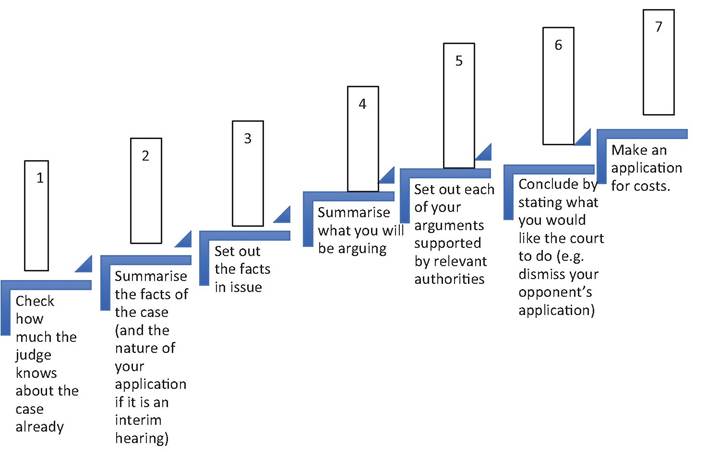
Figure 3.5 Steps to a Good Presentation.
the witness to tell their own story (see discussion in 3.6.1 ). You should ensure that your questioning helps you to elicit the relevant information. This is information that you will need to know in order to progress the client's case in court. For example, in a criminal case, your questions should elicit sufficient information to enable you to assess the following:
| Areas for Questioning | Reason |
| Plea | If the defendant pleads not guilty there will be a trial, if the defendant pleads guilty then matters can move swiftly to sentencing. |
| Severity of offence | This will determine the venue for trial. ‘Summary' offences (minor nature) will be heard in the Magistrates' Court. ‘Either way offences' (medium severity) can be heard in either the Magistrates' or Crown Court. ‘Indictable offences' (serious cases) are heard only in the Crown Court. |
| Evidence | This will help you to determine what case management directions you will need from the court, e.g. use of expert evidence, specific disclosure of evidence from the prosecution, etc. |
| Personal circumstances | This information will be needed for sentencing, particularly when dealing with a ‘plea in mitigation' to try to reduce the possible sentence. We will look at this in more detail in Part B, Chapter 7. |
3.5.1.3 Witness
Your approaches to questioning a non-client witness will differ. This is because you are focused on the disputed facts and the evidence that is needed to prove or disprove those facts to the relevant standard of proof.
| Areas for Questioning | Reason |
| Undisputed facts | This enables you to set the scene and to relax the witness into the story and introduce uncontentious points to the judge/jury. |
| Disputed facts | These facts require proof to the necessary standard (beyond reasonable doubt in criminal proceedings or on a balance of probabilities in civil proceedings or ‘reverse burden' criminal situations). Through crossexamination you can give credence to your client's version of events by challenging the truthfulness, accuracy or credibility of the opponent's version of events. |
| Evidence | These are your tools of proof and help to support or challenge the disputed facts. As discussed in Chapter 2, evidence may come in the form of oral, documentary or real evidence. |
| Personal circumstances | This information may help with some of the rules of evidence, for example, is the witness to be regarded as competent or do their age or physical characteristics impact on their competence? Perhaps the witness requires a ‘special measures' order to be made because they are a vulnerable witness. We will discuss this in more detail in Chapter 4. |
3.5.2 Oral Presentation
As stated earlier, effective speaking is an important part of communication. Becoming a good oral communicator is not just about the choice of words or how these are expressed. Communication is a combination of verbal and physical signals. To command the attention of others you need to be heard not just by using your voice but also through the display of positive body language that reinforces your message. Think about the content needed in your speech to get your message across. You will need to adjust the style of your language and the level of formality used depending on your audience. Here are some aspects of oral presentation that an advocate will need to consider:
3.5.3 Use of Voice
Language is important so you should choose your words carefully and avoid using slang or uncommon terms. Using short sentences and avoiding irrelevant information will ensure that your audience (the judge/jury/your opponent) can concentrate on what the essence of your arguments is and how the evidence supports your case.
It is important to keep your voice loud enough so that it can be heard by others. It is also important to speak with intonation (the rise and fall of your voice). This allows a listener to follow your messages and remain engaged with what you are saying rather than become distracted or bored. You may have to adjust the volume of your voice depending on room size and the number of people in a room. Build in pauses in between sentences as this will help to emphasise the information that you want to get across.
3.5.4 Content
Always tailor the content of your speech to your audience. Ask yourself how much your audience knows about the subject already and what information you need to get across and why. In particular, pay attention to the tone that you will use. Will it be friendly, formal, informal or empathetic? If you are explaining difficult concepts to a non-specialist audience then be careful to use short sentences and repeat key information to reinforce its importance. Build in pauses to give your audience time to assimilate the information.
Sometimes difficult factual or legal content can be best explained by using diagrams and other pictorial representations.3.5.5 BodyLanguage
Your appearance and the way you behave can also have a bearing on how other people perceive you. How you deliver your message will ensure that your oral presentation skills are effective and enable you to obtain the respect and trust of your audience. You should always appear confident and hide any nerves. This can often be achieved by placing one hand over the other so that you remain still when sitting and avoid fidgeting. If you are standing, then you may find it easier to place one hand behind your back to control nerves and avoid gesticulating with your hands which

can be distracting. Holding your hands either in front of you or behind you will also prevent fidgeting or shuffling of papers.
Using visual cues such as hand gestures can be helpful if kept under control as it will also allow you to emphasise your points. You should be careful however not to overuse the body language, as this risks your audience watching but not listening. Good eye contact with the judge is essential to communication as it will establish a ‘communication intimacy' which you will need to take the judge through the importance of what you are saying.
Using your body as a way to make positive affirmations (e.g. nodding your head, facial expressions) also shows that you are listening and that you are hearing and understanding what is said to you. Being able to empathise by seeing things from another person's point of view is also an important part of good communication. Ensure that you maintain good eye contact during a conversation or a presentation as this helps to create a bond of trust between you and the listener or between you and other speakers.
Try to use the following positive body language rather than the negative body language outlined in Figure 3.6.
Court etiquette also requires that an advocate is smartly dressed as appearance also acts as positive body language by suggesting a degree of authority.
3.5.6 Persuasion
This is the art of leading others towards your point of view. This can involve a form of storytelling or ‘rhetoric' (eloquent speaking) whereby you gain trust by giving credible information and aligning your purpose with that of your audience (to see justice done).
Aristotle in his work ‘Rhetoric', divided the methods of persuasion into three categories, shown in Figure 3.7.
As an advocate you should therefore bring ‘presence', ‘emotion' and ‘proof' to your performances in court.
Good presentation is also linked to being assertive and standing up for what you believe in. This will enable you to be more persuasive. However, as a rule, advocates should avoid giving their own opinion. You should therefore work simply with the facts and the law. You should also avoid repetition. You can instead emphasise important points by building pauses into your speech to allow the point you have made to be heard and assimilated by the judge.
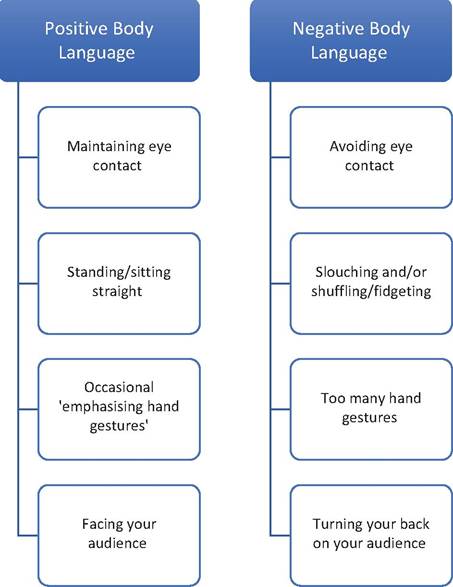
Figure 3.6 The Essentials of Body Language.
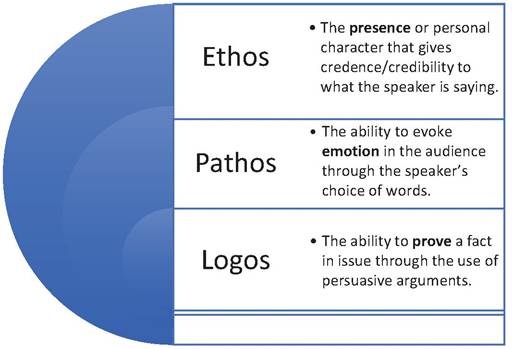
Figure 3.7 Aristotle's Method of Persuasion.
3.5.7 How to Formulate Legal Arguments
Whilst presentation is important, the quality of the content is essential because it ensures leadership and dominance in the courtroom to achieve what can be regarded as ‘courtroom hegemony'. Marcus Fabius Quintilianus, another famous rhetorician, argued that the art of persuasion lies in the content of the speech, not merely the structure. He argued that the speech should contain three elements:
Invention - finding the relevant arguments and evidence.
Disposition - arranging the arguments and evidence.
Style - choosing the words and method of verbal delivery to express the arguments and evidence.
The Quintillian approach would remove the character or behaviours of the advocate from the equation and instead focus on the active choices made by the advocate in terms of their case preparation. Content can only be successfully assimilated if it is presented in a logical structure.
Therefore, you should carefully select the points that you want to argue. Important facts should be included and emphasised, and your arguments should be capable of undermining the arguments of your opponent. This means that you will also need to pre-empt your opponent's arguments.
You should familiarise yourself with all the key arguments that you wish to present in court so that you can avoid reading from a pre-prepared script. However, you should make use of any bundles or documents that the court has before it. You can do this by referring to those documents during the course of your arguments and pointing the judge to any important passages from the documents.
If you think of your presentation as a story, you will be able to organise facts into a logical order. Structuring your speech will enable you to ensure that you present information in a way that can be readily understood and assimilated by others. Like a story, you need an introduction, middle and conclusion. Aristotle argued that speech was an important part of what he called ‘judicial rhetoric'. He recognised that a speech had two parts; firstly, to state the thing in issue and secondly, to demonstrate it. As a result, each speech follows a particular structure in terms of an introduction, a statement addressing the thing in issue, the persuasive arguments and then ends with an epilogue.
Here is an example of how a speech in court might follow (1) an introduction, (2) a statement addressing the issue, (3) a persuasive argument and (4) an epilogue/con- clusion. We will use the facts from Drafting Example 1:
• Any speech should start with an introduction. This will usually involve the advocate introducing themselves and their opponent. For example:
Your Honour, I am Frieda Lauderdale and I appear on behalf of the claimant. My Iearnedfriend Mr Patel appears on behalf of the defendant in these proceedings.
• Any arguments should first identify the issues and the nature of the application (or evidence in the case of a trial) and the remedy sought. For example:
Your Honour, this case concerns a personal injury action arising from a road traffic accident that occurred on 14 August (year). The claimant has made an application to enter summary judgment under Part 24 of the Civil Procedure Rules on the basis that the defendant has no real prospects of successfully defending the action and that there is no compelling reason why the case should be disposed of at trial.
• You should present each persuasive argument separately with clear signposting as to when you are moving on to your next argument. This can be achieved if you present your arguments as a series of submissions. This will enable you to build in pauses and to also emphasise important points - this is a helpful style to adopt when trying to persuade. For example:
Your Honour my first submission is this...
• For each point of law ensure that you cite the relevant authority and point the judge to the relevant facts and evidence. This might, for example, be a case, legislation or procedural rules or a combination of these. This is a further way to ensure that your arguments can persuade. For example:
When deciding whether the defendant has any real prospects of successfully defending the action, as emphasised in the case of Royal Brompton Hospital National Health Service v Hammond and Others [2001] EWCA Civ 550, the focus of this application should be on the statement of case as opposed to the evidence.
• Ensure that your speech has a clear epilogue - this is the final section of your speech that serves as a conclusion by bringing together the important points that you have made into one commentary. For example:
For the reasons I have outlined, namely the defendant'sfailure to plead a proper and valid defence, the strength of the undisputedfacts and the defendant's own admissions of mechanical failings of his vehicle, the defendant's defence is unlikely to succeed at trial. As such, it would not be in the interests of justice to allow the matter to proceed to a costly trial bearing in mind the overriding objective to ensure cases are dealt with expeditiously and fairly and saving expense.
We will continue to work with both content and structure of arguments in Part B.
More on the topic Effective Advocacy:
- D’Alton-Harrison Rita. Advocacy for SQE2: A Guide to Legal Practice. Routledge,2022. — 340 p. — (Legal Practice for SQE2), 2022
- Reform?
- Kuwait
- Harker C., Horschelmann K. (Eds.). Conflict, Violence and Peace. Springer,2017. — 456 p., 2017
- To What Legal System Does Mongolian Law Belong?
- References
- North Korea's Cultural Revolution in 1972
- Bui Ngoc Son, Malagodi Mara (eds.). Asian Comparative Constitutional Law, Volume 1: Constitution-Making. Hart Publishing,2023. — 495 p., 2023