Habitat suitability determines distribution and abundance
Good and poor places to live exist for all species. A desert species is not likely to perform well in the Arctic, or vice versa. Even small differences among environments in survival and/or reproduction of individuals can cause differences in abundance.
Thus, the distribution and abundance of a species are influenced strongly by the presence of appropriate habitat. But what factors make habitat suitable?TheAbiotic Environment
As we discussed in Unit 1, the climate and other aspects of the abiotic (nonliving) environment, such as soil pH, salt concentration, and available nutrients, set limits on whether a habitat will be suitable for a particular species. Some species can tolerate a broad range of physical conditions, while others have more narrow requirements.
Creosote bush (Larrea tridentata), for example, has a broad distribution in North American deserts, ranging across much of the southwestern United States and northwestern and central Mexico (FIGURE 9.10). Creosote bush is very tolerant of arid conditions: it uses water rapidly when it is available, then shuts down its metabolic processes during periods of extended drought. Creosote bush also tolerates cold, so its populations thrive in high-elevation deserts where winter temperatures can remain below freezing for several days.
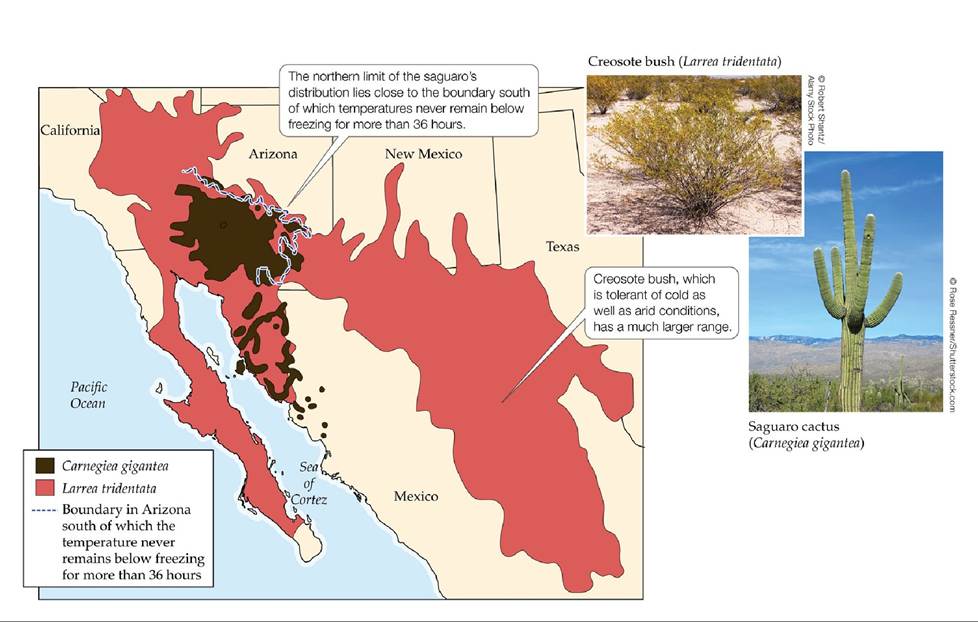
FIGURE 9.10 The Distributions of Two Drought-Tolerant Plants Thegeographic distribution of creosote bush (Larrea tridentata) is much larger than that of saguaro cactus (Carnegiea gigantea). (After T. W. Yang. 1970. JArizonaAcad Sci 6: 41-45; F. Shreve and I. L. Wiggins. 1951. Vegetation and Flora of the Sonoran Desert. Carnegie Institute of Washington: Washington, DC.) View larger image
The saguaro cactus (Carnegiea gigantea), on the other hand, has a more limited distribution.
Like creosote bush, saguaro flourishes under arid conditions, but it achieves its drought tolerance in different ways. The saguaro cactus uses a unique photosynthetic pathway called crassulacean acid metabolism (see Concept 5.3), which allows it to reduce water loss. Furthermore, during wet periods, the saguaro stores water in its massive trunk and arms, saving it for use during times of drought. Saguaro cannot tolerate cold, however; it is killed when temperatures remain below freezing for 36 hours or more. The importance of saguaro's sensitivity to cold is revealed by its distribution: the northern limit of its distribution corresponds closely to a boundary north of which temperatures occasionally remain below freezing for at least 36 hours (see Figure 9.10).The Biotic Environment
The biotic environment also has important effects on distributions and abundances of species. Obviously, species that depend on one another for their growth, reproduction, and/or survival have to live together at the same location. For example, all species require food resources, and thus habitat suitability will depend on the distribution and abundance of their food. An example of this is the Seychelles warbler (Acrocephalus sechellensis), an endangered songbird. In the 1950s, this bird nearly went extinct: its total world population was reduced to just 26 individuals located on Cousin Island in the Seychelles, a group of islands off the east coast of Africa. After the Seychelles warbler was legally protected in 1968, the Cousin Island population increased to about 300 birds, and the species was introduced successfully to two other islands.
Seychelles warblers are territorial: a breeding pair defends its territory against other birds of the species. But not all territories are equal: some are of higher quality than others because they provide more food (e.g., insects) (FIGURE 9.11). Birds that live in a high-quality territory live longer and produce more young. In addition, a breeding pair that lives in a high-quality territory often receives help rearing its young from offspring born in previous years.
Because the high-quality sites attract offspring from previous years and are aggregated toward one end of the island, differences in territory quality make the dispersion of individuals in the population more clumped than it otherwise would be.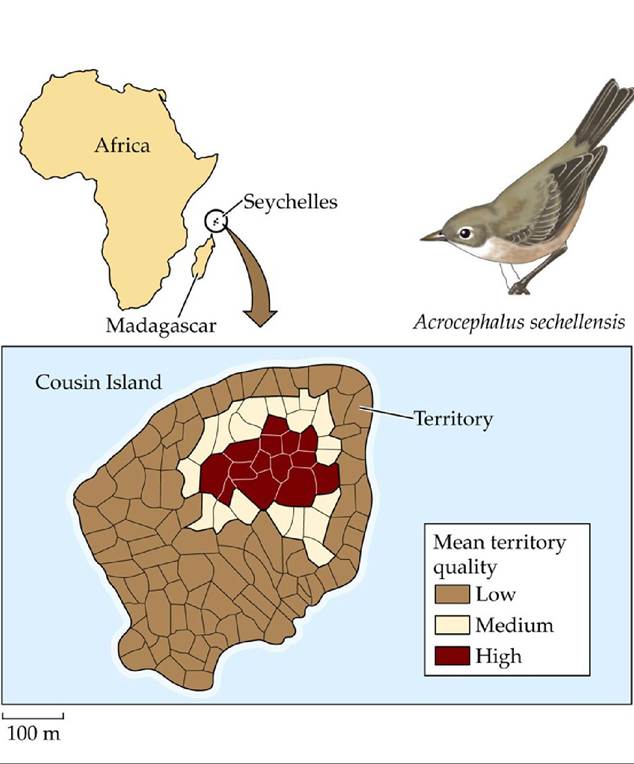
FIGURE 9.11 FoodResourcesAffectHabitatSuitability ThemeanqualityofSeychelles warbler territories on Cousin Island across the years 1986 to 1990. Territories were grouped into three quality categories: high, medium, and low. High-quality territories were clustered inland; these territories had high vegetation cover, little wind, and abundant insects. Coastal areas had lower-quality territories because salt spray led to defoliation, which lowered insect abundance. (After J. Komdeur. 1992. Nature 358: 493-495.) View larger image
Organisms can also be excluded from an area by herbivores, predators, competitors, parasites, or pathogens, any of which can greatly reduce the survival or reproduction of members of a population. For example, the case study describes how the distribution of kelp forests is dependent on the presence of sea otters, which prey on sea urchins, which are voracious herbivores on kelp. Another dramatic example of biotic control of species distribution and abundance is provided by the successful biological control of Opuntia stricta, an introduced cactus that spread rapidly to cover large areas in Queensland and
New South Wales, Australia. The cactus was imported from the southern United States in 1839 and planted as hedge. Within 40 years, O. stricta had become a pest species, and by 1925 it covered 243,000 km2. The cactus can grow up to 2 m high, and in many areas it covered the ground with dense, spiny thickets, making the rangelands it occupied useless (FIGURE 9.12A). In the hope of controlling the cactus, an Argentinean moth, Cactoblastis cactorum, known to feed on Opuntia was released in 1926 (FIGURE 9.12B).
By 1931, the moths had spread widely and destroyed billions of cacti. Since 1940, the cactus has persisted in small numbers, but its distribution and abundance have been greatly reduced. Although the introduction of C. cactorum as a means of biological pest control appears to have been a great success, such introductions must be undertaken cautiously because they can lead to unintended consequences, such as damage to native species (Louda et al. 1997).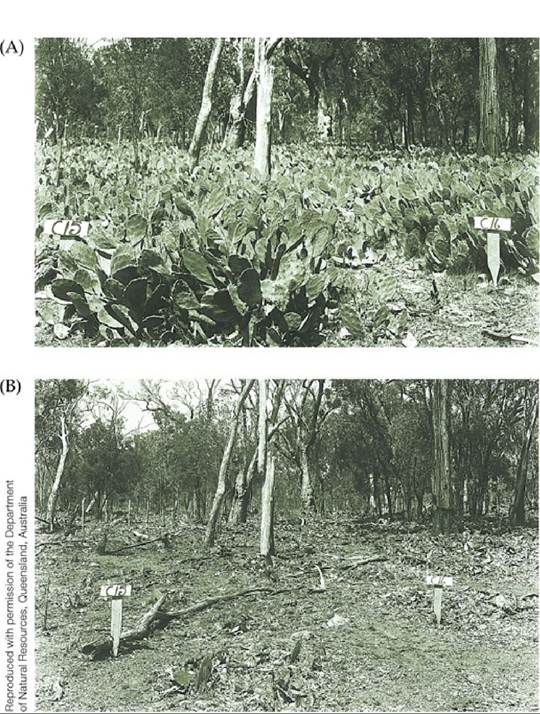
FIGURE 9.12 HerbivorescanLimitPlantDistributions In Australia, the moth
Cactoblastis cactorum was used to control populations of an introduced cactus, Opuntia stricta.
(A) A dense thicket of O. stricta 2 months before the release of the moth. (B) The same stand 3 years later, after the moth had killed the cacti by feeding on their growing tips. View larger image
Interactions Between Abiotic and Biotic Environment
In reality, the distribution and abundance of species are a product of both the abiotic and biotic environment. For example, the quality of the territories of the Seychelles warbler depends not only on insect food resources but also the exposure to salt spray and wind (see Figure 9.11). In another example, the rocky intertidal barnacle Semibalanus balanoides cannot survive when exposed at low tide to summer air temperatures above 25°C, and it cannot reproduce if winter air temperatures during low tide do not remain below 10°C for 20 days or more. On the Pacific coast of North America, temperatures are such that S. balanoides could be found 1,600 km farther south than it currently is (FIGURE 9.13). But this barnacle is absent from the region shown in purple in Figure 9.13, presumably because competition from other species of barnacles prevents it from living in what would otherwise be suitable habitat. To the north, as temperatures become increasingly colder, a point is reached where S. balanoides outcompetes the other barnacles and maintains healthy populations.
Thus, the abiotic and biotic environments interact to determine where populations of this barnacle are found.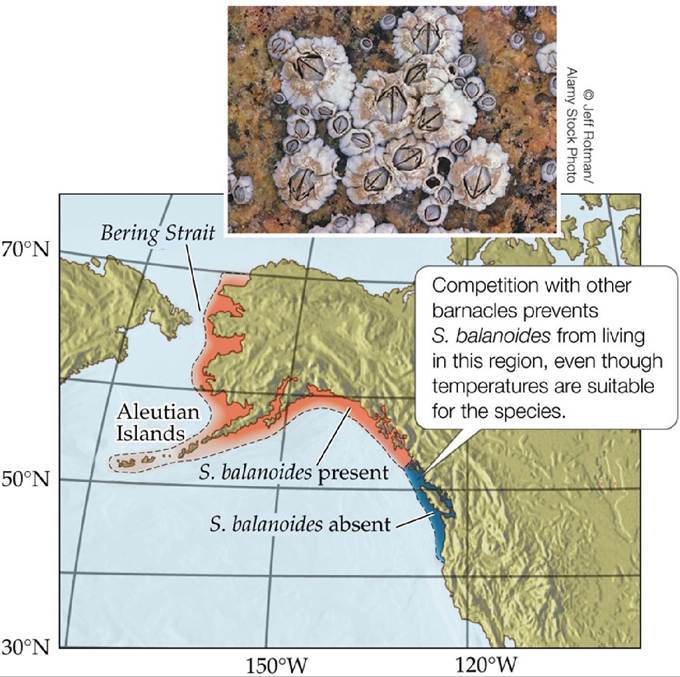
FIGURE 9.13 Joint Effects of Temperature and Competition on Barnacle Distribution
Although temperatures are suitable for the barnacle Semibalanus balanoides throughout the red- and blue-shaded regions, it is excluded from the southern region potentially by its competitors. In
the red-shaded regions, temperatures are colder and S. balanoides is the superior competitor. Is global warming likely to increase or decrease the geographic range of S. balanoides? Explain.
View larger image
Disturbance
The distributions of some organisms depend on regular forms of disturbance. A disturbance is an abiotic event that kills or damages some individuals and thereby creates opportunities for other individuals to grow and reproduce. Many plant species, for example, persist in an area only if there are periodic fires. If humans prevent fires, such species are replaced by other species that are not as tolerant of fires but are superior competitors in the absence of fires. Thus, a change in the frequency of fires can change the composition of ecological communities, as you can explore in ANALYZING DATA 9.1. Floods, windstorms, and droughts are other forms of disturbance that can harm some species but give others an advantage. We'll discuss the role of disturbance in more detail in Chapter 17.
Z
ANALYZING DATA 9.1
Have Introduced Grasses Altered the Occurrence of Fires in Hawaiian Dry Forests?
Bush beardgrass (Schizachyrium condensatum), molasses grass (Melinis minutiflora), and several other non-native grasses were introduced by humans to Hawaii as forage for livestock. By 1969, introduced grasses had invaded the dry forests of Volcanoes National Park, Hawaii. These dry forests are open woodlands with an understory of shrubs; they contain few or no native grasses.
Hughes et al. (1991)* provide data on fire occurrence (TABLE A) and on vegetation abundance in unburned and burned regions of dry forests in the park (TABLE B).
Table A
| Time frame | Number of fires | Total area burned |
| 1928-1968 | 9 | 2.3 ha |
| 1969-1988 | 32 | 7,800 ha |
Table B
| Vegetation abundance index | |||
| Vegetation type | Unburned | Burned once | Burned twice |
| Native trees and shrubs | 112.3 | 5.2 | 0.7 |
| Introduced grass | 80.0 | 92.1 | 100.9 |
1. Using the data in Table A, calculate the frequency of fires and the average area burned before and after introduced grasses invaded Volcanoes National Park. What do your results suggest about how introduced grasses have affected the occurrence of fires in Volcanoes National Park?
2. Based on the data in Table B, does fire promote or limit the abundance of native trees and shrubs? How does fire affect introduced grasses?
3. Introduced grasses recover quickly from fires, and they provide more fuel for future fires than do native trees and shrubs. Use this information to predict what may happen if a fire occurs in a Hawaiian dry forest after introduced grasses have invaded that forest. Do the events you've described help to explain the data in Tables A and B? Explain your reasoning.
*Hughes, F., P. M. Vitousek, and T. Tunison. 1991. Alien grass invasion and fire in the seasonal submontane zone of Hawai'i. Ecology 72: 743-746.