Species may compete directly or indirectly
Species often compete indirectly through their mutual effects on the availability of a shared resource. Known as exploitation competition, this type of competition occurs simply because individuals reduce the supply of a shared resource as they use it.
We have already considered an example of exploitation competition in the Case Study on pitcher plants.The other kind of competition is interference competition, a case in which one species directly interferes with the ability of its competitors to use a limiting resource. Such interactions are perhaps most familiar in mobile animals, as when carnivores fight with one another over animal prey. Similarly, herbivores such as voles may aggressively exclude other vole species from preferred habitat, and members of warring ant colonies may kidnap and kill one another. Interference competition can also occur among sessile animals. For example, as it grows, the acorn barnacle Semibalanus balanoides often crushes or smothers nearby individuals of another barnacle species, Chthamalus stellatus. As a result, Semibalanus directly prevents Chthamalus from living in most portions of the rocky intertidal zone (we'll describe competition between these barnacles in more detail in Concept 14.4).
Interference competition also occurs in plants, as when one plant species grows over another, reducing its access to light (FIGURE 14.4). There is also circumstantial evidence that interference competition can take the form of allelopathy, in which individuals of one species release toxins that harm individuals of another species. Although allelopathy appears to be important in some crop systems (Minorsky 2002; Belz 2007), there are few rigorous tests of the effects of allelopathy in competitive environments.
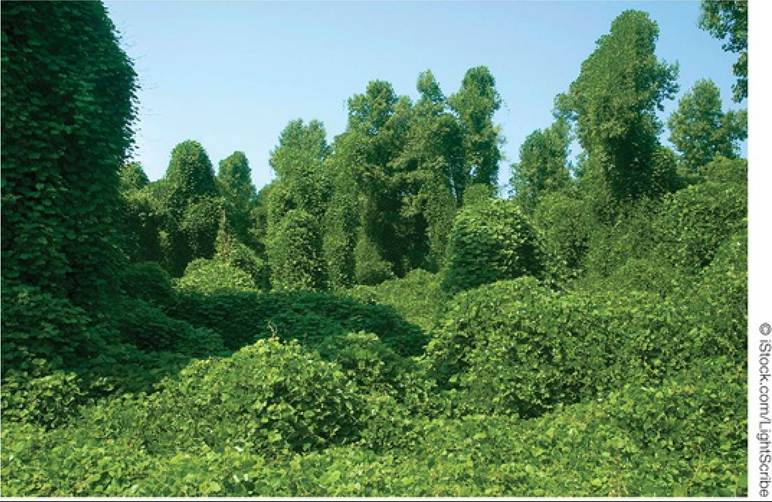
FIGURE 14.4 Interference Competition in Plants Aformidable competitor, the kudzu vine
(Pueraria montana) has grown over and completely covered these Georgia trees and shrubs, competing with them for light. View larger image