Understanding the causes of diversity losses is a first step toward reversing them.
Multiple factors are likely to contribute to the decline and eventual extinction of any particular species. For example, while the last Pyrenean ibex (Capra pyrenaica pyrenaica) was killed in 2000 by a falling tree, declines in its populations following the fourteenth century resulted from overexploitation and competition with domesticated livestock, leading to its eventual extinction (Perez et al.
2002).Multiple causes of diversity loss are also apparent in higher taxonomic groups. For example, over 1,223 mammal species (25% of those for which adequate data are available) are currently threatened with extinction (see Table 23.1). Globally, the primary threats facing mammals are loss of habitat, overexploitation, accidental mortality (e.g., road kills), and pollution—but the relative importance of these factors differs between terrestrial and marine mammals (FIGURE 23.10). Some mammals are threatened by additional factors, such as disease. As we'll see, this scenario, in which multiple types of threats contribute to the decline and extinction of a taxon, is common.
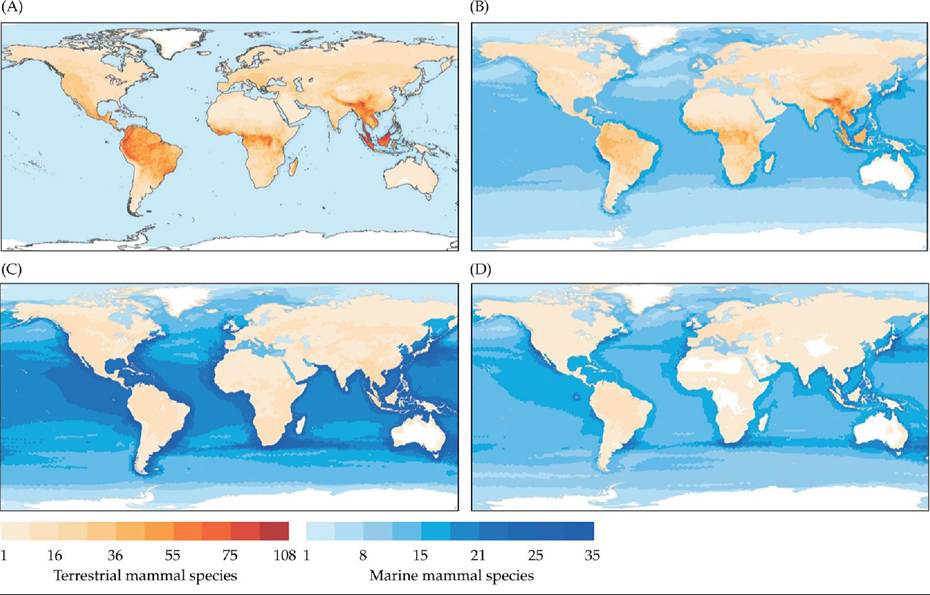
FIGURE 23.10 ThreatstoMammalSpecies Globally, 22% of mammal species are threatened by extinction. These maps show the numbers of terrestrial and marine mammal
species in various parts of the globe that are negatively affected by (A) habitat loss, (B) overexploitation, (C) accidental mortality, and (D) pollution.
Contrast the threats to land mammals with those to marine mammals. (From J. Schipper et al. 2008. Science 322: 225-230.) View larger image