Water Quality Parameters
No single parameter is possible for water. Depending on the use for which water is intended to be used, it should have the right parameters. For example, if water is to be used for cleaning purposes, no special treatment is required and no parameters are to be judged.
However, if water has to be used for washing purposes (laundry etc), it should be ascertained that the water is not hard. Hard water is also harmful for use in boilers etc. as it leads to scale formation. For drinking purposes, water must be pure and free of any of the pollutants. Physical parameters and maximum contaminant level has been prescribed by different regulatory bodies. Tables 5.2 and 5.3 give standards for industrial and drinking water (human consumption) by BIS.Table 5.2 BIS standards for water for industrial and drinking purposes
| Physical parameters | bgcolor=white>BIS standard|
| Colour | Colourless |
| Odour | Odourless |
| Taste | Light, sour-sweet |
| pH | 6-8.5 |
| Specific conductance | 300 μ mho cm’1 |
| Dissolved oxygen | 4-6 ppm |
Table 5.3 Maximum amount of contaminants level permissible for potable water
| Contaminant | Maximum contaminated level (ppm) as BIS standard |
| Chlorides (Cl^) | 600 |
| Sulphate (SO42^) | 1000 |
| Cyanide (CN^^) | 0.0001 |
| Fluoride (F^) | 3 |
| Nitrate + Nitrite (NO3- + NO2-) | 12 |
| Phosphate (PO43^) | 0.1 |
| Calcium (Ca)+3 | 100 |
| Magnesium (Mg)+2 | 30 |
| Barium (Ba)+2 | 1 |
| Copper (Cu)+2 | 1 |
| Arsenic (As)+3 | 0.002 |
| Uad (Pb+2) | 0.1 |
| Iron (filterable) | 0.3 |
| Chromium (Cr+2) | 0.05 |
| Zinc (Zn+2) | 0.05 |
| Pesticides | 0.005 |
| Total bacterial count | IxlO6 |
The quality of water is basically judged by three parameters, viz- Dissolved Oxygen (DO), Biochemical Oxygen Demand (BOD) and Chemical Oxygen Demand (COD).
However, following other parameters are also useful for determining the quality of water:1. Alkalinity
2. Most Probable Number (MPN)
3. Total solids
4. Oxidation
5. Transparency
6. Silicacontent
7. Hardness
8. Dissolved inorganic impurities
9. Toxic metals
10. Microbial contaminants in sewage
5.4.1 Dissolved Oxygen (DO)
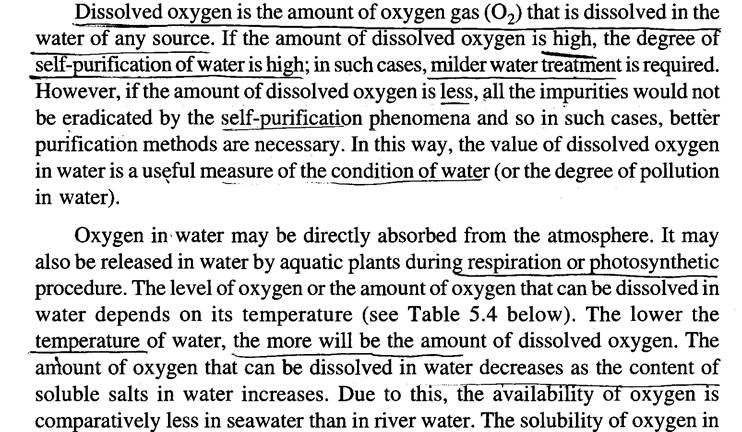
water is also directly proportional to the atmospheric pressure. Thus, a lake or pond at a higher elevation will have a lower value of dissolved oxygen than the one near the sea level.
Table 5.4 Dissolved oxygen in ppm (saturation value) in fresh and sea water
| Typeof Water | Temperature oC | |||||
| O | 5 | 10 | 15 | 20 | 25 | |
| Fresh water | 14.6 | 12.8 | 11.3 | 10.2 | 9.2 | 8.4 |
| Sea water | 11.3 | 10.0 | 9.0 | 8.1 | 7.4 | 6.7 |
The short fall in dissolved oxygen or the degree of unsaturation is determined by subtracting measured value of dissolved oxygen at a given temperature from the saturation value of dissolved oxygen at the same temperature (by referring to table above).
The percentage saturation at a given temperature is given by

5.4.2 Biochemical Oxygen Demand (BOD)
Biochemical oxygen demand (BOD) is a measure of the amount of oxygen that would be needed by the micro-organisms to decompose the organic and inorganic pollution load in polluted water. The micro-organisms transform the pollutants into non-hazardous compounds. During this process, dissolved oxygen is consumed.

The inorganic pollutants may include, sulphites, sulphides, thiosulphates and ferrous iron.
These pollutants are attacked by oxygen in presence of enzymes released by the micro-organisms.For determination of BOD, the water sample is first saturated with oxygen and then incubated at constant temperature (usually 20oC) for five days. This allows sufficient time for the micro-organisms in polluted water to affect oxidation of pollutants. After 5 days, the remaining amount of dissolved oxygen is determined and the biochemical oxygen demand is obtained by substraction.

The result is called the 5-day BOD and is expressed in milligrams of the oxygen per litre of water or in ppm. So, BOD is a measure of the oxygen demand placed on a system to accomplish the complete oxidation or decomposition of suspended colloidal or dissolved organic matter. The 5-day BOD analysis is considered as an accepted standard test. Drinking water should have a 5-day BOD of less than 1.5 mg L1. The BOD of raw sewage ranges from 200-400 mg L"1 or 200-400 ppm, indicating considerable pollution. The major contributors to BOD are the chemical industries, pulp and paper industry and the food processing industry. The BOD water status is given in Table 5.5.
Table 5.5 BOD-water status
| BOD (mg litre)-1 | Status |
| 1 | Very clean water |
| 2 | Clean water |
| 3 | Fairly clean water |
| 5 | Not used for drinking and pharmaceutical preparation |
| 10 | Contaminated water |
| 15 | Unfit for fish reproduction population |
| 150 | Sewage discharge from homes |
| 200 | Industrial waste water |
| 350 | Waste water from paper industries |
| IOOO | Food processing waste water |
| 2000 | Dairy discharge waste |
BOD is not a true indication of pollution, but gives an idea of the problems arising due to waste materials in the water supplies.
In fact, BOD is directly proportional to the organic matter oxidized.5.4.3 Chemical Oxygen Demand (COD)
Like BOD, chemical oxygen demand (COD) is also a measure of the amount of oxygen required to degrade or breakdown the organic matter. In BOD, the degradation of organic matter is affected by micro-organisms but in COD, the degradation is affected by some chemical oxidising agent like potassium dichromate. It is believed that biochemical oxygen demand (BOD) does not give a correct assessment of the pollution load in water. This is because some compounds like detergents are resistant to microbial degradation and some other pollutants like cellulose are slow to get oxidised. Also the toxic compounds, if present in polluted water may poison the micro-organisms before they can act on pollutants. Lastly, the BOD determination takes too long time (5 days).
The above problem can be overcome by another analytical method called chemical oxygen demand (COD). In this case, the water sample is treated with an oxidising agent (usually potassium dichromate in acidic medium), which oxidises most of the polluting substances including those which are resistant to microbial oxidation. The unused potassium dichromate is determined by back titration with a suitable reducing agent like Mohr’s salt. The amount of potassium dichromate consumed is determined by substraction.

The amount of oxygen used in the oxidation can be calculated from the strength OfK2Cr2O7 consumed using the following equation:

The results are expressed in terms of the amount of oxygen in ppm that will be required to oxidize the contaminants. On the basis of COD status, the quality of water can be found out (see Table 5.6 below).
Table 5.6 COD Status
| COD in mg L 1 | Status |
| 0-5 | Very clear water, used for drinking |
| 5-20 | Fairly clean |
| 20-100 | Unfit for drinking but can be used for washing and agriculture |
COD determination is reliable and fast for assessment of the quality of water.
However, it suffers from the drawback that aromatic hydrocarbon derivatives are not easily oxidised by most chemical oxidising agents. So, their presence cannot be judged by COD determination.5.4.4 Alkalinity
The total amount of substances that cause increased concentration of OH ions either on dissociation or as a result of hydrolysis is called alkalinity of water. In natural water, alkalinity is due to the presence of HCO3-, SiO32-, HSiO3-and CO32-. Sometimes, the presence of salts of weak organic acids bind H+ and thus result in increasing the concentration of OH^ ions rendering the natural water alkaline.
The alkalinity may be regarded as bicarbonate alkalinity (Ab), carbonate alkalinity (Ac) or hydrate alkalinity (Ah), depending upon the presence of HCO3-, CO32- and OH- ions, respectively. Carbonate hardness (see sec. 5.4.10.1) is also responsible for the alkalinity of water. Alkalinity of water is determined by titrating it with a mineral acid using methyl orange as an indicator.
5.4.5 Most Probable Number (MPN)
High population of bacteria like E.coli and coliforms is found in water polluted with organic wastes. Both E.coli and coliforms can be detected and
enumerated with the help of MPN method. Coliform is present in human intestine and generally is not harmful but its presence indicates the presence of human waste in water, which may contain other harmful substances. Polluted water shows high values of MPN.
5.4.4 TotalSolids
The total solid content is the amount of non-volatile substances present in water in a colloidal and dispersed state. It is expressed in milligram per kilograms (mg∕kg). For determining the content of total solids in water, calcium and magnesium bicarbonates are converted into carbonates, viz. CaCO3 and MgCO3.
In addition to the total solids, there are three other types of solids; these are:(i) Fixedresiduesolid
(ii) Mineral residue solid
(iii) Sulphate solids
Fixed residue solid is obtained by calcining the total solids for 10-15 min at 800o C; this results in removal of organic substances due to combustion and decomposition of carbonates. The residue obtained is the fixed residue solid content.
The quantity obtained by adding all cations and anions, including CO32' and Al2O3, Fe2O3 and SiO2 in water, is called the mineral residue. If the total solids are treated with concentrated sulphuric acid, all the cations present in water are converted into sulphates, the total mass of which constitutes the sulphate content or sulphate solid.
5.4.5 Oxidation State
The contamination of water by organic substances is represented by Oxidability and is expressed in milligram of oxygen required to oxidise the organic compounds contained in 1 kg of water. The Oxidability is denoted as mg∕kg. Oxidability can also be expressed by the amount of KMnO4 (in mg∕kg) used to oxidise the organic substances. Oxidability, however, does not represent the total content of organic substances in water, since complete oxidation of all organic substances does not occur under the conditions in which Oxidability is determined.
5.4.6 Transparency
It indicates the concentration of suspended solids, which can be determined by the weight method. The transparency can also be determined by the type method (cm) of a column of water in a glass tube, through which it is still possible to discern printing or by the cross method which two crossed black lines 1 mm thick are visible on a white paper placed on the bottom of a glass tube.
5.4.9 SilicaContent
It is the concentration of silicic acid, H2SiO3, expressed as silica (SiO2), contained in water. The concentration of SiO2 in natural water varies from 5-10 to 90 mg L-1. It is an indication of the extent Of mineralization of water. Raw water contains silicic acid in the ionic (HSiO3~) as well as in colloidal state. The presence of silica in feed water for boiler units causes a number of operating conditions due to formation of silicate scales of low thermal conductivity; even heavy deposits on the blades and nozzles of turbines are formed. In modem practice, silica is removed from raw water using ion exchangers.
5.4.10. Hardness
Water from all sources contain a great degree of dissolved mineral salts. Normally, water contains dissolved magnesium and calcium bicarbonates, sulphates and chlorides in considerable amounts, along with traces of different cations and anions which introduce hardness to water. Water that produces or forms an insoluble precipitate when it is boiled or when soap is added is called hard water. In fact, hard water does not give lather with soap, such water may not always be unfit or harmful for drinking but cannot be used in laundry work and for steam generators in boilers. Water required for pharmaceuticals preparations, dairies, laundries and for boiler feed must be soft water. Water which gives lather easily with soap is called soft water. Before water is used, one must ensure the nature and amount of dissolved quantities present.
Soap reacts with soluble calcium or magnesium salts and forms an insoluble white scum or precipitate with hard water; this causes a loss of soap and reduces the cleaning action. A large amount of soap is needed to produce lather with hard water.
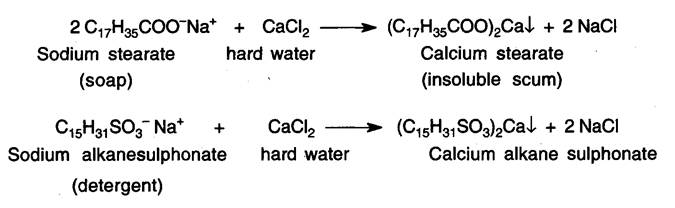
Soft water does not contain dissolved calcium and magnesium salts. The presence of sodium compounds does not contribute to hardness in water. Depending on the nature of the anions present in it, the hardness of water is of following two types:
(i) Temporary or carbonate hardness
(ii) Permanent or non-carbonate hardness
i. TemporaryorCarbonateHardness
When water contains calcium or magnesium bicarbonate, the hardness is called temporary hardness or carbonate hardness. Such hardness can be removed by boiling, when calcium and magnesium bicarbonates form insoluble carbonate and settle down.
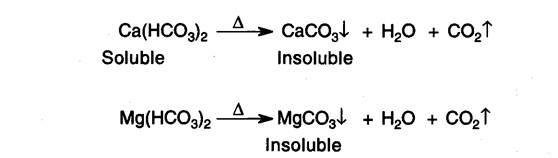
Temporary hardness can also be removed by adding calculated quantities of lime. This method is called Clark’s method. However, if too much lime is added, the water becomes again hard.

ii. Permanent or Non-carbonate Hardness
It is due to the presence of soluble salts (chlorides and sulphates) of calcium magnesium, iron or other heavy metals. Unlike temporary hardness, it cannot be removed by boiling. Carbonate hardness (temporary hardness) and non-carbonate hardness (permanent hardness) together constitute the total hardness. Before removing permanent hardness, the water should be boiled to ensure removal of temporary hardness.
5.4.10.1 UnitsofHardnessofWater
Bicarbonates, chlorides and sulphates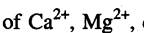 etc which give an
insoluble precipitate with soap contribute to hardness. It is most convenient to express the hardness caused by these different salts in terms of equivalent hardness of a single salt. As a matter of convention, calcium carbonate (sparingly soluble in water and molecular mass =100) is chosen for this pinpose and is expressed in parts per million (ppm). For this purpose, all the hardness-causing impurities are first converted in terms of their respective mass equivalents of CaCO3 and the sum of these is expressed in ppm.
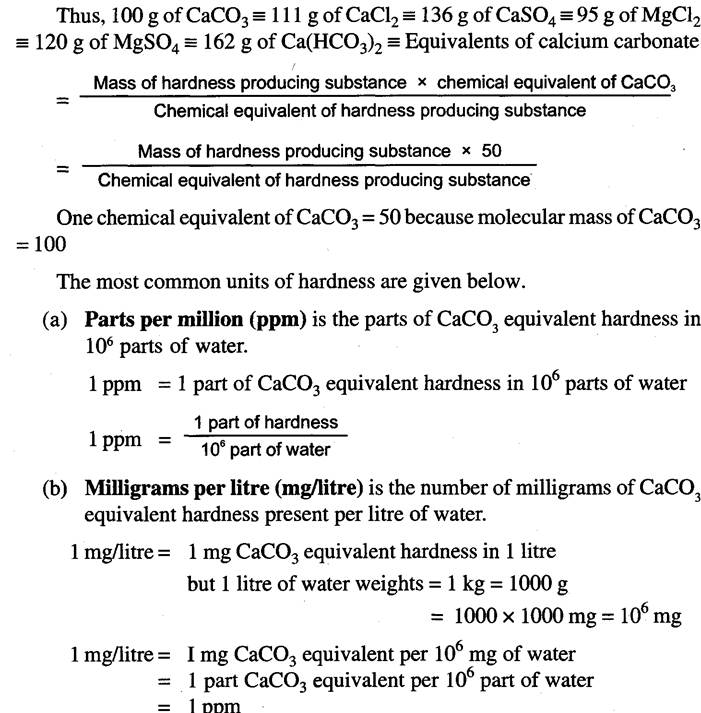
A common method for accurately determining the hardness of water is complexo-metric EDTA titration. It can also be determined by Hehner’s method, where the alkalinities of water before and after boiling are determined. Some times, soap titration method is also commonly used. In this method, standard soap solution is titrated against hard water and it will not give lather until all the hardness causing metal ions are precipitated in the form of insoluble soap.
It is well known that water is used in a number of industries such as textile, sugar, paper, dyeing, laundries, bakeries and pharmaceutical industries. Following are the disadvantages of using hard water in various industries:
(i) Textile Industry. In textile industry, hard water causes wastage of soap when used for washing yam, fabric etc. also the calcium and magnesium soaps get fixed on to the fibres, which do not produce good shades on dyeing.
(ii) Sugar Industry. Hard water causes problems in the crystallisation of sugar. Also the sugar produced may be deliquescent.
(iii) Paper Industry. Using hard water gives undesirable finish to the paper.
(iv) Dyeing Industry. Calcium and magnesium salts in hard water react with dyes forming undesirable precipitates.
(v) Bakeries. The presence of bacteria and fungi affect the yeast’s action resulting in poor quality of the product.
(vi) Pharmaceutical Industry. Hard water containing magnesium and calcium salts in pharmaceutical products like drugs, injections etc. may produce undesirable and harmful effects.
Due to the above mentioned disadvantages of using hard water in industries and boilers etc., it is necessary to remove the hardness of water i.e. to make it soft; for rendering it fit for use.
5.4.10.2 WaterSoftening
The process of removing hardness-producing salts from water is known as softening of water. Following methods can be used for the softening:
i. Lime Soda Process for Water Softening
In this process, the hardness of water is first estimated and then the water is treated with calculated quantities of slaked lime [Ca(OH)2] and soda ash (Na2CO3). Following reactions take place:
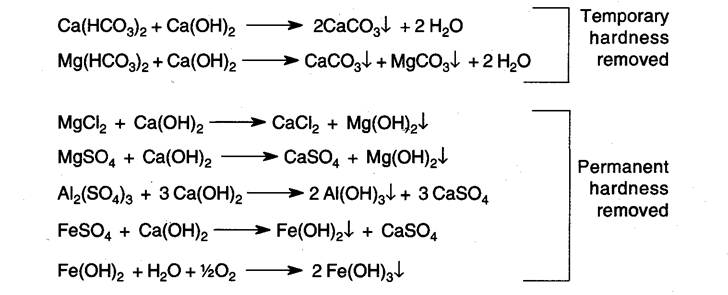
The lime treatment can be done either in cold (this process takes longer time) or in the hot (80-150oC).
ii. PermutitProcess
In this process, hard water is passed through a column of zeolites. These zeolites can be either naturally occurring (e.g. natrolite, Na2O-Al2O3-SiO2-H2O; and anclcini, Na2O-Al2O3.4SiO2.3H2O) or synthetic (e.g, permutit, an artificial zeolite of general formula Na2O-Al2O3,nSiO2.xH2O where n = 5 - 13 and x = 3 - 4). When water is passed through a bed of permutit, the sodium ions in permutit are exchanged with other cations like Ca2+, Mg2+ etc. Thus, sodium zeolite is converted into calcium and magnesium zeolites and water becomes free of Ca and Mg salts but richer in sodium salts. In this way, zeolite is a ‘sodium exchanger’. This process removes both temporary and permanent hardness. When zeolite is exhausted (i.e. all the Na in zeolite is replaced with Ca and Mg), it can be regenerated by washing zeolite bed with a concentrated solution of brine (or sodium chloride); this process converts exhausted zeolite into the original form and can be used again. Soft water obtained by this process is most suitable for laundry purposes but not for boiler purposes. This process cannot be used for treating acidic waters, as permutit disintegrates in acidic condition.
iii. Ion Exchange Process
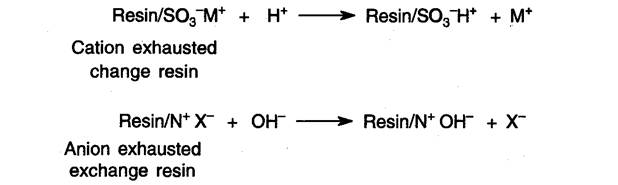
This procedure is useful for removing cationic and anionic impurities in water. In the process, water is passed first through an cation exchanger. The cation exchanger is a resin containing ionic sulphonic acid group. The cations, (M+), present in impure water are exchanged with4he hydrogen ion (H+) of the resin. Thus,

The water is subsequently passed through an anion exchanger resin, which contain ionic quaternary ammonium hydroxide group; the anions, X^, present in impure water exchanges with the hydroxide ions (0H^) of the resin. Thus,

- The H+ ions obtained in the cation exchange process combine with the OH^ ions formed in the anion exchange process to produce water.

When the resins are exhausted, they are regenerated by treatment with acid (in case of exhausted cation exchange resin) or alkali (in case of exhausted an ion exchange resin).
This method is used to obtain demineralised water.
5.4.11 Dissolved Inorganic Impurities
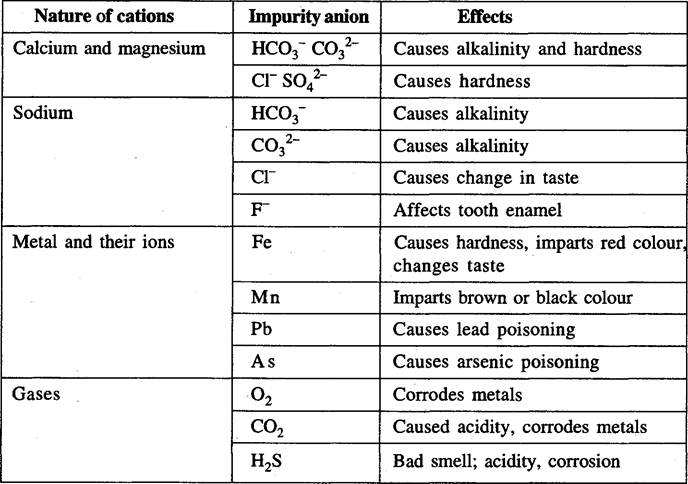
As the name suggests, these substances are dissolved in water. The nature of water depends on these dissolved inorganic impurities. Following table gives the dissolved impurities that may be present in water and their effects.
Table 5.7 Dissolved inorganic impurities
5.4.12 Toxic Metals in Water
Natural waters and wastewaters contain a number of trace elements, which are toxic at higher levels. Following table gives some of such elements along with their sources and effects.
Table 5.8 Some toxic elements in water
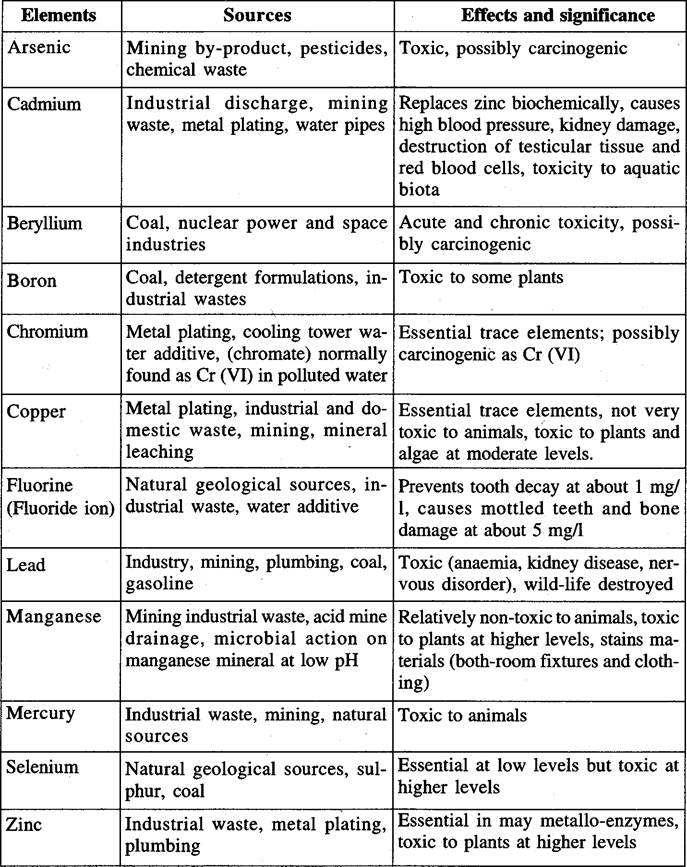
Besides the above, the water bodies contain a large number of pesticides which are discharged into water bodies by run offs from agricultural land, (for more details see sec. 6.4.2.4).
InMbition OfEnzyme Action
The toxic chemicals (viz- metal ions) which may be present, inhibit enzymes. Heavy metal ions, particularly Hg2+, Pb2+ and Cd2+ attack the active sites (e.g. -SCH3 and -SH in methionine and cysteine amino acids, which are part of enzyme structure).
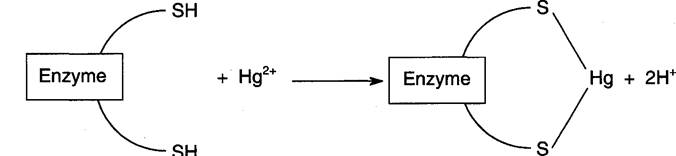
In this way, the enzyme action is inhibited. Also, in metallo-enzymes, the metal of the metallo-enzyme is replaced by another metal ion of similar size and charge. For example, Zn2+ in some metalloenzyme is replaced or substituted by Cd2+ leading to cadmium toxicity. The enzymes, which are inhibited by Cd2+ include adenosine triphosphate, alcohol dehydrogenase, amylase, carbonic anhydrase. Pb2+ inhibits acetylcholinesterase, alkaline phosphate, adenosine triphosphate, and carbonic anhydrase.
The biochemical effects of some toxic elements like arsenic, lead, cadmium and mercury form the subject matter of subsequent discussions.
Effects of Arsenic
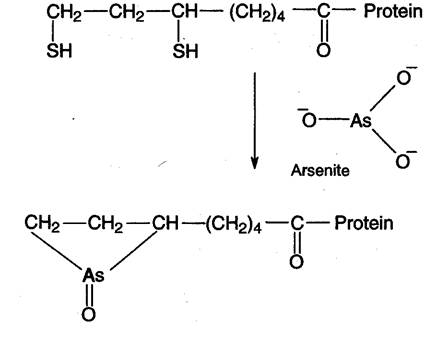
Arsenic occurs in insecticides, fungicides and herbicides. It finds its way into agricultural land and enters the food chain. Arsenic exerts its toxic action by attacking -SH groups of an enzyme resulting in inhibition of enzyme action.
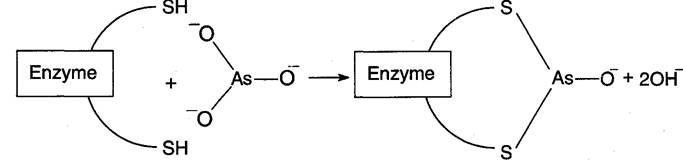
Arsenite
The enzyme, pyruvate dehydrogenase, which is responsible for generating cellular energy is deactivated by Complexation with As(III). In this way, the generation of ATP is prevented.
Arsenic also interferes with some biochemical processes involving phosphorous; this is due to chemical similarity of arsenic and phosphorous. Thus, ATP (adenosine triphosphate), as we know, is generated from glyceraldehyde 3-phosphate by phosphorylation (route A). However, in presence of arsenic, glyceraldehyde 3-phosphate gives l-arseno-3-phosphoglycerate (route B). Thus, in the later route (B), in place of phosphorylation, arsenolysis occurs, the product formed is l-arseno-3-phosphoglycerate, which prevents ATP synthesis.
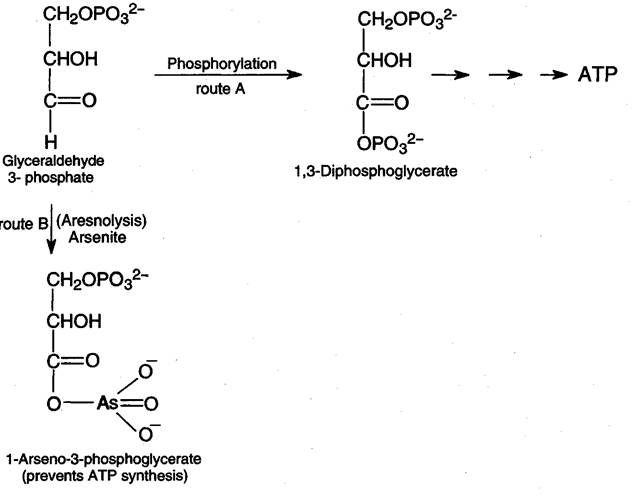
Arsenic (III) compounds in higher concentrations coagulate proteins by attacking the sulphur bonds. The antidotes for arsenic poisoning are chemicals having -SH group, which binds to As(III). An example is 2,3- dimercaptocpropanol.
Effects of Lead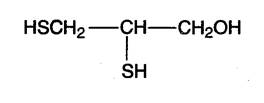
Lead occurs abundantly in nature in the form of sulphide ore. During metallurgical operations, it finds its way into water bodies. Earlier lead was added to gasoline in the form of tetra ethyl lead [Pb(C2H5)4] along with scavengers like 1,2-dichloro- and 1,2-dibromoethane. ft∂wever, the ιise of leaded petrol has been banned in most of the countries and so is no longer considered to be the major source of lead in the atmosphere or water bodies. Lead pipes, which are used for transporting water is a minor source of lead in water bodies, since the lead pipes are coated with a layer of carbonate. However, even the small amount of lead in water bodies enters the food chain. The biochemical effect of Ieadis its interference withheme synthesis leading to haematological damage. Lead inhibits the aminolevulnic acid dehydrase enzyme. Due to this, theδverall effect is the disruption of the synthesis of not only of haemoglobin but also of other respiratory pigments like cytochromes. Also, lead does not permit utilization of oxygen and glucose for life sustaining energy production.
Lead, being similar to Ca2+, gets accumulated in the bones. Subsequently, it is remobilised along with phosphates from the bones which exert a toxic effect.
Lead poisoning can be cured by administration of chelating agents which strongly bind Pb2+. One such example is administration of calcium chelate of EDTA. Pb2+ displaces Ca2+ from the chelate and the resulting Pb2+ chelate is excreted in the urine.
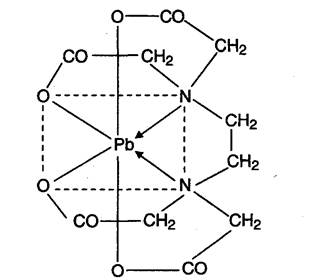
Pb-EDTA Chelate
Effectsof Cadmium
Cadmium occurs in nature along with zinc in zinc blende (ZnS). Cadmium poisoning was first observed in Japan in the form of itαi itai or ‘Ouch Ouch’ disease; in this disease, the bones become fragile. Higher levels of cadmium cause kidney problems, anaemia and disorders of bone marrow, hypertension, anaemia, renal dysfunction and even cancer. Most of the cadmium ingested into the body is trapped in kidneys and eliminated. However, a small fraction is bound effectively by the body proteins, Uietallothionein, present in kidneys. When excessive amounts of Cd2+ arc ingested, it replaces Zn2+ at major enzymatic sites and thus, causes metabolic disorders.
EffectsofMercury
Mercury is one of the most well known toxic metal. The toxicity or the toxic effects of mercury came to lime light in 1953-1960 in Japan by the incidence of Minamata disease. At Minamata Bay in Japan, more than IOO people died and thousands were permanently paralysed by consuming fish contaminated with mercury. Even genetic defects were observed in some new bom babies whose mothers had consumed contaminated fish from the Bay. The cause of the disease was contamination of water with mercury rich effluents discharged into the Bay by Chisso Chemical Company. It was discovered (1963) that the illness was due to methyl mercury poisoning, caused by eating contaminated fish from the bay. The Chisso plant used mercuric chloride catalyst, a non-toxic inorganic mercury compound in the production of acetaldehyde which was released in the industrial effluents. Subsequently, the sediments from the Minamata Bay were found to be rich in methyl mercury chloride. It was, therefore, clear that inorganic mercury underwent bio-methylation in aquatic system. It was also evident from the data obtained which showed the presence of methyl mercury chloride in concentrated form in the body of the fish.
It has been found that methylation of mercury in water bodies is brought about by a number of micro-organisms called methanogenic bacteria. This process is called bio-methylation. The bio-methylation takes place under anaerobic conditions. The process is facilitated by the enrichment of water with organic impurities which permit growth of methanogenic bacteria; the bio-methylaiton proceeds smoothly in the pH range 5.5-6.5.
The Minamata incident was followed by a more tragic incident of mercury poisoning form Iraq (1972) where about 500 people died after consuming wheat which had been sprayed with mercury containing pesticide.
Sources of Mercury in Aquatic Systems
Mercury is discharged into the aquatic system by both natural and manmade sources. Amongst the natural sources is the ore of mercury, cinnabar (HgS) in igneous rocks. On an average, about 800 tonnes of mercury are released into the environment due to weathering of rocks. The lava, produced by volcanic eruptions is also a natural source of mercury contamination of environment. Due to this activity, the mercury content of lake Ontake in Japan has shown a steady rise due to repeated volcanic eruptions of the nearby Mount Kisoontake.
The mercury content in the aquatic systems has increased considerably due to human activities resulting from rapid industrialisation and urbanisation. Some of the human activities include the following:
• Widespread use of mercurials as insecticides, fungicides, bactericides and pharmaceuticals.
• Use of mercury amalgamated with silver, tin, cadmium and copper to make dental fillings.
• The chlor-alkali process using mercury cathodes is the single largest source of mercury in natural waters.
• Even after closing down various industries using or producing mercurials, the amount of mercury already accumulated in the beds of water bodies continues to be a cause of major concern.
• Mercury vapour lamps, electrical switches, mercury batteries are the second largest source of mercury discharge in the environment.
• The impact of seed dressing is enormous. It causes widespread dispersal of mercury compounds. Also, mercury finds its way into the human food chain.
Toxic Effects of Mercury
The toxicity of mercury depends on its chemical species. Thus, elemental mercury (Hg) is non-toxic and quite inert. If swallowed, it is excreted without any serious harm. However, the vapours of mercury (it inhaled) are quite toxic. The vapours on inhalation enter the brain through blood stream causing damage to the central nervous system.
Mercurous ion (Hg22+) forms insoluble chloride with chloride ions. Since the stomach in our body contains hydrochloric acid (chloride ions), it is not toxic. On the other hand, mercuric ion (Hg2+) is quite toxic; due to its affinity for sulphur. It can attach itself to the sulphur containing amino acids of proteins. It also forms bonds with haemoglobin and serum albumin, both of which contain Sulphydryl groups. Since this ion (Hg2+) does not travel across biological membranes, it does not get access into biological cells.
The Organomercurials particularly methyl mercury (CH3Hg+), which is fat soluble, are the most toxic species. The most harmful effect of RHg+ is due to its ability to move through the placental barrier and enter foetal tissues. Attachment of Hg to cell membranes inhibits transport of sugars across the membranes and allow the passage of K (Potassium) to the membrane. In case of brain cell, this results in energy deficiency in the cells. This is the reason why babies bom to mothers having mercury poisoning suffer from irreversible damage to the central Nervous System.
Bioamplification of Mercury
The Organomercurial (e.g. methyl mercury chloride) is incorporated in the food chains. Being soluble in the tissue of simple organisms, these penetrate inside the bodies of simple organisms. The complex species which feed on simple organisms accumulate the organo-mercurials in their system. This process is called bioamplication. Due to the process, organo-mercurials concentrate in the tissues of aquatic organisms, particularly fish. Bioamplication depends on the following parameters of water, viz. pH, temperature, hardness, salinity and contaminants. At lower pH (of water is more sensitive to propagation of life in comparison to air pollution.
6.2