SUMMARY AND CONCLUDING REMARKS
In this chapter we have outlined the broad facts about long-run trends in the distribution of income and wealth. The focus has been on findings primarily stemming from the top income literature and recent studies of wealth concentration, using historical tax and estate data.
However, we have also tried to relate the new results to previous observations in the economic growth and economic history literatures. The end result is always going to be subjective, and we have therefore tried to be as clear as possible on where in the development there is disagreement.When it comes to describing the overall developments of income inequality across the 26 countries studied in Section 7.2, there are three possible broad eras that can usefully be distinguished. The first is the period before the First World War, the second is the period from around 1914 until 1980, and the third consists of the time thereafter. In the first period evidence is relatively clear on the fact that inequality was historically high in the beginning of the twentieth century. To what extent this high level was present throughout the nineteenth century or if it gradually increased is, however, still less clear due to the lack of data. There are some signs of increased inequality but many studies also point toward high and relatively stable levels before the twentieth century.
The period from around 1914 to 1980 is characterized by substantial drops in top income shares in almost all countries for which we have data. The top percentile share falls from around 20% before 1914 to between 5% and 10% around 1980. The decreasing income share for the lower parts of the top decile group are much more modest. In fact, in some countries the income share of lower half of the top decile group (P90—95) remains almost constant throughout the twentieth century. Thus, distinguishing developments within the top group seem important.
Large parts of the decreases seem to happen in connection to shocks such as the World Wars or the Great Depression, but it is worth noting that decreases also take place in countries that did not take part in the war, such as Sweden. Also the drop continues after the Second World War throughout the high- growth periods in the 1950s and 1960s. In terms of income composition, most of the drop seems related to decreasing capital income.The development after 1980 is less homogenous. In some countries, especially the United States and the United Kingdom, inequality has risen sharply. This increase has taken place from a level that was already high in relation to others before it started. In countries like Sweden and Finland, increases have also been substantial but here from internationally low levels to levels that are much higher but remain among the lowest. In, for example, France, Germany, and Japan, there is no clear upward trend but in absolute terms inequality remains higher than in the Nordic countries.
Turning to the development of the wealth distribution in the 10 countries for which we have long-run data, studied in Section 7.3, a picture similar to that of income emerges. In most places (the United States being the notable exception) wealth concentration was relatively constant and historically high before the twentieth century. Even if crosscountry comparisons should be made with caution, there seems to have been important level differences. Estimated top wealth shares at the beginning of the twentieth century were clearly higher in the United Kingdom and in France than, for example, in the United States and in Switzerland, Finland, and Norway, with Denmark, Sweden, and the Netherlands in between. Starting around the First World War, the top percentile group wealth shares decreased substantially until around 1980. Thereafter the development is again more diverse but also much more uncertain and debated than for income
In terms of understanding these developments, we have, in Section 7.4, discussed a number of suggested theories and empirical regularities that aim at explaining various aspects.
The developments over the first half of the twentieth century points to the importance of understanding the joint developments of wealth and income as much of the decrease is related to sharp drops in capital incomes in the top. The cumulative impact of taxation over time also seems important, especially for understanding the lack of recovery of top income shares in the decades after the Second World War. With respect to the different developments after 1980, it seems likely that many factors interact. There are probably important changes in terms of technological change and globalization that affect inequality, but the differences across countries also suggest that the impact depends on individual country characteristics (such as the functioning of the labor market, the education systems, and other policies). In most countries much of the inequality increase is driven by changes within the top, suggesting that an explanation must include a mechanism that gives an increasing income advantage to the very top groups, rather than only accounting for differences between broad groups such as, for example, skilled and unskilled. In addition, the recent increase is not homogenous in terms of income composition. In some countries (the United States) an increased earnings dispersion explains most of the recent increase, whereas in other countries (Sweden) capital seems more important. Finally, we also note that there are cases where data and explanations seem to fit what we observe since the 1980s, but when one applies a long-run perspective the same theory seems less successful (an example being executive pay as explained by the growth of firms). This need not imply that the account for the post-1980 period is incorrect, but it does suggest that most explanations are likely too sensitive to interaction with aspects that change both over time and across countries.7.5.1 Going Forward
When looking ahead a number of areas seem promising in terms of future research. First, the ongoing work of extending the top income database is obviously important, both in terms increasing the number of countries, but also in terms of adding new dimensions.
In at least some countries it could, for example, be possible to distinguish income for men and women over much of the twentieth century. Constructing similar data sets on long- run wealth inequality trends would also represent important contributions.Second, making use of the top income database seems important. Numerous aspects of long-run developments can now be studied over a time span previously void of systematic inequality data. In doing so it is, as emphasized by Atkinson and Brandolini (2006), it is important to take an integrated approach to theory and estimation and to use proper econometric techniques to address deficiencies in the data.
Third, results on the importance of changes within the top illustrate how development can be missed or misinterpreted if one focuses solely on overall inequality. These findings also pose challenges for theories trying to explain the recent surge in income inequality. It is in general quite likely that different explanations apply to different parts of the distribution.
Fourth, a number of the recent findings illustrate the importance of the interplay between wealth and work in determining total income. Also, when income is determined not just by actions over an individual’s lifetime, inheritance also becomes important. This has important effects on a wide range of issues such as optimal taxation (Piketty and Saez, 2013b) and the future development of inheritance flows (Piketty, 2011).
These are some of the research areas that will surely be important for our understanding of long-run inequality trends, their causes, and their consequences.
ACKNOWLEDGMENTS
We have received valuable comments from Anthony Atkinson and seminar participants at the conference “Recent Advances in the Economics of Income Distribution” held at the Paris School of Economics, April 2013. We thank Wiemer Salverda for sharing wealth distribution data on the Netherlands. Data underlying all graphs and tables in the chapter are available on the authors’ Web sites or on request.
APPENDIX
Table 7.A1 Sources of the historical wealth inequality data
| Country | Year(s) | Wealth holder unit | Source |
| Australia | 1915, 1987, 2002, 2006, 2010 | Households | Katic and Leigh (2013, table A2) |
| 1953-1979 | Adults | Katic and Leigh (2013, table A1) | |
| Denmark | 1789 | Males > 19 years | Soltow (1985: table 4) |
| 1908-1975 | Households | Zeuthen (1928: table IV 4: 521) for 1908-1925, Bjerke (1956: table 32) for 1939-1945, Statistics Denmark, Statistisk Arbog for 1950-1975. See also Alvaredo et al. (2013) using roughly the same sources | |
| 1995-1996 | Households | Statistics Denmark (1995, 1996: table 2) | |
| Finland | 1800 | Males > 19 years | Soltow (1980, table 3) |
| 1922 | Households | Soltow (1980, table 3) | |
| 1926 | Households | Soltow (1980, table 3) | |
| 1967 | Households | Soltow (1980, table 3) | |
| 1987-2005 | Adults | Statistics Finland, tax statistics | |
| France | 1807-2010 | Adults | Piketty et al. (2004: table A4, 2006), Piketty (2014) |
| Netherlands | 1894-1974 | Adults | Wilterdink (1984) |
| 1993-2011 | Households (survey) | Statistics Netherlands (2010), Salverda et al. (2013). Series are submitted by Wiemer Salverda | |
| Norway | 1789 | Households | Soltow (1980: table 3) |
| 1868 | Households (?) | Mohn (1873: 10, 30) | |
| 1912 | Households | Statistics Norway (1915a: 6*, 20*-21*) | |
| 1930 | Households | Statistics Norway (1934: 63*f) | |
| 1948-2011 | Households (1983-1993 are adjusted individuals as described in text) | Statistics Norway, Statistisk Arbok and Statistikdatabasen (see text) | |
| 2009 | Households | Epland and Kirkeberg (2012, table 8) |
Table 7.A1 Sources of the historical wealth inequality data—cont'd
| Country Sweden* | Year(s) 1800 | Wealth holder unit Males > 19 years | Source Soltow (1985: tables 4, 5) |
| 1908 | Households | Finansdepartementet (1910: 31) | |
| 1920 | Households | Statistics Sweden (1927) | |
| 1930 | Households | Statistics Sweden (1937, 1938) | |
| 1935 | Households | Statistics Sweden (1940) | |
| 1937 | Households | SOU (1942: 52) | |
| 1945 | Households | Statistics Sweden (1951) | |
| 1946-1950 | Households | SOS Skattetaxeringarna | |
| 1951 | Households | Statistics Sweden (1956) | |
| 1966 | Households | SOU (1969: 54) | |
| 1970 | Households | SOS Inkomst och Formogenhet 1970, | |
| 1975 | Households | Budgetunderso kningen Spant (1979) | |
| 1978-1998 | Households | Jansson and Johansson (2000, table 15) | |
| 1999-2007 | Households | Own calculations based tabulated household | |
| 1873-1877 | Individuals | distributions retrieved from Statistics Sweden’s Wealth Register (see Roine and Waldenstrom, 2009, for details) Finansdepartementet (1879) | |
| 1906-1908 | Individuals | Finansdepartementet (1910). For 1908 there is also | |
| 1954 | Individuals | wealth data based on applying the estate multiplier method (Finansdepartementet, 1910: 14-34) SOU (1957). See Roine and Waldenstrom (2009) | |
| 1967 | Individuals | for details SOU (1969). See Roine and Waldenstrom (2009) | |
| 2002-2003 | Individuals | for details SOU (2004). See Roine and Waldenstrom (2009) | |
| Switzerland | 1913-1997 | Households | for details Dell et al. (2007: table 3) |
| United | 1740, 1810, | Adults | Lindert (2000: table 2) |
| Kingdom (England and | 1875 1911-1913 | Adults | Atkinson and Harrison (1978: table 6.1) |
| Wales before | 1923-1977 | Adults | Atkinson et al. (1989a,b: table 1) |
| 1938) | 1978-2005 | Adults | Inland Revenue Statistics (2006: table 13.5) |
| United States | 1774 | Adults > 19 years | Shammas (1993: table 2) |
| 1916-2000 | Adults > 19 years | Kopczuk and Saez (2004: table 3) | |
| 1774 | Households (free | Lindert (2000, table 3) | |
| 1860 | adult men and unmarried women) Households (free | Shammas (1993: table 2) | |
| 1890 | adult male heads of households) Families | Lindert (2000: table 3) | |
| 1922-1958 | Households | WolfF (1996: table 1). | |
| 1962-2010 | Households | Kennickell (2009, table 4; 2011, table 1) |
Note: List ofsources and data definitions ofthe wealth distribution data used in the chapter. See text for further descriptions of the data. The definition of household used here is not exactly identical across (and sometimes even within) country samples. The basic concept is one where individuals (aged 18 or above) and married couples count as one household (see Section 7.3.2.1.7 on Sweden for details). The asterisk denotes the way that pages are numbered/indexed in the original publications.
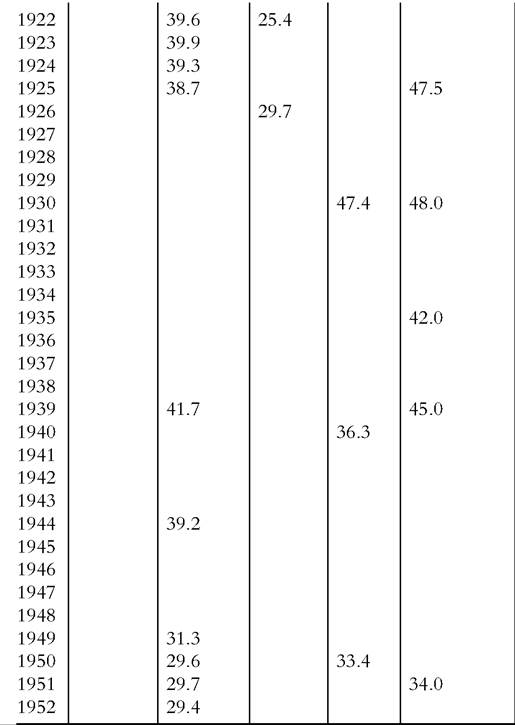
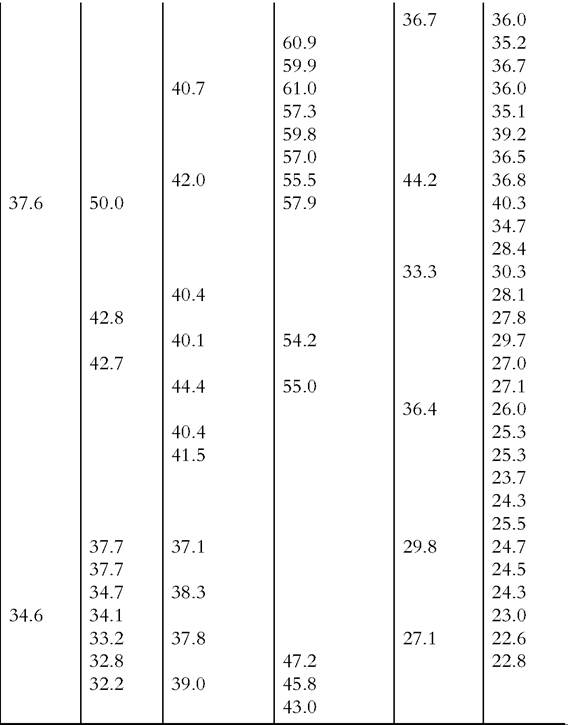
Table 7.A2 Top wealth percentile (P99-100) share of total private wealth in 10 countries
| Year | Australia | Denmark | Finland | France | Netherlands | Norway | Sweden | Switzerland | United Kingdom | USA (hh) | USA (ind) |
| 1740 | 43.6 | ||||||||||
| 1774 | 16.5 | 28.0 | |||||||||
| 1789 | 56.0 | 47.0 | |||||||||
| 1800 | 34.0 | 48.0 | |||||||||
| 1810 | 45.6 | 54.9 | |||||||||
| 1820 | 46.7 | ||||||||||
| 1830 | 47.5 | ||||||||||
| 1840 | 46.0 | ||||||||||
| 1850 | 50.3 | ||||||||||
| 1860 | 52.0 | 21.0 | |||||||||
| 1868 | 36.0 | ||||||||||
| 1870 | 50.4 | ||||||||||
| 1875 | 61.1 | ||||||||||
| 1880 | 49.5 | ||||||||||
| 1890 | 51.1 | 25.8 | bgcolor=white>|||||||||
| 1894 | 54.0 | ||||||||||
| 1900 | 58.7 | ||||||||||
| 1905 | 55.0 | ||||||||||
| 1908 | 46.3 | 53.8 | |||||||||
| 1909 | 37.4 | ||||||||||
| 1910 | 60.5 | ||||||||||
| 1911 | 69.0 | ||||||||||
| 1912 | 37.2 | ||||||||||
| 1914 | 56.5 | ||||||||||
| 1915 | 33.9 | 47.0 | 35.9 | 42.3 | |||||||
| 1916 | 35.6 | ||||||||||
| 1917 | 44.1 | 35.6 | |||||||||
| 1918 | 43.6 | 36.8 | |||||||||
| 1919 | 42.6 | 50.0 | 36.4 | 39.9 | |||||||
| 1920 | 37.2 | 49.2 | 51.5 | 37.6 | |||||||
| 1921 | 39.7 | 38.1 | 35.2 |
Continued
Table 7.A2 Top wealth percentile (P99-100) share of total private wealth in 10 countries—cont'd
| Year | Australia | Denmark | Finland | France | Netherlands | Norway | Sweden | Switzerland | United Kingdom | USA (hh) | USA (ind) |
| 1953 | 14.6 | 29.5 | 40.0 | 43.6 | 31.2 | 23.8 | |||||
| 1954 | 10.7 | 29.3 | 45.3 | 23.2 | |||||||
| 1955 | 9.9 | 29.5 | 35.0 | 41.5 | 44.5 | ||||||
| 1956 | 12.4 | 27.1 | 44.5 | 24.7 | |||||||
| 1957 | 9.4 | 27.2 | 41.9 | 43.4 | |||||||
| 1958 | 9.6 | 27.1 | 41.4 | 24.2 | |||||||
| 1959 | 9.6 | 27.9 | 41.4 | bgcolor=white> | |||||||
| 1960 | 9.4 | 26.4 | 31.9 | 37.5 | 25.5 | 33.9 | 25.2 | ||||
| 1961 | 9.0 | 26.7 | 36.5 | ||||||||
| 1962 | 7.8 | 26.9 | 31.4 | 31.8 | 24.4 | ||||||
| 1963 | 9.0 | 27.2 | |||||||||
| 1964 | 8.8 | 27.6 | 34.5 | ||||||||
| 1965 | 8.9 | 24.2 | 33.0 | 33.0 | 24.7 | ||||||
| 1966 | 7.8 | 24.8 | 23.4 | 30.6 | |||||||
| 1967 | 6.9 | 24.6 | 19.4 | 31.4 | |||||||
| 1968 | 6.3 | 33.6 | |||||||||
| 1969 | 9.0 | 41.6 | 31.1 | 31.1 | 22.9 | ||||||
| 1970 | 8.9 | 24.8 | 22.0 | 31.0 | 20.1 | 29.7 | |||||
| 1971 | 7.9 | 25.5 | 28.4 | ||||||||
| 1972 | 10.0 | 25.3 | 31.7 | 23.1 | |||||||
| 1973 | 6.8 | 21.5 | 27.3 | ||||||||
| 1974 | 8.9 | 28.0 | 22.6 | ||||||||
| 1975 | 7.8 | 25.9 | 17.0 | 22.7 | |||||||
| 1976 | 6.8 | 19.5 | 24.4 | 19.3 | |||||||
| 1977 | 7.4 | 22.1 | |||||||||
| 1978 | 6.6 | 16.6 | 20.0 | ||||||||
| 1979 | 18.5 | 20.0 | |||||||||
| 1980 | 22.0 | 19.0 | |||||||||
| 1981 | 33.0 | 18.0 | |||||||||
| 1982 | 18.0 | 18.0 | 19.1 | ||||||||
| 1983 | 17.5 | 17.7 | 20.0 | 33.8 | 21.1 | ||||||
| 1984 | 18.0 | 18.0 | 21.0 | ||||||||
| 1985 | 18.9 | 16.5 | 18.0 | 22.4 | |||||||
| 1986 | 18.7 | 18.0 | 22.7 | ||||||||
| 1987 | 9.7 | 16.1 | 18.7 | 18.0 | 21.6 | ||||||
| 1988 | 18.9 | 18.4 | 17.0 | 21.7 | |||||||
| 1989 | 15.8 | 18.9 | 17.0 | 30.1 | 22.0 | ||||||
| 1990 | 15.3 | 21.7 | 18.8 | 20.7 | 18.0 | 20.9 | |||||
| 1991 | 15.2 | 18.8 | 33.6 | 17.0 | 21.5 | ||||||
| 1992 | 15.3 | 17.5 | 19.5 | 18.0 | 30.2 | 21.2 | |||||
| 1993 | 13.7 | 22.1 | 17.0 | 18.0 | 21.3 | ||||||
| 1994 | 13.9 | 22.5 | 17.7 | 19.0 | 21.6 | ||||||
| 1995 | 26.9 | 13.9 | 20.7 | 18.0 | 19.0 | 34.6 | 21.5 | ||||
| 1996 | 27.2 | 15.1 | 23.0 | 18.3 | 20.0 | 21.4 | |||||
| 1997 | 16.2 | 22.2 | 19.1 | 20.3 | 34.8 | 22.0 | 21.2 | ||||
| 1998 | 17.3 | 23.6 | 18.7 | 22.0 | 33.9 | 21.7 | |||||
| 1999 | 21.2 | 22.2 | 19.2 | 19.3 | 23.0 | 21.7 | |||||
| 2000 | 21.2 | 23.5 | 22.2 | 19.6 | 21.9 | 23.0 | 20.8 | ||||
| 2001 | 20.6 | 18.5 | 19.7 | 22.0 | 32.7 | ||||||
| 2002 | 11.8 | 19.6 | 18.0 | 18.0 | 24.0 | ||||||
| 2003 | 20.4 | 18.3 | 17.9 | 21.0 | |||||||
| 2004 | 20.7 | 19.2 | 20.5 | 33.4 | |||||||
| 2005 | 21.6 | 20.4 | 19.7 | ||||||||
| 2006 | 16 | 21.4 | 21.0 | 18.5 | |||||||
| 2007 | 22.0 | 22.1 | 18.8 | 33.8 | |||||||
| 2008 | 21.5 | 21.9 | |||||||||
| 2009 | 22.7 | 19.8 | 21.2 | ||||||||
| 2010 | 11.4 | bgcolor=white>24.4 | 22.3 | 19.4 | 34.5 | ||||||
| 2011 | 23.0 | 18.9 |
Note: Note that many series contain several breaks in data definitions that may severely affect comparability both over time and across countries. See Table 7.A1 for sources and Section 7.3 for details. “USA (hh)” denotes top wealth shares in the U.S. distribution ofhouseholds (with some exception) and “USA (ind)” top wealth shares in the U.S. distribution of adult individuals.
Table 7.A3 Bottom four percentiles in top 5 wealth percentiles (P95-99) as share of total private wealth in nine countries
| Year | Denmark | Finland | France | Netherlands | Norway | Sweden | Switzerland | United Kingdom | USA |
| 1740 | 30.0 | ||||||||
| 1774 | 24.5 | ||||||||
| 1789 | 24.0 | 23.0 | |||||||
| 1800 | 25.5 | 21.4 | |||||||
| 1807 | 33.1 | ||||||||
| 1810 | 19.4 | ||||||||
| 1817 | 31.5 | ||||||||
| 1827 | 35.0 | ||||||||
| 1837 | 35.2 | ||||||||
| 1847 | 33.4 | ||||||||
| 1857 | 29.5 | ||||||||
| 1860 | 28.0 | ||||||||
| 1867 | 29.4 | ||||||||
| 1875 | 13.0 | ||||||||
| 1877 | 27.2 | ||||||||
| 1887 | 27.9 | ||||||||
| 1902 | 24.3 | ||||||||
| 1908 | 31.7 | 22.4 | |||||||
| 1909 | 21.2 | ||||||||
| 1911 | 18.0 | ||||||||
| 1912 | 32.0 | ||||||||
| 1913 | 26.9 | ||||||||
| 1914 | |||||||||
| 1915 | 27.2 | 20.9 | 24.0 | 26.4 | |||||
| 1917 | 27.9 | ||||||||
| 1918 | bgcolor=white>26.7|||||||||
| 1919 | 26.9 | 25.9 | |||||||
| 1920 | 29.0 | 27.7 | |||||||
| 1921 | 27.8 | 26.0 | 25.9 | ||||||
| 1922 | 29.0 | 23.4 | |||||||
| 1923 | 28.3 | 21.1 | |||||||
| 1924 | 28.2 | 21.6 | |||||||
| 1925 | 29.4 | 25.0 | 23.9 | 21.1 | |||||
| 1926 | 23.4 | 22.6 | |||||||
| 1927 | 21.5 | ||||||||
| 1928 | 22.6 | ||||||||
| 1929 | 24.6 | 23.4 | |||||||
| 1930 | 26.0 | 33.0 | 27.3 | 21.3 | |||||
| 1934 | 27.5 | ||||||||
| 1935 | 26.0 | 28.0 | |||||||
| 1936 | 28.0 | 23.2 | |||||||
| 1938 | 28.9 | 22.2 |
Table 7.A3 Bottom four percentiles in top 5 wealth percentiles (P95-99) as share of total private wealth in nine countries—cont'd
| Year | Denmark | Finland | France | Netherlands | Norway | Sweden | Switzerland | United Kingdom | USA |
| 1939 | 28.8 | 26.0 | |||||||
| 1940 | 27.2 | ||||||||
| 1941 | 27.9 | ||||||||
| 1944 | 29.2 | ||||||||
| 1945 | 28.3 | 27.2 | |||||||
| 1946 | 28.1 | ||||||||
| 1947 | 26.3 | 28.7 | 27.1 | ||||||
| 1948 | 27.8 | 29.0 | |||||||
| 1949 | 26.9 | 28.7 | 27.2 | ||||||
| 1950 | 26.4 | 26.0 | 27.8 | 27.2 | |||||
| 1951 | 26.3 | 26.8 | 27.3 | 27.9 | |||||
| 1952 | 26.3 | bgcolor=white> | 27.4 | ||||||
| 1953 | 26.2 | 26.6 | 27.7 | ||||||
| 1954 | 26.1 | 26.0 | 26.7 | ||||||
| 1955 | 25.7 | 25.8 | 27.0 | ||||||
| 1956 | 24.6 | 27.1 | |||||||
| 1957 | 24.6 | 25.5 | 25.7 | ||||||
| 1958 | 24.8 | 26.8 | |||||||
| 1959 | 24.7 | 26.1 | |||||||
| 1960 | 23.9 | 27.0 | 25.5 | 25.6 | |||||
| 1961 | 23.9 | 24.3 | |||||||
| 1962 | 23.8 | 23.5 | 21.3 | ||||||
| 1963 | 23.6 | ||||||||
| 1964 | 23.3 | 24.5 | |||||||
| 1965 | 22.0 | 25.4 | |||||||
| 1966 | 22.3 | 26.0 | 23.5 | 25.1 | |||||
| 1967 | 22.4 | 27.3 | 24.9 | ||||||
| 1968 | 25.0 | ||||||||
| 1969 | 25.2 | 25.3 | 17.7 | ||||||
| 1970 | 22.9 | 25.0 | 22.0 | 24.2 | |||||
| 1971 | 23.2 | 24.2 | |||||||
| 1972 | 22.7 | 25.2 | |||||||
| 1973 | 22.5 | 24.2 | |||||||
| 1974 | 26.0 | ||||||||
| 1975 | 24.6 | 26.0 | 21.0 | 23.8 | |||||
| 1976 | 22.8 | 24.6 | |||||||
| 1977 | 24.3 | ||||||||
| 1978 | 22 | 17.0 | |||||||
| 1979 | 23.6 | 17.0 | |||||||
| 1980 | 17.0 | ||||||||
| 1981 | 23.6 | 18.0 |
Continued
Table 7.A3 Bottom four percentiles in top 5 wealth percentiles (P95-99) as share of total private wealth in nine countries—cont'd
| Year | Denmark | bgcolor=white>FinlandFrance | Netherlands | Norway | Sweden | Switzerland | United Kingdom | USA | |
| 1982 | 27.5 | 18.0 | |||||||
| 1983 | 26.9 | 20.7 | 17.0 | 22.8 | |||||
| 1984 | 24.6 | 17.0 | |||||||
| 1985 | 24.1 | 20.5 | 18.0 | ||||||
| 1986 | 24.3 | 18.0 | |||||||
| 1987 | 20.4 | 24.7 | 19.0 | ||||||
| 1988 | 24.3 | 21.7 | 19.0 | ||||||
| 1989 | 20.1 | 24.0 | 18.0 | 24.1 | |||||
| 1990 | 19.6 | 24.2 | 21.9 | 17.0 | |||||
| 1991 | 19.4 | 23.9 | 23.0 | 18.0 | |||||
| 1992 | 19.3 | 22.8 | 21.4 | 20.0 | 24.4 | ||||
| 1993 | 17.9 | 23.7 | 17.6 | 20.0 | |||||
| 1994 | 18.0 | 26.0 | 22.8 | 17.8 | 20.0 | ||||
| 1995 | 27.0 | 18.0 | 22.4 | 17.5 | 19.0 | 21.3 | |||
| 1996 | 25.8 | 18.3 | 22.2 | 17.6 | 20.0 | ||||
| 1997 | 18.6 | 21.8 | 17.6 | 23.8 | 23.2 | 21.0 | |||
| 1998 | 18.7 | 22.1 | 17.1 | 18.0 | 23.3 | ||||
| 1999 | 19.0 | 21.9 | 17.4 | 24.7 | 20.0 | ||||
| 2000 | 18.9 | 21.4 | 17.5 | 22.5 | 21.0 | ||||
| 2001 | 17.9 | 17.4 | 22.4 | 20.0 | 25.0 | ||||
| 2002 | 17.9 | 17.5 | 23.2 | 21.0 | |||||
| 2003 | 17.9 | 17.7 | 22.8 | 19.0 | |||||
| 2004 | 17.8 | 16.5 | 22.2 | 24.1 | |||||
| 2005 | 17.7 | 16.9 | 23.9 | 19.0 | |||||
| 2006 | 21.9 | 17.2 | 21.5 | ||||||
| 2007 | 20.9 | 17.7 | 21.8 | 26.6 | |||||
| 2008 | 21.0 | 17.7 | |||||||
| 2009 | 18.6 | 22.2 | 18.0 | ||||||
| 2010 | 22.4 | 18.3 | 28.4 | ||||||
| 2011 | 22.2 | 17.7 |
Note: Note that many series contain several breaks in data definitions that may severely affect comparability both over time and across countries. For the United States, the series is based on estimates from mainly the household distribution. See Table 7.A1 for sources and Section 7.3 for details.
Table 7.A4 Top wealth decile (P90-100) as share of total private wealth in eight countries
| Denmark | Finland | France | Norway | Sweden | Switzerland | United Kingdom | USA | |
| 1740 | 86.0 | |||||||
| 1774 | 59.0 | |||||||
| 1789 | 88.0 | 81.0 | ||||||
| 1800 | 75.8 | 86.0 | ||||||
| 1810 | 79.9 | 83.4 | ||||||
| 1820 | 81.8 | |||||||
| 1830 | 83.2 | |||||||
| 1840 | 80.4 | |||||||
| 1850 | 82.4 | |||||||
| 1860 | 83.7 | |||||||
| 1870 | 81.8 | |||||||
| 1875 | 83.8 | |||||||
| 1880 | 84.6 | |||||||
| 1890 | 84.7 | 72.2 | ||||||
| 1908 | 87.3 | 86.0 | ||||||
| 1909 | 70.6 | |||||||
| 1910 | 88.5 | |||||||
| 1911 | 92.0 | |||||||
| 1912 | 76.3 | |||||||
| 1913 | 84.8 | |||||||
| 1915 | 84.8 | 69.1 | 80.5 | |||||
| 1917 | 85.9 | |||||||
| 1918 | 85.4 | |||||||
| 1919 | 83.4 | 76.3 | ||||||
| 1920 | 80.9 | 81.7 | 91.7 | |||||
| 1921 | 83.6 | 77.0 | ||||||
| 1922 | 83.9 | 64.4 | ||||||
| 1923 | 83.6 | 89.1 | ||||||
| 1924 | 83.2 | 88.1 | ||||||
| 1925 | 83.7 | 75.8 | 88.4 | |||||
| 1926 | 68.3 | 87.4 | ||||||
| 1927 | 88.3 | |||||||
| 1928 | 87.2 | |||||||
| 1929 | 76.7 | 86.3 | ||||||
| 1930 | 80.0 | 84.6 | 89.5 | 86.6 | ||||
| 1935 | 83.6 | |||||||
| 1936 | 85.7 | |||||||
| 1938 | 85.0 | |||||||
| 1939 | 84.0 | |||||||
| 1940 | 75.8 | 80.8 | ||||||
| 1941 | 81.9 | |||||||
| 1944 | 82.4 |
Continued
Table 7.A4 Top wealth decile (P90-100) as share of total private wealth in eight countries—cont'd
| Denmark | Finland | France | Norway | Sweden | Switzerland | United Kingdom | USA | |
| 1945 | 83.2 | 78.3 | ||||||
| 1946 | 81.4 | |||||||
| 1947 | 79.6 | 79.0 | ||||||
| 1948 | 78.4 | 80.7 | ||||||
| 1949 | 73.2 | 79.1 | 78.8 | |||||
| 1950 | 71.1 | 72.8 | 77.3 | |||||
| 1951 | 71.1 | 75.0 | 79.9 | |||||
| 1952 | 70.7 | |||||||
| 1953 | 70.7 | 79.9 | ||||||
| 1954 | 70.5 | |||||||
| 1955 | 70.1 | 79.9 | ||||||
| 1956 | 66.8 | |||||||
| 1957 | 66.9 | 79.9 | ||||||
| 1958 | 66.8 | |||||||
| 1959 | 67.4 | |||||||
| 1960 | 65.2 | 69.9 | 66.4 | 71.5 | ||||
| 1961 | 65.4 | 71.7 | ||||||
| 1962 | 65.4 | 67.3 | 64.6 | |||||
| 1963 | 65.1 | |||||||
| 1964 | bgcolor=white>65.171.4 | |||||||
| 1965 | 60.9 | 71.7 | ||||||
| 1966 | 61.9 | 63.2 | 69.2 | |||||
| 1967 | 61.8 | 61.9 | 70.0 | |||||
| 1968 | 71.6 | |||||||
| 1969 | 78.9 | 67.7 | ||||||
| 1970 | 62.9 | 62.0 | 57.9 | 68.7 | ||||
| 1971 | 63.9 | 67.6 | ||||||
| 1972 | 62.8 | 70.4 | ||||||
| 1973 | 58.7 | |||||||
| 1975 | 67.5 | 54.0 | ||||||
| 1976 | 57.1 | 50.0 | ||||||
| 1977 | 50.0 | |||||||
| 1978 | 54.5 | 49.0 | ||||||
| 1979 | 58.1 | 50.0 | ||||||
| 1980 | 61.8 | 50.0 | ||||||
| 1981 | 69.6 | 50.0 | ||||||
| 1982 | 58.6 | 49.0 | ||||||
| 1983 | 56.5 | 54.5 | 50.0 | 68.9 | ||||
| 1984 | 57.1 | 48.0 | ||||||
| 1985 | 57.4 | 53.4 | 49.0 | |||||
| 1986 | 56.7 | 50.0 | ||||||
| 1987 | 50.7 | 56.9 | 51.0 | |||||
| 1988 | 56.4 | 56.6 | 49.0 | |||||
| 1989 | 50.6 | 55.7 | 48.0 | 67.2 |
Table 7.A4 Top wealth decile (P90-100) as share of total private wealth in eight countries—cont'd
| 1990 1991 1992 | Denmark | Finland 50.0 49.5 49.1 | France 61.0 | Norway 55.9 55.5 53.0 | Sweden 58.7 57.7 | Switzerland 69.9 | United Kingdom 47.0 47.0 50.0 | USA 67.1 |
| 1993 | 45.9 | 47.7 | 51.0 | |||||
| 1994 | 46.2 | 48.6 | 52.0 | |||||
| 1995 | 73.3 | 46.2 | 48.7 | 50.0 | 67.8 | |||
| 1996 | 72.2 | 47.6 | 48.9 | 52.0 | ||||
| 1997 | 49.0 | 49.5 | 61.1 | 71.3 | 54.0 | |||
| 1998 | 50.0 | 51.7 | 52.0 | bgcolor=white>68.6|||||
| 1999 | 52.9 | 52.5 | 60.3 | 55.0 | ||||
| 2000 | 52.8 | 62.1 | 52.8 | 59.9 | 56.0 | |||
| 2001 | 51.4 | 51.6 | 57.7 | 54.0 | 69.8 | |||
| 2002 | 50.5 | 51.2 | 57.3 | 54.0 | ||||
| 2003 | 51.1 | 51.9 | 56.6 | 53.0 | ||||
| 2004 | 51.4 | 52.9 | 57.8 | 69.5 | ||||
| 2005 | 51.9 | 54.2 | 58.4 | 54.0 | ||||
| 2006 | 54.6 | 55.9 | ||||||
| 2007 | 55.7 | 56.7 | 71.5 | |||||
| 2008 | 55.3 | |||||||
| 2009 | 54.4 | 52.6 | ||||||
| 2010 | 62.4 | 51.1 | 74.5 | |||||
| 2011 | 49.5 |
Note: Note that many series contain several breaks in data definitions that may severely affect comparability both over time and across countries. For the United States, the series is based on estimates from mainly the household distribution. See Table 7.A1 for sources and Section 7.3 for details.
REFERENCES
Aaberge, R., Atkinson, A.B., 2010. Top incomes in Norway. In: Atkinson, A.B., Piketty, T. (Eds.), Top Incomes over the Twentieth Century: A Global Perspective. Oxford University Press, Oxford.
Acemoglu, D., Autor, D.H., 2012. What does human capital do? A review of Goldin and Katz’s race between education and technology. J. Econ. Lit. 50 (2), 426—463.
Acemoglu, D., Autor, D.H., 2013. Skills, tasks and technologies: implications for employment and earnings. In: Ashenfelter, O., Card, D.E. (Eds.), Handbook of Labor Economics, vol. 4. North-Holland, Amsterdam.
Acemoglu, D., Johnson, S., Robinson, J.A., 2005. Institutions as the fundamental cause of long-run growth. In: Aghion, P., Durlauf, S. (Eds.), Handbook of Economic Growth. North-Holland, Amsterdam.
Acemoglu, D., Naidu, S., Restrepo, P., Robinson, J.A., 2013. Democracy, redistribution and inequality. In: Atkinson, A.B., Bourguinon, F. (Eds.), Handbook of Income Distribution. In: vol. 2. North- Holland, Amsterdam.
Adelman, I., Taft Morris, C., 1973. Economic Growth and SocialEquity in Developing Countries. Stanford University Press, Stanford.
Agarwal, S., Wang, F.H., 2009. Perverse incentives at the banks? Evidence from a natural experiment. Working Paper Series WP-09-08, Federal Reserve Bank of Chicago.
Aghion, P., Caroli, E., Garcia-Penalosa, C., 1999. Inequality and economic growth: the perspective of the new growth theories. J. Econ. Lit. 37 (4), 1615—1660.
Akerlof, G.A., 1980. A theory of social custom, of which unemployment may be one consequence. Q. J. Econ. 94 (4), 749-775.
Alvaredo, F., 2010. The rich in Argentina over the twentieth century: 1932-2004. In: Atkinson, A.B., Piketty, T. (Eds.), Top Incomes: A Global Perspective, vol. 2. Oxford University Press, Oxford.
Alvaredo, F., Atkinson, A.B., 2011. Colonial rule, apartheid and natural resources: top incomes in South Africa, 1903-2007. CEPR Working Paper No. 8155, Centre for Economic Policy Research, London.
Alvaredo, F., Gasparini, L., 2014. Post-1970 trends in inequality and poverty in developing and emerging countries. In: Atkinson, A.B., Bourguinon, F. (Eds.), Handbook of Income Distribution. In: vol. 2. North-Holland, Amsterdam.
Alvaredo, F., Pisano, E., 2010. Top incomes in Italy, 1974-2004. In: Atkinson, A.B., Piketty, T. (Eds.), Top Incomes: A Global Perspective, vol. 2. Oxford University Press, Oxford.
Alvaredo, F., Saez, E., 2009. Income and wealth concentration in Spain from a historical and fiscal perspective. J. Eur. Econ. Assoc. 7 (5), 1140-1167.
Alvaredo, F., Velez, LJ., 2013. High incomes and personal taxation in a developing economy: Colombia 1993-2010: CEQ Working Paper No. 12, Commitment to Equity.
Alvaredo, F., SandholtJensen, P., Sharp, P., 2013. Inheritance and Wealth in Denmark. Mimeo.
Andreoni, J., Erard, B., Feinstein, J., 1998. Tax compliance. J. Econ. Lit. 36 (2), 818-860.
Armour, P., Burkhauser, R.V., Larrimore, J., 2013. Deconstructing income inequality measures: a crosswalk from market income to comprehensive income. Am. Econ. Rev. Papers Proc. 103 (3), 173-177.
Atkinson, A.B., 1997. Bringing income distribution in from the cold. Econ. J. 107 (441), 297-321.
Atkinson, A.B., 1999. Is Rising Income Inequality Inevitable? A Critique of the Transatlantic Consensus WIDER Annual Lecture, vol 3. UNU-WIDER.
Atkinson, A.B., 2005. Top incomes in the UK over the 20th century. J. Roy. Stat. Soc. A Stat. Soc. 168 (2), 325-343.
Atkinson, A.B., 2007a. Methodological issues. In: Atkinson, A.B., Piketty, T. (Eds.), Top Incomes over the Twentieth Century: A Contrast Between European and English-Speaking Countries. Oxford University Press, Oxford.
Atkinson, A.B., 2007b. The distribution of top incomes in the United Kingdom, 1908-2000. In: Atkinson, A.B., Piketty, T. (Eds.), Top Incomes over the Twentieth Century: A Contrast Between Continental European and English-Speaking Countries. Oxford University Press, Oxford.
Atkinson, A.B., 2008a. The Changing Distribution ofEarnings in OECD Countries Oxford and NewYork. Oxford University Press, Oxford.
Atkinson, A.B., 2008b. Concentration among the rich. In: Davies, J.B. (Ed.), Personal Wealth from a Global Perspective. Oxford University Press, Oxford.
Atkinson, A.B., 2010. Top incomes in a rapidly growing economy: Singapore. In: Atkinson, A.B., Piketty, T. (Eds.), Top Incomes: A Global Perspective, vol. 2. Oxford University Press, Oxford.
Atkinson, A.B., 2011. Income Distribution and Taxation in Mauritius: A Seventy-five Year History of Top Incomes. Mimeo.
Atkinson, A.B., Brandolini, A., 2001. Promise and pitfalls in the use of ‘Secondary’ data-sets: income inequality in OECD countries as a case study. J. Econ. Lit. 39, 771-799.
Atkinson, A.B., Brandolini, A., 2006. The panel-of-countries approach to explaining income inequality: an interdisciplinary research agenda. In: Morgan, S.L., Grusky, D.B., Fields, G.S. (Eds.), Mobility and Inequality: Frontiers of Research in Sociology and Economics. Stanford University Press, Stanford.
Atkinson, A.B., Harrison, A., 1978. The Distribution of Personal Wealth in Britain. Cambridge University Press, Cambridge.
Atkinson, A.B., Leigh, A., 2007a. The distribution of top incomes in Australia. In: Atkinson, A.B., Piketty, T. (Eds.), Top Incomes over the Twentieth Century: A Contrast Between European and English-Speaking Countries. Oxford University Press, Oxford.
Atkinson, A.B., Leigh, A., 2007b. The distribution of top incomes in New Zealand. In: Atkinson, A.B., Piketty, T. (Eds.), Top Incomes over the Twentieth Century: A Contrast Between European and English-Speaking Countries. Oxford University Press, Oxford.
Atkinson, A.B., Leigh, A., 2013. The distribution of top incomes in five Anglo-Saxon countries over the long run. Econ. Rec. 89 (Suppl. S1), 31-47.
Atkinson, A. B., Morelli, S., 2011. Economic Crises and Inequality. Human Development Reports Research Paper 2011/06. UNDP.
Atkinson, A.B., Piketty, T. (Eds.), 2007. Top Incomes over the Twentieth Century: A Contrast Between European and English-Speaking Countries. Oxford University Press, Oxford.
Atkinson, A.B., Piketty, T. (Eds.), 2010. Top Incomes: A Global Perspective. Oxford University Press, Oxford.
Atkinson, A.B., Salverda, W.,2005.Top incomes in the Netherlands andthe United Kingdom over the 20th century. J. Eur. Econ. Assoc. 3 (4), 883-913.
Atkinson, A.B., S0gaard,J., 2013. The long-run history ofincome inequality in Denmark: top incomes from 1870 to 2010, EPRU Working Paper 2013-01.
Atkinson, A.B., Gordon, J.P.F., Harrison, A., 1989. Trends in the shares of top wealth-holders in Britain: 1923-1989. Oxf. Bull. Econ. Stat. 51 (3), 315-332.
Atkinson, A.B., Piketty, T., Saez, E., 2010. Top Incomes in the Long Run of History. In: Atkinson, A.B., Piketty, T. (Eds.), Top Incomes: A Global Perspective, vol. II. Oxford University Press, Oxford.
Atkinson, A.B., Piketty, T., Saez, E., 2011. Top incomes in the long run of history. J. Econ. Lit. 49 (1), 3-71.
Auerbach, A.J., 1989. Capital gains taxation and tax reform. Natl. Tax J. 42, 391-401.
Autor, D., Katz, L.F., Kearney, M., 2006. Thepolarization ofthe U.S. labor market. Am. Econ. Rev. Papers Proc. 96 (2), 189-194.
Banerjee, A., Piketty, T., 2009. Top Indian incomes, 1922-2000. In: Atkinson, A.B., Piketty, T. (Eds.), Top Incomes: A Global Perspective. In: vol. 2. Oxford University Press, Oxford.
Baumol, W., 1959. Business Behavior, Value and Growth. Macmillan, New York, 1959.
Bebchuck, L.A., Spamann, H., 2010. Regulating bankers’ pay. Georgetown LawJ. 98 (2), 247-287.
Bebchuk, L.A., Fried, J., 2004. PayWithout Performance: The Unfulfilled Promise of Executive Compensation. Harvard University Press, Cambridge.
Beck, T., Demirgiic-Kunt, A., Levine, R., 2007. Finance, inequality and the poor. J. Econ. Growth 12 (1), 27-49.
Bell, B., van Reenen, J., 2010. Bankers’ pay and extreme wage inequality in the UK. CEP Special Report.
Bengtsson, T., van Poppel, F., 2011. Socioeconomic inequalities in death from past to present: an introduction. Explor. Econ. Hist. 48, 343-356.
Bengtsson, N., Holmlund, B., Waldenstrom, D., 2012. Lifetime versus annual tax progressivity: Sweden, 1968-2009. UCFS Working Paper, Uppsala University.
Benhabib, J., Bisin, A., 2007. The distribution of wealth and redistributive policies, Meeting Papers 368, Society for Economic Dynamics.
Bentzel, R., 1953. Inkomstfordelningen i Sverige. Almqvist & Wiksell, Uppsala.
Bentzen, J., Schmidt-S0rensen, J.B., 1994. Wealth distribution and mobility in Denmark: a longitudinal study. CLS Working Paper 4, Aarhus School of Business, Aarhus.
Berg, L., 1983. Konsumtion och sparande—en studie av hushallens beteende. Ph.D. Dissertation, Department of Economics, Uppsala University.
Bertrand, M., Mullainathan, S., 2001. Are CEOs rewarded for luck? The ones without principals are. Q. J. Econ. 116 (3), 901-932.
Besley, T., Persson, T., 2009. The origins of state capacity: property rights, taxation, and policy. Am. Econ. Rev. 99, 1218-1244.
Besley, T., Persson, T., 2013. Taxation and development. In: Auerbach, A., Chetty, R., Feldstein, M., Saez, E. (Eds.), Handbook of Public Economics. North-Holland, Amsterdam.
Bjerke, K., 1956. Changes in Danish income distribution 1939-52. Income Wealth IV, 98-154.
Bjorklund, A., 1998. Income distribution in Sweden: what is the achievement ofthe welfare state? Swed. Econ. Policy Rev. 5, 39-80.
Bjorklund, A., Jantti, M., Lindquist, MJ., 2009. Family background and income during the rise ofthe welfare state: brother correlations in income for Swedish men born 1932-1968. J. Public Econ. 93 (5-6), 671-680.
Bjorklund, A., Roine, J., Waldenstrom, D., 2012. Intergenerational top income mobility in Sweden: capitalist dynasties in the land of equal opportunity? J. Publ. Econ. 96 (5—6), 474—484.
Bohlin, J., Lundh, C., Prado, S., 2011. Markets orpolitics? The Swedish urban-rural wage gap, 1865—1945. Unpublished manuscript, Gothenburg University.
Bordo, M.D., Meissner, C.H., 2012. Does inequality lead to a financial crisis?. NBER Working Paper 17896, National Bureau of Economic Research.
Bordo, M.D., Eichengreen, B., Klingebiel, D., Soledad Martinez-Peria, M., 2001. Is the crisis problem growing more severe? Econ. Policy 16 (32), 51—82.
BorgerhoffMulder, M., Bowles, S., Hertz, T., Bell, A., Beise,J., Clark, G., Fazzio, I., Gurven, M., Hill, K., Hooper, P., Irons, W., Kaplan, H., Leonetti, D.L., Marlowe, F., Naidu, S., Nolin, D., Piraino, P., Quinlan, R.J., Sear, R., Shenk, P., Smith, E.A., Wiessner, P., 2009. The intergenerational transmission of wealth and the dynamics of inequality in pre-modern societies. Science 326, 682—688.
Bourguignon, F., 1981. Pareto superiority of unegalitarian equilibria in Stiglitz' model of wealth distribution with convex saving function. Econometrica 49 (6), 1469—1475.
Bowley, A.L., 1914. The British super-tax and the distribution of income. Q. J. Econ. 28 (2), 255—268.
Brenner, Y., Kaelble, H., Thomas, M. (Eds.), 1991. Income Distribution in Historical Perspective. Cambridge University Press, Cambridge.
Burkhauser, R.V., Feng, S., Jenkins, S., Larrimore, J., 2012. Recent trends in top income shares in the USA: reconciling estimates from March CPS and IRS tax return data. Rev. Econ. Stat. 94 (2), 371—388.
Burkhauser, R.V., Hahn, M., Wilkins, R., 2013. Measuring top incomes using tax record data: a cautionary tale from Australia. NBER Working Paper No. 19121.
Cahuc, P., Challe, E., 2009. Produce or speculate? Asset bubbles, occupational choice and efficiency. IZA Discussion Paper 4630.
Caselli, F., 1999. Technological revolutions. Am. Econ. Rev. 89 (1), 78—102.
Christensen, H.M., 2003. Skatteberegningsreglerne gennem 100 ar. Skatteministeriet, Copenhagen.
Clark, G., 2008. A Farewell to Alms. A Brief History of the World. Princeton University Press, Princeton, NJ.
Coghlan, T., 1906. Discussion. J. Roy. Stat. Soc. 69, 735—736.
Comin, D., Mestieri, M., 2013. If technology has arrived everywhere, why has income diverged?. NBER Working Papers 19010, National Bureau of Economic Research.
Cowell, F., 2011. Measuring inequality. Oxford University Press, Oxford.
Cowell, F., 2013. UK wealth inequality in an international context. In: Hills, J. (Ed.), Wealth in the UK. Oxford University Press, Oxford.
Crum, W.L., 1935. Individual shares in the national income. Rev. Econ. Stat. 17 (6), 116—130.
Davies, J.B., Shorrocks, A.F., 2000. The distribution of wealth. In: Atkinson, A.B., Bourguignon, F. (Eds.), Handbook of Income Distribution, vol. 1. North-Holland, Amsterdam.
De Long, J.B., 1996. Billionaires. www.j-bradford-delong.net/Econ_Articles/billionaires.html (accessed 10.07.06).
Dell, F., 2007. Top incomes in Germany throughout the twentieth century. In: Atkinson, A.B., Piketty, T. (Eds.), Top Incomes over the Twentieth Century: A Contrast Between European and English-Speaking Countries. Oxford University Press, Oxford.
Dell, F., Piketty, T., Saez, E., 2007. Income and wealth concentration in Switzerland over the twentieth century. In: Atkinson, A.B., Piketty, T. (Eds.), Top Incomes over the Twentieth Century: A Contrast Between European and English-Speaking Countries. Oxford University Press, Oxford.
Dew-Becker, I., Gordon, R.J., 2005. Where did the productivity growth go? Inflation dynamics and the distribution of income. Brooking Papers Econ. Act. 2, 67—127.
Edlund, L., Kopczuk, W., 2009. Women, wealth and mobility. Am. Econ. Rev. 99 (1), 146—178.
Eloranta, J., Garcia-Iglesias, C., Jalava, J., Ojala, J., 2006. On the road to prosperity: an introduction. In: Ojala, J., Eloranta, J., Jalava, J. (Eds.), On the Road to Prosperity. An Economic History of Finland. SKS, Helsinki.
Epland, J., Kirkeberg, M.I., 2012. Wealth distribution in Norway: evidence from a new register-based data. Statistics Norway, Report 35/2012.
Esping-Andersen, G., 1990. The Three Worlds of Welfare Capitalism. Princeton University Press, Princeton, NJ.
Fahlenbrach, R., Stulz, R., 2009. Bank CEO incentives and the credit crisis. J. Financ. Econ. 99 (1), 11-26.
Feenberg, D.R., Poterba, J.M., 1993. Income inequality and the incomes of very high-income taxpayers: evidence from tax returns. In: Poterba, J.M. (Ed.), Tax Policy and the Economy, vol. 7. MIT Press, Cambridge and London, pp. 145-177.
Feldstein, M., 1976. Social security and the distribution of wealth. J. Am. Stat. Assoc. 71, 800-807.
Finansdepartementet, 1879. Sammandrag ofver stampelafgifterna for lagfarter, inteckningar, aktens- kapsforord, morgongafvobref och afhandlingar omlosoreskop under ar 1877 samt for bouppteckningar under aren 1873-1877. Finansdepartementet, Stockholm.
Finansdepartementet, 1910. Bouppteckningar efter aflidna, inregistrerade vid vederborande domstolar aren 1906-1908. Finansdepartementet, Stockholm.
Frank, R., Cook, PJ., 1995. The Winner-Take-All Society: How More and More Americans Compete for Ever Fewer and Bigger Prizes, Encouraging Economic Waste, Income Inequality, and an Impoverished Cultural Life. Free Press, New York.
Frankel, S.H., Herzfeld, H., 1943. European income distribution in the Union of South Africa and the effect thereon of income taxation. S. Afr. J. Econ. 11 (2), 121-136.
Freeman, R., 2011. Globalization and inequality. In: Salverda, W., Nolan, B., Smeeding, T.M. (Eds.), The Oxford Handbook on Economic Inequality. Oxford University Press, Oxford.
Freeman, R., Gelber, A.M., 2010. Prize structure and information in tournaments: experimental evidence. Am. Econ. J. 2 (1), 149-164.
Frick, J., Grabka, M., 2013. Public pension entitlement and the distribution of wealth. In: Gornick, J.C., Jantti, M. (Eds.), Income Inequality. Economic Disparities and the Middle Class in Affluent Countries. Stanford University Press, Stanford.
Friedman, E., Johnson, S., Kaufman, D., Zoido-Lobaton, P., 2000. Dodging the grabbing hand: the determinants of unofficial activity in 69 countries. J. Public Econ. 76 (3), 459-493.
Friesen, S.J., Scheidel, W., 2009. The Size of the Economy and the Distribution of Income in the Roman Empire.
Frydman, C., Saks, R.E., 2007. Executive compensation: a new view from a long-term perspective, 1936-2005. Rev. Financ. Stud. 23 (5), 2099-2138.
Gabaix, X., Landier, A., 2008. Why has CEO pay increased so much? Q. J. Econ. 123 (1), 49-100.
Gale, W.G., 1998. The effects of pensions on household wealth: a reevaluation of theory and evidence. J. Polit. Econ. 106 (4), 706-723.
Gersbach, H., Schmutzler, A., 2007. Does globalization create superstars?. CEPR Discussion Papers 6222, Centre for Economic Policy Research, London.
Goldin, C., Katz, L., 1998. The origins of technology-skill complementarity. Q. J. Econ. 113 (3), 693-732.
Goldin, C., Katz, L.F., 2008. The Race Between Education and Technology. The Belknap Press of Harvard University Press, Cambridge, MA.
Grossman, G.M., Rossi-Hansberg, E., 2008. Trading tasks: a simple theory of offshoring. Am. Econ. Rev. 98 (5), 1978-1997.
Haig, R.M., 1921. The Federal Income Tax. Columbia University Press, New York.
Hoffman, P.T., Postel-Vinay, G., Rosenthal, J.-L., 2007. SurvivingLarge Losses: Financial Crises, the Middle Class, and the Development of Capital Markets. Harvard University Press, Cambridge, MA.
Inland Revenue Statistics, 2006. Distribution among the adult population of marketable wealth. http:// www.hmrc.gov.uk/stats/personal_wealth/table13_5.xls (accessed 22.06.06).
Jansson, K., Johansson, L., 2000. Foormoogenhetsfoordelningen i Sverige 1997 med tillbakablick till 1975. Statistics Sweden, Stockholm.
Jenkins, S., Brandolini, A., Micklewright, J., Nolan, B., 2013. The Great Recession and the Distribution of Household Income. Oxford University Press, Oxford.
Jantti, M., 2006. Trends in the distribution ofincome andwealth: Finland 1987-1998. In: Wolff, E.N. (Ed.), International Perspectives on Household Wealth. Edward Elgar, Northampton.
Jantti, M., Riihela, M., Sullstrom, R., Tuomala, M., 2010. Trends in top income shares in Finland. In: Atkinson, A.B., Piketty, T. (Eds.), Top Incomes: A Global Perspective, vol. 2. Oxford University Press, Oxford.
Johannessen, N., Zucman, G., 2014. The end of bank secrecy? an evaluation of the G20 tax haven crackdown. Am. Econ. J. Econ. Pol. 6 (1), 65-69.
Johansson, F., Klevmarken, A.N., 2007. Comparing survey and register wealth data. In: Essays on Measurement Error and Nonresponse. Uppsala University Economic Studies 103, Uppsala University, Uppsala.
Johnson, N.O., 1935. The brookings report on inequality in income distribution. Q. J. Econ. 49 (4), 718-724.
Johnson, N.O., 1937. The pareto law. Rev. Econ. Stat. 19, 20-26.
Jones, A.H., 1970. Wealth estimates for the American middle colonies, 1774. Econ. Dev. Cult. Change (4), Part 2, pp. i-x+ 1-172.
Jones, A.H., 1972. Wealth estimates for the New England colonies about 1770. J. Econ. Hist. 32, 98-127.
Jones, A.H., 1980. Wealth of a Nation to Be: The American Colonies on the Eve of the American Revolution. Columbia University Press, New York.
Journal of Roman Studies, 99, 61-91.
Jutikkala, E., 1953. The distribution of wealth in Finland in 1800. Scand. Econ. Hist. Rev. 1 (1), 81-103. Kanbur, R., 2000. Income distribution and development. In: Atkinson, A.B., Bourguignon, F. (Eds.), Handbook of Income Distribution, vol. 1. North-Holland, Amsterdam.
Kaplan, S., Rauh, J., 2010. Wall street and main street: what contributes to the rise in the highest incomes? Rev. Financ. Stud. 23 (3), 1004-1050.
Katic, P., Leigh, A., 2013. Top wealth shares in Australia 1915-2012. Working Paper, International Water Management Institute.
Katz, L., Autor, D., 1999. Changes in the wage structure and earnings inequality. In: Ashenfelter, O., Card, D. (Eds.), Handbook of Labor Economics, vol. 3. North-Holland, Amsterdam.
Katz, L., Murphy, K., 1992. Changes in relative wages: supply and demand factors. Q. J. Econ. 107, 35-78.
Kennickell, A., 2009. Ponds and Streams: Wealth and Income in the U.S., 1989 to 2007. Finance and Economics Discussion Series 2009-2013, Board of Governors of the Federal Reserve System (U.S.), Washington, D.C.
Kennickell, A., 2011. Tossed and Turned: Wealth Dynamics of U.S. Households 2007-2009. Finance and Economics Discussion Series 2011-51, Board of Governors of the Federal Reserve System (U.S.), Washington, D.C.
Kimr, A.N., 1917. Indtaegts- og formuesforhold efter skatteligningerne for 1913/14 sammenignet med tidli- gere og senere aar. Departementet for Sociale Saker, Kristiania.
Kopczuk, W., Saez, E., 2004. Top wealth shares in the United States, 1916-2000: evidence from estate tax returns. Natl. Tax J. 57 (2), 445-487.
Kopczuk, W., Saez, E., Song, J., 2007. The American Dream: Inequality and Mobility in Social Security Earnings Data Since 1937, NBER Working Paper No. 13345. National Bureau of Economic Research.
Kopczuk, W., Saez, E., Song, J., 2010. Earnings inequality and mobility in the United States: evidence from social security data since 1937. Q. J. Econ. 125 (1), 91-128.
Kuznets, S., 1953. Shares of Upper Income Groups in Income and Savings. National Bureau of Economic Research, Cambridge, Mass.
Kuznets, S., 1955. Economic growth and income inequality. Am. Econ. Rev. 45 (1), 1-28.
Kuznets, S., 1963. Quantitative aspects of the economic growth of nations: VIII. Distribution of income by size. Econ. Dev. Cult. Change 11 (2, part 2), 1-80.
Laeven, L., Valencia, F., 2008. Systemic banking crises: a new database. IMF Working Paper No. 08/224. Lampman, R.J., 1962. The Share of Top Wealth-Holders in National Wealth: 1922-56. Princeton University Press, Princeton, NJ.
Lane, P.R., Milesi-Feretti, G.M., 2001. The external wealth of nations: measures of foreign assets and liabilities for industrial and developing countries. J. Int. Econ. 55, 263-294.
Lane, P.R., Milesi-Feretti, G.M., 2007. The external wealth of nations mark II. J. Int. Econ. 73, 223-250.
Lavindkomstkommissionen, 1979. Udviklingen i Ibrmuefordelingen 1960—1977. Delrapport 2, Lavind- komstkommissionen, K0benhavn.
Lazear, E.P., Rosen, S., 1981. Rank-order tournaments as optimum labor contracts. J. Polit. Econ. 89, 841-864.
Leamer, E.E., 2007. A flat world, a level playing field, a small world after all, or none of the above? A review of Thomas L Friedman's the World is flat. J. Econ. Lit. 45 (1), 83-126.
Leigh, A., 2005. Deriving long-run inequality series from tax data. Econ. Rec. 81 (255), 58-70.
Leigh, A., 2007. How closely do top income shares track other measures of inequality? Econ. J. 117 (524), F619-F633.
Leigh, A., 2009. Top incomes. In: Salverda, W., Nolan, B., Smeeding, T. (Eds.), The Oxford Handbook of Economic Inequality. Oxford University Press, Oxford.
Leigh, A., van der Eng, P., 2009. Top incomes in Indonesia: 1920-2004. In: Atkinson, A.B., Piketty, T. (Eds.), Top Incomes: A Global Perspective, vol. 2. Oxford University Press, Oxford.
Leigh, A., Jencks, C., Smeeding, T.M., 2011. Health and economic inequality. In: Nolan, B., Salverda, W., Smeeding, T.M. (Eds.), The Oxford Handbook of Economic Inequality. Oxford University Press, Oxford.
Levy, P., Temin, P., 2007. Inequality and institutions in 20th century America. NBER Working Paper No. 13106.
Lindahl, M., Palme, M., Sandgren-Massih, S., Sjogren, A., 2012. Dynastic capital and long-term intergenerational persistence of earnings and educational attainment. Working Paper, Uppsala University.
Lindert, P.H., 1986. Unequal English wealth since 1670. J. Polit. Econ. 94 (6), 1127-1162.
Lindert, P.H., 2000. Three centuries of inequality in Britain and America. In: Atkinson, A.B., Bourguignon, F. (Eds.), Handbook of Income Distribution, vol. 1. North-Holland, Amsterdam.
Lindert, P., Williamson, J. G., 2003. Does globalization make the world more unequal? In: Bordo, M., Taylor, A., Williamson, J.G. (Eds.), Globalization in Historical Perspective. University of Chicago Press and National Bureau of Economic Research.
Lindert, P.H., Williamson, J.G., 2014. American incomes since the seventeenth century: gaining world leadership and losing equality. Princeton University Press, Princeton, NJ.
Ljungberg, J., 2006. The secular decline of professional relative earnings in Sweden. Evidence and explanation. Unpublished manuscript, Lund University.
LO, 2013. Makteliten—klyftornabestar. En studie av inkomstutvecklingen for makteliten perioden 1950 till 2011. Landsorganisationen, Stockholm.
Long, J., Ferrie, J., 2007. The path to convergence: intergenerational occupational mobility in Britain and the US in three eras. Econ. J. 117, C61-C71.
Lydall, H., 1968. The Structure of Earnings. Oxford University Press, London.
Mallet, B., 1908. A method of estimating capital wealth from the estate duty statistics. J. Roy. Stat. Soc. 71, 65-84.
Manasse, P., Turrini, A., 2001. Trade, wages, and ‘superstars'. J. Int. Econ. 54 (1), 97-117.
Marshall, A., 1920. Principles of Economics, eighth ed. Macmillan, London.
Mayer, T., 1960. Distribution of ability and earnings. Rev. Econ. Stat. 42 (2), 189-195.
Meade, J.E., 1964. Efficiency, Equality, and the Ownership of Property. Allen and Unwin, London.
Melitz, M.J., 2003. The impact of trade on intra-industry reallocations and aggregate industry productivity. Econometrica 71 (6), 1695-1725.
Melitz, M.J., Ottaviano, G., 2008. Market size, trade, and productivity. Rev. Econ. Stud. 75, 295-316.
Milanovic, B., 2006. An estimate of average income and inequality in Byzantium around year 1000. Rev. Income Wealth 52 (3), 449-470.
Milanovic, B., 2013. The Inequality Possibility Frontier: The Extensions and New Applications. Mimeo, World Bank.
Milanovic, B., Lindert, P., Williamson, J.G., 2011. Pre-industrial inequality. Econ. J. 121, 255-272.
Moehling, C.M., Steckel, R., 2001. Rising inequality: trends in the distribution of wealth in industrializing New England. J. Econ. Hist. 61 (1), 160-183.
Mohn, J.R., 1873. Statistiske bidrag til belysning af privatformuens fordeling i Norge. Norsk Retstidende 1-2, 1-32.
Mokyr,J., 1990. The Lever of Riches: Technological Creativity and Economic Progress. Oxford University Press, Oxford.
Moriguchi, C., Saez, E., 2008. The evolution of income concentration in Japan, 1885—2002: evidence from income tax statistics. Rev. Econ. Stat. 90, 713—734.
Morrisson, C., 2000. Historical perspectives on income distribution: the case ofEurope. In: Atkinson, A.B., Bourguignon, F. (Eds.), Handbook of Income Distribution, vol 1. Elsevier, North-Holland, Amsterdam, pp. 217—260.
Murphy, KJ., 1999. Executive compensation. In: Ashenfelter, O., Card, D. (Eds.), Handbook ofLaborEco- nomics, vol. 3. North-Holland, Amsterdam.
Nolan, B., 2007. Long term trends in top income shares in Ireland. In: Atkinson, A.B., Piketty, T. (Eds.), Top Incomes over the Twentieth Century: A Contrast Between European and English-Speaking Countries. Oxford University Press, Oxford.
Office for National Statistics, 2011. The Effects of Taxes and Benefits on Household Income, 2009/10. Further Analysis and Methodology. Office for National Statistics, London, UK.
Ohlsson, H., Roine, J., Waldenstrom, D., 2008. Long-run changes in the concentration of wealth: an overview of recent findings. In: Davies, J.B. (Ed.), Personal Wealth from a Global Perspective. Oxford University Press, Oxford.
O’Rourke, K.H., Williamson, J.G., 1999. Globalization and History. The Evolution of the 19th Century Atlantic Economy. MIT Press, Cambridge, MA.
O’Rourke, K.H., Taylor, A., Williamson, J.G., 1996. Factor price convergence in the late nineteenth century. Int. Econ. Rev. 37, 499-530.
Pareto, V., 1897. Cours d’economie politique, vol. ii, F. Rouge, Lausanne.
Paukert, F., 1973. Income distribution at different levels of development: a survey of evidence. Int. Lab. Rev. 108, 97-125.
Persson, M., Sandmo, A., 2005. Taxation and tournaments. J. Public Econ. Theory 7 (4), 543-559.
Phelps Brown, H., 1977. The Inequality of Pay. University of California Press, Berkeley.
Phillippon, T., Reshef, A., 2012. Wages and human capital in the U.S. financial industry: 1909-2006. Q. J. Econ. 127 (4), 1551-1609.
Piketty, T., 2000. Theories of persistent inequality and intergenerational mobility. In: Atkinson, A.B., Bourguignon, F. (Eds.), Handbook of Income Distribution, vol. 1. North-Holland, Amsterdam.
Piketty, T., 2001a. Les hauts revenus en France au 20eme siecle. Grasset, Paris.
Piketty, T., 2001b. Income inequality in France, 1900-1998. CEPR Discussion Paper No. 2876, Centre for Economic Policy Research, London.
Piketty, T., 2003. Income inequality in France, 1901-1998. J. Polit. Econ. 111 (5), 1004-1042.
Piketty, T., 2005. Top income shares in the long run: an overview. J. Eur. Econ. Assoc. 3 (2-3), 1-11.
Piketty, T., 2006. The Kuznets’ curve, yesterday and tomorrow. In: Banerjee, A., Benabou, R., Mookerhee, D. (Eds.), Understanding Poverty. Oxford University Press, Oxford.
Piketty, T., 2007. Income inequality in France, 1900-1998. In: Atkinson, A.B., Piketty, T. (Eds.), Top Incomes over the Twentieth Century: A Contrast Between European and English-Speaking Countries. Oxford University Press, Oxford.
Piketty, T., 2011. On the long-run evolution of inheritance: France 1820-2050. Q. J. Econ. 126 (3), 1071-1131.
Piketty, T., 2014. Capital in the 21st Century. Harvard University Press, Cambridge, MA.
Piketty, T., Qian, N., 2009. Income inequality and progressive income taxation in China and India, 1986-2015. Am. Econ. J. Appl. Econ. 1 (2), 53-63.
Piketty, T., Saez, E., 2003. Income inequality in the United States, 1913-1998. Q. J. Econ. 118 (1), 1-39.
Piketty, T., Saez, E., 2006. The evolution of top incomes: a historical and international perspective. Am. Econ. Rev. Papers Proc. 96 (2), 200-205.
Piketty, T., Saez, E., 2007. How progressive is the U.S. federal tax system? A historical and international perspective. J. Econ. Perspect. 21 (1), 3-24.
Piketty, T., Saez, E., 2013a. Optimal labor income taxation. In: Handbook of Public Economics. vol. 5. North-Holland, Amsterdam.
Piketty, T., Saez, E., 2013b. A theory of optimal inheritance taxation. Econometrica 81 (5), 1851-1886.
Piketty, T., Zucman, G.,2013. Capital is back: wealth-income ratios in rich countries, 1700-2010. Working PaperParis, School of Economics.
Piketty, T., Zucman, G., 2014. Capital is back: wealth-income ratios in rich countries, 1700-2010. Q. J. Econ. 129 (3), 1255-1310.
Piketty, T., Postel-Vinay, G., Rosenthal, J.-L., 2004. Wealth concentration in a developing economy: Paris and France, 1807-1994. CEPR Working Paper 4631Centre for Economic Policy Research, London.
Piketty, T., Postel-Vinay, G., Rosenthal, J.-L., 2006. Wealth concentration in a developing economy: Paris and France, 1807-1994. Am. Econ. Rev. 96 (1), 236-256.
Piketty, T., Saez, E., Stantcheva, S., 2013. Optimal taxation of top incomes: a tale of three elasticities. Am. Econ. J. Econ. Pol. 6 (1), 230-271.
Poterba, J.M., Feenberg, D.R., 2000. The income and tax share of very high-income households, 1960-1995. Am. Econ. Rev. 90 (2), 264-270.
Reich, R., 2010. Aftershock. The Next Economy and America’s Future. Alfred A. Knopf.
Roine, J., Waldenstrom, D., 2008. The evolution of top incomes in an egalitarian society: Sweden, 1903-2004. J. Public Econ. 92, 366-387.
Roine, J., Waldenstrom, D., 2009. Wealth concentration over the path of development: Sweden, 1873-2006. Scand. J. Econ. 111 (1), 151-187.
Roine, J., Waldenstrom, D., 2010. Top incomes in Sweden over the twentieth century. In: Atkinson, A.B., Piketty, T. (Eds.), Top Incomes: A Global Perspective, vol. 2. Oxford University Press, Oxford.
Roine, J., Waldenstroom, D., 2011. Common trends and shocks to top incomes: a structural breaks approach. Rev. Econ. Stat. 93 (3), 832-846.
Roine, J., Waldenstrom, D., 2012. On the role of capital gains in Swedish income inequality. Rev. Income Wealth 58 (3), 569-587.
Roine, J., Vlachos, J., Waldenstroom, D., 2009. The long-run determinants of inequality: what can we learn from top income data? J. Public Econ. 93 (7-8), 974-988.
Rosen, S., 1981. The economics of superstars. Am. Econ. Rev. 71 (5), 845-858.
Rosenbloom, J.L., Stutes, G.W., 2008. Reexamining the distribution of wealth in 1870. In: Rosenbloom, J. L. (Ed.), Quantitative Economic History: The Good of Counting. Routledge, London.
Saez, E., 2004. Reported incomes and marginal tax rates, 1960-2000: evidence and policy implications. In: Poterba, J. (Ed.), Tax Policy and the Economy. In: vol. 18. MIT Press, Cambridge, MA.
Saez, E., Veall, M.R., 2005. The evolution of high incomes in Northern America: lessons from Canadian evidence. Am. Econ. Rev. 95, 831-849.
Saez, E., Slemrod, J., Giertz, E., 2012. The elasticity of taxable income with respect to marginal tax rates: a critical review. J. Econ. Lit. 50, 3-50.
Salverda, W., 7, A.B., 2007. Top incomes in the Netherlands over the twentieth century. In: Atkinson, A.B., Piketty, T. (Eds.), Top Incomes Over the Twentieth Century: A Contrast Between Continental European and English-Speaking Countries. Oxford University Press, Oxford.
Salverda, W., Haas, C., de Graaf-Zijl, M., Lancee, B., Notten, N., Ooms, T., 2013. Country Report for the Netherlands: Growing Inequalities and Their Impacts in the Netherlands. GINI Project, Amsterdam.
Sattinger, M., 1979. Differential rents and the distribution of earnings. Oxford Econ. Papers 31, 60-71.
Sattinger, M., 1993. Assignment models of the distribution of earnings. J. Econ. Lit. 31, 831-880.
Scheve, K.F., Stasavage, D., 2009. Institutions, partisanship, and inequality in the long run. World Polit. 61 (2), 215-253.
Scheve, K.F., Stasavage, D., 2010. The conscription of wealth: mass warfare and the demand for progressive taxation. Int. Org. 64 (3), 529-561.
Scheve, K.F., Stasavage, D., 2012. Democracy, war, and wealth: evidence from two centuries of inheritance taxation. Am. Polit. Sci. Rev. 106 (1), 82-102.
Seldon, A., 1979. Tax Avoision: The Economic, Legal and Moral Inter-relationships Between Avoidance and Evasion. Institute of Public Affairs, London.
Shammas, C., 1993. A new look at long-term trends in wealth inequality in the United States. Am. Hist. Rev. 98 (4), 412-432.
Simon, H.A., 1957. The compensation of executives. Sociometry 20 (I), 32-35.
Simons, H., 1938. Personal Income Taxation: The Definition of Income as a Problem of Fiscal Policy. University of Chicago Press, Chicago.
Slemrod,J., 1992. Why People Pay Taxes: Tax Compliance andEnforcement. University ofMichigan Press, Ann Arbor.
Slemrod, J., 1996. High-income families and the tax changes of the 1980s: the anatomy of behavioral response. In: Feldstein, M., Poterba,J. (Eds.),Empirical Foundations ofHouseholdTaxation. University of Chicago Press and the National Bureau of Economic Research, pp. 169-188.
Slemrod, J., 2000. The economics of taxing the rich. In: Slemrod, J. (Ed.), Does Atlas Shrug? The Economic Consequences of Taxing the Rich. Russell Sage Foundation and Harvard University Press.
Slemrod,J., Yitzhaki, S., 2002. Taxavoidance, evasion, andadministration. In: Auerbach, AJ., Feldstein, M. (Eds.), Handbook of Public Economics. In: vol. 3. North-Holland, Amsterdam.
Smeeding, T., Thompson, J., Morelli, S., 2014. Post-1970 trends in within-country inequality and poverty.
In: Atkinson, A.B., Bourguignon, F. (Eds.), Handbook of Income Distribution. In: vol. 2. North- Holland, Amsterdam (Chapter 9).
Smith, J.D., 1984. Trends in the concentration of personal wealth in the United States, 1958 to 1976. Rev. Income Wealth 30 (4), 419-428.
Soderberg, J., 1991. Wage differentials in Sweden, 1725-1950. In: Brenner, Y.S., Kaelble, H., Mark, T. (Eds.), Income Distribution in Historical Perspective. Cambridge University Press, Cambridge.
Soltow, L., 1968. Long-run changes in British income inequality. Econ. Hist. Rev. 21 (1), 17-29.
Soltow, L., 1971. Economic inequality in the United States in the period from 1790 to 1860. J. Econ. Hist. 31, 822-839.
Soltow, L., 1980. Wealth distribution in Norway and Denmark in 1789. Hist. Tidsskr. 59, 221-235.
Soltow, L., 1981a. Wealth distribution in Finland in 1800. Scand. Econ. Hist. Rev. 27 (1), 21-32.
Soltow, L., 1981b. Wealth distribution in Denmark in 1789. Scand. Econ. Hist. Rev. 27 (2), 121-138.
Soltow, L., 1981c. The distribution of property values in England and Wales in 1798. Econ. Hist. Rev. 34 (2), 60-70.
Soltow, L., 1985. The Swedish census of wealth at the beginning of the 19th century. Scand. Econ. Hist. Rev. 33 (1), 1-24.
Soltow, L., 1989. Distribution of Wealth and Income in the United States in 1798. University of Pittsburgh Press, Pittsburgh, PA.
Soltow, L., 1998. Inequality of income and wealth at the beginning of the 19th century. In: Soltow, L., van Zanden, J.L. (Eds.), Income & Wealth Inequality in the Netherlands 16th-20th Century. Het Spinhuis, Amsterdam.
Soltow, L., van Zanden,J.L., 1998. Income &Wealth Inequality in the Netherlands 16th-20th Century. Het Spinhuis, Amsterdam.
SOU, 1942. Forutsattningarna for och verkningarna av en engangsskatt a formogenhet i Sverige. SOU 1942:52, Finansdepartementet, Stockholm.
SOU, 1957. Arvsbeskattning, betankande av Arvsskattesakkunniga. SOU 1957:48, Finansdepartementet, Stockholm.
SOU, 1969. Kapitalbeskattningen, betankande av Kapitalskatteberedningen. SOU 1969:54, Norstedt, Stockholm.
SOU, 2004. Egendomsskatter: reform av arvs- och gavoskatter. Slutbetankande av Egendomsskattekommit- ten. SOU 2004:66, Fritzes, Stockholm.
Spant, R., 1979. Den svenska Iormogenhetsfbrdelningens utveckling. SOU 1979:9, Fritzes, Stockholm.
Spant, R., 1982. The distribution of household wealth in some developed countries. A comparative study of Sweden, Denmark, France, Germany, United Kingdom and United States. In: Kessler, D., Masson, A., Strauss-Kahn, D. (Eds.), Accumulation et Repartition de Patrimoines. CNRS and Economica, Paris.
Stamp, J.C., 1914. A new illustration of Pareto's law. J. Roy. Stat. Soc. 77, 200-204.
Stamp, J.C., 1916. British Incomes and Property: The Application of Official Statistics to Economic Problems. P.S. King, London.
Statistics Denmark, 1995. Indkomster og Formuer 1995. Copenhagen.
Statistics Denmark, 1996. Indkomster og Formuer 1996. Copenhagen.
Statistics Finland, 1911. Bidrag till Finlands officiella statistik, IV. Formogenhetsforhailanden. Kungliga senatens tryckeri, Helsingfors.
Statistics Finland, 2006. Tulo-javarallisuustilasto 2004. Statistics Finland, Helsinki.
Statistics Finland, 2007. Kotitalouksien varallisuus 1988—2004. Statistics Finland, Helsinki.
Statistics Netherlands, 2010. Procesbeschrijving statistiek Vermogens huishoudens, Vermogensstatistiek. Centraal Bureau voor de Statistiek, Den Haag/Heerlen.
Statistics Norway, 1915a. Indtaegs og formuesforhold efter skatteligningen 1911 i forbindelse med Folke- t^llingen 1910, Kristiania.
Statistics Norway, 1915b. Indtaegt, formue og fordelingen av den kommunale skat if0lge skatteligningen for 1913-1914, Kristiania.
Statistics Norway, 1934. Folketellingen i Norge 1 desember 1930. 7 hefte. Inntekt og formue efter skatteligningen 1930-31, Oslo.
Statistics Norway (various years), Statistisk Arbok, Oslo.
Statistics Sweden, 1927. Folkrakningen den 31 december 1920. V. Yrkesrakningen, 2: yrke, inkomst och formogenhet kombinerade inbordes samt med kon, civilstand och alder. P.A. Norstedt & Soner, Stockholm.
Statistics Sweden, 1937. Folkrakningen den 31 december 1930. VII. Folkmangden efter yrke, inkomst och formogenhet: 2 avd. P.A. Norstedt & Soner, Stockholm.
Statistics Sweden, 1938. Folkraakningen den 31 december 1930. VIII. Folkmaangden efter yrke, inkomst och foa rmoa genhet: 3 avd. P.A. Norstedt & Sooner, Stockholm.
Statistics Sweden, 1940. Saarskilda folkraakningen 1935/36. VIII. Partiella folkraakningen i mars 1936: Yrke. Yrkesvaxling. Skol- och yrkesutbildning. Inkomst och formogenhet. P.A. Norstedt & Soner, Stockholm, Stockholm.
Statistics Sweden, 1951. Folkraakningen den 31 december 1945. VIII:1. Partiella undersookningar (bottensam- plingen). Behandlar delar av statistiken oover inkomst. Sveriges Officiella Statistik: Folkmaangden och dess forandringar. K.L. Beckmans Boktryckeri, Stockholm.
Statistics Sweden, 1956. Folkrakningen den 31 december 1950. VII. Urvalsunderscokningar. Statistiken «over inkomst. Sveriges Officiella Statistik: Folkmangden och dess forandringar. Statistiska Centalbyran, Stockholm.
Steinmo, S., 1993. Taxation and Democracy. Yale University Press, New Haven.
Stiglitz, J.E., 1969. Distribution of income and wealth among individuals. Econometrica 37 (3), 382-397.
Tervio, M., 2008. The difference that CEOs make: an assignment model approach. Am. Econ. Rev. 98 (3), 642-668.
Tinbergen, J., 1974. Substitution of graduate by other labor. Kyklos 27, 217-226.
Tinbergen, J., 1975. Income Distribution: Analysis and Policies. North-Holland, Amsterdam.
Tucker, R.S., 1938. The distribution of income among income taxpayers in the United States, 1863-1935. Q. J. Econ. 52 (4), 547-587.
Tuomala, M., Vilmunen, J., 1988. On the trends over time in the degree of concentration of wealth in Finland. Finnish Econ. Papers 1, 184-190.
U.S. Census Bureau, 2011. Income, Poverty, and Health Insurance Coverage in the United States: 2010. U.S. Census Bureau, Washington, DC.
van Zanden, J.L., 1998a. The egalitarian revolution of the 20th century. In: Soltow, L., van Zanden, J.L. (Eds.), Income & Wealth Inequality in the Netherlands 16th-20th Century. Het Spinhuis, Amsterdam.
van Zanden, J.L., 1998b. In conclusion. In: Soltow, L., van Zanden, J.L. (Eds.), Income & Wealth Inequality in the Netherlands 16th-20th Century. Het Spinhuis, Amsterdam.
van Zanden, J.L., 2009. The Long Road to the Industrial Revolution: The European Economy in a Global Perspective, 1000-1800. Brill, Leiden.
Veall, M., 2010. Top income shares in Canada: updatesand extensions. WorkingPaper, McMasterUniversity.
Venables, A.J., 2008. Rethinking economic growth in a globalizing world: an economic geography lens. Working Paper No. 18, The International Bank for Reconstruction and Development/World Bank, on behalf of the Commission on Growth and Development.
Vermaas, A., Verstegen, S.W., van Zanden,J.L., 1998. Income inequality in the 19th century: evidence for a Kuznets curve? In: Soltow, L., van Zanden, J.L. (Eds.), Income & Wealth Inequality in the Netherlands 16th-20th Century. Het Spinhuis, Amsterdam.
Waldenstrom, D., 2014. Wealth-income ratios in a small, late-industrializing, welfare-state economy: Sweden, 1810-2010. Working Paper, Uppsala University.
Watkins, G., 1907. The Growth of Large Fortunes: A Study ofEconomic Causes Affecting the Acquisition and Distribution of Property. Macmillan, New York.
Williamson, J., 1980. Earnings inequality in nineteenth-century Britain. J. Econ. Hist. 45 (3), 457-476.
Williamson,J.G., 2006. Globalization and the Poor Periphery Before 1950: The 2004 Ohlin Lectures. MIT Press.
Williamson, J.G., Lindert, P., 1980a. American Inequality: A Macroeconomic History. Academic Press, New York.
Williamson, J.G., Lindert, P., 1980b. Long-term trends in American wealth inequality. In: Smith, J.D. (Ed.), Modeling the Distribution and Intergenerational Transmission of Wealth. University of Chicago Press, Chicago.
Wilterdink, N., 1984. Vermogensverhoudingen in Nederland. Ontwikkelingen sinds de negentiende eeuw. De Arbeiderspers, Amsterdam.
Wolff, E.N., 1987. Estimates of household wealth inequality in the U.S. 1962-1983. Rev. Income Wealth 33 (3), 231-256.
Wolff, E.N., 1996. International comparisons of wealth inequality. Rev. Income Wealth 42 (4), 433-451. Wolff, E.N., 2007. The retirement wealth of the baby boom generation. J. Monetary Econ. 54 (1), 1-40. Wolff, E.N., 2012. The Asset Price Meltdown and the Wealth of the Middle Class. Unpublished manuscript, New York University.
Wolff, E.N., Marley, M., 1989. Long-term trends in U.S. wealth inequality: methodological issues and results. In: Lipsey, R.E., Tice, H.S. (Eds.), The Measurement of Saving. University of Chicago Press, Chicago, IL.
Wolff, E.N., Zacharias, A., 2009. Household Wealth and the Measurement of Economic Well-Being in the United States. J. Econ. Inequal. 7 (2), 83-115.
Wood, A., 1994. North-South Trade, Employment and Inequality: Changing Fortunes in a Skill-Driven World. Clarendon Press, Oxford.
World Bank, 2002. Globalization, Growth, and Poverty. World Bank and Oxford University Press, Washington D.C.
Zeuthen, F., 1928. Den 0konomiske Fordeling. Nyt Nordisk Forlag Arnold Busck, Copenhagen.
Zucman, G., 2013. The missingwealth of nations, are Europe and the U.S. net debtors ornet creditors? Q.J. Econ. 128 (3), 1321-1364.
More on the topic SUMMARY AND CONCLUDING REMARKS:
- Concluding remarks
- 2.13 Concluding remarks
- This concluding chapter will be divided into three parts.
- Concluding remarks
- Loan Disbursements
- Implications of Plasticity
- Contents
- Empty opinions about the just
- TWELVE Summary and Future Directions
- Development of New Paratuberculosis Vaccines