THE GENDER WAGE GAP
Women’s increasing participation in the labor market was a major trend in the second half of the twentieth century. At the same time, women’s educational levels caught up with those of men—even overtook them, on average, in nearly all advanced countries—and women gained access to a greater number of occupations, favored by technological change.
Since the 1970s, the effects of what Goldin (2006) describes as a “quiet revolution” have changed not only women’s expectations about their careers and family lives but also public attitudes toward women’s social role. Nowadays, in most industrialized countries, the participation of women, and especially mothers, in paid employment has become almost a norm; dual-earner families outnumber “male breadwinner” families; gender equality is an explicit policy goal, and gender discrimination is prohibited by law in many countries. But women’s outcomes in the labor market still remain significantly lower than men’s.This section presents an overview of the analysis of gender inequality in wages, focusing particularly on the recent search for new explanations of its persistence. Over recent decades, this gap has narrowed in many OECD countries, but the trend of convergence now seems to be very slow, if not stationary (Blau and Kahn, 2006a,b). Since the early 1970s, the fact that men earn higher wages than women on average has usually been analyzed as the result of two main factors: a gender gap in productivity (due to women’s lower levels of human capital and/or effort at work) and gender discrimination (cf. the survey by Altonji and Blank, 1999). With women’s human capital (education and experience) catching-up men’s, these variables become ever less relevant to explaining the gender wage gap. The stylized fact today is that gender wage inequality results from gender differences in occupations and from the lack of women at the top.
This raises the question of why women still do not have similar careers to men. A vast literature competes in proposing explanations that are generally nonexclusive, complex, and of a scope far beyond standard human capital models. A growing strand of this literature incorporates psychological factors and social norms, shedding new light on the relationships between individual behavior and labor market outcomes (see a survey by Bertrand, 2010). But this does not rule out the central role played in the gender wage gap by the unequal share of unpaid work. Children are still at the heart of gender inequality on the labor market, and family constraints are largely responsible for career interruptions, part-time jobs, reduced working hours, and slow wage progressions. Before reviewing these developments, we start with a brief overview of the main trends and cross-country differences since the 1990s.12.3.1 Main Trends and Cross-Country Differences in Gender Labor Market Outcomes
Wages are among the most available data on income by gender, but comparing wages (and the gender wage gap) over time and between countries presents a number of difficulties. Ideally, comparisons of the gender wage gap should be based on data covering all employees, sectors, and industries and a consistent concept of wage. Such data do not exist. National sources do not necessarily provide directly comparable information because of the variety of possible statistical sources (self-reported or administrative data), differences in scope (e.g., covering some or all sectors and industries, including part-time workers or not), differences in the concept of wage (especially whether it includes overtime, bonuses, etc.). Indicators of the wage gap can be calculated on the basis of hourly, weekly, monthly, or yearly wages, which of course do not yield the same result; they can cover all the employees or (and most frequently) only full-time workers; they can be calculated as a differential of the mean or median wages.
It is therefore not surprising that the size of the gender wage gap can vary even within the same country and over a single year, making comparing gender wage gaps between countries even more tricky (on the importance of comparable data for the measurement of the wage dispersion in international comparisons, see Salverda and Checchi, 2014, Chapter 18, in this volume).12.3.1.1 Narrowing, But at Different Speeds Across Countries, and Not Closing Completely
The overview of trends and cross-country differences presented below does not escape these limitations. We use the information available from the OECD. The information from the OECD has the advantage of scope and time coverage (1975 through 2011, although not for all countries); one drawback is that information is based on national definitions; another drawback is that it only covers full-time (or, in a few cases, full-time equivalent) employment, hence making it impossible to assess the impact of part-time work on the gender wage gap. Graphs are the easiest way to “see” trends over time, so Figure 12.2 displays the average gender pay gap over half-decades since 1975 for a sample of OECD countries, using a 4-year moving average to smooth the changes.
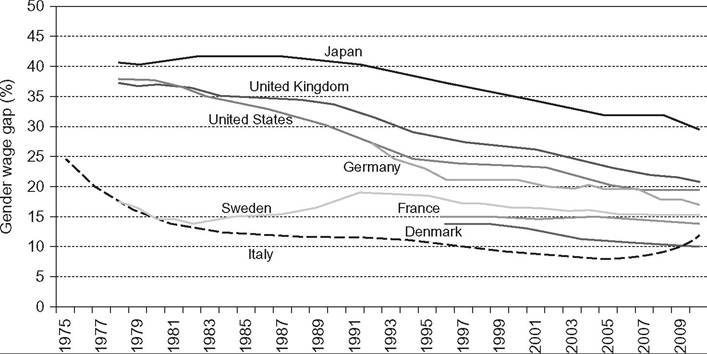
Figure 12.2 The gender wage gap in selected Organisation of Economic Co-operation and Development (OECD) countries from 1975 through 2007 (4-year moving average considering fulltime workers). The wage gap is measured as the mean men's wage minus the mean women's wage divided by the mean men's wage. The gap is measured for various concepts of wage (annual, monthly, hourly), depending on the country. Source: OECD, employment database 2012, national definitions and sources. Available from: http://www.oecd.org/employment/emp/ onlineoecdemploymentdatabase.htm#earndisp.
The general view of a wide gender pay gap narrowing fast and then more slowly is clearly verified for the United States, whereas the pattern is less uniform in other OECD countries.
The United States experienced the most dramatic narrowing of the gender wage gap during the 1980s. This was particularly remarkable because it occurred during a period when the level of labor market inequality was rising sharply in the United States. This movement was called “swimming upstream” in a famous paper by Blau and Kahn (1997): women’s improving qualifications, especially their experience and occupations, made up for the rising inequality. In the OECD countries, the gender wage gap has been decreasing more slowly since the late 1990s (except in the United Kingdom and Japan, where the narrowing has continued at the same pace) or stagnating, and even increasing in Italy.Historically, the main factors behind the general narrowing of the gender wage gap have been the increases in women’s educational levels (Goldin et al., 2006) and in labor market experience together with the associated returns (O’Neil and Polachek, 1993). Since the 1970s, the catching-up of women’s educational levels and a reversal of the gender education gap have been observed in most OECD countries. Women now outrank men in 29 of the 32 OECD countries; in 2009, about 60% of all graduates with a university degree were women (OECD, 2012). However, the specialty of degree remains highly gendered: only 26% of graduates in engineering, manufacturing, and construction are women, compared with more than 75% in health and welfare (OECD, 2011a). This has very important implications for occupational segregation (see below).
The increase in women’s participation in and attachment to the labor market, and the corresponding increase in their work experience, is believed to result from changes in the demand for labor and in women’s labor supply. Labor demand changes were driven mostly by major technological changes such as computerization[725] [726] and the rise of the service sector. On the supply side, two sorts of technological change may also have contributed to women’s increased attachment to the labor market by modifying their constraints: progress in domestic technology, reducing the time required for domestic chores (a debated factor; see Section 12.6), and the contraceptive pill, of which Goldin and Katz (2002) underline the central role in allowing women to postpone maternity, spend more time in education and at work, and “form their identities before marriage and family” (Goldin, 2006, p. 14), and which was a true cultural change. However, the impact of these changes (which occurred with varying delays and intensities outside the United States) is a sort of one-shot impact and cannot explain the lasting trend of convergence between women’s and men’s participation rates over the 1990s and Figure 12.3 Variations in men's and women's labor force participation, 1990-2011. Source: Organisation of Economic Co-operation and Development, employment database 2012, http://www. oecd.org/gender/data/harmonisedindicators.htm. 2000s.[727] In most countries, this trend stems from the continuing increase in women’s participation in the labor force, combined with a slight decrease in men’s participation (Figure 12.3). The exceptions areJapan and the United States, where both participation rates have decreased (but men’s more than women’s); Sweden, which has hardly changed; and Spain, where men’s participation increased, albeit far less than women’s. 12.3.1.2 Gender Labor Market Outcomes: An Overview for OECD Countries At the end of the 2010s, the average gender wage gap in the OECD countries is about 16%, but there are wide differences across countries: it is more than 25% in 3 countries, between 20% and 25% in 3 countries, between 15% and 20% in 9 countries, between 10% and 15% in 10 countries, and less than 10% in the remaining 7 countries (Table 12.3). Several factors can help to explain these differences. The most important of these factors is the degree of inequality in the national wage structure. Other possible explanations, but at a lesser level, are gender differences in the employment rate, part-time work and the unemployment rate. We will briefly review differences across countries for these indicators. 12.3.1.2.1 TheWageStructure Because women tend to be concentrated at the bottom of the wage distribution, a more compressed male wage structure reduces the gender pay gap, as shown by Blau and Kahn (1992, 2003): the average wage penalty resulting from women’s unfavorable ranking in the male wage distribution is mechanically smaller in countries where the wage distribution is less widespread (Blau and Kahn, 1996). Table 12.3 Organisation of Economic Co-operation and Development countries grouped by size of the gender wage gap (among full-time workers),a 2010 Gender wage gap Chile (2011) Italy aCountries are ordered in each group from the highest to the lowest gap. Source: Online Organisation of Economic Co-operation and Development Employment Database. http://www.oecd. org/els/emp/onlineoecdemploymentdatabase.htm. mean ranking in men’s wage distributions[728] is 28.2 in Sweden and 32.3 in the United States; the less favorable position of women in the wage hierarchy in Sweden nevertheless results in a lower pay gap than in the United States because the wage distribution is more compressed in Sweden.[729] The wage structure compression itself depends essentially on differences in wage-setting institutions: highly centralized, unionized wage settings reduce the wage dispersion and have a positive effect on low-paid workers, who are predominantly women; similarly, the existence of a minimum wage raises women’s relative pay by limiting its lowest possible level (on labor market institutions and wage dispersion, see Salverda and Checchi, 2014, Chapter 18, in this volume). 12.3.1.2.2 The Gender Gap in Employment Despite the trend of convergence, women’s employment rates generally remain significantly lower than men’s (Figure 12.4), and it has been found that the gender wage gap could be negatively correlated with the gender gap in employment. For instance, the employment gap is much smaller in the United Kingdom than in Italy, and the wage gap is much smaller in Italy than in the United Kingdom (cf.Table 12.3). This is caused by effects of selection into employment, as shown by Olivetti and Petrongolo (2008): the Figure 12.4 Gender gaps in employment in selected Organisation of Economic Co-operation and Development (OECD) countries, 2011. Source: OECD Employment Outlook (2012). fewer women employed, the more they are positively selected and the higher their relative wage. In a study of the impact of reunification on former East Germany, Hunt (2002) reported a similar effect. She found that in the 4 years following reunification, the gender wage gap dropped by 10% points. But she also found that, because of a decrease in the demand for low-skilled workers, the employment rate of women had fallen by 6% more than men’s and that this differential in exits from employment explained half the relative wage gain of women. However, the relation between women’s participation in employment and the gender wage gap is not uniform, as shown by the comparison between Italy and Japan, two countries that are very similar in their high gender employment gaps (the highest of the countries displayed in Figure 12.4) but are far from similar in their gender wage gaps (see Table 12.3). While employed women in Italy are becomingly increasingly skilled compared with “random” employed men, however, the gender gap in education remains pronounced in Japan, and employed women are mostly concentrated in part-time or short-term jobs, with men securing the best and best-paid jobs (see Chang and England, 2011, on the heterogeneity with regard to gender inequality within Asian industrialized countries). 12.3.1.2.3 Part-TimeWork Part-time work is a typical feature of women’s employment. The percentage of part-time work among men is growing slightly, but attheendofthe2000s, it remains, on average, well below 10% in most OECD countries (with the noticeable exception of the Netherlands), while it represents anything from 15% to about 40% among women and up to 60% in the Netherlands. Comparing total employment or full-time employment may lead to very different views of cross-country differences. Figure 12.5 shows the gender gaps in employment in the OECD countries (OECD, 2013) using two measures: the gap in total employment and a gap measured in full-time equivalent employment (part time is defined as less than 30 weekly hours). The contrast between the two indicators reflects the difference in the share of part-time employment between women and men, which can be very large, as for instance in the Netherlands, Germany, and Switzerland and, to a lesser degree, in Austria and the Figure 12.5 The gender gap in employment rate and in full-time equivalent (FTE) employment rate, 2011. Source: OECD Family database www.oecd.org/social/family/database (2) The statistical data for Israel are supplied by and under the responsibility of the relevant Israeli authorities http://dx.doi.org/ 10.1787/888932315602. United Kingdom. Part-time employment, which contributes to women’s participation in the labor market—especially by making it easier to balance work and family constraints (see Jaumotte, 2003)—may have adverse effects on women’s careers and wages (see below). Unfortunately, as mentioned earlier, indicators of the gender wage gap, including part-time employment, are not available at the OECD level. 12.3.1.2.4 GenderGaps in Unemployment In most OECD countries, the unemployment gap has virtually disappeared as a result of women’s increased labor force attachment (Albanesi and Sahin, 2013). In the United States there has been no difference between men’s and women’s unemployment rates since the 1980s —except during recessions, when men’s unemployment rates exceed women’s (but the recovery is also faster for men). In the European Union, unemployment rates have converged since 2000, and the gap can be said to be mostly residual (Eurostat), with the exception of southern countries (Greece, Italy), where women’s relatively low attachment to the labor market makes them more at risk of unemployment.[730] Azmat et al. (2006) also found a prominent effect of women’s participation rate on the gender gap in unemployment and explain cross-country differences by the interaction of gender differentials in labor market attachment and institutional factors—plus perhaps hiring. Institutions contributing to a more compressed wage distribution (minimum wage, unions) or to a reduction of labor turnover (firing costs and subsequent reduced hiring rates) as well as temporary contracts (making it difficult to stay in employment) increase the unemployment rate of low-skilled workers or workers with less attachment to the labor market. Women (whose outflow rates from employment are higher than those of men) are then more likely than men (more often employed in permanent jobs) to be affected by reductions in hiring. To sum up: at the end of the first decade of the twenty-first century, the raw gender wage gap stands between 10% and 20% in most industrialized countries, but it has been at this level since the mid-1990s; men’s and women’s employment rates continue to converge, but women are still much more likely to work part time. 12.3.2 Gender Segregation on the Labor Market Not so long ago, it was legal to offer women lower wages than men for the same job or to hire only men or women for certain jobs. In the United States, job advertisements could be published separately by sex until 1963, the year of the Equal Pay Act, which prohibited wage differentials based on gender. In Australia, the law allowed employers to pay women up to 25% less than men for the same work until 1969. It was the same in New Zealand, where the legal pay gap was set at 50% in 1903, lowered to 30% during World War II, and finally abolished in 1972. Equal pay for equal work is now the law in many countries, and the antidiscrimination legal framework has been reinforced in recent decades. In theory, pure wage discrimination is no longer possible. The persistence of a gender wage gap between workers with similar productive characteristics but of different genders is therefore puzzling; it suggests that there is still a possible discrimination, but one different from pure wage discrimination (that is, unequal pay for equal work) and difficult to assess. Wage differentials between apparently comparable workers can result (and actually do result) essentially from the unequal distribution of men and women across occupations, firms, or sectors more than from differences in pay rates within occupations in a same firm (see Blau, 2012, specifically chapter 1, “Equal Pay in the Office”). In this section we start by briefly describing the tools of empirical research on the gender wage gap. Then we turn to analyses of the effect of gender segregation by firm, industry, and occupation. Finally, we present the important strand of literature devoted to vertical segregation and the debates around the “glass ceiling effect.” 12.3.2.1 How to Analyze the Gender Wage Differential Since the 1970s, numerous empirical studies of the genderwage gap have sought to quantify the contributions of various factors to pay differences between men and women or to the way they have changed over time. Fundamentally, this means distinguishing between the part of the gap that is due to differences in the observable productive characteristics of men and women and the part that is not. The standard methodology used in this huge number of studies is decomposition of the gender wage gap, initiated by the seminal papers by Oaxaca (1973) and Blinder (1973). The basic principle is to rewrite the gender wage gap as the sum of two differences: a difference in the “quantities” of men’s and women’s productive characteristics (i.e., human capital variables) and a difference in the prices of these characteristics as measured by the difference in their estimated returns. The decomposition method has been developed and extended to explain changes over time in the unexplained wage gap (Juhn et al., 1991, 1993); to integrate quantile analysis (Albrecht et al., 2003; Machado and Mata, 2005); and to treat dichotomous outcomes (Fairlie, 2005), nonlinear models, censored outcomes (Bauer and Sinning, 2008), and nonparametric setups (Nopo, 2008a,b). The case of distributional parameters other than the mean has been incorporated into this framework, and different methods have been proposed to study the entire conditional distribution (Chernozhukov et al., 2013; DiNardo et al., 1996; Firpo et al., 2009; Fortin and Lemieux, 2000). Decomposition methods still form a very active field of research in econometrics (see the survey by Fortin et al., 2011). Decomposition methods provide a useful tool to assess the contributions of various factors to the gender wage gap and to diagnose which of these factors are the most quantitatively important, but they do not say anything about the underlying economic mechanisms. Forinstance, the variable “occupation” is responsible for a large part of the gender wage gap, but this difference may result from employer’s discrimination toward women or from gender differences in the choice of occupations; clarification of this point requires further analysis. Applied economists face some practical problems when decomposing the gender wage gap. One classic difficulty is that the measurement error of some key variables may be more marked for women than for men. This is particularly likely for the measure of actual labor market experience, which is not always available in individual data sets and in this case is replaced by a measure of potential experience (current age minus schoolleaving age). Because women are more likely than men to experience career breaks, their potential experience is overestimated, biasing downward the returns to experience and so biasing upward the unexplained part of the wage gap (cf.Regan and Oaxaca, 2009, who used the 1979 National Longitudinal Survey of Youth and the Panel Study of Income Dynamics). Another difficulty in choosing the specification of the wage equation is the risk of omitting variables that could be correlated with the included variables; this bias can work in either direction (Neumark and Korenman, 1992). Workers, especially women, are generally not a random sample of the working-age population. Certain unobserved factors may determine whether an individual is employed, and they may be correlated with the individual’s productive characteristics and the wage. Following Heckman (1976,1979), sample selection bias is treated by introducing a correction term (the inverse Mills ratio), obtained from a probit model of the probability of being employed, into the wage equation (Neuman and Oaxaca, 1998). This method itself introduces a practical difficulty: the need to find at least one explanatory variable correlated with labor market participation but not with wage (i.e., an exclusion variable; see Vella, 1998).37 Another standard issue is that of the “norm” (price) to be used in the valuation of the difference between productive characteristics. In the initial formulations of Oaxaca and Blinder, the coefficients estimated for men were used as the price norm, which was arbitrary (technically, they could equally well have used the estimated returns to women’s endowments) but fairly logical given the sign of the wage gap. However, using men’s or women’s coefficients as prices does not result in the same estimates of the explained and unexplained parts of the gap. Neumark (1988) and Oaxaca and Ransom (1994) proposed a generalized method using the coefficients obtained by estimating the wage equation over the pooled sample of men and women as the norm (alternative weighting schemes have been proposed by Cotton, 1988 and Reimers, 1983). Fortin (2008) updated the Neumark (1988) or Oaxaca-Ransom approach (1994) by including gender intercept shifts in the pooled regression with an identification restriction, so that the non- discriminatory wage structure is such that the advantage of men equals the disadvantage of 38 women. Such decomposition techniques have been widely used on data from different countries, periods, and samples of workers. Given all the possible variations in the data collected and the methodology adopted, the results are difficult to compare, even within a single country. A meta-analysis by Weichselbaumer and Winter-Ebmer (2005) using 263 published papers covering 63 countries between the 1960s and the 1990s[731] [732] [733] offers a useful overview of these findings and their sensitivity to the methods used. Ultimately, data restrictions (how wages are defined, which sample is studied, the quality of independent variables) were found to be more important than the choice of econometric methods in the decomposition of the wage gap. They found that the overall decrease in the total gender wage gap (from 65% in the 1960s to 30% in the 1990s) was mostly explained by the improvement in women’s productive characteristics (education, experience). The decrease in the explained part is not surprising; as mentioned above, women’s education levels are comparable to those of men in OECD countries, and because their increasing participation in the labor market has given them similar levels of work experience,[734] the gender wage gap is less able to be explained by gender differences in basic human capital variables. The remaining component is predominantly due to occupational segregations: women and men do not occupy the same jobs (horizontal segregation) or have the same wage careers (vertical segregation). In both cases, these differences are unfavorable for women, but the gender gap in promotion and access to top jobs is generally considered the main cause of gender pay inequality. 12.3.2.2 Gender Differences in Occupations and Sectors Occupational gender segregation in the whole economy is observed in all OECD countries: less than 10 occupations[735] accounted for half of the total employment of women in 2009, compared with 12 or more for men (OECD, 2012). A similar pattern is observed for the United States but at a lower degree than in most industrialized countries (Anker, 1998). Dolado et al. (2003) used a common detailed classification (108 occupations) to compare horizontal segregation in the United States and Europe in 1999. The degree of occupational concentration is smaller in the United States than in Europe,[736] but in both cases women are concentrated in similar types of jobs (salespersons, domestic help, personal care, secretaries, and teachers). 12.3.2.2.1 The Multiple and Complex Causes of Gender Differences in Occupations The first explanation of this general finding is persistent gender differences in the field of study; in short, few women choose science or technology, and this has direct consequences on occupational segregation[737] and, consequently, on wages. The choice of subject of study is, then, a pre-labor market decision that has significant long-term consequences on earnings. The effects of college major on wages have been studied for the United States (Black et al., 2008; Brown and Corcoran, 1997; Loury, 1997; Weinberger, 1998, 1999); these studies concluded that it has a significant effect on early career wages. Including the field of study in the wage equation considerably improves the explained part of the gender pay gap. Similar results were obtained by Machin and Puhani (2003) for Germany and the United Kingdom: the choice of degree explains a significant part (between 8% and 20%, according to the specifications) of the overall gender wage gap among graduates. This raises the question of why women are so reluctant to choose science, given the well-known consequences on their future earnings and their high performance at school. Traditionally, differences in the choice of study subjects and their consequences on chosen occupations have been explained by taking into account the outside options for women, i.e., family responsibilities. Polachek (1981) argued that women choose occupations (and the corresponding investment in education and training) in which the cost of career interruptions is low. Because women’s work attachment is stronger nowadays and their careers are more often continuous, this kind of explanation is less convincing. Economic analyses are turning toward more psychological approaches and gender stereotypes to explain this conundrum (see Section 12.3.3). The choice of field of study may also depend on the environmental conditions of schooling and peer effects. In line with educational studies research, recent economic papers test the causal impact of the gender composition of classes or teachers in the choice of field of studies. This is done using random variations in teacher gender (Carrell et al., 2010) or in the gender composition of classes (Schneeweis and Zweimtiller, 2012). Results tend to show that exposure to a female-dominated environment encourages girls toward male- dominated fields. In addition to investment in education, occupational segregation results from both supply and demand factors. On the supply side, women may prefer a given occupation because of nonmonetary advantages (flexible work hours, job amenities), in line with Adam Smith’s compensating differentials theory, in which case they trade nonmonetary advantages for lower wages. For instance, Filer (1985) and MacPherson and Hirsch (1995) support the explanation of gender differences in preferences for occupational characteristics and found that taking into account occupational characteristics reduces significantly the unexplained part of gender wage differentials. But, as in the case of educational choice, women may also choose a given occupation to comply with social norms and stereotypes. On the demand side, discrimination against women (taste discrimination) or the employer’s perception that women are, on average, less productive or reliable than men (statistical discrimination) may affect the gender composition of occupations. Hiring discrimination has been estimated by correspondence testing (Booth and Leigh, 2010; Duguet et al., 2005; Petit, 2007; Riach and Rich, 2002) on the French financial sector) or audit studies (Neumark, 1996 on waiters and waitresses[738]). Correspondence testing shows that women are less likely to be selected for an interview in high-status jobs and in traditional male occupations; the opposite is observed in female-dominated occupations (secretary, for instance). Weichselbaumer (2004) extended correspondence testing to investigate whether gender stereotypes affect the hiring process. She included personal characteristics given in curriculum vitae (hobbies, photographs) and did not find that a masculine identity for a woman (indicated by a masculine look and hobbies, such as motorbiking) reduces unfavorable treatment in masculine occupations; she concluded that discrimination is largely responsible for sex segregation. In that case, the proportion of women in a given occupation may change if the hiring process is modified and a fairer procedure is adopted. A famous example of this mechanism is presented by Goldin and Rouse (2000), who examine the effect of the adoption of “blind” auditions behind a “screen” to recruit musicians to American symphony orchestras. The blind audition procedure clearly increased the proportion of women in orchestras, suggesting that hiring discrimination was responsible for the previous quasi-absence of women in orchestras. 44 12.3.2.2.2 A Slow Decrease in Occupational Segregation Occupational segregation has changed over time. The increase in women’s education and labor market participation since the 1970s has modified the quality and quantity of the female labor supply. It is also possible that hiring discrimination decreased with the strengthening of antidiscrimination policies. Conversely, the expansion of the service sector, partly driven by the marketization of housework (Ngai and Petrongolo, 2013), and technological changes biased in favor of highly skilled workers have affected the occupational structure of female employment and their tasks (Black and Spitz-Oener, 201 0).[739] Occupational segregation in the United States tended to decline slowly in the 1960s (Blau and Hendricks, 1979), and this trend accelerated over the 1970s (Bianchi and Rytina, 1986). It has continued to decline, but at a much slower pace, since the mid-1990s (Blauetal., 1998) or even stagnated (Hegewisch etal.,2010). Thestudyof occupational segregation by gender in the United States from 1970 to 2009 by Blau et al. (2013), with a consistent set of occupational categories, confirmed the slowing decline of occupational gender segregation. This study also confirmed that the reduction in occupational segregation is positively correlated with education. The largest decrease is observed among college graduates, whereas there is a very limited change among high school dropouts. This result is in line with the results of Black and Juhn (2000), who observed, again for the United States, a strong increase in the percentage of college- educated women in high-paying professional occupations (increasing from 8% in 1967 to 23.5% in 1997). Their analysis was that women had positively responded to the increase in demand by firms and increasingly chosen “career jobs,” either by increasing their labor market participation or by moving away from traditional “female” occupations (nursing, teaching). Occupational segregation is related to workplace gender segregation in a complex interaction. Using matched employee-employer data for the United States, Hellerstein et al. (2007) found a decrease in workplace segregation by sex between 1990 and 2000, contrary to workplace segregation by race or ethnicity. Interestingly, changes in the occupational distribution of men and women were not the main reason for the decline in workplace gender segregation. The main driving force was the change of occupational structure within firms, with a growing share of mixed occupations and the decline of female- or male-dominated occupations. Moreover, the rise of the service sector (in which women represent a large majority of the workforce) has slowed the decline of horizontal segregation. 12.3.2.2.3 Do Female-Dominated Occupations Systematically Pay Less? What are the consequences of this occupational segregation for the gender wage gap? It is generally considered that female-dominated occupations pay less, following Bergmann’s (1974) “overcrowding” model: the discriminatory behavior of some employers creates an excess supply of women, which depresses their wages for a comparable occupation. A wide empirical literature on the US case verifies this prediction: controlling for measured characteristics of workers, predominantly female occupations pay less than predominantly male occupations. Consequently, occupational gender segregation accounts for a part of the gender wage gap (Bayard et al., 2003; Groshen, 1991; Killingsworth, 1990[740]). FortheUnitedStates, Groshen (1991) concluded that the importance of occupational segregation in the gender wage gap is an argument in favor of comparable worth policy (equal pay for work of equal value) as a powerful tool to reduce the gender wage gap. Amuedo-Dorantes and De la Rica (2006) also found a notable effect of female segregation into low-paying jobs on the gender wage gap in Spain. This effect can be amplified by gender segregation in firms (particularly small firms; see Carrington and Troske, 1995) and the corresponding wage penalty. Because women are more likely to be employed in low-wage workplaces, the unexplained gender wage gap is reduced when a workplace fixed effect is included[741] (Drolet and Mumford, 2012). But the penalty attached to female-dominated occupations is not observed everywhere, or only to a lesser extent. In their comparative study of the United States and Canada, Baker and Fortin (1999) found a small and not statistically significant effect of occupational gender composition on Canadian women’s wages; they attribute this result to a higher unionization rate in Canada than in the United States. Jurajda and Harmgart (2007) studied the interesting case of former West and East Germany and did not find a wage penalty on female jobs in West Germany; in East Germany predominantly female occupations offered higher wages.[742] Female-dominated occupations often are associated with jobs providing care for others, such as childcare, nursing, teaching, or social work. Again, the wage penalty attached to these jobs is not uniform, nor is it observed in all countries. Barron and West (2013) examined the gender wage penalty in caring occupations in Britain and found that this penalty is located in occupations requiring lower levels of educational qualification (childcare workers, nursing assistants, auxiliaries) and not in highly qualified occupations (doctors, nurses, school teachers). 12.3.2.2.4 Female Overrepresentation in the Public Sector Tends to Reduce the Overall Gender Wage Gap The question of wages in caring occupations is related to a well-known phenomenon of industrial gender segregation: women are overrepresented in the public sector. According to the OECD (2012), women accounted for about 58% of the total public sector workforce, and the public sector accounted for about 20% of overall employment in OECD countries. The overrepresentation of women in the public sector is explained by several nonexclusive factors (Blank, 1985): it offers traditionally female-dominated occupations (teaching, nursing, administrative tasks); it is often a family-friendly workplace with childcare, leave, and flexible hours, which are valuable to women; and employment security may attract more risk-averse workers (see Section 12.3.3.2). Pay formation in the public sector is regulated (with variations across countries), and the public wage structure is more compressed than in the private sector (Gregory and Borland, 1999). As a result of this difference in wage structure, the gender wage gap is often smaller in public sector jobs than in the private sector (Arulampalam et al., 2007; Chatterji et al., 2011; Lucifora and Meurs, 2006). Another stylized fact is that the public-private sector pay gap is positive (with some exceptions, such as in Germany or Sweden; cf.Melly, 2005), particularly in the lower part of the wage distribution, but may be insignificant or negative at the top (Depalo et al., 2011). Because women are concentrated in the lower wage brackets, they are better off in the public sector (Meurs and Ponthieux, 2008); this is particularly true for the United Kingdom (Lucifora and Meurs, 2006) and Australia (Baron and Cobb-Clark, 2010). So, women’s presence in the public sector tends to reduce the overall gender wage gap. However, this protective effect has been receding with the trend of privatization since the 1980s and, more recently, with the budget crisis and its negative consequences on public wages (de Castro et al., 2013). 48 To sum up, horizontal gender segregation by occupation is often associated with a female wage penalty and is responsible for part of the gender wage gap in some countries (the United States), but this is not the case everywhere, nor is it the case in all female- dominated occupations. Labor market institutions and trade union density can reduce or reverse this penalty. 12.3.2.3 Vertical Segregation and the Glass Ceiling As women gain education and experience, their relative absence in top jobs[743] is attracting growing attention (OECD, 2012) as a potential waste of human capital. More generally, vertical segregation—that is, the fact that women do not move up the career ladder at the same speed as their male counterparts—is considered today as the key factor for understanding the persistence of the gender wage gap. 12.3.2.3.1 Measuring the Gender Gap in Promotions and the Glass Ceiling Women’s disadvantaged position in the wage hierarchy can result from two different, nonexclusive mechanisms. The first is that women are promoted at lower rates than men. Since the publication by Albrecht et al. (2003), this has been called the “glass ceiling effect,” evoking an invisible barrier between women and the highest positions in firms. A glass ceiling is suspected if the gap between the conditional wage distributions of men and women gets wider in the upper tail of the wage distribution. The second mechanism occurs when women are as likely as men to be promoted but gain less from their promotion than men do. This has been labeled the “sticky floor effect,” following Booth et al. (2003)[744]; a sticky floor is suggested by a widening of the gender wage gap at the bottom of the wage distribution. The detection of a glass ceiling effect, based on quantile regressions, has given rise to a large set of empirical work. The initial pattern of a continuous increase of the gender gap throughout the wage distribution and a sharp acceleration in the upper tail, as found in Sweden by Albrecht et al. (2003), was subsequently observed in many countries, but with differing intensities. The analysis of gender wage distributions in 11 European countries by Arulampalam et al. (2007) confirms the variety of patterns across countries and across sectors; this diversity is even more striking between the 26 European countries (Christofides et al., 2013). Kassenboehmer and Sinning (2014) examined changes in the US gender wage distributions over time, applying a decomposition based on the method described by Firpo et al. (2009). They confirmed the heterogeneity along the wage distribution, with greater narrowing of the gender wage gap at the bottom and small changes at the top. A glass ceiling effect is observed in the majority of countries, with the exception of Spain, but its magnitude varies substantially, depending on labor market institutions and the compression of national wage distributions. Countries with more “generous” work-family reconciliation policies have a lower unexplained wage gap at the bottom of the wage distribution and a wider one at the top—this is the case in Denmark and the Netherlands. Interestingly, a glass ceiling is observed in Spain only among educated workers (Amuedo-Dorantes and de la Rica, 2006; DelRio etal., 2011). Gobillon et al. (2015) proposed another empirical tool for measuring the glass ceiling effect, based on a job assignment model. This measure is the probability ratio of getting a job for women and men at each rank of the wage ladder. An application to French fulltime executives 40-45 years old in the private sector shows that the gender difference in the probability of getting a job increases along the wage ladder from 9% to 50%. 12.3.2.3.2 A Gender Difference in the Pace of Promotion Within Firms We now turn to what happens inside the firm and the distribution of men and women across jobs. It has long been observed that pay rates tend to be equal in the same narrow occupational category within a firm (Blau, 1977, 2012; Groshen, 1991; Petersen and Morgan, 1995). This does not mean that there are no wage differences (and no discrimination) at the firm level, but rather that the observed gender wage differences at this level are mainly because of differences in the distribution of men and women in the wage hierarchy within the firm. This then raises the question of the extent to which gender differences in job-level assignment are due to labor supply factors, to firm discrimination, or to individual preferences. To study precisely the internal mechanism of promotion requires access to personal data. These data are quite difficult to get, so there is a limited number of papers on gender differences in intrafirm mobility and job assignment. Overall, they conclude that there is a large part of job assignment that is not explained by observable individual productive characteristics. Malkiel and Malkiel (1973) studied the gender wage difference using a sample of professional employees in a single corporation for 4 years. When only individual variables are included in the Oaxaca-Blinder decomposition, a large part of the gender wage difference cannot be explained; adding the job level (defined in 13 categories) into the wage regressions makes the unexplained gender wage difference fall to a value close to zero. The authors showed that half the gender difference in job level cannot be explained, suggesting gender discrimination in job assignment.[745] Pekkarinen and Vartiainen (2006) presented another approach to the glass ceiling effect by studying gender differences in the allocation of workers across jobs of different complexity among Finnish metalworkers. Women are less likely to be promoted than men, and women face a higher promotion threshold than men. Ransom and Oaxaca (2005) investigated intrafirm mobility and gender wage differences in a large grocery retailer in the United States over the 1976—1986 period. Importantly, for hourly wage workers, the wage rate in a given occupation is fixed for a given seniority by gender-neutral union contracts. Nevertheless, the employer had full control over job allocation and recruitment (in 1982, no woman held a top position). For hourly paid jobs (covered by union contracts), all gender difference in pay can be associated with the job assignment of employees, and women have less chance of promotion than men.[746] Dina et al. (2012) exploited two particularities of this case: there was no “pure discrimination”— union contracts were gender neutral—so the wage differential arose uniquely because of occupational segregation, and the firm was found guilty of discrimination, so the job assignment was proven to be discriminatory against women. The methodology developed in that paper extended the existing decompositions of the gender wage gap to isolate the contribution due to job segregation, even in the case where there is no overlap between men’s and women’s occupations. 12.3.2.3.3 Explaining the Gender Gap in Promotion How can this gender gap in promotion within a firm be explained? Some studies argue that there is no unexplained difference once the exit rate has been taken into account; female executives exit the occupation at higher rates than men, and the executives who remain are promoted more quickly (Gayle et al., 2012). The promotion of young professionals also seems to be correlated with working longer hours (Gicheva, 2013), and women may be disadvantaged on account of their family constraints. These explanations of vertical segregation in terms of gender differences in labor market commitment are in line with human capital theory (Polachek, 1981). Amodelproposedby LazearandRosen (1990) formalizes the link between outside opportunities and wage careers. It assumes that wage differences are uniquely due to differences in promotions along a job ladder where top jobs require specific training. Men and women have the same distribution of labor market ability, but women have a higher ability in domestic work. Consequently, women have a higher probability of leaving the labor market, and, as a result, employers are reluctant to invest in their training and to promote them on an equal basis with men. Thus, a woman must have greater ability than a man to be promoted (and to be induced to stay at work by a higher wage). So their productive “advantage” in the labor market turns out to be a handicap in their wage career and prevents them from obtaining high-paid positions.[747] This explanation does not, however, rule out the possible role of discrimination in job promotions (see the study on Austria by Winter-Ebner and Zweimuller, 1997, where a large part of gender differences in job positions remains unexplained even after taking into account expected job-separation probabilities). Statistical discrimination (Arrow, 1973; Phelps, 1972) is regularly advanced as a key notion for understanding inequality in careers and unequal access to higher positions. Models are based on workers’ heterogeneity, imperfect information about their productive characteristics, and distinct distributions of unobserved productive characteristics between groups. This covers two situations: when women’s level of ability is lower on average than men’s (which is not true discrimination because workers are not equally productive) and when the ability levels are equal on average but the variance is larger within one group (see Aigner and Cain, 1977). The most common example of a case of statistical discrimination is when employers do not hire or promote women because they assume that women are more likely to interrupt their careers to have children and/or have a higher rate of absenteeism or be less available for late meetings and business travel because they are or will be mothers. This mechanism may be perpetuated by feedback effects: if women are systematically less often promoted than men because their employers anticipate career breaks, they may be less motivated to invest in their careers. They thus confirm their employers’ preconceptions. The trouble is that such feedback effects make it difficult to distinguish between statistical discrimination—that is, unequal treatment due to employers’ assumptions of labor supply behavior—and the human capital model of unequal promotions based on employees’ work-family trade-off decisions. These two lines of explanations both highlight the key role of career interruptions (effective or potential) in the gender gap in promotions. Other models complete these explanations based on family constraints by taking into account behavior at work and individual preferences on the gender composition of coworkers. This also implies that improvements in gender equality may be obtained by paying attention to the relationship between workers. Becker’s model of taste discrimination was extended to unequal promotion by Baldwin et al. (2001), with the hypothesis that men have distaste for female supervision. Goldin (2013) presents a “pollution model” that combines the taste and statistical discrimination models: the entry of women into a male-dominated occupation is viewed as a negative signal on the value of this occupation and reduces the associated prestige. Consequently, male employees will oppose the recruitment of women to protect their labor status. Empirical research also examines the role of interpersonal relationships within the firm to explain gender differences in promotion. Cannings and Montmarquette (1990) found that men use informal networks for career advice more often that women, whereas women rely more on formal bidding for promotion than men and wait longer for promotion. 12.3.3 Psychology, Social Norms, and the Gender Wage Gap The persistence of the gender wage gap combined with the weakened explanatory power of standard human capital variables (education, experience) has led economists increasingly to integrate psychological factors and sociological approaches into their analysis of gender differences on the labor market (Bertrand, 2010). Psychosocial factors are used and tested to explain occupational segregation in the gendered choice of field of study, job, and sector. Also, because the gap in promotion to the top positions in the wage distribution is one of the most important gender inequality, it is not surprising that a large part of the psychological work applied to economics focuses on the reasons why women seem to be disadvantaged in labor market competition. The issue still being debated is the explanatory scope of these findings in the real world. These traits certainly play a role in slowing women’s promotions, but their effect on the gender wage gap should not be overestimated. 12.3.3.1 Gender Differences in Risk Aversion and Competitiveness Women’s risk aversion and lack of competitiveness have been extensively studied in experiments (Croson and Gneezy, 2009; Eckel and Grossman, 2008), and these psychological traits are said to explain gender differences in earnings (see, e.g., Dohmen and Falk, 2011; Gneezy and Rustichini, 2004; Gneezy et al., 2009; Gneezy et al., 2003; Niederle and Vesterlund, 2007, 2011). Laboratory and field experiments concur that women are more risk averse and less competitive than men. The reasons for these gender psychological differences are still being investigated in terms of the respective roles of culture (Gneezy et al., 2009 found that women in matrilineal societies are more competitive than men), social learning (Booth and Nolen, 2012a,b used variations in single-sex coeducational schooling and found that all-girl groups favor risk-taking attitudes), or biological factors (on the role of hormones see Wozniak et al., 2010). Ifpsychological features are acquired, the next question is the age at which these gender differences in behavior appear, so experimental studies examine the attitude toward competition among the young (Dreber et al., 2011; Gneezy and Rustichini, 2004) or the very young (Sutter et al., 2013 extended the analysis to 3-year- old children). A gender gap in competitiveness is generally observed at young ages, except by Dreber et al. (2011), whose research is based on Swedish children, among whom no gender differences were observed. Again, the role of social environment, even in childhood, seems to be central in explaining gender differences in psychological traits. A close and related question is the stability over time of these psychological traits. Risk aversion and the taste for competition often are considered as immutable when people reach adulthood. But new evidence suggests that it may still change over time and in different circumstances. To test this is not easy because it requires repeated information on individual preferences, but some recent empirical papers found that risk aversion is not time invariant: middle-aged people seem to be more risk averse than adolescents and elderly people (Tymula et al., 2013). Risk tolerance is also positively influenced by health (Hammitt et al., 2009), and unexpected negative shocks such as a disease change the attitude toward risk (Tison et al., 2012). 12.3.3.2 Occupational Segregation, Risk Aversion, and Gender Identity Psychological approaches have been applied to the analysis of gender occupational segregation in many different ways. For instance, psychosocial traits such as self-esteem, impulsivity, or self-assessed intelligence may shape the choice of both study subjects and occupations (Antecol and Cobb-Clark, 2013). Risk aversion is also an important feature in the choice of occupation because it may lead to a trade-off in favor of more stable but less well-paid occupations (Bonin et al., 2007). Because the public sector offers more job security, it may attract more risk-averse workers (Clark and Postel-Vinay, 2009) and thus explain the overrepresentation of women in the public sector. The few empirical studies of this subject[748] confirm the influence of risk aversion on self-selection into the public sector (Bellante and Link, 1981 for the United States; Pfeifer, 2011 for Germany). The preference for team work may also explain industrial segregation. In laboratory experiments, Kuhn and Villeval (2013) found that women are significantly more likely than men to select team-based pay. They conclude that this preference may explain their overrepresentation in the nonprofit sector and helping occupations, where work often requires cooperative production (but provides few financial rewards). However, the most widely used framework for understanding gender differences in choice of occupation is the model of gender identity developed by Akerlof and Kranton (2000, 2010). Their starting point is the idea that each individual is assigned a social category (“man” or “woman”) associated with prescribed behaviors. Failingto comply with these prescriptions leads to disutility in oneself and in others (negative externalities). An action’s payoff is then dependent on gender identity. So, men in female-dominated occupations (such as nursing) or women in male-dominated occupations (law) do not follow the behavior expected of their gender. They make their coworkers uncomfortable; in return, the latter may react negatively and not cooperate with them. These two negative payoffs (the disutility of deviating from social norms and the disutility brought by coworkers) may help to explain why women (or men) are reluctant about certain occupations and why occupational segregation persists over time. This framework is extended from the choice of occupations on the labor market to the global question of the gender division of labor, particularly when the time of work within the household cannot be explained solely by specialization and also seems to be shaped by social norms (see Section 12.6). 12.3.3.3 The Impact of Women's Lack of Competitiveness on Wages Two main psychological factors (reluctance to ask, lack of competitiveness) are put forward to explain women’s disadvantage in promotion opportunities. Gender differences in the ability to negotiate have been studied by Babcock and Laschever (2003). In a US cohort of graduates from the same business school, they observed that men obtained a first job salary 7.6% higher than women; however, only 7% of women had tried to negotiate with their recruiter, compared with 57% of men. A large field experiment further clarified the difference between men and women in initiating wage bargaining (Leibbrandt and List, 2012). The authors collected 2500 responses from jobseekers to fictitious ads for administrative jobs in various cities in the United States; when the ads did not explicitly mention that wages were negotiable, men were more likely to negotiate than women, but if it was explicitly stated that wages were negotiable, this gender difference disappeared. Another important result of this testing is that male candidates preferred the rules of wage determination to be ambiguous. In laboratory experiments, Gneezy et al. (2003) found that women are less effective than men in a competitive environment, particularly when they are in direct competition with men, but they perform equally well in noncompetitive environments. The findings of Niederle and Vesterlund (2007) corroborate this idea that women tend to avoid competition, unlike men (on aversion to competition and the choice of tournament see also Datta Gupta et al., 2013). The authors attribute these results to male overconfidence and gender differences in the taste for competition. This behavior reduces women’s chances in competing for jobs or promotion, especially when they are in direct competition with men. The question of whether experimental findings can be extrapolated to real life is discussed by Levitt and List (2007), and the contributions and limits of experimental designs to the understanding of gender differences in labor market outcomes are discussed by Azmat and Petrongolo (2014). Some studies affirm that the influence of women’s aversion to competition in explaining gender differences in wage promotion should not be overestimated. Garrat et al. (2013) developed an interesting approach using the natural experiment of a footrace where the participants, both women and men, had to choose between two levels of competition (elite race and cash prize or “regular”). As expected, women were, on average, less interested than men in the elite race. But the very fastest women respond to financial incentives and were quite likely to try the elite race. It was in the midrange that the difference between women and men was the widest: in this range, men tended to overestimate their skills. The authors concluded that the economic consequences of aversion to competition for capable women are probably limited in the labor market. One example of discrepancy between behavior in laboratory experiments and behavior in the real world is given by Lavy (2012): in a case of performance-based pay for teachers, contrary to lab and field experiments, he did not find gender differences in performance when the financial rewards depended on a rank order tournament. The last two examples are based on case studies, so it is difficult to extrapolate their significance to the whole economy. Manning and Saidi (2010) adopted a more general approach by using a large individual data set for Great Britain with detailed information on performance pay contracts. They tested the importance of differences in attitudes toward competition on the actual gender wage gap. They found that women are less likely than men to work on performance contracts, as predicted by experimental studies, but the final effect of performance pay on earnings is limited and does not differ much by gender. So, they concluded that the competition hypotheses do not provide a significant explanation of the observed gender pay gap. A similar conclusion (that a small part of the gender wage gap is explained by psychological factors) was obtained in a previous work on the gender gap in early career wage growth (Manning and Swaffield, 2008). 12.3.4 Family Constraints, Career Interruptions, and the Family Pay Gap The more women participate in the labor market, the more they face the need to reconcile the constraints of motherhood and professional life. The unequal sharing of unpaid work and family responsibilities (see Section 12.6) probably contributes much more to gender income inequalities than women’s lack of taste for competition. Fortin (2005) argued that culture, social norms, and inner conflict between work and family values may be considered a major cause of the slowdown (or, recently, the stagnation) of the gender convergence in pay. Consequently, family situation and the composition of the household (particularly the number and age of children) are crucial to the gender wage gap. As Polachek (2004) argued, “the detrimental division of labor is at the root of almost all the wage gap” (p. 27). In the labor market, family characteristics have dissimilar consequences for women and men, even between women and men who are comparable in their productive characteristics. To what extent can women’s adaptations to their family constraints— by choosing a family-friendly occupation with flexible hours, choosing a part-time job, or interrupting her employment—explain the average gender wage gap and differences in career? How large is the motherhood wage penalty between comparable women? Men’s wages also are affected by their family status, but in the opposite direction to women. Their earnings are not modified by the number of children they have (which is consistent with the fact that fatherhood does not change their work habits), but men enjoy a marriage premium, while there is no such positive wage difference for married women. There are two main explanations for this marriage premium: either married men are positively selected, or they are more productive thanks to specialization at home and the domestic chores done by their spouses. The earliest studies of this issue tried to distinguish between these two hypotheses; more recent studies focus on the expected changes in the marriage premium when the norm becomes a two-earner family, the benefits of specialization within marriage are receding, and the traditional type of married couple becomes less prevalent in OECD countries. 12.3.4.1 On the Demand Side: Lower Wages as a Result of the Inelasticity of Female Labor Supply Because of their family obligations, (married) women often face multiple constraints in their choice of labor supply; this can give employers in monopsonic labor markets some market power. In this case, the employer exploits the inelasticity of the supply curve and pays workers below the competitive wage. The more inelastic the labor supply, the lower the wage (see Manning, 2003, on dynamic monopsony drawn from the search-theoretic framework of Burdett and Mortensen, 1998). In this approach, married women or mothers can suffer a wage penalty because they are less (or not at all) geographically mobile or because they need to work closer to their home to meet their domestic responsibilities. The female labor supply to a given firm may then be less elastic than that of men, and the employer may pay them lower wages than comparable men. Ransom and Oaxaca (2010) tested this framework in the case of a retail grocery store chain and found that the elasticity of labor supply to the firm differed between men and women; this difference was consistent with wage discrimination against women. Other studies from Germany (Hirsch et al., 2010) and Norway (Barth and Dale-Olsen, 2009) also found that women’s labor supply is less elastic than men’s and is linked with wage discrimination. 12.3.4.2 The Supply Side: Part-Time Work and Career Interruptions Motherhood may also modify women’s labor supply as a result of the gender division of labor within the household (see Section 12.6.3). Part-time paid work is a common way for mothers to reconcile work and childcare, and it may be considered a substitute for childcare facilities.[749] Part-time work usually leads to a pay penalty (in hourly earnings) compared to full-time work. In the United Kingdom, the penalty was about 25% and has widened over recent decades (Manning and Petrongolo, 2008). This penalty is partly due to individual characteristics (part-timers are less educated) and partly due to occupational segregation: women switching to part-time work often downgrade professionally (i.e., move to a lower-skilled job[750]). The risk of occupational downgrading is strongly dependent on the (lack of) part-time opportunities within a woman’s current occupation (Connolly and Gregory, 2008). Does this correspond to a willing choice by women, happy with this reduced time, making it possible to reconcile work and family? Or, does it rather correspond to a constraint on their labor supply? The answer depends greatly on the institutional context and on the social norms in the country considered. In three countries characterized by a high share of part-time work (Australia, the Netherlands, and the United Kingdom), Booth and Van Ours (2008, 2009, 2013) found that women report high levels of satisfaction with their reduced working hours, which are associated with a clear gender bias in the division of labor within the household. The case of the United Kingdom seems slightly different; women’s satisfaction seems to be unaffected by their hours of work and remains “a puzzle.” Career interruptions are a radical way to meet family constraints but have strong and lasting negative effects on wages. Since the work of Mincer and Polachek (1974) and Mincer and Ofek (1982), employment interruptions are commonly responsible for gender differences in earnings because of the loss of experience and human capital depreciation (skills atrophy). Are the (negative) returns associated with career breaks different for men and women? Empirical evaluation is difficult for want of an appropriate data set with precise information on the duration of employed periods, time out of the labor market, and the reasons for career interruptions. It is therefore not surprising that the magnitude of the penalty associated with career breaks varies according to the study and methodology, but it is regularly found to be significantly negative. Kim and Polachek (1994) identified three possible biases in the estimates of penalties related to career interruptions: heterogeneity (unobserved characteristics such as motivation, influencing both labor market intermittency and earnings); endogeneity (low wages may explain intermittency and not the reverse); and selectivity. Takinginto account these biases and using panel data (the Panel Study of Income Dynamics), they found a stronger effect of labor market intermittency on wages, but the effect was equivalent for men and women; the unexplained male-female wage gap was, therefore, very small. Albrecht et al. (1999) also analyzed the coefficients associated with the total time out using a rich Swedish data set that distinguishes different reasons for time out of the labor market (formal parental leave—an important component of the Swedish family policy—versus household time and other career interruptions). The penalty associated with parental leave for mothers was far smaller than that for fathers. The interpretation is that parental leave taken by the father is a rare event (compared with parental leave taken by mothers), so the signal was interpreted negatively by employers; for mothers, the negative coefficient reflects uniquely human capital depreciation. Finally, Hotchkiss and Pitts (2007) evaluated the total effect oflabor market intermittency on gender wage differentials using a US sample of retirees with detailed information on their work history. They found that differences in intermittent employment represented 61% of the explained part, making the largest contribution to gender differences on observed characteristics[751]; but the sample was composed of retirees belonging to generations when labor market interruptions were very common. 12.3.4.3 The Family Pay Gap Since the mid-1990s, increasing attention has been paid to the “family pay gap” or “motherhood wage gap,” that is, the differential in hourly wage between women with and without children. This is because the wage dispersion between women with different family characteristics increased in some countries (the United States) while the gender wage gap was shrinking. As a result, marital status and children were making a larger contribution to the average gender wage gap (Korenman and Neumark, 1992; Waldfogel, 1998a), whereas the wages of childless women were closer to those of men. The family pay gap is generally negative, but its extent varies depending on the country, the period, and the methodology used to assess it. Several nonexclusive explanations for the family pay gap have been advanced (see the detailed survey by Budig and England, 2001). First, working mothers are more likely than childless women to have spent time out of the labor market and, consequently, to have accumulated less human capital. In addition to the negative impact of career breaks on wages, having children to care for may influence mothers’ allocation of effort (Becker, 1985). Mothers might limit their occupational choices to jobs and positions that are compatible with their family responsibilities—seeking “more convenient and less energyintensive jobs” or just putting less effort into their work or being absent more often (Simonsen and Skipper, 2012, found some evidence of the role of absenteeism in the wage penalty in Denmark). These adjustments, under the form of working or having worked part-time jobs or in jobs or firms that are more “family friendly” (or simply closer to the home or school) may result in reduced work opportunities or, according to the theory of compensating differentials, lower pay to make up for better working conditions (Filer, 1985). Finally, mothers maybe discriminated against if their employers assume that they are less productive and therefore avoid promoting them or putting them on fast tracks. Empirical measurement of the effect of children on women’s wages is not straightforward. One possible method is to include the number of children in a standard wage equation based on a cross-sectional data set; the motherhood penalty then corresponds to the estimated coefficient. However, this approach suffers from several biases, the most severe being the unobserved heterogeneity between mothers and nonmothers: less work-oriented women may have more children and cause spurious correlations of motherhood and wages. So, the most widely used method to measure the family pay gap is using panel regression models to control for cohort effects, individual unobserved heterogeneity, and, if possible, sample selection bias (working women are not a random sample[752]). However, one problem with cohorts is that, by construction, one observes the results of past careers. Because there have been profound changes in education, job opportunities, and family policies over the past decades, the observed family pay gap may not be an accurate prediction for the next generations of women.[753] 57 Most of the evidence of the existence and extent of a family pay gap is based on Anglo-American research (Budig and England, 2001; Joshi et al., 1999; Lundberg and Rose, 2000; Viitanen, 2014; Waldfogel, 1998b). There are also some results for other countries, for example, Spain (Molina and Montuenga, 2009, using the European panel ECHP[754]) and Australia (Livermore et al., 2011, based on the Australian panel Hilda), and a few comparative studies: Harkness and Waldfogel (2003) studied seven industrialized countries; Davies and Pierre (2005) studied the European Union; Gangl and Ziefle (2009) studied the United States, the United Kingdom, and Germany; Sigle-Rushton and Waldfogel (2007) studied eight Western industrialized countries. Significant pay penalties associated with motherhood (around 2—10% for one child, 5—15% for two or more children) have regularly been found in all countries except the Nordic countries. In the United Kingdom and the United States, the wage penalty is entirely explained by career interruptions, reduced work hours, and the concentration of mothers in low-paying part-time jobs (especially in the United Kingdom, where the family gap is particularly high). Joshi et al. (1999) found a penalty of 33% for the United Kingdom (comparing mothers and nonmothers at the age of 30), and Waldfogel (1998b) found a penalty of 20% (for women aged between 30 and 33 in 1991) in the United Kingdom and the United States. Interestingly, using a different method (propensity scores) on the same British cohort as Waldfogel (1998b), Viitanen (2014) found similar results for the United Kingdom and also found a long-lasting (but small) pay penalty 30 years after motherhood for the generation born in 1958 (the last wave observed was of women aged 50-51 in 2008-2009). For the United States, Kahn et al. (2014) found an attenuated effect of motherhood at older ages, except for women having three or more children, which is consistent with the work effort explanation (young children are more demanding than older ones). Anderson et al. (2003) proposed an alternative explanation; observing that medium-skilled mothers suffered a higher net wage penalty than low- and high- skilled mothers in the United States, they argued that medium-skilled workers face more time constraints (regular presence required during office hours, no possibility of taking work home), with negative effects on their wages. A more recent debate concerns the relationship between the timing of births and the family pay gap, with the hypothesis that women postpone having children to accumulate work experience and build their careers; the fertility delay seems to be correlated with an increase in earnings (Caucutt et al., 2002).61 The empirical difficulty is to identify the causal effect from delayed maternity to earnings and so to find convincing variables that influence the timing of motherhood and nothing else. Miller (2011) exploited biological fertility shocks in the US case and confirmed a positive effect of delaying the first birth on wages (as well as a flatter wage profile after motherhood). There are few studies of continental Europe because of the lack of suitable data sets. One exception is Germany, where the GSOEP (German Socio-Economic Panel) allows studies comparable to those from the United States and the United Kingdom. A pure and high wage penalty against working mothers (i.e., an unexplained difference after taking into account labor market behavior) has been observed in Germany for cohorts born between 1955 and 1969 (Gangl and Ziefle, 2009). This finding was confirmed by Felfe (2012), who tested the influence of job amenities on the wage penalty in Germany. The motherhood wage gap can be partially explained by compensating wage differentials, but women who have neither changed jobs nor reduced their working hours still face a family wage penalty of 12%. Nordic countries constitute a special case because the family gap is very limited (Harkness and Waldfogel, 2003, compared seven western countries including Finland and Sweden; Albrecht et al., 1999, studied Sweden; Datta Gupta and Smith, 2002, studied Denmark). One possible explanation of this singularity is that the generosity of Nordic maternity leave and family policies affects all women, mothers or not, since childless women are expected to become mothers and take parental leave; this leaves room for statistical discrimination against all women, however many children they have (Datta Gupta and Smith, 2002). Another important feature for understanding the small motherhood penalty in Nordic countries is the role played by self-selection into the public sector, which offers more favorable conditions to mothers.[755] [756] 12.3.4.4 Opting Out: Do Highly Skilled Mothers Interrupt Their Careers? The studies presented above generally found that the motherhood penalty increases with the education level (Anderson et al., 2002[757]), and that interruptions are less frequent among highly skilled mothers, because this has a higher cost for them. However, the idea that highly educated women are increasingly “opting out” to care for their children as a consequence of “mother guilt” is receiving much more media coverage and has attracted the attention of economists as a possible effect of culture and norms on labor supply and a possible explanation for the small number of women in top jobs. To test this hypothesis, various studies have examined the careers of highly educated cohorts of women and their propensity to leave their job and the labor market, temporarily or permanently. No strong evidence of the opt-out revolution was found. On the contrary, Goldin and Katz (2008) even found evidence of a stronger labor market attachment in the most recent group of women from highly selective colleges (Harvard/Radcliffe classes) who graduated in 1970, 1980, and 1990, and no major change in fertility rates across cohorts (around 38% in each cohort were childless 15 years after graduating). Half of the mothers from these cohorts had not been out of the labor market for more than 6 months, and the most recent graduates had taken even less time off after childbirth. However, highly skilled workers are heterogeneous with respect their work commitment. Focusing more specifically on women graduated from a top US business school between 1990 and 2006, Bertrand et al. (2010) found that MBA graduates seem to have more difficulty combining career and family than physicians, PhDs, or lawyers. This is consistent with a study by Herr and Wolfram (2009), who found that female graduates from Harvard are less likely to stay in the labor market if their workplace lacks a family-friendly policy. The phenomenon of opting out also seems to be more common among a specific group of women in highly visible job positions or working in particularly male-dominated occupations. The propensity of the media to focus on this group may explain the discrepancy between common perception and empirical evidence (Antecol, 2011). The second implication of these findings is that family constraints matter for the labor supply, even for some highly educated women. Pursuing these analyses, Goldin (2014) explains the heterogeneity among highly qualified women by differences in the allocation of working hours and the nonlinearity of earnings with respect to hours worked. People working in corporate, financial, and legal occupations are considered not substitutable and are required to work long hours (and are paid accordingly). Lack offlex- ibility makes the life of women with young children too difficult and incites them to leave their jobs. On the contrary, pharmacists are perceived as being interchangeable and can modulate their working time, so women are not disadvantaged in such occupations.[758] 12.3.4.5 On the Men's Side: A Marriage Premium Family situation also influences men’s wages, but in the opposite direction. There is generally no direct effect of children on men’s wages, and there are few studies of this issue (Loughran and Zissimopoulos, 2009), but a differential of 10-20% has been regularly observed in married men’s earnings compared with unmarried men (mostly in the US literature), and there is an abundant literature to elucidate the reasons for this wage advantage. The two main hypotheses tested are productivity and selection. More precisely, men’s marriage premium may result from greater productivity resulting from more effort (Becker, 1974b) or more time spent at work (Korenman and Neumark, 1991), thanks to their wives being specialized in home production. Employers might also favor married men over unmarried men because they think they are more stable (Hill, 1979a). The marriage premium may also result from a selection mechanism: more productive men in the labor market are also more valued in the marriage market (Cornwell and Rupert, 1997; Nakosteen and Zimmer, 1997). Bonilla and Kiraly (2013) recently proposed a model in which the marriage premium results from search equilibrium in frictional labor and marriage markets, but they have not tested it empirically. Empirical analyses provide mixed evidence on selection versus productivity hypotheses, which is not surprising given the endogeneity problem, the sensitivity of results to the methodology, the variety of identification strategies, and the fact that the two hypotheses are compatible. For the United States, Nakosteen and Zimmer (1997), observing earnings before the marriage, and Dougherty (2006), using panel data and taking into account the duration of marriage,[759] conclude there is a selection effect. On the contrary, Chun and Lee (2001) found no effect of selection and a positive effect of the degree of specialization within the household.[760] Mehay and Bowman (2005) came to a similar conclusion, exploiting personal data and observing performance reviews and promotions ofUS naval officers. Korenman and Neumark (1991) used a fixed-effects model and found that the marriage premium seems to be due to married workers being in better-paid positions within the company and receiving higher performance ratings from their supervisors, lending support to the productivity effect explanation. Ginther and Zavodny (2001) exploited shotgun weddings (marriage because of premarital conception) as a potential exogenous cause of marriage to identify the selection effect and concluded that selection does not explain the marriage premium, as did Antonovics and Town (2004), who used data on monozygotic twins. In addition to these results from the United States, Petersen et al. (2011) found an opposite result in Norway, where the marriage premium resulted from sorting into higher-paid occupations and occupation-establishment units before marriage. More important, the marriage premium seems to be decreasing over recent decades (Blackburn and Korenman, 1994), and marriage may even negatively affect the wage growth of men in the United States for recent cohorts (born in 1979) when unobserved heterogeneity has been taken into account (Loughran and Zissimopoulos, 2009). This would be consistent with the idea that marriage—and dual-earner families—impose constraints on men’s careers, too. So far we have not considered the impact of changes in family status and the increasing share of cohabitation on the marriage premium. Does this premium differ according to the legal status of the couple? Datta Gupta et al. (2007) examined the situation in the United States and Denmark and found in both countries that marriage is a more selective state than cohabitation[761] and that it is therefore important to control for cohabitation when estimating the marriage premium. They also observed a small but negative effect of fatherhood on wages in Norway—the wage growth is lower for fathers than nonfathers—and explained it by the hypothesis that fathers may devote more time to childcare and less to training. For Germany, Barg and Beblo (2009) used a nonparametric matching model to differentiate between wage premiums for married and cohabiting men compared with single men. A wage premium exists for cohabiting and married men and seems to be due to positive selection into both marriage and cohabitation. Finally, Killewald (2013) considered different types of family (coresidential or not, biological father or not) in estimating the marriage premium and found a vanishing marriage premium in less normative family structures (unmarried fathers, nonresidential fathers, or stepfathers). Moreover, married residential fathers also received no statistically significant wage premium when their wives worked full time. 12.3.5 Institutions and Policies Matter Almost all OECD countries have legislation ensuring equal pay for equal work regardless of gender (OECD, 2007). However, there is evidence of wage discrimination on the labor market, as proved by the persistence of an unexplained part of gender wage differentials. Policies against wage discrimination, and more generally against gender inequality at work, can be classified into two broad categories: those aiming to regulate firms’ behavior (firm-targeted policies) and those aiming to change women’s labor supply and facilitate the conciliation between work and family. Policies seeking to change firms’ hiring and promotion behavior do not seem to be very effective on the whole because they do not address the major source of inequality on the labor market, namely family constraints. Consequently, public policy, especially family-friendly policies, is now considered to be the major lever in reconciling work and family (OECD, 2007, 2012) and in reducing gender inequalities on the labor market. Public policies encouraging women’s labor market participation also are considered important for economic growth and the fight against poverty and to maintain fertility rates in OECD countries. These public policies cover monetary incentives to work (tax/benefit systems, childcare benefits) and work-family conciliation policies (parental leave, public childcare services). They are effective enough in increasing female labor market participation (with differences across countries according to the bundle of policies), but family-friendly policies that are too generous may have a “boomerang effect” and jeopardize women’s careers. Ultimately, involving fathers in childcare through paternal leave incentives is increasingly viewed as a way to directly address the source of gender inequality, but empirical evidence is still rare and does not show any dramatic changes in childcare sharing. 12.3.5.1 Firm-Targeted Policies In addition to enacting antidiscrimination legislation, changing the behavior of firms toward working women can be done in two opposite ways: first through the pressure of competition, and second by regulating the composition of the workforce (affirmative action, quotas). Both have been scrutinized in numerous works. In both cases, there is empirical evidence of their effects on gender inequality, which are generally positive but of a limited extent and sometimes dubious. 12.3.5.1.1 Does More Competition on the Product Market Reduce Wage Discrimination? According to Becker’s (1971) theory of taste discrimination, discrimination is costly for firms, and gender discrimination should spontaneously regress with increased competition: discriminatory employers cannot survive in a competitive market because they have to pay higher wages than their competitors to obtain their preferred type of worker. The policy recommendation is then simply to let the market clear discriminatory employers. In recent years, a number of empirical studies have tested this hypothesis by studying the evolution of the gender wage gap in contexts of increasing competition. This could be the result of deregulation in a given industry, as for the US banking industry (Black and Strahan, 2001); they found that men’s wages decreased more than women’s and that women’s occupational status improved. Using a difference-in-difference approach, Heyman et al. (2013) also found that takeovers and product market competition have a positive (but limited) impact on the relative position of Swedish female employees. A more common way to study the effects of a competitive shock on the gender wage gap is to observe the consequences of the opening up of an economy to international trade. Examining the relationship between globalization and changes in the gender wage gap across industries in the United States, Black and Brainerd (2004) found that the decrease in the residual gender wage gap was faster in concentrated industries after the shock of competition than in already competitive industries. Similar findings were obtained for other developed countries. According to Klein et al. (2010), exporting firms exhibit less wage discrimination than nonexporting firms in Germany. Meng and Meurs (2004) also found a smaller unexplained gender wage gap among firms more exposed to competition in France and Australia. These papers are based on national case studies. Zweimiiller et al. (2008) gave a more general view by adding to the meta-analysis described above (Weichselbaumer and Winter-Ebner, 2005) a proxy for the degree of competition in each country (the “Economic Freedom Index”). They observed a negative correlation between competitive markets and gender wage gap residuals. They acknowledged, however, that they could not tell whether these reduced gender wage gaps resulted from wage increases for women or wage decreases for men, and the effect on employment was not considered. The general conclusion of these diverse studies is that competition actually reduces the gender wage gap (generally by reducing men’s wages), but the effect is not strong enough to profoundly change firms’ discriminatory behavior. 12.3.5.1.2 Affirmative Action and Quotas: Their Effect on Gender Equality Another means of reducing discrimination on the labor market that has been investigated is directly regulating firms’ labor demand and compelling them to observe certain rules in their workforce composition. The famous US affirmative action programs of the early 1907s[762] fall into this category of antibias policy and have been extensively discussed in the literature (Fryer and Loury, 2005), mainly based on Coate and Loury’s (1993) theoretical framework, in which it is argued that positive discrimination policies do not systematically eliminate negative stereotypes. A large strand of research on the effect of this policy is devoted to the employment of racial minorities in the United States,[763] but it also has been extended to women’s employment. Leonard (1989) concluded that affirmative action has been more effective in increasing job opportunities for minorities than for white women, whose employment would probably have increased without the program. However, Holzer and Neumark (2000) have a more positive assessment of affirmative action policy; they argue that the firms adopting this program change their process of hiring and training, reducing statistical discrimination, and attract more minority and female job applicants. Eberts and Stone (1985) focused on the effect of Equal Employment Opportunity Commission on promotion in the education sector in the 1970s and also concluded that discrimination against female teachers had decreased. Finally, experimental evidence concludes that affirmative action may increase women’s willingness to compete (Niederle et al., 2013) and their self-confidence (Villeval, 2012). More recently, attention has been centered on gender quota policies in top management and their effect on gender inequality. This is consistent with the analysis that the persistent imbalance in top positions is now the most important mark of the inequality between men and women on the labor market. It has led to public policies imposing an increase in the proportion of women on corporate boards in many OECD countries (Pande and Ford, 2012), with the notable exception of the United States, which is very hostile to this kind of regulation. Norway is a leader in this field, requiring 40% women on corporate boards since 2003, but now it is also the case in France, Italy, the Netherlands, and Belgium, which have mandatory quotas from 30% to 40%. A European directive imposing a quota of 30% on corporate boards for all member states in 2015, and 40% by 2020, was adopted in 2012. The percentage of women on boards of directors is usually analyzed from the point of view of firms’ financial performance, with mixed evidence, more often positive (for the United States see Carter et al., 2007; Erhardt et al., 2003; Miller and del Carmen Triana, 2009; Shrader et al., 1997, via a positive effect on innovation; see also Smith et al., 2005, on a panel of Danish firms; Adams et al., 2011 found a positive reaction of shareholders to female director appointees in Australian firms). The problem with this empirical evidence is that variations in the percentage of women on boards of directors are endogenous, so causal effects are difficult to prove. In Norway, firms were obliged by law to change their board composition, so it offers an interesting natural experiment. Exploiting this case, Ahern and Dittmar (2012) found negative effects of the shock on board composition: stock prices and firms’ performances (measured by Tobin’s q) both decreased. They interpreted these results as a consequence of the lack of experience of new female directors replacing old and experienced male directors. This suggests that the negative effect may be transitory if women accede to positions enabling them to acquire managerial skills. This raises the question of the effect of gender quotas in boards of directors on human resource practices. Does the reinforced presence of women at the top trickle down to the lower grades? The expected mechanism behind this hypothesis is double: women at the top may directly favor the promotion of women and/or act as positive role models. There are still few econometric studies testing the effects of top managers on the female proportion of executives because of the dearth of suitable data. The few studies of US panel data found a positive association between an increase in the proportion of women on boards of directors or among top managers and a reduced gender wage gap (Cohen and Huffman, 2007), better pay for executive women (Bell, 2005), or a higher share of women among top executives (Matsa and Miller, 2011; and for Norway, Matsa and Miller, 2013; Kurtulus and Tomaskovic-Devey, 2012). However, a positive association between the proportion of women among top executives and positive outcomes for women is not observed everywhere; for example, in Denmark, Smith et al. (2013) did not find that having more women in the management board favors the promotion of women. Therefore, the link between the proportion of women involved in the hiring process and a break in the glass ceiling effect is probably not as straightforward as these findings may suggest. Bagues and Esteve-Volart (2010)[764] showed that a higher proportion of women on a recruitment committee plays in favor of male candidates, whose relative quality is overestimated. Other studies (based on correspondence testing) did not find gender difference in the recruiters’ bias in favor of men for hiring in science research positions (Moss-Racusin et al., 2012). This sheds doubt on the efficacy of quota policies for helping women in their careers. To sum up these mixed findings, the presence of women in top positions does not guarantee that promotions will be fair or that the lack of women at the top will quickly dissipate. The mitigated results of voluntary policies to equalize career prospects between men and women are partly due to the timing of childbearing. Some policy programs directly address the difficulty women have in combining a career and childbearing (“the overlap between biological and tenure clocks”), especially in academia. The “Stop the Clock” policy, which delays promotion review under certain circumstances, was introduced in 1971 at Stanford University and is now widely adopted in US academic institutions. Manchester et al. (2010) found no empirical evidence of the effectiveness of this policy and even proposes that Stop the Clock policies may exacerbate the gender pay gap in academia. This last example suggests that the effects of equal opportunity programs are limited when they do not directly address issues related to labor supply. 12.3.5.2 Public Policy and Women's Participation in the Labor Market The particularities of the labor supply of (married) women have been extensively studied in labor economics (Heckman, 1974; Killingsworth and Heckman, 1986). Basically, it depends on the choice between market activities (and the corresponding wages) and household production. The mechanisms behind this choice, however, seem to have evolved dramatically. As underlined in the first part of this section, the increase in the female labor supply since the 1970s has been outstanding, and this trend was mainly due to changes in the behavior of married women with young children; the traditional pattern of withdrawal from the labor market to take care of children has receded in recent decades. Olivetti (2006) explained this impressive change by the relative increase in (married) women’s returns to experience. As a result, work interruptions are penalized more highly, especially for young women in their early careers. These changes shifted the elasticity of married women’s labor supply in two directions (at least for 1980—2000 in the US case): their wage elasticity decreased by half and became quite similar to men’s, and their labor supply became less responsive to their husbands’ wages (Blau and Kahn, 2007). The general increase in total hours worked by women may be the result of greater participation in the labor market (extensive margin) and/or of an increase in the intensity of work on thejob (intensive margin). In two companion papers, Blundell et al. (2011a,b) decomposed the evolution of total hours worked in three countries (the United States, France, and the United Kingdom) into extensive and intensive margins for the period 1975—2008. One striking result is that while the extensive labor supply for married women with children is similar in the three countries, the intensive margin differs: US married women increased their mean annual hours of work, contrary to women in France and the United Kingdom, who tended to reduce their hours worked. These differences between industrialized countries are related to differences in institutions and policies, for instance, whether part-time work for mothers is encouraged. We focus here on the two main policy tools influencing the female labor supply: earnings taxation and family-friendly policies (cf OECD, 2007). First, we briefly sum up the debates about the response of the labor supply to income tax. To what extent does the current fiscal structure determine the labor supply of men and women? Second, maternal and parental leave, childcare subsidies, and family-friendly public policies in general have been expanding over the past few decades in OECD countries, but at different speeds in different countries. A growing corpus of studies details their impact on the labor behavior of mothers. The positive impact of these policies on female labor participation is widely recognized, but various studies highlight the possible negative effects of some of these policies—especially parental leave—on female wage careers. The parental leave taken by fathers has more recently been viewed as a possible lever to change attitudes at work and to improve equal gender opportunities, but the (still) scarce empirical evidence on this issue does not really support this view. 12.3.5.2.1 Marriage, Taxation, and the Labor Force Supply Does it pay for the second earner in a household to work in the labor market? The answer greatly depends on the tax system for families and on the average effective tax rate and the marginal effective tax rate (METR). The OECD (2012, Chapter 4) provides an overview of the METR for test cases in OECD countries. The designed test cases are the transition from inactivity to part-time employment, then from part-time to full-time employment, for couples with two young children (aged 4 and 6). The financial incentive to take a part-time job in single-earner couples is very low in 16 of 29 countries (particularly Sweden, Switzerland, Ireland, and Norway, where the METR is gt;100%), whereas the incentive to transition to full-time work is strong. In both cases (transition to parttime or to full-time work), the incentives are stronger for dual-earner couples. These test cases assess the effect of national tax systems on family income without differentiating between incentives within the household. In fact, income tax may be applied 71 The average effective tax rate is the proportion of gross earnings lost by taking up employment (extensive margin). The METR measures the proportion of any increase in earnings lost to taxation and/or benefit income reductions for those already working (intensive margin). to individuals or to households, and the choice between joint taxation and individual taxation is the subject of considerable theoretical debate, with strong implications for female labor force participation. A large majority of authors support the individual tax unit through the Ramsey (1927) rule: an optimal tax system ensures that individuals with high labor supply elasticity face a lower marginal tax rate than those with low elasticity. Applied to dual-earner married couples and when the income tax is progressive, this means that it is preferable to tax individual earnings rather than the household income (Boskin, 1975); in the case of individual taxation, the secondary workers of the household, whose labor supply elasticity is high, are taxed at a lower marginal rate than the primary workers, whose labor supply elasticity is low. Following this reasoning, the US system, in which husbands and wives have been allowed to pool their income and file a joint return[765] since 1948, is generally considered not optimal (Rosen, 1977) because it discourages second earners (in practice, wives) from working. The Boskin and Sheshinski (1983) model of taxation of married couples relies on individual and cross-labor supply elasticities and the joint distribution of wage rates to design optimal taxation; their numerical example, based on US parameters, suggests that the optimal rate for husbands would be approximately twice that for wives. One of the difficulties with this scheme is that individual taxation counteracts the objective of redistribution: if the government values redistribution, two married women with the same labor income ought not to be treated identically if their husbands’ incomes are different. Kleven et al. (2009) studied how the tax rate of one individual should vary with the earnings of the spouse, taking into account the objective of redistribution. They propose a sophisticated model of optimal income taxation of couples where the second earner has to decide whether to work (a binary choice). The optimal tax formula is a function of labor supply elasticity, the redistributive tastes of the government, and the distribution of earning abilities and work costs among the population. As a result, the optimal tax (or subsidy) on secondary earnings decreases with primary earnings and converges to zero asymptotically. The idea that a tax system based on individuals rather than households is more efficient has been challenged by Piggott and Whalley (1996) by adding household production to the model of optimal taxation. In this case, the optimal tax design should not distort the input of family members in household production. The underlying intuition is that moving from an individual to a household-based income tax reduces the supply of secondary work but increases time for household production and leisure and can improve welfare.[766] Apps and Rees (1999, 2007) disagree with this model. They also include household production in their optimal taxation model and find, contrary to Piggott and Whalley (1996), that it is still optimal to tax individuals separately, as in the Boskin and Sheshinski (1983) model. Another lively debate of the optimal taxation of married couples concerns the idea of gender-based taxation (GBT), whereby women have a lower tax rate because of their higher elasticity of labor supply. Alesina et al. (2011) argued that such a reform would increase the bargaining power of women within the family, endogenize labor supply elasticities, and narrow the gender labor elasticity gap. Their idea is to replace the various policies in favor of women, such as quotas, affirmative action, or subsidized childcare facilities, with this tax advantage for women. Saint-Paul (2008) strongly disagreed on the grounds that it is discriminatory and GBT would be perceived as unfair because it does away with equality before the law. He argued in favor of a gender-neutral system (the second earner not necessarily being a woman) with the same rate of taxes on individual earnings. Guner et al. (2012b) brought an empirical perspective to this debate. They tested the introduction of GBT in the US context and found that it would improve welfare, but welfare gains would be higher if the US tax system were replaced by a proportional, gender-neutral income tax. There are relatively few empirical studies of the effect of fiscal policies on the actual female labor supply. Guner et al. (2012a) used a dynamic model with heterogeneity and quantified the effects of two possible tax reforms in the United States: a proportional income tax and a reform in which married individuals file taxes separately. Their model indicates that the effect on married women’s work hours is stronger in the second case— labor force participation increases more than twice as much as it does under a proportional income tax reform (+10% and +5%, respectively). The effect is even more pronounced for married women with children, with men’s hours being nearly constant in both cases. Kabatek et al. (2014) studied the French case, which is characterized by the joint taxation of married couples (but not for cohabiting couples at the time of the survey), using an individualized data set with information on each member of the couple. Once again, a simulation of separate taxation concluded that the labor supply of wives increases, but only to a limited extent. Japan offers an interesting case because the tax system is such that the primary earner (usually the husband) has a spousal deduction (Allowance of Spouse) if his spouse earns income below a threshold level. As a result, an increase in the wife’s earnings decreases the amount deductible from the husband’s income. Akabayashi (2006) exploited this particularity to assess the labor supply response of women and found that it is a strong disincentive to women’s labor supply because they value more the loss of the spousal deduction than the potential gain of their own paid work. Consequently, the intrahousehold allocation of labor supply is inefficient. As in Japan, Italian tax policy does not encourage women to participate in the labor market: a tax credit for dependents is paid to the main earner of the family, which encourages one-earner families. Figari (2011) studied the potential effects of abolishing the existing tax credit and replacing it by in-work benefits, inspired by the UK Working Tax Credit, which is an income supplement for all individuals working 16 or more hours a week. The first scenario envisaged is an in-work family-based benefit; the second is individual based. Using EUROMOD (the tax benefit microsimulation model for the European Union),[767] Figari found an increase in the labor supply of women in both cases; the larger effect was obtained with the individual-based benefit, and the labor supply changes are particularly marked for the poorest households. Figari et al. (2007) proposed comprehensive comparative research on the effects of the tax and benefits system on the labor supply of married women for nine European countries. As in the case study for Italy, the simulations were based on the EUROMOD model, which allows for calculations on the basis of the actual social and demographic characteristics of each national population. The first aim of this comparative work was to quantify the difference in independent income brought into households by male and female partners in couples and to measure how far the gap is closed by the national tax and benefits system.[768] In all nine countries, the average share of couples’ pretax benefit income received by women is far less than half, with the lowest in Greece (18%), mainly because of its low female rate of participation, and the highest in Finland (37%). But the case of women with a higher income than their partners is not so rare (around 25% of couples in Finland and the United Kingdom). The tax benefit system reduces within-couple income inequality on average in all countries: more so in Austria, Finland, the United Kingdom, and France (countries where non-means-tested benefits[769] have an equalizing effect), and less so in Greece (the system makes little difference to the women’s share before and after tax benefit). The equalizing effect is small in Germany and Portugal. The second aim of this study was to assess the incentives of women in couples with an earning partner to increase their earnings by working more or at a higher wage rate (intensive margins) or by taking on paid work themselves (extensive margins). As expected, comparative analysis indicates that joint taxation (France, Germany, and Portugal) is the system with the most important negative impact on incentives for the second earner to work (assessed based on marginal effective tax rates). 12.3.5.2.2 Family Policy Instruments and Labor Market Participation After this overview of the debates about the effect of the tax system on female labor market participation, we now turn to public family policy and its impact on the female labor supply. Family policy instruments cover a wide variety of programs (OECD, 2013; Thevenon, 2013). Typically, they combine three kinds of measures: entitlements to maternity and parental leave after the birth of a child, which provide employment protection and often are covered by public income support; childcare services adapted to the working hours of parents with young children; and a tax benefit system that contains incentives to work. All countries have developed these policies over recent decades, but to different extents and in different combinations, so it is not easy to obtain an overall picture of the bundle of policies. One convenient way to classify types of family public policy is to use the Esping-Andersen (1999) framework. Broadly speaking, countries can be categorized into three groups (Thevenon, 2011, 2013). Nordic countries (Denmark, Finland, Iceland, Norway, and Sweden) favor the model of the dual-earner family. These countries are characterized by comprehensive support for working parents with very young children. They offer generous birth-related leave conditions for working parents and provide childcare and services out of school hours. English-speaking countries (Ireland and the United Kingdom, the United States, Australia, Canada, and New Zealand) provide less generous in-kind support to working parents with very young children and more cash benefits, often targeted to low-income families. Continental countries form a heterogeneous group: southern European countries provide limited support for working families, but France is a particular case, providing strong support for working women to combine work and family. Interestingly, the type of welfare state regime (which can also be categorized as sociodemocratic, liberal, and conservative in the order of presentation above) also shapes the division oflabor at home (Geist, 2005; see Section 12.6 on unpaid work in the household). 12.3.5.2.2.1 A Positive Effect of quot;Family-Friendlyquot; Policies on Female Labor Market Participation The expansion of “family-friendly” policies in Europe (and in the other OECD countries, except for the United States) over the past two decades has largely contributed to the increase in female labor force participation, contrary to the recent stagnation of the US participation rate[770] (Blau and Kahn, 2013). The diversity of policies within Europe has attracted numerous studies seeking to evaluate their effect on female labor participation in a comparative framework. In general, macroeconometric analyses of OECD panel countries found a positive effect of family-friendly policies (especially when combined with female education, low unemployment, and favorable cultural norms) on female labor market participation; the exception is child benefits, which tend to reduce female participation because of an income effect (Jaumotte, 2003). Thevenon (2013) developed a macroeconometric analysis of the responses of female labor participation to changes in policies for 18 OECD countries from 1980 to 2007. His results confirm the key role of childcare services as a driver of female participation in the countries’ labor forces. Taking into account complementarities with other policies, he showed that this effect is enhanced in countries with high levels of employment protection, longer paid leave, and other measures supporting working mothers. Using the European panel ECHP, Del Boca et al. (2009) found that part-time work opportunities (when well paid), childcare, optional parental leave, and child allowances are a greater determinant of the participation choices of women with lower levels of education. They also concluded that differences in social policies across European countries are responsible for a large part of the differences in female labor market participation across these countries. Gutierrez-Domenech (2005) studied the influence of national policies on a precise event in work life—women’s transition from employment to nonemployment after a first birth—and compared five European countries over 1973—1993. During this period, Spanish mothers increased their probability of employment after giving birth, contrary to West Germany. The author points out the shift towards a separate taxation system, the increase in education and part-time employment to explain this divergence across countries. 77 12.3.5.2.2.2 Maternal and Parental Leaves: What Effect Do These Have on the Participation Rate? Maternity and parental leaves (generally taken by the mother) are one key component of family policy in all OECD countries (Thevenon and Solaz, 2013). However, national policies differ in their objectives and in the resources allocated. A first group of countries (Nordic countries) favor short, well-paid leave as a way to preserve mothers’ work attachment; other countries consider parental leave as a substitute for formal childcare services and propose long leaves at a flat rate (if any); the US case is particular because it was one of the few countries that had no national maternity leave policy until 1993 (since then, 12 weeks’ unpaid leave have been granted under the Family and Medical Leave Act). How do women react to maternity leave entitlement with regard to their work commitment? The general findings are that maternity leave encourages labor market participation before pregnancy to qualify for leave benefits and reinforces work attachment and return to the former employer (Ruhm, 1998; Waldfogel, 1998a). But the empirical problem in studying the effect of maternity leave on mothers’ labor supply is to find exogenous variations in taking maternity leave. The identification strategy usually exploits either an institutional difference across countries on a parameter of the policy considered or a sudden change because of a reform in a given country. The US case has been largely studied because, despite the absence of national coverage, it was possible to get differentiated coverage through state policy, unionized firms, or voluntary employer provisions. These studies then compare the behavior of women with and without maternity leave entitlement and measure their respective probabilities of returning to paid work.[771] Women entitled to maternity leave are more likely to take leave up to the maximum period allowed but return more quickly after 12 weeks than mothers with no entitlement. They are also more likely to return to their previous employer after childbirth (Berger and Waldfogel, 2004)79 and to receive a wage premium that offsets the negative effects of having children (Waldfogel, 1998b). Positive effects in terms ofjob continuity were observed by Baker and Milligan (2008), who exploited the variability of maternal leave eligibility across Canadian provinces, and by Joshi et al. (1996) in work with the British 1958 birth cohort, which was the first generation to be offered statutory maternity leave; the gains of maternity leave and other family-friendly policies were unevenly distributed and more pronounced for educated women. Parental leave policy (after maternity leave) has complex effects on the probability of returning to work after childbirth. Two statutory components—the length ofjob protection and payment during the leave period—produce opposite effects on the return to work. A longer period ofjob protection increases the probability of returning to work; paid leave increases the probability of taking the leave and then staying at home (Pronzato, 2009). So, the overall effect ofparental leave varies according to the generosity of the conditions. Lalive and Zweimiiller (2009) provided causal evidence of the impact of parental leave on employment and earnings[772] [773] using two opposite changes in Austrian parental leave policy. The 1990 reform increased the duration of parental leave from 1 to 2 years, whereas the 1996 reform reduced it to 18 months (there was no change in the benefit paid during the parental leave, equal to 40% of net median female earnings). They found that extended leave led to significant short-run reductions in employment and earnings and delayed the return to work, even after the parental leave had expired. But they did not observe any negative effects of the parental leave extension on earnings 5 years after the birth, even for highly qualified mothers (contrary to a general view that longer parental leave has a negative effect on women’s careers; see Section 12.3.5.2.3). Dustmann and Schonberg (2012) used a change in maternity leave coverage in Germany[774]; as in the work by Lalive and Zweimiuller, they found that the extension of leave actually delays mothers’ return to work. 12.3.5.2.2.3 The Effects of the Costs of Childcare on Mother Labor Supply We have already mentioned the general consensus that access to childcare is crucial to enabling parents to be in paid employment. The costs of childcare may be a serious barrier against labor market participation. When they are taken into account, the financial incentive to work decreases, especially for lower-income families.[775] The disincentive effect is particularly strong in Anglophone countries, Japan, Israel, and Switzerland (OECD, 2012). Consequently, lower childcare costs increase female employment, but estimating the price elasticity of childcare presents serious methodological difficulties (Blau, 2003). Natural experiments offer a convenient way to identify the effects of childcare subsidies on labor supply. Baker et al. (2005) studied a new childcare policy of reduced fees in Quebec, Canada, and found a large and positive impact on the labor supply of mothers with preschool children.[776] On the contrary, such an effect was not found in Sweden after a considerable reduction in childcare prices (Lundin et al., 2008). The interpretation here is that highly subsidized childcare already existed before the reform, so further reductions had limited impact (not significant). Some studies underline that the effect on labor supply also depends on availability (see Kreyenfeld and Hank, 2000, for Germany) and on the quality of childcare (see Hansen et al., 2006, for the United Kingdom). Finally, out-of-school care is also an important factor in reconciling full-time work with motherhood when children are in primary school, but this public policy is not yet very developed in OECD countries. 12.3.5.2.3 The Boomerang Effect OfFamily-Friendly Policies The evidence that family-friendly policies boost the female labor participation rate seems to be solidly established by numerous empirical studies. However, this does not imply any improvement in women’s position in the labor market or any reduction in gender wage inequality. Blau and Kahn (2013) completed their observation of the relative advantage of OECD countries over the United States in female labor market participation (see above) with a relative disadvantage in the quality of work: US women are more likely than women in other OECD countries to work full time and to be managers or professionals. The most controversial family policy is long parental leave, which is regularly associated with a wage penalty for mothers in various countries (Ruhm, 1998, describes nine countries in a seminal work; Misra et al., 2011, describe European countries; Phipps et al., 2001b, describe Canada; Beblo et al., 2009, describe Germany; Lequien, 2012, describes France). Although parental leave preserves the ties between women and their employers and thereby encourages women’s participation in the labor market, it reduces their commitment to a career. These negative effects of family policy seem predominantly to affect highly qualified workers through a “boomerang effect” (Datta Gupta et al., 2006, 2008). The extension of family-friendly schemes[777] seems to have a negative effect on the wages of women (with children) because it leads to a higher probability of long career interruptions and penalizes their careers, particularly for the most highly qualified. The same conclusion was reached by Mandel and Semyonov (2005, 2006) in their comparative analysis of industrialized countries: the welfare state facilitates women’s access to the labor force but not to managerial occupations. More generally, family-friendly policies may deter women’s (mothers or not) career progression (see Albrecht et al., 2003; Arulampalam et al., 2007; Christofides et al., 2013). They also attract disproportionate numbers of women to the public sector, which offers more favorable working conditions at the expense of their wage career (Simonsen and Skipper, 2006). Datta Gupta et al. (2008) concluded that “extensive family-friendly schemes may even have created a ‘systembased glass ceiling’ hindering women’s career progression” in Nordic countries. 12.3.5.2.4 Does Paternity Leave Change Parents' Behavior? Paternity leave has recently attracted attention as a policy that directly addresses the main cause of gender inequality on the labor market, namely the time devoted to childcare by mothers. The expected effects are twofold: first, to shorten maternal leave by sharing parental leave; second, to change mentalities in the hope of obtaining a fairer division of housework over the long term (Huerta et al., 2013; OECD, 2012, Chapter 18). The finding by Nepomnyaschy and Waldfogel (2007) that the length of paternity leave has a positive influence on fathers’ involvement in childcare constitutes an argument in this direction. However, the country studied was the United States, where there is no paternity leave policy, even though a large proportion of fathers take some (unpaid) time off work after a birth, so it could be argued that the fathers who take longer paternity leave are a selected group. Contrary to the US case, European countries have adopted various measures in favor of paternal leave in the past two decades. The Nordic countries (Norway, Sweden, Finland, and Iceland) are the most advanced in this field, with well-paid paternity leave and a strong incentive to take it because part of the total parental leave is lost if not taken by the father. For instance, Iceland is often exemplified for its system of 3 + 3 + 3, meaning that a third of the parental leave is reserved for the father (13 weeks), a third is reserved for the mother, and the last third can be taken by either the mother or the father (in practice, usually by the mother). What are the actual changes in fathers’ behavior induced by this policy? Highly educated fathers are more likely to take parental leave (Sundstrom and Duvander, 2002); large parental leave benefits and longer duration of exclusive parental leave for fathers seem to be positively correlated with fathers’ childcare time (see Haas and Hwang, 2008, for Sweden; Boll et al., 2013, for a cross-country comparison based on timeuse data). But these findings are descriptive and do not establish a causal effect of paternal leave on fathers’ behavior. Ekberg et al. (2013) took advantage of a natural experiment in Sweden (the 1995 “daddy-month” reform offers 1 month of parental leave for the fathers of children born after January 1) to study the short- and long-term effects on fathers’ behavior. They observed a strong short-term effect of the incentives on male parental leave but no behavioral effects over the long term (measured by sick days taken to look after sick children younger than 8 years old). It is possible that this persistency in behavior was due to the limited scope of the observed change (only 1 month). A similar pattern was observed in Germany; the natural experience exploited by Kluve and Tamm (2013) was the introduction of more generous parental leave benefit and 2 “daddy months” in 2007 (the “Elterngeld reform”). Like Ekberg et al., they found no significant changes in the time fathers devoted to childcare among those subject to the reform (measured by the fathers’ relative contribution to childcare during the children’s first year). Generous paternal leave attracts fathers and so has an effect on the duration of maternity leave, but it has little effect on childcare sharing. To sum up the findings on the gender wage gap, the most salient fact is that the gender wage has stopped decreasing in OECD countries since the late 1990s, after a sharp decline in the 1970s and 1980s. The reasons for this decline have been clearly identified: rising education levels and increasing participation in the labor market have brought women’s human capital closer to men’s. The reasons for the recent stagnation are nowhere near as clear cut. From a descriptive point of view, men’s and women’s occupational structures differ considerably, and women are less successful than men in their careers. A huge number of studies have tested a large range of sophisticated explanations that are not exclusive and are difficult to rank in terms of explanatory power. First, firms may discriminate against women, and testing, natural experiments, and econometric studies show that women are not treated equally in the hiring process or in promotions. Second, women’s psychological features may impede them from being as aggressive as their competitors or from choosing certain occupations. Once again, there are laboratory experiments proving the existence of gender differences in risk aversion and competitiveness, but the external validity of psychological explanations for the gender wage gap is still open to question. Finally, family constraints and the issue of children and housework appear to be central to understanding the gender wage gap: young mothers are penalized in their careers, especially when they are highly qualified; women may choose family-friendly places at the expense of their careers; if firms think that childless women may become mothers in the future, they may be reluctant to train and promote them. As a result, national public family policies play a major role in explaining national differences in the gender gap. The new paradox is that a generous system in favor of parents of young children has positive effects on female participation but a negative impact on their careers. 12.4.
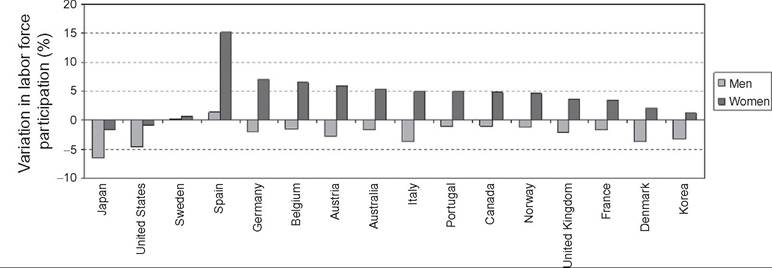
lt;10% 10% to lt;15% 15% to lt;20% 20% to lt;25% gt;25% Denmark Slovak Republic United Kingdom Israel Korea Norway Sweden Austria The Netherlands Estonia Belgium Iceland Finland Turkey Japan New Zealand France United States Luxembourg Australia Canada Hungary Portugal Switzerland Poland Greece Germany ChiH (2011) Spain Ireland Czech Republic