Chapter Four Eric R. Varner Incarnating the Aurea Aetas: Theomorphic Rhetoric and the Portraits of Nero
In his fourth eclogue, Vergil for the first time in Latin literature evokes the idea of a return of Saturn's golden age, and he links the return with the birth of a divinely sanctioned child (4.6 redeunt Saturnia regna) or, in Anchises prophecy, explicitly with Augustus himself (6.7923: Augustus Caesar divi genus aurea condet/saecula).
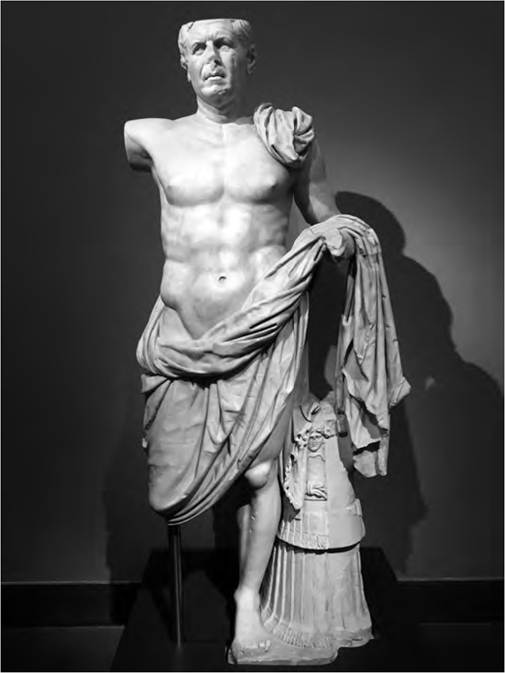
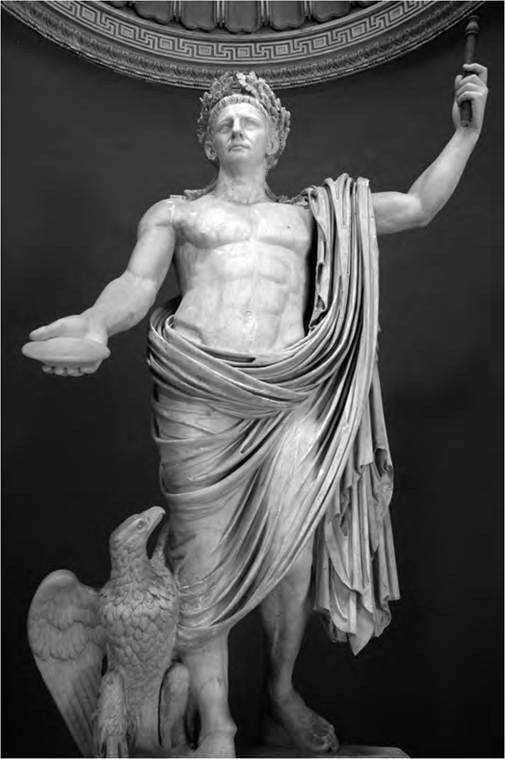
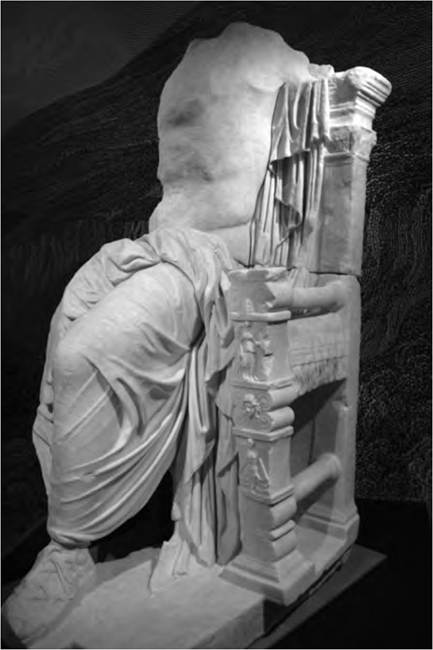
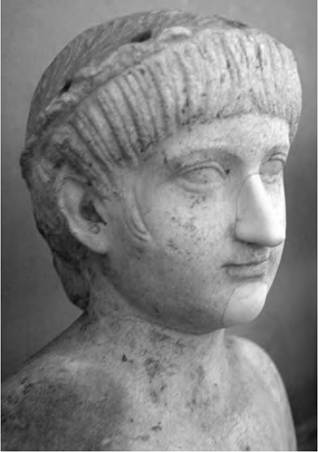
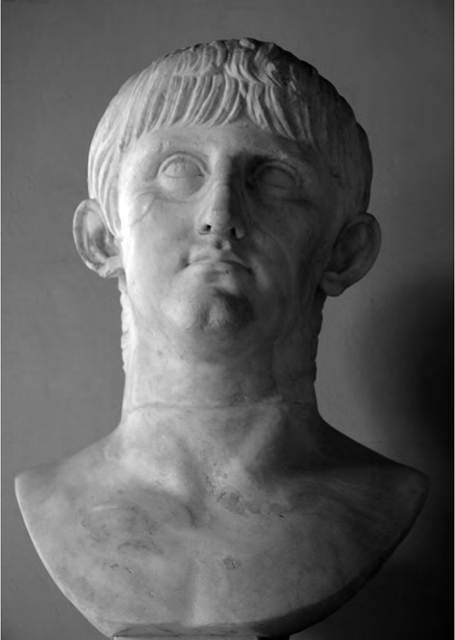
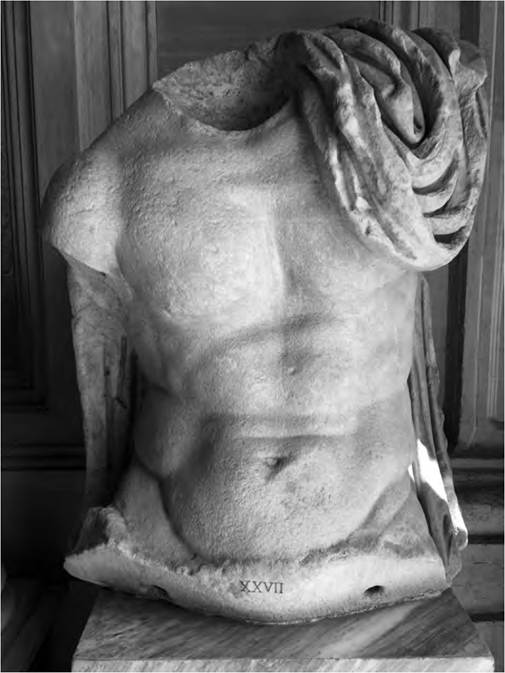
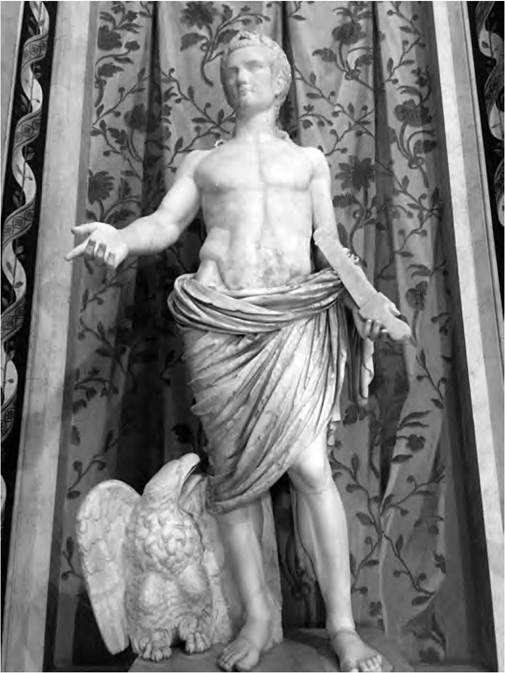
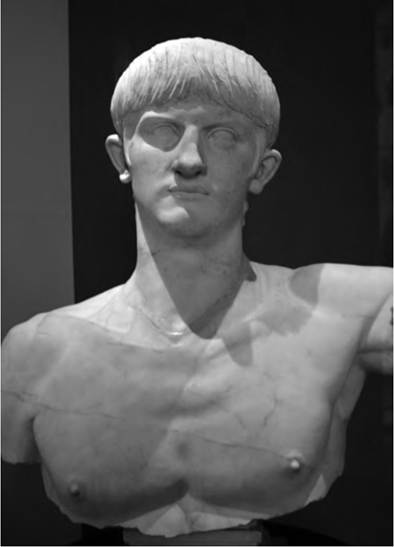
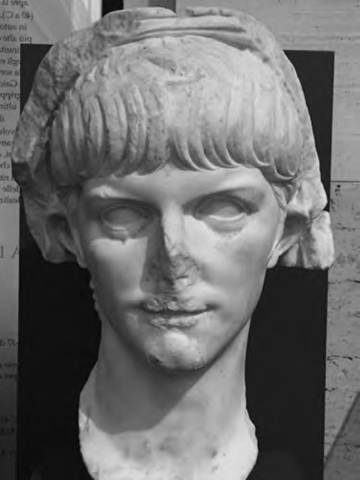
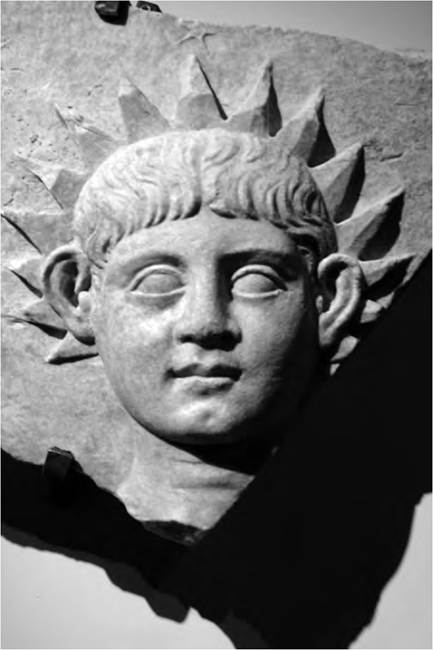
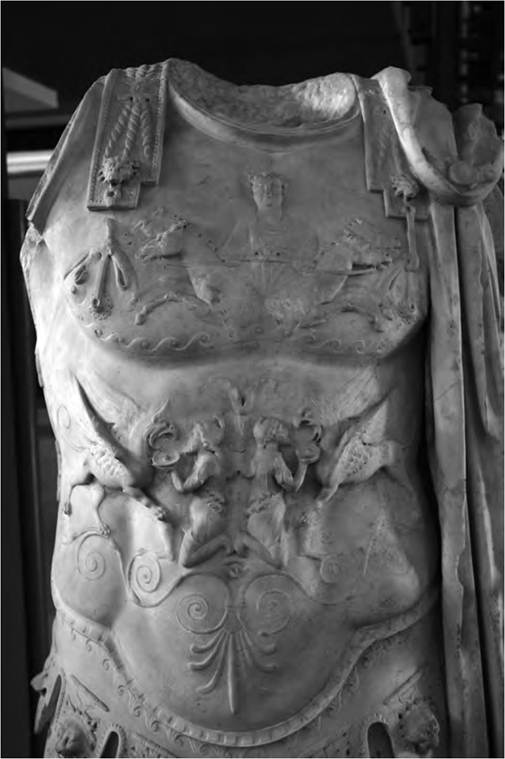
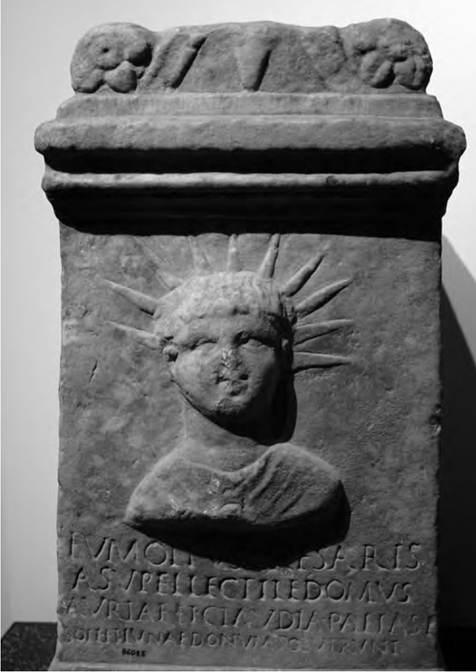
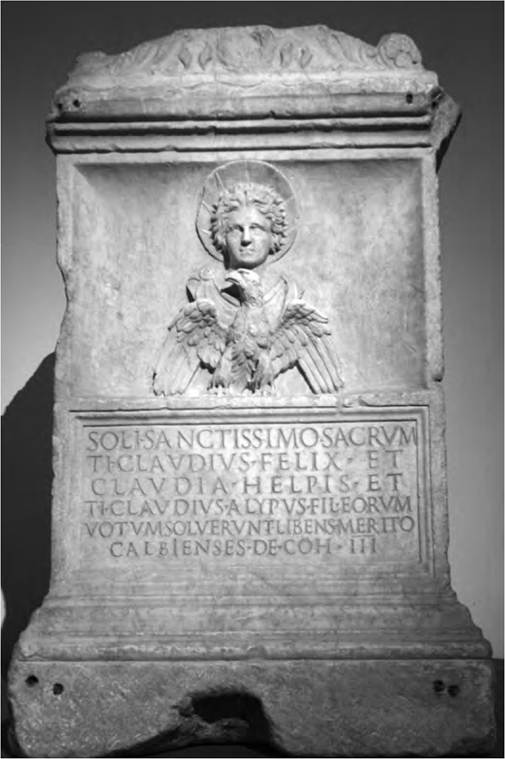
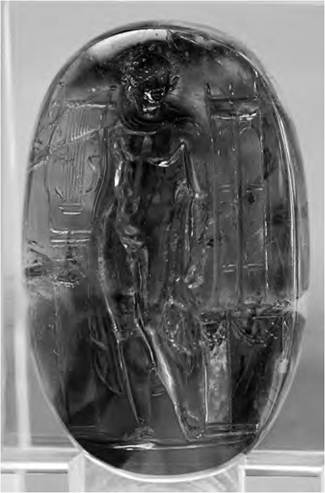
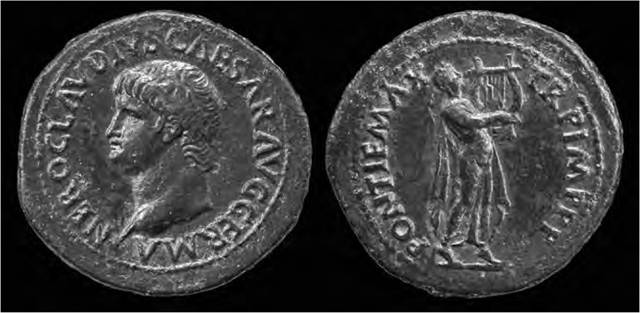
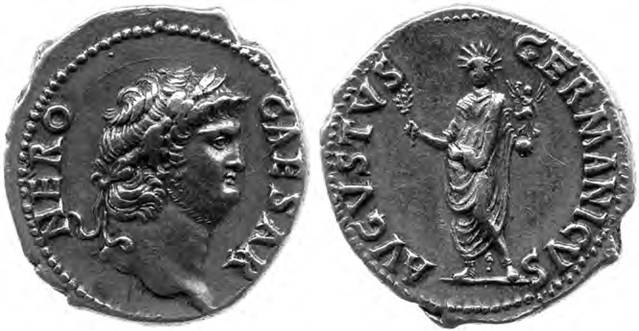
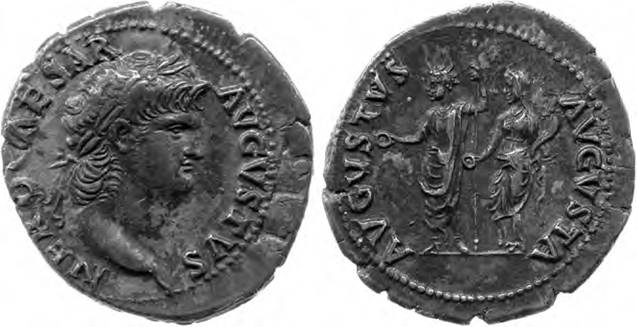
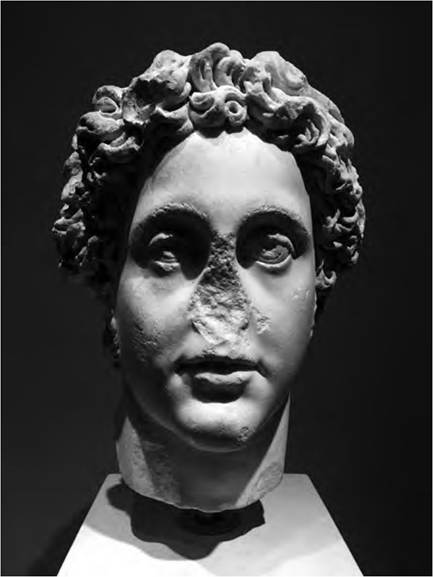
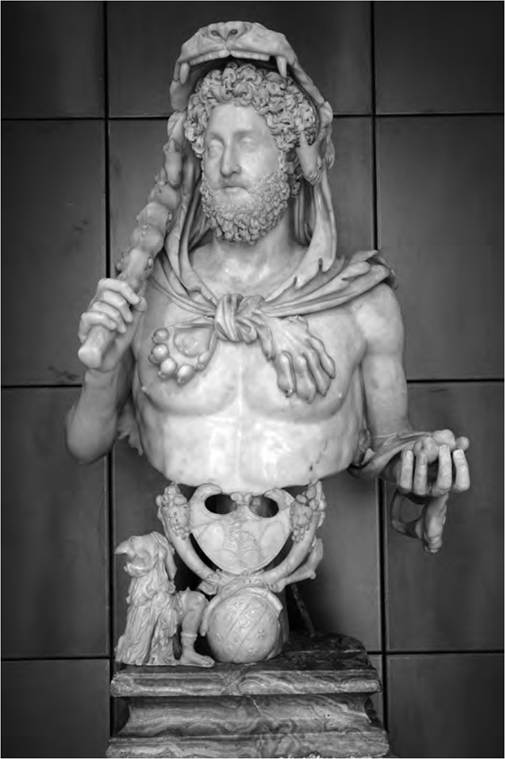
Early in the principate of Nero, several authors including Seneca, Calpurnius Siculus, Lucan, Antiphilus, and the author of the Einsiedlin Eclogues revive and amplify the Vergilian formulation of divinity, golden age, and youthful ruler. These concepts are also insistently broadcast in Neronian visual arts through the widespread use of theomorphic representations of the emperor.Theomorphic imagery, in which mortal and divine are allusively aligned, was not unique to the imperial period (Pollini 2012, 70; M. Bergmann 2013, 341). In the late Republic, for example, a realistic portrait of a general from the Sanctuary of Hercules Victor at Tivoli is elided with a standing Jupiter body type (fig. 1; Museo Nazionale Romano, Palazzo Massimo alle Terme, inv. 106513, h. 1.94 m; Scarpatti in Gasparri and Paris 2013, 48-50, no. 8, with figs.). This portrait, created ca. 75 BCE, amalgamates the general with Jupiter, through the stance and draping of the paludamentum (general's cloak) around the hips, echoing established standing Jupiter compositions and underscoring the anonymous general's position as Jupiter's mortal incarnation on the day of the triumph.1 In the early Imperial period, Augustus, too, continues to employ allusions to Jupiter, most notably in the Gemma Augustea, which invokes the seated compositional type of Jupiter Optimus Maximus Capitolinus, but also more subtly in his statue from Prima Porta, where, like the Tivoli general, the draping of the paludamentum echoes the standing Jupiter statuary type.[68] [69] Figure 1. A headless statue from Tivoli originally depicting Augustus appears to be the earliest depiction of an emperor enthroned as Jupiter, and the type becomes more widely used in dynastic group monuments during the principate of Tiberius.[70] [71] Under Caligula, enthroned statues continue to be produced and the standing Jupiter type is now also used for portraits of the emperor. Colossal portraits from Carsulae and Ocriculum subsequently reworked to Claudius Figure 2. Claudius as Jupiter; from Lanuvium, Rome, Musei Vaticani, Sala Rotonda, inv. 243; photo E. R. Varner. originally belonged to seated statues depicting Caligula as Jupiter, as confirmed by surviving fragments of the Carsulae statue and eighteenth-century excavation reports for the Ocriculum head (Otricoli: Rome, Musei Vaticani, Sala Rotonda 551, inv. 242; Boschung 2002, 68, no. 19.4, pl. 53.1; Varner 2010, 46-47, fig. 39; Carsulae, Museo, h. 0.65 m; Maderna 1988, JT 7; Varner 2010, 47-48, fig. 40). A statue of Caligula reconfigured as Augustus from Aenona employs the standing Jupiter type (Zadar, Archaeological Museum, inv. 1, h. 2.3 m; Boschung 1993, 80, 193, cat. 207, pls. 140, 219.2; B. Bergmann 2010, 290 cat. 15). In addition to Figure 3. Headless Julio- Claudian emperor (Caligula?) as Jupiter; Nemi, Museo; photo E. R. Varner. the Carsulae and Ocriculum likenesses, Claudius also employs Jupiter imagery in portraits created ex novo, including standing statues from Lanuvium now in the Vatican and from the Metroon at Olympia (fig. 2; Rome, Musei Vaticani, Sala Rotonda, inv. 243, h. 2.54 m; Maderna 1988, 157-58, no. JS2, pl. 3.1; Olympia, Museum A 125, h. 2.1 m; Maderna 1988, 158-60, no. Nero’s earliest surviving portraits in all media produced under Claudius stress the young heir’s prospective military roles, as in Claudian coin portraits in which Nero features the paludamentum, or civic, religious, and intellectual roles—as for instance a type 1 togate statue from Anzio, formerly in the Borghese collection and now in the Louvre, which is a precocious presentation of the Figure 4. Nero (type 1) with radiate crown, later recarved; Rome, Musei Vaticani, Galleria Chiaramonti 22.15, inv. 1528; photo E. R. Varner. young heir as an orator (MA 1210, h. 1.38 m; de Kersauson 1986, 210-11, no. 99, figs. [with earlier literature]; Born and Stemmer 1996, 70-71, figs. 18-19; M. Bergmann 1998, 147-48, pl. 27.1; Fabrega-Dubert 2009, 218, no. 434; Cadario 2011, 178, fig. 2a; Sandrelli, Fabreega-Dubert, and Martinez in Coliva, Fabreega- Dubert, Martinez, and Minozzi 2011, 384 cat. 64). To be sure, the scope of Claudian representations of Nero is unprecedented for an imperial heir; the portraits introduce innovative sculptural and numismatic imagery, but divine allusions are largely absent. A recarved type 1 portrait of Nero in the Galleria Chiarmonti of the Vatican (fig. 4) appears to be a rare instance of theomorphic imagery in Nero's boyhood likenesses (Musei Vaticani, Galleria Chiaramonti 22.15, inv. 1528, h. 0.196 cm; Wrede 1981, 302, no. 284; Andreae, Stadler, and Anger 1995, no. 88, pls. 172-73; M. Bergmann 1998, 169-70). The centrally parted hairstyle, boyish facial features with full receding lower lip and large ears are clear remnants of Nero's first portrait type. Nero's Claudian boyhood portraits are also reflected in two season reliefs in the Palazzo Rondinini in Rome depicting Autumn (Galleria, inv. 1807, 67 x 40 cm; Bruto in Candilio and Bertinetti 2011, 180, no. 177) and Winter (Galleria, inv. 1807, 67 x 40 cm; Bruto in Candilio and Bertinetti 2011, 173-74, no. 173). Both seasons appear as a young boys, with cloaks draped over their shoulders and fastened with a bulla. Autumn holds an apple in his outstretched right hand and grapes in his left, while Winter holds a bird in his outstretched left hand and a dead rabbit in his right. Both seasons have the centrally parted hair, prominent ears and full receding lower lip seen in Nero's type 1 portraits produced under Claudius. The draping of the cloak and pose of the seasonal figures recalls compositional types associated with the sun god Sol (Papini 2002). Upon his accession, however, Nero's representations begin to adopt a much wider range of theomorphic rhetorics; Seneca stresses the new ruler's resemblance to the gods in the De clementia, one of the first major productions of the so- called “accession literature” of the early Neronian period (1.7.1-3). Although there have been attempts to date the works of Calpurnius Siculus later, internal evidence within the poems strongly suggests that he is indeed writing in the early years of Nero's principate and Calpurnius, too, employs numerous theomorphic allusions for the young princeps (deus ipse, ipse deus, deus idem, enim deus, iuvenis deus, melior deus, formam deorum, mea numina, and praesenti numine).[73] An important Neronian cameo in Cologne accesses the traditional elision of the emperor with Jupiter, but adds important new elements, including a standing figure of Nero's mother, Agrippina Minor, who extends the laurel crown (corona triumphalis) over the emperor's head (Dom, Dreikonigenschrein I B a 17, 8.0 x 6.4 cm; Megow 1987, 4, 96, 101-2, 109, 137, 143, 149, 213-14, no. The star that springs from Nero's head accesses a richly layered symbolism. Stars had long-standing associations with the protectors of Rome, the Dioscuri, and as such were particularly appropriate for Nero given the mytho-historical origins of the Ahenobarbi, as it was the twins who turned the beard of Nero's ancestor from black to red as proof of the victory of the Romans at Lake Regillus in 498 BCE.[75] Additionally, stars had been placed on representations of Divus lulius to commemorate the comet that appeared in the sky at the ludi circenses in July of 44 and was subsequently interpreted as a cosmological confirmation of his apotheosis (Pollini 2012, 412-54). Stars were also added to the portraits of Germanicus and Augustus on the Ravenna relief, where Augustus appears with a standing Jupiter type body.[76] Germanicus's star may also be linked to his Latin translation of Aratus's astronomical poem, the Phaenomena, which was itself a meditation on the golden age (aurea aetas).[77] The star in the Cologne cameo functions on another level to recall the comet that appeared in 54 CE, foretelling the impending death of Claudius and the accession of Nero. A second gem, now in Nancy, also strongly equates Nero with Jupiter (Meditatheque de Nancy, inv. Camee 1; M. Bergmann 1998, 149, 220 pl. 29.1-2; Markiewicz in Aillagon 2008, 84). On this cameo, Nero is depicted with bare upper torso and the aegis of Jupiter as he is carried aloft on the back of an eagle. Nero holds an augur's staff (lituus) in his right hand. The Jupiter iconography of aegis and eagle are here combined to create a kind of apotheosis of the emperor, very similar to a cameo of Claudius in Paris (Bibliotheque Nationale, Cabinet des Medailles 265, h. 10.7 x 11.5 cm; Megow 1987, 199-200, no. A 80, pl. 27.1; Vollenweider and Avisseau-Broustet 2003, 109-10, no. 120; Zwierlein-Diehl 2007, 168, fig. 638; Pollini 2012, 137-38, fig. III.9; Koortbojian 2013, 58-9, fig. III.4). While the date of the Claudian cameo is debated and it could have been created late in his principate, more likely it is Neronian and thus represents the new Divus Claudius. The Nero cameo, however, which employ's the emperor's third portrait type, must have been created sometime between 59 and 64 and stands out as one of Nero's most emphatically theomorphic images. Sculpted representations from early in Nero's principate also visually melded the new emperor with Jupiter. A type 2 likeness in the Museo Capitolino was excavated in the environs of Tusculum at the Vigna Lucidi and should be associated with one of two surviving Jupiter body types now in the Villa Borghese (fig. 5; Stanza degli Imperatori, 4, inv. 418, h. 0.32 m; Fittschen and Zanker 1985, 17-18, no. 17; pl. 17; Cadario in La Rocca, Lo Monaco, and Parisi 2011, 264). One of the statues follows the seated compositional type and would have been comparable to Nero's presentation on the Cologne cameo (fig. 6; Portico, inv. 27; h. 0.95 m; Moreno and Viacava 2003, 98-99, no. 59). The other statue conforms to the standing Jupiter type and has been restored with a modern head of Tiberius (fig. 7; Salone, inv. 39, h. 1.78; Moreno and Viacava 2003, 115, no. 78). Whether standing or seated, the display of the Capitoline head on one of these bodies confirms the production of Nero's portraits as Jupiter in freestanding statuary from the outset of his principate. Tusculum also had close ties to the Domitii Ahenobarbi, Nero's paternal ancestors, and the display of representations of the new emperor there would have been particularly resonant (Arce, Dupre, and Saquete 1997; Cadario 2011, 264). The nineteenth century Figure 5. Nero; Rome, Museo Capitolino, Stanza degli Imperatori 4, inv. 418; photo E. R. Varner. excavations also yielded a seated statue of Apollo (Galleria Borgese, Portico, inv. 2; h. 0.85 m; Moreno and Viacava 2003, 65, no. 10). Another portrait of Nero in Cagliari has been cut down from a full-length statue of the emperor as Jupiter (Museo Nazionale, inv. 35533, h. 0.42 m; Meyer 2000, 30, 46, figs. 47, 82-83; Varner 2004, 69; Cadario 2011, 178, fig. 2b) (fig. 8). The diagonal extension of the left shoulder indicates that he likely held a scepter in a seated compositional type very similar to both Augustus on the Gemma Augustea and Tiberius on the Grand Camee.11 Additional evidence for seated depictions of Nero as Jupiter may also be provided by a torso in the Palazzo [79] Figure 6. Jupiter; Galleria Borghese, Portico inv. 27; photo E. R. Varner. Spada in Rome which seems to be late Neronian or early Flavian in date and may be from the Theater of Pompey (Palazzo Spada, Cortile; Coarelli 1971-1972, 117-18, fig. 24; Maderna 1988, 179-80, no. JT 27; Hallett 2005, 319, no. B115). As Vespasian does not conspicuously employ Jupiter imagery and is not known to have used the seated Jupiter Optimus Maximus Capitolinus type, the association of the Palazzo Spada fragment with Nero seems more plausible. In an epigram by Leonidas from the Greek Anthology, Nero is also implicitly likened to Zeus/ Jupiter as Poppaea is addressed in the poem as the wife of Zeus (Ποππαία, Διος εΰνι, 9.355). By 67, Nero is equated with Zeus Eleutherios (Zeus the liberator) for his liberation of Achaea (Weinstock 1971, 142-45; Champlin 2003, 137). Coins minted in Diosheiron in Lydia depict facing busts of Nero and Jupiter with the legend ΖΕΥΣ ΝΕΡΩΝ ΚΑΙΣΑΡ, effectively fusing the two images through the Figure 7. Jupiter; Villa Borghese, Salone, inv. 39; photo E. R. Varner. inscription, which elliptically presents the emperor as Zeus Caesar (RPC 430, no. 2559; Nock 1930, 18). Edward Champlin, and Jocelyn Toynbee have argued that Nero's identification with Apollo does not start in earnest until 59, when he is acclaimed by his retinue of youthful followers, the Augustiani at the Juvenilia as “Beautiful Caesar! Our Apollo, our Augustus, another Pythian! (ό καλός Καΐσαρ ό Απόλλων ό Αύγουστος εις ώς Πύθιος; Dio 61 (62) 20.5) (Toynbee 1942; Champlin 2003, 113; Volk 2006, 199 n. 38 also speculates that the solar imagery may be post 59). Champlin further insists that Lucan establishes Nero as the new Apollo in his proem of the De bello civile, probably not first publicly recited until 60, and certainly the majority of Nero's visual representations linking him to Apollo and Sol/Helios, culminating spectacularly in the project for the Colossus for the Figure 8. Nero; Cagliari, Museo Nazionale, inv. 35533; photo E. R. Varner. Domus Aurea, are created later in the principate. Nevertheless, Nero is referred to as Νέως Ήλίως at Sagalassos already under Claudius, and the reworked Chiaramonti head seems to have originally been an early type 1 portrait of Nero as Sol/Helios with radiate crown.[80] An onyx cameo in Paris combines a type 2 profile portrait of Nero with a radiate crown, and stands as another early example of his use of divine solar attributes during the initial years of the principate (Bibliotheque Nationale, Cabinet des Medailles 256; Babelon 1897, 118, no. 256, pl. 26; M. Bergmann 1998, 170; Vollenweider and Avisseau-Broustet 2003, 114, no. 127).[81] In addition, at least two portraits of Nero's second type, in use between his accession in 54 and the introduction of a new type to mark his quinquennalia in 59, appear to have originally been displayed in Apolline contexts and suggest early connections between the new emperor and the god. It is also surely not coincidental that the news of Claudius's death was delayed by several hours so that the new princeps Nero could appear before his subjects for the first time Figure 9. Nero; Museo Nazionale Romano, Palazzo Massimo alle Terme, inv. 616; photo E. R. Varner. on the monumental staircase of the Domus Tiberiana at precisely noon on 13 October 54 CE, an event that was eventually spectacularly commemorated every year through the carefully calculated solar alignment of the Octagon Room at the Domus Aurea.[82] A veiled portrait of Nero as Pontifex Maximus was discovered at the Temple of Apollo Palatinus, which is likely to have been its original location (Museo Nazionale Romano, Palazzo Massimo alle Terme [ex Museo Palatino], inv. 616, h. 0.43m; Gianetti in Gasparri and Paris 2013, 107, no. 58) (fig. 9). The head is worked for insertion into a separately carved togate body and must have been removed from its statue as a result of the memory sanctions enacted against Nero after his suicide. Within the temple of Apollo precinct, the image of Nero would have accompanied numerous other Julio-Claudian images, including a bronze portrait of Augustus in the guise of Apollo recorded to have been in the adjacent library, as well as portraits of Drusus and Germanicus.[83] Nero's Figure 10. Sol/Helios; Museo Nazionale Romano, inv. 54745; photo E. R. Varner. appearance at the temple as Pontifex Maximus would also have reinforced the official aspects of the god's cult and the temple as the new repository of the Sibylline Books. A type 2 portrait reworked to represent Vespasian was discovered at the Temple of Apollo at Bulla Regia, where the cult of Augustan Apollo also seems to be associated with the imperial cult and the Dii Augusti.[84] Many reworked portraits of condemned emperors retain their original display context, so it is likely that the initial portrait of Nero formed part of the temple's decoration and the young emperor's image would be linked with Apollo and as well as his deified predecessors, Augustus and Claudius. A relief with a radiate depiction of Sol/Helios also incorporates the iconography of Nero's second portrait type into the depiction of the deity (Rome, Museo Nazionale Romano, inv. 54745; Wrede 1981, 302 n. 32; Neverov 1986, 191; M. Bergmann 1998, 167-69, pl. 33.4; Tomei and Rea 2011, 237, no. 28) (fig. 10). The distinctive coiffure quotes the centrally parted hairstyles of Nero's first and second portrait types, and also incorporates an upper section of locks that are a distinctive feature of the emperor's type 2 coiffure. The physiognomy including full receding lower lip and large ears of the image are also reminiscent of Nero's type 2 portraits. Stars, like that of the Cologne cameo, appear in the background of the relief with the same cosmic implications for the aurea aetas. While the relief is probably not intended as a portrait of Nero as Sol/Helios, it certainly reflects an early use of solar associations for Nero. The relief creates a recognizably Neronian version of the god, a Neroized Sol/Helios. As such, it recalls Martial's description of statues of Hercules and Jupiter that borrowed facial features from Domitian.[85] A lost relief from the imperial series at the Sebasteion at Aphrodisias also apparently paired Nero and Helios. An inscription naming Nero and Helios follows the same format as an inscription from another Neronian panel depicting Nero and the personification of Armenia, suggesting that the missing relief had a similar two-figure composition and paired a portrait of the emperor with a depiction of the god.[86] Given the similar formats, it seems probable that the Nero-Helios relief is contemporary with the Nero-Armenia panel, which uses the emperor's second portrait type and can thus be dated to ca. 54-59. Significantly, the Nero-Helios relief is the only one to pair an emperor with a god in the sequence of imperial panels from the Sebasteion and it visually proclaims the young emperor's status as the comes (companion) of the god (Rose 1997, 167; Smith 2013, 141-43, C-Base 10, fi. 88, pls. 61-62). Another relief from the Sebasteion at Aphrodisias, depicting two nude boys, presents a more anomalous portrait (Smith 1987, no. 9; Rose 1997, 166, pl. 206; Smith 2013, 158-60, C-19, fig. 100, pls. 54. Smith 1987, no. 9; Rose 1997, 166, pl. 206; Smith 2013, 158-60, C 19, 100 pls. 74-75). The sequential position of this relief indicates that it should be dated to early in Nero's principate. The boy at the right of the relief is depicted with a version of Nero's centrally parted coiffure suggesting that the boy at left may be Britannicus. The parting of Nero's hair has been shifted slightly to the left. Nero wears a chlamys pinned over his right shoulder. As in the Rondanini season reliefs, the chlamys, together with the contraposto pose and curve of the left hip, recall statuary types associated with Sol. In the Aphrodisias relief Nero holds a globe, another attribute used in depictions of Sol, in his extended left hand and an aplustre or decorated ship's steering rudder in his right and, as in the Cologne cameo, it evokes Roman dominance over land and sea. Its appearance at Aphrodisias may suggest that the attribute was particularly promoted in the early years of Nero's principate. The pairing of Nero and Britannicus also alludes to the Dioscuri, Castor and Pollux, whose imagery had been used for earlier imperial brotherly pairs, Tiberius and Drusus, and Gaius and Lucius.[87] Nero's affinities with the sun are also prevalent in literature from the early years of Nero's principate. Seneca employs a solar comparison in his description of Nero in the De dementia, likely written sometime late in 55 or early in 56, where the emperor is explicitly likened to the sun: “It happens that you can be hidden no more than the sun. There is a great light facing you and the eyes of all are rotated towards it. You think you are going out? You are rising.” (1.8.4).[88] Seneca's treatise in part draws on the established literary genre of kingship theory which also incorporates solar tropes (Frears 1976; S. Braund 2009, 251). Seneca's solar metaphor recalls an earlier comparison of Nero to the sun that occurs in Antiphilus's poem in praise of a successful speech Nero had delivered to the Roman Senate on behalf of the island of Rhodes in 53 that restored rights to the Rhodians that had been suspended by Claudius: I, Rhodes, once the Sun's island, am now Caesar's, and I boast of equal light from both. Just as my fire was dying a new radiance illuminated me. O Sun, surpassing your light, Nero shone forth. How shall I say to whom I owe more? The one revealed me from the sea, the other rescued me just as I was sinking.[89] Antiphilus's epigram was included in the final omega section of the Garland of Philip. Since the poem must postdate Nero's speech on behalf of the island, Philip's compilation of the Garland cannot be any earlier than very late in Claudius's reign or early in Nero's (Cameron 1980, 43-62; Cameron 1993, 56-65; Hoschele 2017, 2-3). The Garland's proem underscores the newness of its epigrams in the collection, as opposed to the considerably older poems assembled in its predecessor, the Stephanos of Meleager (Anthologia Palatina 4.2; Hoschele 2017, 2-3). Philip's insistence on the newness of the poems he has chosen fits very well within the artistic climate celebrating the new emperor, Nero, at the outset of his principate. Seneca's Apocolocyntosis, likely composed for the Saturnalia of 54 shortly after Nero's accession, provides the most insistent early linkage of the new emperor and Apollo.[90] Apollo describes Nero as similar to himself in “looks, grace, song and voice (ille mihi similis vultu similisque decore/nec cantu ne voce minor) and Nero is like Lucifer and Hesperus, the evening and morning stars, and the blazing sun; furthermore, his face shines with brilliance (Apocol. 4.2032). Apollo also describes Nero's long flowing hair which was a prominent new feature of the emperor's type 2 portraits (adfuso cervix formosa capillo) that deliberately recalled the god's own long coiffures. Literary elisions of Nero and Apollo are not confined to Seneca. Calpurnius Siculus compares Nero's face to both Apollo and Mars (Martis vultus et Apollinis; Ecl. 7. 84.). Calpurnius also presents Nero as companionate with Apollo (comitatus Apolline Caesar) in Ecl. 4, where he implicitly compares him to Palatine Apollo, echoing the pairing of Nero and Helios in the Aphrodisias panel (4.87, 159).[91] For the contemporary anonymous author of the Einsiedlin Eclogues Nero is “your own Apollo (vester Apollo and tuus Apollo).”[92] Although the sincerity of its flattery has often been questioned, the proem to Lucan's De bello civile is rife with theomorphic and celestial allusions for Nero. The proem does not appear to have been publicly recited any earlier than the Neronia of 60, but could have been composed before that and thus be more closely connected chronologically with other authors' evocations of Nero with Apollo and the sun (1.48).[93] In the proem, Lucan posits Nero's apotheosis in the guise of either Jupiter or Apollo (1.47-48; Henderson 2013, 175). Again Nero is refulgent and Lucan likens him to a star (obliquo sidere 1.55). Whether satirical or not, Lucan's proem clearly relies on the theomorphic rhetorics already in play early in Nero's principate. M. Dewar (1994, 202) has argued that the proem must be read within the extravagant and overblown conventions of panegyric. Certainly, by the time of Nero, the identification of the ruler with the gods was an established topos, which would be even more elaborately realized in the visual arts later in his principate.[94] All of these theomorphic alignments in the visual arts and the celebratory, inaugurative “accession literature” that included the De clementia, the Apocolocyntosis, Calpurnius's Eclogues, the Einsiedlin Eclogues, and perhaps Lucan's proem are unparalleled; together they invest the person of the god-like emperor with an unprecedented amount of youthful promise and announce the return of the golden age.[95] The Apocolocyntosis stages Nero's accession as the beginning of the most happy era (initio saeculi felicissimi); the Fates themselves spin out the new golden age (aurea saecula); Apollo foretells that the new emperor will be the guarantor a joyful era felicia saecula)[96] The Apocolocyntosis was apparently written for Nero's first Saturnalia as emperor in 54, its recitation then would have had even more powerful connections to the renewal of Saturn's golden age during the annual festivities.[97] Nero is also positioned as the guarantor of worldwide prosperity and happiness in a papyrus that appears to be a draft of a public proclamation celebrating Nero's accession (P.Oxy. 7.1021). The papyrus invests the new emperor with the hope and expectation of the world, and positions Nero as the favorable genius of the world and the source of all good things (Horn 1922, 494-95).[98] [99] The new Neronian golden age will also rival and surpass the previous aurea aetas of Augustus (Slater 2009/2010, 277-78). Indeed, all of the Neronian accession writers in Apolline and golden age references very consciously evoke their Augustan counterparts, especially Vergil's fourth Eclogue, book 9 of the Aeneid, and Horace's Carmen Saecularis (see, e.g., Henderson 2013, 173-76 and M. Bergmann 2013, 342). Calpurnius Siculus also explicitly invokes the new golden age—“a golden age will be reborn with secure peace” (aurea secura cum pace renascitur aetas)—as well as the aurea saecula and the beata saecula, while the author of the Einsiedlin Eclogues formulates an aurea regna3 For Seneca peace is a central theme of the new era that will flourish together with iustitia, pudicitia, securitas and dignitas.[100] Peace and the absence of war are paramount concerns in the second Einsiedlin Eclogue that may reflect the initial Neronian interventions in Armenia and the subsequent cessation of hostilities early in 55, which was celebrated with an ovation and portrait statue in the Temple of Mars Ultor. Calpurnius further defines the new Neronian peace as perpetual (perpetuam... pacem) but he also articulates it as a distinctly Roman phenomenon by calling it pacem togatam?[101] Seneca adduces additional virtues for the new felix ac purum saeculum of piety, integrity, modesty and faith.[102] The statue and ovation were voted in 55, after direct military conflict with the Parthians was avoided and they evacuated Armenia. Nero's portrait was designated for the Temple of Mars Ultor and was equal in size to the cult image (effigiemque eius pari magnitudine ac Martis Ultoris eodem in templo censuere, Tacitus Ann. 13.8). Although we cannot know if Nero's colossal statue employed the kind of theomorphic rhetoric of some of his other early images, its placement in the temple effectively made it the spectacular culmination of Augustus's sculptural program which embodied a monumental history of Rome that prominently featured Nero's ancestors, the Julii, the Kings of Alba Longa, the Summi Viri, Aeneas, and Romulus. Within the temple, Nero is grouped with images of the divine ancestors of the Roman people, Mars and Venus, as well as with his own divine ancestor, Divus lulius. Nero, then is presented as a kind of co-divinity (suntheos, sunnaos) with his divine ancestors.[103] Eugenio La Rocca (1995, 79-80) underscored the Forum of Augustus's importance as a site closely linked to the emperor cult, and Nero's statue would have been an important component of sacrifices made to his genius and to Mars Ultor in the Forum of Augustus that were enacted by the Arval Brothers on 23 June 59 CE (Smallwood 1967, 22, no. 22). The extraordinary statue and its display context may also inform visual allusions in Calpurnius Siculus's Eclogues. As mentioned earlier, the seventh eclogue compares Nero's countenance to that of Mars (Martis vultus, Ecl. 7.84). Although G. B. Townend (1980, 173, n. 41) finds Calpurnius's reference to Mars “without parallel” and ascribes it to renewal of military conflict with the Parthians and the new campaigns led by Gn. Domitius Corbulo in 58, it is just as likely that Calpurnius's language reflects the earlier pairing of images of Nero and Mars within the temple, a date more commensurate with the accessional allegory in the rest of the poem. Calpurnius couples his comparison of Nero to Mars with that of Nero to Apollo (again vultus... Apollonis) and the Augustan cult image of Mars Ultor was noteworthy for its use of Apolline symbols (Romeo in La Rocca, Lo Monaco, and Parisi 2011, 184). In Ecl. 1, Calpurnius also employs highly unusual visual allusions which strongly suggests his working knowledge of the artistic program of the Forum of Augustus. In describing Bellona, the goddess of war, as a bound captive, Calpurnius draws on Vergil's description of Furor enchained from book 1 of the Aeneid. Both passages employ nearly identical imagery and language. Calpurnius renders Bellona as dabit impia victas post tergum Bellona manus spoliataque telis in sua vesanos torquebit viscera morsus (“And unholy/impious Bellona with her conquered hands behind her back and deprived of weapons will turn her furious teeth upon her own entrails,” Ecl. 1.46-48) and Vergil depicts Furor as Furor impius intus/ saeva sedens super arma et centum vinctus aenis/post tergum nodis fremet horridus ore cruento) (“Impious/unholy Furor inside sitting on savage arms and bound behind his back with a hundred knots of bronze will scream horribly with bloody mouth,” Aen. 1.294-296).[104] Both Bellona and Furor are described as impious, conquered, and with their hands bound behind their backs, and both authors employ a vivid and bloody description of biting mouths. Significantly, both passages also echo the well-known painting by Apelles, representing Alexander in triumph and War with hands bound behind its back, which Augustus displayed in his Forum, likely in the aula which also held his colossus.[105] Servius certainly recognized the Vergilian correspondences with the painting which was apparently still visible when Servius was writing his commentary on Vergil in the fourth century (aut sicut quidam FUROR IMPIUS INTUS non in aede Iani, sed in alia in foro Augusti introeuntibus ad sinsistrum, fuit bellum pictum et furor sedens super arma devinctus eo habitu quo poeta dixit, ad Aen. 294). By the reign of Nero, the painting, together with its pendant of Alexander (with Victory, Castor and Pollux), had only recently been altered by Claudius, who replaced the portrait features of Alexander in the paintings with those of Augustus (Pliny Nat. 35.94).[106] The statue, with its rich display context within the Forum of Augustus that included Apelles's paintings, and the Calpurnian eclogues create an evocative invocation of the new emperor and the aurea aetas. Nero's association with Mars is furthered in an unusual fragmentary sardonyx cameo in Berlin that features a type 4 portrait with helmet (Berlin, Staatliche Museen, Antikensammlung, inv. 30219.710, 2.22 x 2.02 x 0.49 cm; Megow 1987, 96, 98, 215, no. A 100, pl. 35.4; Vollenweider and Avisseau-Broustet 2003, 117, n. 3; Platz-Horster 2012, 79, no. 56, pl. 11). The Berlin cameo is the earliest surviving image of an emperor wearing a helmet, and follows Hellenistic precedents including a cameo in Paris variously identified as Alexander the Great, Seulukos I Nicator, or Alexander Balas (Paris, Bibliotheque Nationale, 227, 7.7 x 8 cm; Vollenweider and Avisseau-Broustet 1995, 50-52, no. 33; Gentili 2013, 252, no. 18). The next emperor to use the attribute is Hadrian, in a statue from Ceprano, followed by Marcus Aurelius as Mars with Faustina Minor as Venus in a double portrait statue; the helmet would not appear again in imperial representations until Trajan Decius.[107] The general shape of the helmet and visor with volutes in the Berlin cameo closely resembles that of the statue of Trajan Decius in the Centrale Montemartini, although without the crest. The Berlin cameo amplifies the Mars imagery that had been invoked by Calpurnius Siculus. The innovative martial imagery of the gem suggests that it may also reflect the military expeditions to Ethiopia and the Caucasus that were being planned late in Nero's principate (D. Braund 2013, 96-98). The theomorphic rhetorics employed by Neronian artists and authors at the outset of Nero's principate all seek to instantiate the aurea aetas through words and images. Their conceptualization of the new Neronian golden age, especially in terms of Apolline and solar imagery, would find its most spectacular expression in the Colossus project for the Domus Aurea. Although authors both ancient and modern have construed the Colossus as a monumental expression of Nero's overweening megalomania that sought to inappropriately memorialize the emperor as the sun god, the original aims of the project were in fact far more calibrated and situated within an already rich tradition of Neronian and earlier theomorphic imagery.[108] Commissioned from the renowned sculptor of colossi, Zenodorus, the ca. 120-foot tall statue was intended as the centerpiece of the vestibule that allowed access to Nero's new residence from the Via Sacra in the Roman Forum. Not completed at the time of Nero's suicide on 9 June 68, the Colossus was ultimately dedicated by Vespasian in 75. Based on a Flavian intaglio in Berlin and coins minted by Gordian III in the third century, the basic appearance and attributes of the statue can be reconstructed (M. Bergmann 1994}; M. Bergmann 1998, 190, fig. 3). The statue depicted the god standing with right hand resting on a ship's rudder and left arm leaning on a pedestal. As in traditional representations of Sol-Helios, the head is radiate. The ship's rudder, however, is a striking new innovation in solar imagery and it replaces the whip used to guide the chariot of the sun, which is the standard attribute for the right hand. The rudder is borrowed from the iconography of the goddess Fortuna who, in standing representations, also rests her right hand on it. The incorporation of the rudder enriches the solar imagery with notions of the divine fortune of the city and makes the statue syncretic. The globe on which the ship's rudder sits is also a traditional attribute of images of Sol-Helios, although it is normally held in the extended left hand. Together, the rudder and globe also symbolize Roman dominance of land and sea. The appearance of the rudder also recalls Nero's earlier deployment of the aplustre in the Cologne cameo and on the Aphrodisian relief. A nexus of monuments apparently related to the Colossus suggest the range of theomorphic solar imagery possible in the later years of Nero's principate. A 120-foot tall painting, whose commensurate scale should indicate a close connection to the Colossus and its imagery, was visible in the Horti Maiani (Pliny Nat. 35.51).[109] Pliny does not record the iconographic details of the painting, but implies that Nero commissioned it as nothing less than a colossal portrait of himself (colosseum se) without actually using any of the words typically associated with portraits, such as imago or effigies. Pliny's use of the adjective colloseus also connects the painting with the Colossus. Earlier in Book 34 in his accounting of colossi, which ends with the Colossus of Nero, Pliny had carefully defined the word as especially associated with large-scale statuary (Nat. 34.39).[110] Indeed, Pliny's use of colosseus to describe the painting is the only instance in the entire Historia Naturalis where the words colossus or colosseus/colossaeus are not associated with statuary. Figure 11. Nero; Rome, Musei Vaticani, Museo Gregoriano Profano, inv. 348; photo E. R. Varner. The Colossus's solar imagery also connects it to the gold embroidered purple awning that was specially made for the Theater of Pompey for the celebrations surrounding the coronation of Tiridates in 66. Cassius Dio, indicates that the awning featured a central depiction of Nero driving a chariot surrounded by golden stars, effectively theomorphosizing Nero with Apollo-Helios.[111] The awning's solar rhetoric is also reflected in the relief decoration of a headless cuirassed statue from the series of Julio-Claudian portraits decorating the Roman Theater at Caere (fig. 11).[112] In the upper section of the cuirass, a radiate Apollo- Helios drives the four-horsed solar chariot over stylized waves. The god's full and rounded facial features, and the elaborate coiffure of parallel curls, closely resemble Nero's later portraits. The statue was originally completed with a separately carved portrait head of Nero's last type, making an implicit equation of god and emperor. The cuirass also features a highly unusual mythological scene of kneeling Arimaspi offering bowls to winged griffins just below the Neronian Apollo-Helios. Ancient authors identify the Arimaspi as one-eyed people from Scythia legendary for their conflicts with the griffins (Herodotus Hist. 3.116, 4.13, 27; Gergel 1994, 196). The cuirass depicts the Arimaspi kneeling in front of the griffins, creatures sacred to Apollo. The kneeling posture suggests subservience, proskineisis, and perhaps also clemency; in addition, they recall Tiridates's double public obeisance to Nero at the Forum Romanum and the Theater of Pompey during the coronation ceremonies. Dio's account of the ceremonies includes Tiridates kneeling before Nero as a god and hailing the emperor as “my god” (τον έμον θεόν, 62.[63] 5.2). The combination of Neronian Apollo-Helios, Arimaspi, and griffins also appears on an almost identical cuirass discovered at Susa (now in Turin and restored with a private third century likeness) that also boldly celebrates Nero's themorphic linkages to the sun god (Turin, Museo di Antichità, without inv. no., h. 1.95 m; Stemmer 1978, 96, pl. 64.1-2; Rose 1997, 85, and n. 17). The emperor and sun god are again visually melded in an altar dedicated to the Sun and the Moon by Eumolpus, a slave in charge of furnishings at the Domus Aurea, together with his daughter, Claudia Pallas (Florence, Museo Archeologico, inv. 86025; CIL 6.3719; M. Bergmann 1998, 194-201, pl. 38.1-4; Hallett 2005, 242-3; Cadario 2011, 183, fig. 8; Tomei and Rea 2011, 237, no. 27) (fig. 12). The bust length depiction of the radiate sun god borrows its fuller rounded facial features and hairstyle from Nero's fourth portrait type and recalls the appearance of the sun god on the Caere and Turin cuirasses. A second altar with a bust of Sol, dedicated by Tiberius Claudius Flelix, Claudia Helpis, and their son Tiberius Claudius Alypus to Sol Sanctissimus, has clear echoes with the Eumolpus altar and the cuirasses (Musei Capitolini, Galleria Lapidaria, inv. 2412, h. 085m; CIL 6.710; Chausson 1995, 675-77; M. Bergmann 1998, 197, pl. 39.1) (fig. 13). The facial features and coiffure of the deity again reflect developments in Nero's later portraits. Saturn is represented on the left side of the altar, also Figure 12. Altar dedicated to Sol and Luna by Eumolpus and Claudia Pallas; Florence, Museo Archeologico inv. 86025; photo E. R. Varner. in bust form, and he adds an additional element of golden age rhetoric to the imagery (Chausson 1995, 677). The Eumolpus altar clearly states that it is a dedication to the Sun and the Moon (Soli et Lunae donum). It does not, however, mention the emperor, and so its imagery should not be read as a strictly theomorphic portrait of the emperor as the sun god. Instead it fuses imperial and divine identities and accesses a recognizably Neronian instantiation of Apollo-Sol-Helios. In addition, the altar provides direct, contemporary visual evidence for the iconographical program of the Colossus project itself, as well as the related imagery of the colossal painted “portrait” in the Horti Maiani, and strongly suggests that the Colossus was not an unequivocal portrait of the emperor as the sun god created in a grotesquely inappropriate scale as later authors claimed, but rather a carefully nuanced representation of the divinity inflected in a recognizably Neronian manner. As F. Albertson (2001, 97-99) has noted, Pliny is the first author to leave the impression that Nero intended the Colossus as a theomorphic portrait of himself Figure 13. Altar dedicated to Sol Sanctissimus by Ti. Claudius Felix, Claudia Helpis and Ti. Claudius Alypus; Rome, Musei Capitolini, inv.; photo E. R. Varner. and he says that the Colossus was “designed as a representation of that emperor (Nero).”(Nat. 34.45).[113] Pliny's language is telling in that he does not employ the terms more closely associated with portraits, effigies or imago, but rather simulacrum, which is usually used for statues of divinities. Simulacrum implies the semblance of the statue with the emperor and leaves the decided impression, like his description of the painting from the Horti Maiani, that Nero intended it as a portrait. Figure 14. Apollo, amethyst intaglio; Paris, Biblo- theque Nationale; photo Wikimedia, Marie Lan Nguyen. Nero and Apollo are also fused on an amethyst intaglio in the Bibliotheque Nationale in Paris, which depicts the god standing with a tripod at his left and a lyre at his right (Cabinet des Medailles, 5.6 x 3.5 cm; Vollenweider and Avisseau-Broustet 2003, 114-15, no. 128) (fig. 14). In addition, the contraposto pose, curved hip and cloak are related to the statuary type of Sol. As with the Eumolpus and Sol Sanctissimus altars or the Caere and Turin cuirasses, the god's facial features and coiffure have been infused with elements from Nero's final portrait type. The diffusion of this blended imagery is further attested on the Jupiter Column at Mainz, where Sol-Helios is represented in the four-horsed chariot with the broader Neronian facial features and coiffure of parallel locks framing the face (Bauchhenss 1984, 8, pl. 27). The column dates to ca. 59-66, so firmly within the arc of time of Nero's last two portrait types (Bauchhenss 1984, 32-33). Triclinium A from the complex at Murecine outside Pompeii also features a Nero-like Apollo as the focal point of its central wall (Pompeii, Ufficio Scavi, inv. 85182, 2.5 x 500 m; Mastroroberto 2007; Mattusch 2009, 246-47, no. 111). The configuration of the face, with fuller facial features and distinctive full, receding lower lip, again recalls the emperor's last two portrait types. Although the function of the Murecine complex has not been fully explicated, its multiple dining rooms would suggest a commercial establishment or seat of an important collegium. Its furnishings included an elaborate silver service with two canthari, likely created to commemorate the treaty of Brindisium between Octavian and M. Antonius. Although the Apollo from Triclinium A has been interpreted as a portrait of Nero, it is rather a Neronian incarnation of the emperor's patron deity, like the Colossus or the Helius figure on the Jupiter Column at Mainz (Mastroroberto 2007; Mattusch 2009, 246-47). The Murecine complex included two other triclinia, one also with red background (B) and one with black (C). The rooms had been redecorated after the earthquake of 62, but were used Figure 15. Nero and Apollo, as, minted in Rome, ca. 64-66; London, British Museum, 192.0612.5; photo courtesy of the Trustees of the British Museum. as storerooms at the time of the eruption of Vesuvius in 79. Collectively, the sumptuous and luxurious wall schemes in all three of the Murecine triclinia, which also included representations of the Dioscuri and Victory, formulate visually the new Neronian golden age (Mastroroberto 2007). A series of coins minted between 64 and 66 merge the identities of Nero and the sun god through text and image; these coins feature Nero on the obverse and Apollo Citharoedus on the reverse (fig. 15) (BMCRE 130, nos. 75-77, pl. 22; M. Bergmann 1998, 185-89; Pollini 2012, 153, fig. III.21). Apollo is depicted wearing the long belted chiton and mantle of the musician.[114] Although Suetonius links these coins with portrait statues of Nero dressed in the traditional costume of the citharode, the coins cannot actually depict the statues themselves, which were not erected until after Nero's return from Greece in 67 (Nero 25.2).[115] Instead the coins aggregate Nero's profile portrait on the obverse and a representation of the god on the reverse, which could not help but to recall Nero's own public performances with the lyre where he wore an identical costume. Apollo's fuller facial features, discernible on many of the reverses also recall Nero's final portrait type. The inscriptions on the coins' reverses additionally interweave the identities of emperor and god by encircling Apollo Nero's imperial titulature PONTIF MAX TR POTEST (or POT) IMP P P (Pontifex Maximus, Tribunician Power, Imperator, Pater Patriae). The melded imagery on the coins which combined Nero's type 4 profile portrait, citharoedic Apollo, and imperial titulature were so effective, that they may have encouraged Suetonius's mistaken impression that they were actual numismatic depictions of the later portrait statues. Apollo Citharoedus appears in several provincial coins minted late in Nero's reign, including a bronze issue from Patras with Nero (type 4) on the obverse where the emperor is identified on the obverse as IMP NERO CAES, while Apollo on the reverse is (APOL)LO AVG, underscoring the imperial, Neronian incarnation of the god, but also creating a disingenuous and ambiguous inscriptional identity if the names and titles are read together as IMP NERO CAES APOLLO AUGUSTUS (RPC 261, no. 1275; M. Bergmann 1998, 204). Coins from Thessalonike also feature type 4 portraits of Nero, either with laurel crown or radiate combined with representations of Apollo Citharoedus on the reverse (RPC 302, no. 1599; M. Bergmann 1998, 207-8). Nero is the first living emperor of Rome to appear with the radiate crown on coins and in sculpture. As noted earlier, the recut boyhood portrait in the Galleria Chiaramonti and a cameo in Paris with a type 2 portrait may be some of the earliest appearances of the radiate crown in Nero's portraiture and it had been used sporadically on some early provincial coins. The radiate crown first appears in imperial portraiture for representations of Augustus produced after his death in order to signal his newly deified status and include the Grand Camee de France, cameos in Vienna (Kunsthistorisches Museen, 9, inv. IX a 95, 9 x 6.6 cm; Megow 1987, 255, no. B 15, pl. 9.1-3; M. Bergmann 1998, 108-9, 22.1), Cologne (Romisch-Germanisches Museum; Zwierlein-Diehl 1980; M. Bergmann 1998, 112-13, 116, pl. 22.2), Würzburg, and St. Petersburg (Ermitage, 104, inv. Nr. Z 149, diam. 8.3 cm; Megow 1987, 167-68, no. A 22, pl. 10.13; M. Bergmann 1998, 108-9, pl. 22.3), an altar from Praeneste (Palestrina, Museo Archeologico Nazionale; Boschung 1993, 138, no. 63, pl. 67.1-3, 221.3; M. Bergmann 1998, 105, 112, pl. 21.2, 24.5-6; Agnoli 2002, 243-49 no. 3.9; Pollini 2012, 150), the Ravenna Relief (Boschung 1993, 174, no. 158, pl. 160.3-4, 216.2, 222.1; M. Bergmann 1998, 330; Pollini 2012, 150, fig. 3.18), a portrait head in Venice (Venice, Museo Archeologico, inv. 200, h. 0.41 cm; Boschung 1993, 109, no. 5, pl. 6; M. Bergmann 1998, 111, pl. 24.2), and a coin reverse likely depicting a statue of Divus Augustus dedicated in 22/23 at the Theater of Marcellus (BMCRE 1, 30, no. 74; RIC 1, 106, no. 20; Hertel 2013, 127-28, pl. 142.1-2; Koortbojian 2013, 211, fig. VIII.18). Thus, by Nero's principate, radiate imagery was well known in Rome and its expropriation for the first time by the living ruler would have been especially noteworthy. For Nero, the radiate crown provided immediate visual synthesis with his divine ancestor, Augustus, and with the radiate sun god, both associations of primary significance for Nero from the outset of his reign. As with the physiognomy and coiffures of Nero's last two types, the radiate crown Figure 16. Nero, denarius minted in Rome, ca. 64-65; London British Museum, 1843, 1028.249; photo courtesy of the Trustees of the British Museum. also reflected images of the Hellenistic dynasts, especially the Ptolemies, several of whom had appeared radiate on coins or seals (M. Bergmann 1998, 58-61). Nero's type 4 profile portraits with radiate crown first appear on Roman dupondii, which could also feature bareheaded and laureate profiles (MacDowall 1979, 171-73, nos. 181-94, 197-200, 203-6). By 65 CE the dupondii exclusively feature radiate portraits (MacDowall 1979, 173-75, nos. 210-41). Beginning in 64, asses could also employ radiate profile portraits (MacDowall 1979, 177, nos. 259-61, 178, nos. 270-76). The radiate crown continues to appear on provincial issues, including coins from Rhodes (RPC 457, no. 2772), Corinth (RPC 255-56, 1204-6), Buthrotum (RPC 278-79, nos. 1402-9, 1413-17), Thessalonike (RPC 302-3, nos. 1599-1600), Phoenice (RPC 279, nos. 1418-19), Maronea (RPC 316, nos. 1732-33), Nicomedia (RPC 351, no. 2084), Patras (RPC 260-61, nos. 125763, 1265, 1267-68, 1271, 1274, 1276-81), Nicea (RPC 348-49, nos. 2060-61), Cassandrea (RPC 292, no. 1517), Prusa (RPC 344, no. 2018), Tripolis (RPC 647, no. 4522), and extensively at Alexandria (RPC 708-10, nos. 5274-5325). Two reverse types may reflect radiate portrait statues of Nero. Aurei and denarii from 64-66 represent a standing togate figure wearing a radiate crown and holding a victory in his right hand and a palm branch in his left (MacDowall 1979, 159, no. 22, 162, no. 54) (fig. 16). The flat ground line on which the figure stands may suggest that it represents a work of sculpture. The legend NERO GERMANICUS surrounds the togate figure and expand the name and titles, NERO CAESAR that surround Nero's type 4 portrait on the obverse, encouraging the identification of the reverse image as a second representation of the emperor. John Pollini has suggested that the togate figure may be derived from a freestanding statue created to celebrate the diplomatic victories in Armenia in Figure 17. Nero and Poppaea, denarius, minted in Rome, ca. 64-65; London, British Museum, R.9902; photo courtesy of the Trustees of the British Museum. 63 (Pollini 2012, 151). The reverse label, AVGVSTVS GERMANICUS, also revives the memory of Nero's maternal grandfather, Germanicus, and invites comparison of his military successes in the East with the current military and diplomatic achievements of his imperial descendent.[116] A second reverse type, also used on aurei and denarii from 64-66, features a togate radiate figure together with a veiled female figure with cornucopiae (MacDowall 1979, 159, no. 23, 162, no. 55) (fig. 17). The two figures stand on an individual ground line and hold paterae in their outstretched right hands; the male figure also has a spear or scepter in his left. The two figures are labeled on either side AVGVSTVS and AVGVSTA, which may suggest that it reflects a statuary group created for Nero and Poppaea. The female figure's pose and attributes further associate her with the goddess Concordia. These coins, and the putative statuary group they may be modeled on, would celebrate the concordia of the imperial union which guarantees the harmony of the empire at large through their theomorphic aspects. Further evidence for the sculptural production of radiate images of Nero is provided by a portrait in Worcester, which has been updated from a type 3 to a type 4 portrait, whose cuttings suggest a radiate crown added in metal as part of the reworking, and a type 4 relief portrait of Nero later recarved as Augustus that also exhibits holes for added metal rays (Luni, Antiquario, inv. CM 1033, h. 0.43 m; Frova 1973, 536-37 n. 1, pl. 127.1-3; Boschung 1993, 161, no. 124, pl. 145; M. Bergmann 1998, 111-12, pl. 24.4). The recut relief portrait was discovered together with a much more fragmentary relief head, probably of Claudius, with corona civica that suggests the possibility of a larger dynastic relief that would also confirm the continuing relevance of Divus Claudius in the later Neronian period (Luni, Antiquario, inv CM 1470; h.; Frova 1973, 539, n. 4, pl. 127-4; Holscher 1994, 98-99). In addition Nero wears a radiate crown on an amethyst intaglio in a private collection and it also features the fourth portrait type and lightly incised beard (Spier 2010, 54, no. 30). In the provinces one early coin also endowed Nero's portrait with the sun god's radiate crown. Cidrama issued a bronze featuring Nero with the paludamentum and radiate crown and his centrally parted coiffure from the first two portrait types (RPC 473, no. 2880, pl. 124). The legend omits Nero's full name and titles and only reads ΝΕΡΩΝ, which makes precise dating difficult. The coin has been dated to Claudius's principate, but a date in the first five years of Nero's reign is equally possible (M. Bergmann 1998, 164-66, pl. 33.3; 2013, 344). Alexandria also issued coins under the Praefect Ti. Julius Balbillus with the young Nero seated and with radiate crown (Geissen 1974, 46-57, no. 121-37; M. Bergmann 1998, 157-64, pl. 32.1-3; M. Bergmann 2000 157-64; Noeske 2004; M. Bergmann 2013 344-45, fig. 20.9). A solar disk is also featured above Nero's portrait on a Cretan coin from Knossos that is complemented by a second issue depicting Nero again with solar disk and a facing bust of Octavia with a lunar crescent dating to the early years of the principate (RPC 239, nos. 1005-6, pl. 56; M. Bergmann 1998 150-51, pl. 29.5; 2013, 344). A heroic nude torso with a type 4 portrait head and chlamys draped around the shoulder whose whereabouts are no longer known was apparently part of a more straightforwardly theomorphic image of Nero which appears to borrow its body type from depictions of Sol.[117] The draping of the chlamys over the upper torso pinned on the right shoulder, soft, rounded handling of the musculature and pronounced thrust of the hip are again characteristic of a group of sculptures including a statue in the Palazzo Barberini associated with Sol (Papini 2002). In the Barberini image, the god holds the whip for driving the chariot of the sun in his right hand.[118] The more abbreviated form of the chlamys in the fragmentary portrait statue also recalls the likeness of Nero holding the aplustre and globe from the Sebasteion at Aphrodisias. Suetonius suggests that by the end of the reign, the combined theomorphic rhetorics employed for Nero that linked him to Apollo and Sol had worked and that the emperor was esteemed as equal to Apollo in music and Sol in driving a chariot (Nero 53).[119] The Colossus, and related deployment of solar imagery from later in Nero's reign, continued to visually promulgate the new golden age. By 64, the Figure 18. Commodus/Sol; Rome, Museo Nazionale Romano, Palazzo Massimo alle Terme, inv. 56128; photo E. R. Varner. conventions were well established and may have helped to lend credulity to the supposed discovery of Dido's golden treasure by Caesellius Bassus as recorded by Tacitus (Ann 16.1-2). Laudationes composed for the second Neronia exploited the incident for its golden rhetoric, one of them proclaiming “Non enim solitas tantum fruges nec confusum metallis aurum gigni, sed nova ubertate provenire terram et obvias opes deferre deos (“For not only were the usual crops brought forth and gold fused with other metals, but the earth prospered with new abundance and the gods rendered easy riches,” Tacitus Ann. 16.2). Neronian artists and writers revealed the rich possibilities of theomorphic rhetorics as they experimented with a sliding scale of amalgamated imperial and divine identities in which the emperor could borrow and exchange elements with deities like Jupiter, Apollo, Sol/Helios, and Mars. While previous emperors had explored divine elements in their representations, imagery that fused imperial and divine iconographies reached an artistic apogee under Nero. Suetonius suggests that Nero held contempt for religion, except for the cult of Dea Syria; a pair of lost statues from Rome may have associated the emperor with both Dea Figure 19. Commodus as Hercules; Rome, Palazzo dei Conservatori, inv. 1120; photo E. R.Varner. Syria and Jupiter (Nero 56).[120] Despite Suetonius's claims, Nero clearly did not hesitate to exploit the potential of sacred imagery. Subsequent emperors would create carefully blended images. Domitian, for instance, continued to employ Jupiter imagery and was represented in statuary with the standing Jupiter type, including a statue recarved to Nerva and now in Copenhagen (Ny Carlsberg Glyptotek, inv. 1454, h. 2.0 m; Johansen 1995, 84-87, no. 30). As already noted, Martial describes cult statues of Jupiter and Hercules that borrowed their likenesses from the emperor. The emperor's dining room in the imperial palace on the Palatine was also known as the banquet hall of Jupiter (Coenatio lovis). In addition, Domitian explored innovative theomorphic iconographies that blurred the traditional boundaries of gender by merging the emperor's facial features with the body and attributes of his patron divinity Minerva.[121] Commodus would also actively explore theomorphic imagery in innovative ways that merged his likeness with Jupiter, Sol, and perhaps most famously with Hercules. Coin obverses that show Jupiter luvenis and Sol present the deities with coiffures, beards and facial features clearly borrowed from Commodus's portraits (lupiter luvenis: BMCRE 4, nos. 253-54, 264, 623-24; M. Bergmann 1998, 265, fig. 51.5-6; Hekster 2002, 102, fig. 4; Sol: Gnecchi 1912, 52, nos. 3-4, pl. 78.3-4; M. Bergmann 1998, 247-48, pl. 46.2-3; O. Hekster 2002, 100-101, fig. 3). Other obverses show the double-headed Janus, with the proper left head bearing Commodus's likeness (Janus: BMCRE 4, 181; Gnecchi 1912, no. 131; M. Bergmann 1998, 265, fig. 51.4; Hekster 2002, 99-100). In sculpture Commodus also is represented as Sol in a portrait in the Palazzo Massimo, which presents the emperor beardless, like the sun god, and with regularly spaced holes in the coiffure above the forehead for the attachment of the radiate crown (fig. 18); both coins and sculpture also represented Commodus as Hercules, or Hercules Commodianus, including the famous bust in the Palazzo dei Conservatori (fig. 19).[122] Additionally, Commodus is alleged to have modified the Neronian Colossus itself, by changing its depiction of Sol into a representation of Hercules with Commodus's own facial features (Hist. Aug., Comm.; M. Bergmann 1998, 199; Hekster 2002, 122-25). Later in the third and early fourth centuries, Nero's exploitation of solar iconography would be revisited with the cult of Sol Invictus and even find strong reverberations in the visual program on the arch of Constantine (Marlowe 2006). The theomorphic experiments of Domitian and Commodus, as well as other emperors, reveal the enduring appeal of imagery that sought to merge the ruler with the sacred, but they never achieved the ambitious range of visual ideologies and strategies explored by Nero as he sought to artistically instantiate a new aurea aetas for Rome. Bibliography Agnoli, Nadia. 2002. Museo Archeologico Nazionale di Palestrina: Le sculture. Xenia Antiqua 10. Rome: Bretschneider. Aillagon, Jean-Jacques. 2008. Roma e I Barbari: La Nascita di un Nuovo Mondo. Milan: Skira. Alexandridis, Annetta. 2004. Die Frauen der romischen Kaiserhauses: Eine Untersuchung ihrer bildlichen Darstellung von Livia bis lulia Domna. Mainz: von Zabern. Andreae, B., Martin Stadler, and Klaus Anger, eds. 1995. Bildkatalog der Skulpturen des Vatikanischen Museums I: Museo Chiaramonti 1-3. Berlin: de Gruyter. Andren, A. 1976-1977. “In Quest of Vulca.” Atti della Pontificia Accademia Romana di Archeologia. Rendiconti 49:63-83. Arce, J., S. Dupre and J.C. Saquete. 1997. “Cn. Domitius Ahenobarbus en Tusculum: A proposito de una nueva inscripcion de època republicana.” Chiron 27:287-96. Avagliana, Alessandra. 2-11. “LAres tipo Borghese: Una rilettura,” Archaeologia Classica 62:41-76. Babelon, Ernest. 1897. Catalogue des Camees Antiques et Modernes de la Bibliothèque Nationale. Paris: Leroux. Bauchhenss, Gerhard. 1984. Die grosse luppitersäule aus Mainz. Mainz: Verlag des Romisch-Germanischen Zentralmuseums; Bonn: In Kommission bei R. Habelt. Bergmann, Birgit. 2010. Der Kranz des Kaisers: Genese und Bedeutung einer romischer In- signie. Image and Context 6. Berlin: de Gruyter. Bergmann, Marianne. 1994. Der Koloss Neros: Die Domus Aurea und der Mentalitätswandel im Rom der frühen Kaiserzeit. Trier Winckelmanns Program 13. Mainz: von Zabern. -----. 1998. Die Strahlen der Herrscher: 'Theomorphes Herrscherbild und politische Symbolik in Hellenismus und in der romischen Kaiserzeit. Mainz: von Zabern. -----. 2000. “Pronoia Neou Sebastou.” Pages 657-63 in XII Internationaler Numismatischer Kongress Berlin 1997. Edited by Bernd Kluge and Bernhard Weisser. 2 vols. Berlin: Staatliche Museen zu Berlin. -----. 2013. “Portraits of an Emperor—Nero, the Sun and Roman Otium” Pages 332-62 in A Companion to the Neronian Age. Edited Emma Buckley and Martin T. Dinter. Oxford: Wiley-Blackwell. Fittschen and Zanker 1985, 85-90, no. 78, pls. 91-94; Hekster 2002, 117; Mascolo in La Rocca, Lo Monaco, and Parisi 2015, 328-29, no. 1.3.1-3; Hercules coins: Hekster 2002, 103-11. Born, Hermann, and Klaus Stemmer. 1996. Damnatio Memoriae: Das Berliner Nero-porträt. Sammlung Axel Guttman 5. Mainz: von Zabern. Boschung, Dietrich. 1993. Die Bildnisse des Augustus. Romische Herrscherbild 1.2. Berlin: Mann. -----. 2002. Gens Augusta: Untersuchungen zu Aufstellung, Wirkung und Bedeutung der Statuengruppen des julisch-claudischen Kaiserhauses. Monumenta Artis Romanae 32. Mainz: von Zabern. Braund, D. 2013. “Apollo in Arms: Nero at the Frontier.” Pages 83-191 in A Companion to the Neronian Age. Edited Emma Buckley and Martin T. Dinter. Oxford: Wiley- Blackwell. Braund, Susanna. 2009. Seneca, De dementia. Oxford: Oxford University Press. Cadario, Matteo. 2011. “Nerone e il ‘potere delle immagini.” Pages 176-89 in Nerone. Edited by Marie Antonietta Tomie and Rosella Rea. Milan: Electa. Cameron, Alan. 1980. “The Garland of Philip,” GRBS 21:43-62. -------. 1993. The Greek Anthology from Meleager to Planudes. Oxford: Clarendon Press. Candilio, Daniela, and Marina Bertinetti, eds. 2011. I marmi antichi di Palazzo Rondinini. Rome: De Luca. Champlin, Edward. 1978. “The Life and Times of Calpurnius Siculus.” JRS 68:95-110.. Nero. 2003. Cambridge: Belknap Press of Harvard University Press. -------. 2011. “Tiberius and the Heavenly Twins.” JRS 101:73-99. Chausson, Francois. 1995. “Vel lovi vel Soli: Quatre etudes autour de la Vigna Barberini (191-354),” MEFRA 107:661-765. Coarelli, F. 1971-1972. “Il complesso pompeiano nel Campo Marzio e la sua decorazione scultorea.” RPAA 44:99-122. Cole, Spencer. 2006. “Elite Scepticism in the Apocolocyntosis; Further Qualifications.” Pages 175-82 in Seeing Seneca Whole: Perspectives on Philosophy, Poetry and Politics. Edited by Katherina Volk and Gareth D. Williams. CSCT 28. Leiden: Brill. Coliva, Anna, M. L. Fabrega-Dubert, J. L. Martinez, and M. Minozzi, eds. 2011. I Borghese e lAntico. Milan: Skira. Davis, P. J. 1987. “Structure and Meaning in the Eclogues of Calpurnius Siculus.” Ramus 16:32-54. Daut, Raimund. 1984. “Belli facies et triumphus.” MDAI(R) 91:115-23. Dewar, Michael. 1994. “Laying It on with a Trowel: The Proem to Lucan and Related Texts.” CQ 44:199-211. Drijvers, H. J. W 1986. “Dea Syria.” LIMC 3:55-58. Ehrenberg, Victor, and A. H. M. Jones. 1955. Documents Illustrating the Reigns of Augustus and Tiberius. 2nd ed. Oxford: Oxford University Press. Fabrega-Dubert, Marie-Lou. 2009. La Collection Borghese au Musee Napoleon. Paris: Musee du Louvre. Fishwick, Duncan. 1987. The Imperial Cult in the Latin West: Studies in the Ruler Cult of the Western Provinces of the Roman Empire. EPRO 108. Leiden: Brill. -------. 1989. “Dii Caesarum.” AntAf 25:111-14. Fittschen Klaus, and Paul Zanker. 1985. Katalog der romischen Porträts in den Capito- linischen Museen und den anderen kommunalen Sammlungen der Stadt Rom 1. Kaiser- und Prinzenbildnisse. Mainz: von Zabern. Fittschen, Klaus, Paul Zanker, and Petra Cain. 2010. Katalog der romischen Porträts in den Capitolinischen Museen und den anderen kommunalen Sammlungen der Stadt Rom 2. Berlin: de Gruyter. Frears, J. Rufus. 1976. “The Solar Monarchy of Nero and the Imperial Panegyric of Q. Curtius Rufus.” Historia 25:494-96. Frova, Antonio. 1973. Scavi di Luna. Rome: Bretschneider. Fuchs, Michaela, Paolo Liverani, and Paolo Santoro, eds. 1989. Il teatro e il ciclo statuario Giulio-Claudio. Caere 2. Rome: Consiglio Nazionale delle Ricerche. Fullerton, M. 2015. “Style: Applications and Limitations.” Pages 209-23 in The Oxford Handbook of Roman Sculpture. Edited Elise A. Friedland, Melanie G. Sobocinski, and Elaine K. Gazda. Oxford: Oxford University Press. Gasparri, Carlo, and Rita Paris, eds. 2013. Palazzo Massimo alle Terme: Le Collezioni. Milan: Electa. Geiger, Joseph. 2008. The First Hall of Fame: A Study of the Statues in the Forum Augustum. Mnemosyne supplements 295. Leiden: Brill. Geissen, Angelo. 1974. Katalog Alexandrinischer Kaisermünzen der Sammlung des Instituts für Altertumskunde der Universität zu Koln I. Papyrologica Coloniensia 5. Opladen: Westdeutscher. Gentili, Giovanni, ed. 2013. Cleopatra: Roma e l’incantesimo dell’Egitto. Milan: Skira. Gergel, R. 1994. “Costume as Geographic Indicator: Barbarians and Prisoners on Roman Cuirassed Statue Breastplates.” Pages 191-212 in The World of Roman Costume. Edited by Judith L. Sebesta and Larissa Bonfante. Wisconsin Studies in Classics. Madison: University of Wisconsin Press. Ghini, Giuseppina, ed. 2013. Caligola: La Trasgressione del Potere. Rome: Gangemi. Gnecchi, Francesco. 1912. I medaglioni romani. Milan: Hoepli. Hallett, Christopher. 2005. The Roman Nude: Heroic Portrait Statuary 200 B.C.-A.D. 300. Oxford Studies in Ancient Culture and Representation. Oxford: Oxford University Press. Hannah, Robert, and Giulio Magli. 2011. “The Role of the Sun in the Pantheon’s Design and Meaning.” Numen 58:486- 513. Hekster, Olivier. 2002. Commodus: An Emperor at the Crossroads. Amsterdam: Gieben. Hemsoll, David. 1990. “The Architecture of Nero’s Golden House.” Pages 10-38 in Architecture and Architectural Sculpture in the Roman Empire. Edited by Martin Henig. Monograph 29. Oxford: Oxford University Committee for Archaeology. Henderson, J. 2013. “The Carmina Einsidlensia and Calpurnius Siculus’ Eclogues” Pages 170-87 in A Companion to the Neronian Age. Edited Emma Buckley and Martin T. Dinter. Oxford: Wiley-Blackwell. Henriksen, Christer. 2012. A Commentary on Martial, Epigrams Book 9. Oxford: Oxford University Press. Hertel, D. 2013. Die Bildnisse des Tiberius. Romische Herrscherbild 1.3. Berlin: Reichert. Holscher, Tonio. 1994. “Claudische Staatsdenkmäler in Rom und Italien. Neue Schritte zur Festigung des Principats.” Pages 91-105 in Die Regierungszeit des Kaisers Claudius (41-54 n.Chr.) Umbruch oder Episode? Internationales interdisziplinäres Symposion aus Anlass des hundertjährigen Jubiläums des Archäologischen Instituts der Universität Freiburg i. Br., 16.-18. Februar 1991. Edited by VM. Strocka. Mainz: von Zabern. Hoschele, Regina. 2017. “‘Harvesting from a New Page’: Philip of Thessalonike’s Editorial Undertaking.” Aitia 7. doi:10.4000/aitia.1727 Horn, Robert C. 1922. “Life and Letters in the Papyri.” CJ 179:487-502. Johansen, Flemming. 1995. Roman Portraits Catalogue II: Ny Carlsberg Glyptotek. Copenhagen: Ny Carsberg Glyptotek. Karakasis, E. T. 2016. Calpurnius Siculus: A Pastoral Poet in Neronian Rome. Berlin: de Gruyter. Kersauson, Kate de. 1986. Musee du Louvre: Catalogue des portraits romains; Tome 1, Portraits de la Republique et d’epoque julio-claudienne. Paris: Editions de la Reunion des musees nationaux. Koortbojian, Michael. 2013. The Divinization of Caesar and Augustus: Precedents, Consequences and Implication. Cambridge: Cambridge University Press. La Rocca, Eugenio. 1995. “Il programma figurativo del Foro d’Augusto.” Pages 74-87 in I Luoghi del consenso imperiale: Il foro di Augusto, il foro di Traiano; Introduzione storico-topografico Edited by Eugenio La Rocca, Lucrezia Ungaro, and Roberto Meneghini. Rome: Progetti museali. La Rocca, Eugenio, Annalisa Lo Monaco, and Claudio Parisi Persicce, eds. 2011. Ritratti: Le tante facce del potere. I giorni di Roma. Rome: MondoMostre. -----, eds. 2015. L’età dell’ angoscia: Da Commodo a Diocleziano. 180-305 d.C. I giorni di Roma. Rome: MondoMostre. Leach, Eleanor W 2008. “The Implied Reader and the Political Argument in Seneca's Apo- colocyntosis and De Clementia” Pages 264-98 in Seneca. Edited by John G. Fitch. Oxford Readings in Classical Studies. Oxford: Oxford University Press. Levick, Barbara M. 1983. “Nero’s Quinquennium.” Pages 211-25 in Studies in Latin Literature and Roman History 3. Collection Latomus 180. Brussels: Latomus. MacDowell, David W 1979. The Western Coinages of Nero. NNM 161. New York: American Numismatic Society. Maderna, Caterina. 1988. Iuppiter Diomedes und Merkur als Vorbilder für romische Bildnisstatuen. Archäologie und Geschichte 1. Heidelberg: Verlag Archaologie und Geschicte. Marlowe, E. 2006. “Framing the Sun: The Arch of Constantine and the Roman Cityscape.” Art Bulletin 88, 223-42. Marsden, Adrian. 2011. “Gods or Mortals-Images on Imperial Portrait Gems, Medallions and Coins in the 3rd Century A.D.” Pages 163-78 in Gems of Heaven: Recent Research on Engraved Gemstones in Late Antiquity c. A.D. 200-600. Edited by C. Entwistle and N. Adams. London: British Museum. Mastroroberto, Marsia. 2007. “L’aurea aetas neroniana sulle pareti dipinte di Moregine a Pompei.” Pages 60-73 in Rosso Pompeiano: La decorazione pittorica nelle collezioni del Museo di Napoli e a Pompei. Edited by Maria Luisa Nava, Rosanna Paris, and Rita Friggeri. Milan: Electa. Mattusch, Carol C., ed. 2009. Pompeii and the Roman Villa: Art and Culture around the Bay of Naples. Washington: National Gallery of Art. Mayer, Roland. 2006. “Latin Pastoral after Virgil.” Pages 451-66 in Brill’s Companion to Greek and Latin Pastoral. Edited by Marco Fantuzzi and Theodore Papanghelis. Leiden: Brill. Megow, Wolfgang-Rüdiger. 1987. Kameen von Augustus bis Alexander Severus. AMuGS 11. Berlin: de Gruyter. Meyer, Hugo. 2000. Prunkkameen und Staatsdenkmäler Romischer Kaiser: Neue Perspektiven zur Kunst der frühen Prinzipatszeit. Munich: Biering & Brinkmann. Moreno, Paolo, and Antonietta Viacava. 2003. I marmi antichi della Galleria Borghese: La collezione archeologica di Camillo e Francesco Borghese; Guida-catalogo. Rome: De Luca. Nauta, Ruurd R. 1987. “Seneca’s Apocolocyntosis as Saturnalian Literature.” Mnemmosyne 40:69-96. Neverov, O. 1986. “Nero-Helios.” Pages 189-94 in Pagan Gods and Shrines of the Roman Empire. Edited by Martin Henig and A. C. King. Monograph 8. Oxford: Oxford University Committee for Archaeology. Nock, A. D. 1930. “Sunnaos Theos.” HSCP 41:1-62. Nodelman, Sheldon. 1987. “The Portrait of Brutus the Tyrannicide.” Pages 41-86 in Ancient Portraits in the J. Paul Getty Museum 1. Occasional Papers on Antiquities 4. Malibu, CA: Getty Museum. Oliver, James H. and Robert E. A. Palmer. 1954. “Text of the Tabula Hebana.” AJP 75:22549. Orlandi, Silvia, ed. 2008. Pirro Ligorio: Libri delle Iscrizioni Latine e Greche. Rome: De Luca, 2008. Papini, Massimiliano. 2002.“Una statua di Sol a Palazzo Barberini.” MDAI(R) 109:83-108. Platz-Horster, Gertrud. 2012. Erhabene Bilder: Die Kameen in der Antikensammlung Berlin. Wiesbaden: Reichart. Pollini, John. 2012. From Republic to Empire: Rhetoric, Religion and Power in the Visual Culture of Ancient Rome. OSCC 48. Norman, Oklahoma: University of Oklahoma Press. Possanza, D. Mark. 2004. Translating the Heavens. Aratus, Germanicus and the Poetics of Latin Translation. LCS 14. New York: Lang. Post, Andreas. 2004. Romische Hüftmantelstatuen: Studien zur Kopistentätigkeit um die Zeitenwende. Munster: Scriptorium. Ripari, A. 1995. “LAula del Colosso.” Pages 63-73 in I Luoghi del consenso imperiale: Il foro di Augusto, il foro di Traiano; Introduzione storico-topografico. Edited by Eugenio La Rocca, Lucrezia Ungaro, and Roberto Meneghini. Rome: Progetti museali. Roccos, L. 2002. “The Citharode Apollo in Villa Contexts.” Pages 273-93 in The Ancient Art of Emulation: Studies in Artistic Originality and Tradition from the Present to Classical Antiquity. Edited by Elaine K. Gazda. MAARSup 1. Ann Arbor: University of Michigan Press. Rose, Charles B. 1997. Dynastic Commemoration and Imperial Portraiture in the Julio- Claudian Period. CSCAI. Cambridge: Cambridge University Press. Schneider, Rolf Michael. 2003. “Gegenbilder im romischen Kaiserporträt: Die neuen Gesichter Neros und Vespasians.” Pages 59-76 in Die Porträt vor der Erfindung des Porträts. Edited by Martin Büchsel and Peter Schmidt. Mainz: von Zabern. Sena Chiesa, Gemma. 2011. “Myth Revisited: The Re-use of Mythological Cameos and Intaglios in Late Antiquity and the Early Middle Ages.” Pages 299-38 in Gems of Heaven: Recent Research on Engraved Gemstones in Late Antiquity c. A.D. 200-600. Edited by C. Entwistle and N. Adams. London: British Museum. Slater, Niall W 2009/2010. “Seneca's Apocolocyntosis as Dystopic Prelude to a Neronian Golden Age.” Ordia Prima 8/9:257-79. Smallwood, E. Mary. 1967. Documents Illustrating the Principates of Gaius, Claudius, and Nero. Cambridge: Cambridge University Press. Smith, R. R. R. 1987. “The Imperial Reliefs from the Sebasteion at Aphrodisias.” JRS 77:88138. Smith, R. R. R. 2000. “Nero and the Sun-God: Divine Accessories and Political Symbols in Roman Imperial Images.” Journal of Roman Archaeology 13:532-42. -----. 2013. Aphrodisias 6: The Marble Reliefs from the Julio-Claudian Sebasteion. Mainz von Zabern. Spier, Jeffrey. 2010. Treasures of the Ferrell Collection. Wiesbaden: Reichert. Squire, M. J. 2013. “Embodied Ambiguities on the Prima Porta Augustus.” Art History 36:242-79. Stemmer, Klaus. 1978. Untersuchungen zur Typologie, Chronologie und Ikonographie der Panzerstatuen. Antike Forschung 4. Berlin: Mann. Stenhouse, William. 2002. Ancient Inscriptions: The Paper Museum of Cassiano Dal Pozzo Series A-Antiquities and Architecture, Part Seven. London: Royal Collection. Thompson, Lynette. 1964. “Lucan's Apotheosis of Nero.” CP 59:146-53. Tomei, Marie Antonietta, and Rosella Rea, eds. 2011. Nerone. Milan: Electa. Toynbee, Jocelyn M. C. 1942. “Nero Artifex: The Apocolocyntosis Reconsidered.” ClQ 36:83-93. Varner, Eric R. 2004. Mutilation and Transformation. Damnatio Memoriae and Roman Imperial Portraiture. MGR 10. Leiden: Brill. -----. 2008. “Transcending Gender: Assimilation, Identity, and Roman Imperial Portraits.” Pages 185-205 in Role Models in the Roman World: Identity and Assimilation. Edited by Sinclair Bell and Inge L. Hansen. MAARSup 7. Ann Arbor: University of Michigan. -------. 2010. “Reconfiguring Roman Portraits: Theories and Practices.” MAAR 55:45-56. Volk, Katharina. 2006. “Cosmic Disruption in Seneca's Thyestes: Two Ways of Looking at an Eclipse.” Pages 183-200 in Seeing Seneca Whole: Perspectives on Philosophy, Poetry and Politics. Edited by Katherina Volk and Gareth D. Williams. CSCT 28. Leiden: Brill. Vollenweider, Marie-Louise, and Mathilda Avisseau-Broustet. 1995. Camees et Intailles. Tome I. Les portraits grecs du cabinet des medailles. Paris: Biblioteque Nationale de France. -----. 2003. Camees et Intailles: Tome II; Les portraits romains du Cabinet des medailles catalogue raisonne. Paris: Biblioteque Nationale de France. Waznick, J.H. ed. 1962. Plato Latinus 4: Timaeus a Calcidio Translatus Commenarioque Instructus. London: Warburg Institute: Leiden Brill. Weinstock, Stefan. 1971. Divus Iulius. Oxford: Clarendon Press. Wiseman, T P. 1982. “Calpurnius Siculus and the Claudian Civil War.” JRS 72:57-67. Wood, Susan. 1999. Imperial Women: A Study in Public Images, 40 B.C.-A.D. 68. MS 194. Leiden: Brill. Wrede, Henning. 1981. Consecratio in Forman Deorum: Vergottliche Privatpersonen in der romischen Kaiserzeit. Mainz: von Zabern. Wünsche, Raimund, Vinzenz Brinkmann, Berthold Helmut Kaeser, Paolo Liverani, Markus Ewel, and Ilse von Zur Mühlen. 1998. Il Torso Belvedere da Aiace a Rodin. Vatican City: Musei Vaticani. Wyler, Stephanie. 2012. “Dionysiaca aurea: the Development of Dionysian Images from Augustus to Nero.” Neronia Electronica 2:3-19. Zevi, Fausto, and Paola Miniero, eds. 2008. Museo Archeologico dei Campi Flegrei: Castello di Baia. Naples: Electa. Zwierlein-Diehl, Erika. 2007. Antike Gemmen und ihr Nachleben. Berlin: de Gruyter.