Daily Devotional Practices
Guru Nanak emphasized the importance of nam simaran, “remembrance of the Name.” This can be done simply by repeating one of the names used to refer to God. Recall that Guru Nanak composed many hymns; kirtan, the singing of hymns, is another form of nam simaran.
A third form involves meditation practices designed to contemplate the divine Name and ultimately to bring one into perfect harmony with God. On one hand, these methods are straightforward and easy to practice on one’s own. On the other hand, making significant progress normally takes years of diligence.Daily prayers are another form of devotional practice that can (and should) be done by every Sikh. The Khalsa Rahit, which spells out the ideal regimen for much of the religious life, gives the following instructions:
A Sikh should rise early (3 A.M. to 6 A.M.) and having bathed he should observe nam japan by meditating on God. Each day a Sikh should read or recite the order known as the “Daily Rule” (nit- nem). The Daily Rule comprises the following portions of scripture: Early morning (3 A.M.-6 A.M.): Japji, Jap, and the Ten Savayyas.... In the evening at sunset: Sodar Rahiras.... At night before retiring: Sohila. At the conclusion of the selections set down for early morning and evening (Sodar Rahiras) the prayer known as Ardas must be recited.12
To follow such a regimen requires much diligence and much time: altogether, these prayers cover about twenty pages in English translation. Whereas some Sikhs, especially those more advanced in age, commonly do this on a regular basis, the majority do not.
VISUAL GUIDE
Sikhism
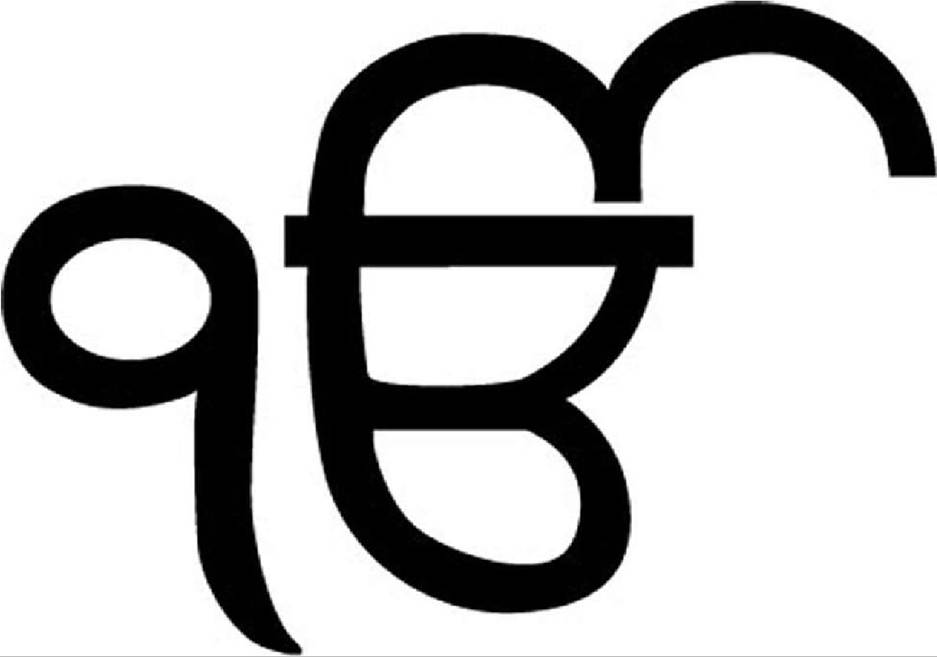
Ik Onkar. Literally meaning “one God,” Ik Onkar is the primary Sikh symbol of monotheism. The Mui Mantra, recited daily by most Sikhs, begins with these words.

Five Ks. Objects symbolizing membership in the Khalsa: kes, uncut hair; kangha, a small comb worn in the hair; кала, a steel wristlet; kirpan, a sword; kachh, a pair of shorts tied with a drawstring.
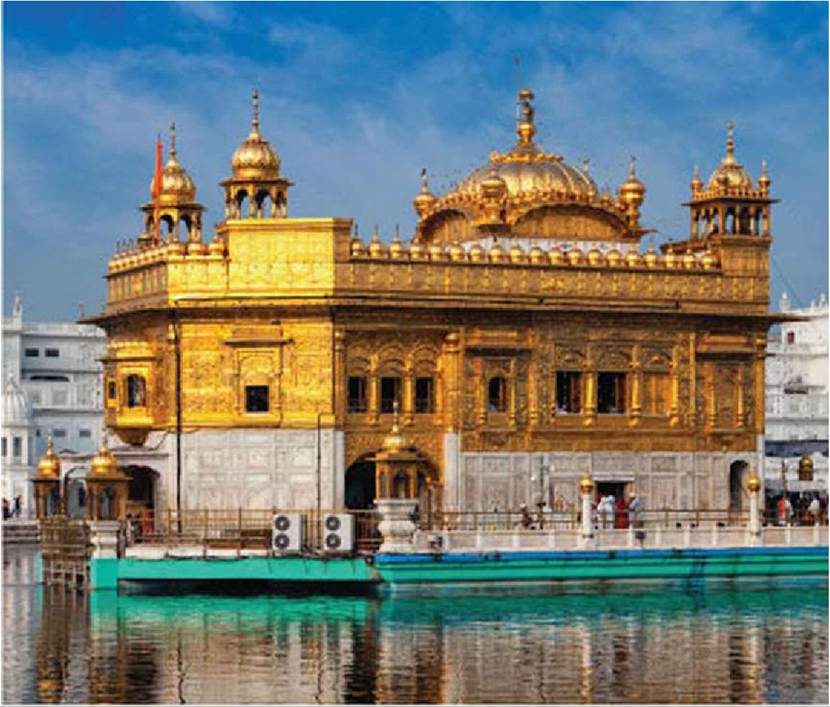
Golden Temple. Located in Amritsar in the Punjab, the Darbar Sahib (“Court of the Lord”) or Golden Temple, was built by Guru Arjan in about 1600 ce, providing Sikhs to this day with a geographical center.
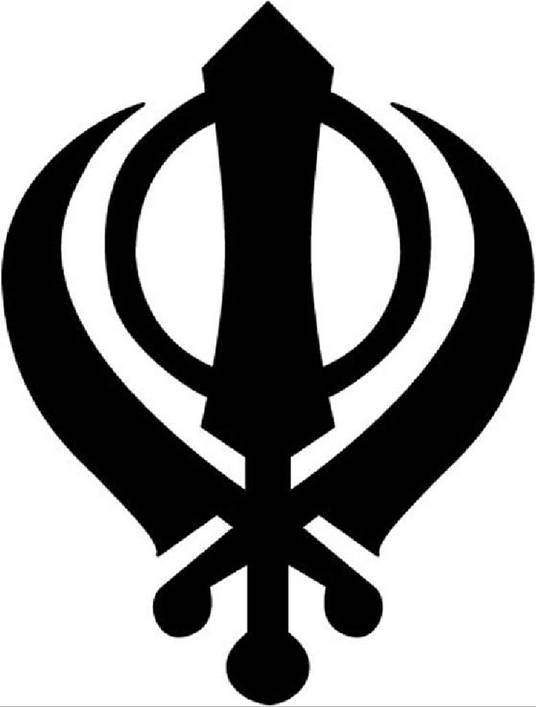
Composed (from the center outward) of a double-edged sword, the circular Chakar, and two kirpans, the khanda symbolizes the balanced unity of Sikh spiritual and worldly life.