Evil Dreams and Insomnia in the Babylonian Incantation Bowls
The corpus of Babylonian incantation bowls (bib) consists of about two thousand clay bowls that were produced in Sasanian Babylonia between the fifth and eight centuries CE. They preserve magical texts written in five different scripts: square Aramaic script, Mandaic, Syriac (both Estrangelo and Proto- Manichean), Pahlavi and Arabic[371] The spells inscribed upon the bowls, which were probably transmitted both orally and textually, are generally apotropaic, aimed at preserving and restoring the health and welfare of the user against demons and the evil eye.
Some bowls, and particularly those exhibiting the qybl’ formula, are explicitly aggressive and were intended to harm another human.[372] [373] Since good health also meant restoring sleep and good dreams, the bib were often used to keep insomnia and nightmares away from the user. Furthermore, a few bowls also contain oneiric aggressive techniques.Ancient Mesopotamians believed that certain demons—lilu, “incubus,” the male form, or lilltu or ardat lill, “succubus,” the female form,—sexually assaulted the dreamer and were responsible for erotic dreams?1 The bib
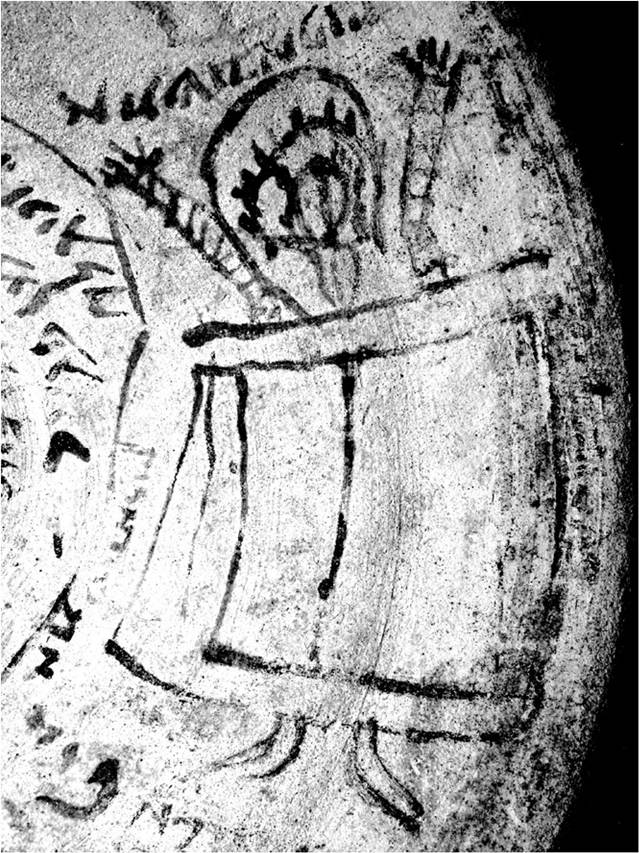
appear to continue this tradition, with demons (especially Lilith, the direct descendent of the Akkadian demoness) assigned a primarily nocturnal nature by the Aramaic-speaking communities living in Sasanian Babylonia.[374] [375] [376] [377] Among the evil deeds performed by demons to the detriment of their victims, the bib register both nocturnal and diurnal apparitions to humans. For instance, one of the bowls from the collection of the British Museum reads: КЛ’Ь’Ь X’bp XOO'“ Ю[1Т]’ПП К’ТПЛЛІ X’b’b“ КлЬ’ПП К’ТПЛЛІ X-i'X ’13“ XH’b X’pOO“ XbXJH X’O3,” “the evil Lilith that causes the heart of the sons of men to go astray and appears in the dream of night and appears in the vision of day; that burns, casts down with nightmare” [bm 136204, 3-4]/3 similarly, a bowl from Nippur reads: “КТПЛОТ [хлхг"]H NnN’bbl XJXObl X1XOO1 XT’“! X“'3' ’Л’ЛПІ TOX ’0X0’3 {ТЛО}1 X’bbXH,” “Bound and sealed are the demon, the dev, the satan, the curse, and the e[vil] liliths which appear during the night and during the day” [Text 20, 2-4].74 The scene of such demonic attacks was generally the victim’s bedroom. To refer to demonic attacks or to command the demons not to appear to their human victims, the bib generally adopt a formula of the type “the demon/s that appears in a dream of night and in a vision of day/in the sleep of the day.” For instance, a formula of this kind occurs twice in a bowl aimed at divorcing demons in the name of Rabbi Joshua son of Perahiah: “bob ’U’A J’nb N1000 -t’N pn’w no nonnoni [Nn]0i’p no wooon pnno jinb j’tnn’0n Nn’b’b Nbi n’b’bn Nob’no Nb [jmb jitnn’n] Nbi... N00’n Nnrwoi n’b’bn N0b’no n’nn N00’n Nni’wo,” “I am writing divorces for them, for all liliths which appear to them, in this of Babanos the son of Qayom[ta] and of Saradust the daughter of Sirin, his wife, in a dream by night and in sleep by day... you will not appe[ar to them] either in dream by nigh[t or] in sle[ep] by day” [Text 9, 3-6 and 9].77 Another bowl for divorcing demons with an act of divorce in the name of Rabbi Joshua son of Perahiah, produced for a certain Ardoy and conserved in the Iraq Museum, reads: “n’n’N Nn’l’bl pn ’inn’Nb lb Jitnn’n Nbl N00’n xni'wo Nbl n’b’bn Nob’no Nb N00 no,” “Do not appear to him, to this Ardoy, and to his wife Iwita daughter of Mama, not in dreams of the night nor in the sleep of the day,” [im 142131, 9-io].78 A bowl for subduing the demons attached to the son and daughter of the user reads: “pnNb Jinb J’tnn’n Nbl N00’n xni'^o Nbl n’b’bn Nob’no Nb [j]inniob n’bl ’inNn no nnNbl ’WNn no,” “and may they not appear to Adaq the son of Hatoi and Ahat the daughter of Hatoi and to their children, neither in a dream of the night nor in sleep of the day” [Text 6, 9-io].79 Other bowls exhibit similar formulae, but list additional couples to the standard parallelismus “dream-vision,” i.e., “sleep-waking” and “twelve hours of the night-twelve hours of the day.” For instance, a bowl from the Schoyen Collection reads: “Ntit]’no Nbi N[’b’]bn Nob’no Nb jinb jitnn’n Nbi ’n^p ’nnno Nbl n’b’b ’p^ ’n^’p ’nnno Nbl Jl[H]H’b’po Nbl Jinnt’^o Nbl H[0]0’[n HOO’T ’p№,” “and do not appear to them, neither by dream of n[igh]t nor by vi[sion of] d[a]y, and neither during their sleep nor during th[e]ir waking, and neither during the twelve hours of the night nor during the twelve hours of the day” [jba 15 (ms 1927/43), 10-11].[382] [383] [384] In the Mandaic bowls the formula employed is similar to that attested in the Jewish Aramaic bowls: for “dreams of the night and visions of the day;” we read, for instance, “'3xb Jlb’NTn’n xbl N0X0’1 JDNirnnNbl N’b’bl Jl’Nob’n,” “do not show yourselves, neither in their dreams of the night nor in their visions of the day” [Text 21, 14-15P1 In all the examples discussed above, the specific formula is built by the juxtaposition of the expressions “a dream of/by night” and “a vision/sleep of/by day,” in a sort of parallelismus membrorum. The term “dream,” in Aramaic “Nob’n,” is always associated with the night and, yet, is paralleled to a diurnal “dream-like” experience, rendered either by “vision,” “NllT’n,” or “sleep,” “Nni’W.” In one case, the term “dream” (“Nob’n”) is replaced with “thought” (“ЮІЛЛЛ”): NOO’l 1ТЛЗ Nb N’b’b ’ЛГПЛЗ №д” “not in visions of day nor in thoughts of night” [Bowl G, 8]Л2 This particular construction might indicate that, from the perspective of the users of the bowls, the oneiric phenomenon was perceived as a direct continuation of the waking experience, and that various categories of dreams, visions and apparitions were all regarded as part of the same spectrum of reality. The verb form employed in these formulae is either the active participle, “N’tnno,” or the imperfect, “Jltnn’n,” Ethpe'al, from the root ’tn*, which in the Peal means “to see” and is used in locutions such as “Nobn ’tn Л1Л ’3 bNlO^” (Lit. “when Samuel saw a bad dream”) in bBerakhot 55b, or “’Nobro NJ’tr ’NO” (Lit. “what shall I see in my dream”) in bBerakhot 56a. In the incantation bowls, the use of this specific predicate to refer to demonic manifestations suggests that the apparition of evil creatures was imagined as a “physical” experience visually perceived. In the bib, the neutral term “dream,” “Nob’r,” generally takes on a negative connotation, due to the negativity implied in the demonic apparition, and might partially render the meaning of what contemporary science regards as a nightmare. The bib show that those who wrote and used the bowls were aware of what it means to experience nightmares, and they understood them to be the result of a demonic power penetrating human sleep. Besides demons, the dead were also sometimes imagined to trouble the living in their dreams. For instance, a Mandaic bowl produced for Bardesa, daughter of Terme, daughter of Dadi, and for her unborn child, lists, among other demons, hateful ghosts and the deceased niece of the user: “NbN’ONT’OT NO’b’b N“i’Op NON1OT J’rblO JNO’Op HONrN OS NONOT 00,” “bound is the lilith that appears to her in [the shape] of Tata, her sister's daughter; bound are all the hateful ghosts,” [Text 39, 9].[385] A belief in the appearance of the dead in dreams was also widespread in ancient Mesopotamia. Akkadian sources show that a vision of a deceased family member was often perceived as an unpleasant torment rather than a comforting memory, and were explained as an act of “revenge for the cessation of funerary offerings.’^[386] In several bowls, unpleasant dreams and nightmares are not referred to as “by-products” of the demonic torment, but are instead listed among other demons as if they are the personification of the oneiric phenomenon. In an incantation bowl produced for a certain Daday daughter of Sirin and for her daughter Buzrin, “hated apparitions,” “J’OO J’JlT’r,” and “evil dreams,” 87 Gordon, “Aramaic Incantation Bowls,” pp. 119-120. 88 Ancient Babylonian lists of woes also include unpleasant dreams—see Butler, Mesopotamian Conceptions of Dreams, p. 50. 89 For the bowl, see Segal, Catalogue of the Aramaic and Mandaic Incantation Bowls, pp. 79-81; Christa Müller-Kessler, “Die Zauberschalensammlung des British Museum,” Archiv für Orientforschung 48/49 (2001/2002), 125-128; Levene,Jewish Aramaic Curse Texts, pp. 117-118. The bowl is related to two other bowls—see Segal, Catalogue of the Aramaic andMandaic Incantation Bowls, pp. 81-86. The bowl contains the qybl’ formula and thus represents a counter-charm for both protective and aggressive purposes; on the function of multiple copies of the same text belonging to the qibl’ category, see Levene, “‘This is a qybl’ for Overturning Sorceries’,” pp. 219-244. 90 Levene, Jewish Aramaic Curse Texts, p. 117. n’5 jinrn xb ”m n’5 ji^p’ wm nwrai H>abra n’-usn xn- n’b jnr’b,” “And send against Mar Zutra son of Ukmay your maid servants and your jailors and your masters and your messengers, may you release dogs from leashes and cubs from chains. May they inflame him and burn him and heat him up and frighten him, and may they subdue him. Like in the oneiric aggressive spells in shr and HdM discussed above, insomnia and nightmares are used in this bowl to threaten and bewitch a victim. According to the bowl, the user is aware that, by distorting the victim's sleeping/dreaming faculties, he will be able to physically exhaust him until his death. The forecast of the victim's death might imply the belief that prolonged and pathological insomnia might lead to death[390] The magical logic and the language employed in the bowl are reminiscent of those expressed in the recipes for causing insomnia in shr and in HdM. The expression used in the bowl for indicating the intent of causing insomnia in the victim, “H’l’pb xnrw H’b JDr’b xbl,” “and may they not give sleep to his eyes” [bm 91771, 13] is analogous to that employed in shr, “TSpSpb linn bxi Hl’^,” “and do not give sleep to his eyelids” [shr i §138][391] [392] Furthermore, both texts create a figurative image of the insomniac characterized by animal confusion and agitation: shr employs the symbolic image of a dog's head and the metaphor of a barking dog to refer to the troubled mind of the insomniac, while the bowl describes the victim as assaulted and subdued with fire by dogs and wild animals.94 In the bowl, the periphrasis used to express the command to the deity to send her messenger against the victim, “№1O ’1’1 ’3’bp NlpaWQl pb’T smiM H’bp mwr... xobyv “I adjure you, Nanay mistress of the world... that you send against him your messenger” (bm 91771, 10) is similar to that employed in HdM, although in this text the name of the non-human entity adjured is not preserved, “'s'3's T’ 3pS’l Nb’bp Nn’bw b’T” [ ] QW3,” “in the name of [ ]may the swift messenger go and torment N, son of N” [HdM, 70].[393] [394] [395] In the bowl, seeing an evil dream is regarded as an indication of a curse. A Mandaic bowl [bm 91715], composed of two independent incantations, registers the nightmare dreamt by the user, Basniray daughter of Sahafrid, in which she is violently bound and tortured: “NlN’tn ’N3’1^N3 N1N 3 TN1TN 3 N”N1T3 N’1T1 Nbl33 3 N’^N333 NW’33 NW3301 N^’33 [N]’bN’TNni ’N0b’n3 N33’11 NWNni №7133 3 N03N N’TIT NS’nO Nn N31N bp N33’1,” “The signs that I, Basniray, saw in my dream: it seemed I was strapped and doubly strapped, strapped with straps of iron and chained with chains of lead, indeed thrown face down beneath a bed of iron, copper and lead, and I was filled with the water of sahras and (my) head was placed upon the skulls of liliths” [bm 91715, 13-18].97 The vivid images used in this dream-report correspond, in part, to the description of the victim bound by angels with iron chains and copper rods in shr i §138, “nwi T1U103 imwpni bi33 ’b3n3 imoNnw,” and the victim punished on a bed of punishment and condemned to a bad death in the figure 9.9 Babylonian Incantation Bowl in Jewish Babylonian Aramaic, Schoyen Collection, ms 2053/233. The drawing might represent either a humanfigure or a demon in a bed. The rectangular shape dividing thefeetfrom the head might be a blanket and the half-circle behind the head a pillow. REPRODUCED WITH THE KIND PERMISSION OF MARTIN SCHOYEN AND MATTHEW MORGENSTERN. Roman defixio, “ποιήσητε κατά κράβατον τιμωρίας τιμωζειδόμενον κακώ θανάτω,” [DefixTab 155, A, 11-14]·[396] [397] On the basis of a parallel found in a later Mandaic text, James Ford argues that the dream report preserved in the bowl “was not an actual dream, but a once well-known magical motif.”99 Since the bowl mentions the bed and pillow of the user, “Л’ЛКО’31 ЛОЛК1” [bm 91715, 4, 12], and expresses the request that the user receives pleasant dreams while her hater, the pityaruta-demon, is shown hateful dreams, “К’оЬ’П bpl N’T’SKWl К’ЗКО К’оЬ’П bp ЗКЗК^’Л! лЬ'ЧГТ’П КЛП’О’З ’ЮКО 3N3Wpb NTNO,” [bm 91715, 19-20], it might be considered an oneiric aggressive incantation that adopts a conventional magical motif to depict and reverse the sleep impairment of the user/victim. The bib clearly show a belief in nocturnal demonic attacks, either provoked by demons, the dead or the living (sorcerer/enemy). This belief was quite widespread in the surrounding context in which these texts were written and used. The bib are finished products that preserve the names of their users, their family members and, sometimes, the enemies/victims for whom the spells were intended. For this reason, they are very important sources that provide crucial information about the world of the clients who commissioned the incantations and the scribes who produced them.