Gender and Identity
Gender roles and conceptions of gender vary across Native American religious traditions. As you have learned, the sacred narratives of Native American religions often include tales of important female spiritual beings, like Changing Woman.
Furthermore, women have often had prominent roles in certain aspects of religious practice, such as healing, and many Native religions mark the transition from girlhood to womanhood in a profound manner. For example, as you will read in the next section, young Navajo girls embody Changing Woman during the ritual marking their transition to adulthood.Among the Iroquois, balance and reciprocity have long been emphasized in the relations between men and women, and many scholars regard the historical Iroquois as a fine example of a gender-egalitarian society, in which neither men nor women dominated. This emphasis on balance has been reflected in both religious symbols and religious practice. In the Iroquois Longhouse Religion, which is practiced today, the house of worship is divided into male and female spaces, and male and female religious leaders known as “faithkeepers” are of equal importance in spiritual matters.-2 The ceremonial year is very important in regulating ceremonies honoring Creator and spirits, and historically women and men have each been in charge of ceremonies during half of the Iroquois year. For example, women’s songs are sung to accompany the planting of com to encourage fertility.—
Two Spirit Many Native North American cultures have historically recognized the existence of a third gender—people who are regarded as being neither male nor female. A Two Spirit person might be biologically male but adopt the dress, occupations, and behaviors of a woman. Collectively, such individuals are called “Two Spirit” people, as they are regarded as having the spirits of both men and women. Historically, Two Spirit persons were treated with respect and were regarded as having special spiritual abilities, and many took on a special religious role in the community. With the arrival and domination of Europeans, however, the role of the Two Spirit people was suppressed. European binary understandings of gender did not acknowledge third or fourth genders, and Two Spirit people were often regarded as deviant rather than occupying a special social role. Today, many Native peoples are proudly reclaiming a Two Spirit identity. The Montana Two Spirit Society, for example, is an organization founded by member of the Pikunii Blackfeet Nation that advocates for LGBTQ and Two Spirit issues and histories. For twenty-five years, the society has held regular gatherings for Native Two Spirit people and their families and friends.
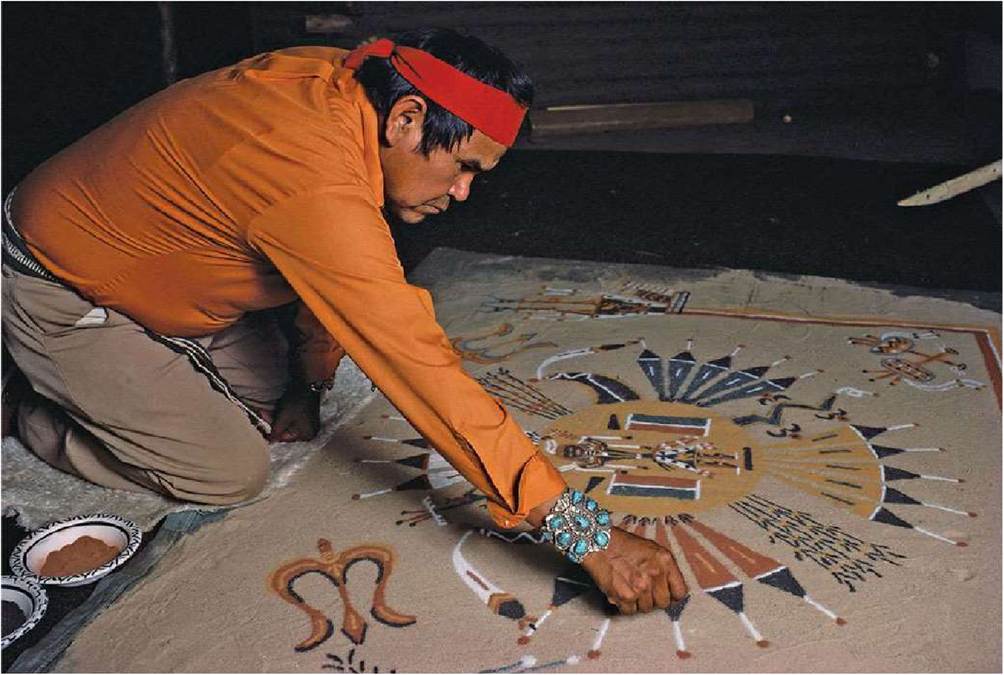
Navajo man preparing a sand painting.