Rites of Passage
Like other religions around the world, Native American traditions use rituals to recognize important changes in a person’s social status. Such rituals are known as rites of passage.
Often, rites of passage mark the transition from childhood to adulthood. Many Native cultures have elaborate rites marking this transition for young women and men. In this section, we will examine two rites of passage. First, we will look at the Kinaalda, which marks a Navajo girl’s transition to adulthood. Then we will examine a spiritual rite of passage known as a vision quest.The Kinaalda
The Navajo puberty rite for girls is known as the Kinaalda. It takes place soon after a girl begins menstruating. Each girl undergoing Kinaalda has a sponsor. This is an older woman who serves as a guide and role model and teaches her about the expectations of her as a Navajo woman. The ceremonial activities last several days and are part of the chantways. Thus, the ritual has its foundation in mythology. Changing Woman experienced the first Kinaalda, which is the model ritual for all girls. Indeed, girls are believed to take on the identity and spiritual qualities of Changing Woman during the ritual. Because she takes on the identity of Changing Woman, a girl going through the rites is thought to have special healing powers. People may visit her to request healing for their ailments.
One important Kinaalda activity is baking a giant cake of cornmeal. The initiate prepares the cake with the assistance of her family. She grinds the corn and prepares the batter carefully, since it is believed that if a cake turns out well, she will have a full and productive life. A poorly made cake bodes ill for her future.
The Vision Quest
A rite of passage common to many North American religions is the vision quest. This is the attempt by an individual to communicate with the spirit world.
It is especially well known among peoples of the Great Plains and Great Lakes regions of Canada and the United States, such as the Sioux and the Ojibwa. Men or women may undertake the quest, depending on the culture, and it may occur once or at several points in an individual’s life. In some cultures, the vision quest marks the transition from childhood to adulthood.Usually, the goal of the vision quest is for an individual to make contact with the spirit world. This is frequently accomplished through contact with a spirit guide. Often, the spirit guide takes an animal form, which may be revealed during the quest. Sometimes, individuals report that the spirit guide appeared to them directly. Others learned the identity of the guide by spotting a particular animal during the quest. In other vision quests, the focus is not on a spirit guide but rather on accessing a spiritual power more generally.
What rites of passage are important in other religious traditions? Do they always mark the transition to adulthood, or can they mark other transitions?
In most quests, the initiate will remove himself or herself from normal society by spending several days alone in the wilderness. The vision quest can be both mentally and physically demanding, as it may require long periods of isolation and fasting. A vision quest teaches a person about the importance of seeking and following guidance from the spirit world and has the potential to cultivate a mental and physical hardiness that will serve the individual throughout his or her life.-9 Among the Ojibwa, boys normally undertook the vision quest at puberty. After a period of preparation, a boy was taken deep into the woods where he would remain by himself, fasting, until he received a vision. For many boys, visions were journeys into the spirit world, and spirit guides would help the boy figure out his life’s path. Boys who were not able to endure the fast could try again at a later time.32
VISUAL GUIDE
North American Religions
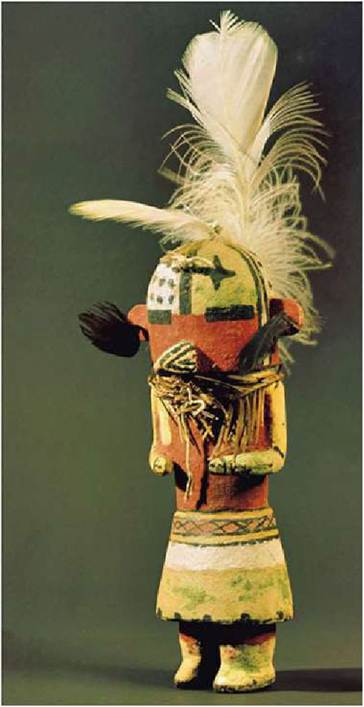
Among Pueblo peoples such as the Hopi and Zuni, kachina dances are a type of renewal rite.
When dancers wear the masks of the kachinas, they are thought to become imbued with the spirit of the kachinas. Kachinas have the power to bring rain and enhance fertility. This is a Hopi kachina doll, representing a kachina, from Arizona. The doll dates to before 1901 and is made of painted wood, feathers, and pine needles.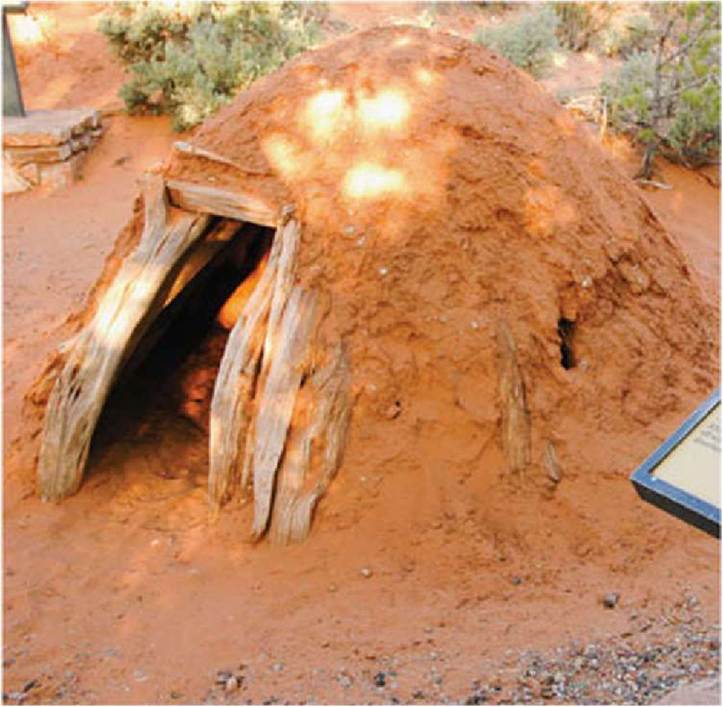
In North American religions from Mexico to Alaska, sweat lodge ceremonies ritually purify and cleanse the body. In these ceremonies, participants build an enclosed structure that is filled with heated stones.
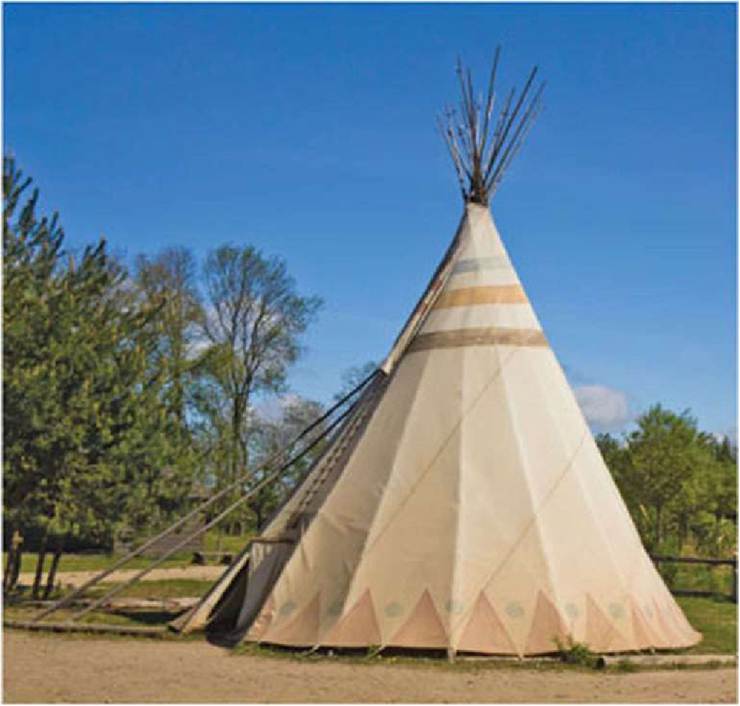
The tipi, a typical structure of the tribes of the Great Plains, has religious significance. Each tipi is an image of the universe. The perimeter of the tipi is the edge of the universe, and the lit fire in the center represents the center of all existence.
More on the topic Rites of Passage:
- Iconography as a visual history of an aristocratic world
- This chapter will explore ritual violence in the form of close combat in precolonial western Africa (and the African diaspora) during the period of European contact from the mid fifteenth century until the late nineteenth century, a period which saw an end to the slave trade and the start of European colonisation.
- The Zoroastrian Community: Social and Ethical Responsibilities
- Brodd Jeffrey, Little L., Nystrom B., Platzner R., Shek R., Stiles E.. Invitation to World Religions. 4th edition. — Oxford University Press,2022. — 1196 p., 2022
- Zoroastrianism as a Way of Life
- Conclusion
- Findings and Discussions
- The word ‘civilisation' is special in the West: ‘By this term Western society seeks to describe what constitutes its special character and what it is proud of: the level of its technology, the nature of its manners, the development of its scientific knowledge or view of the world, and much more.'1
- Ritual Implements Used by the Flaminica Dialis
- Passages in a Genocidal Reordering: Macedonia-Thrace