Gender and Sexualit
There is much variation in how gender roles are perceived and interpreted throughout Muslim cultures. As in other religious traditions, such as Judaism, Christianity, and Hinduism, patriarchal cultural norms are sometimes justified in terms of religion.
When we consider the historical context in which it was revealed, the Qur’an introduced many legal rights and privileges to women that they had not previously enjoyed. For example, women were given the right to divorce their husbands on a variety of grounds, they were allowed to inherit and hold property that remained theirs even in marriage (women in England did not gain this right until the late nineteenth century), and they were given the right to refuse arranged marriages. The Qur’an also prohibited female infanticide.According to Islamic belief, women and men are viewed as equals in the eyes of God and will be judged on their own accord. In the Qur’an, verse 35 of sura 33 addresses this issue:
Verily for all men and women who have come to submission,
Men and women who are believers,
Men and women who are devout, Truthful men and truthful women.
Men and women with endurance,
Men and women who are modest,
Men and women who give alms,
Men and women who observe fasting,
Men and women who guard their private parts,
And those men and women who remember God a great deal, For them God has forgiveness and a great reward.—
The Qur’an requires all Muslims, women and men, to live a righteous life and to seek education. Women may work outside the home, though this is still uncommon in some areas. According to religious law, all of a woman’s earnings remain her property. Thus, women are not required to use their earnings to support the family and maintain the home; it is a man’s legal duty to provide for his family, even if his wife is wealthier than he is.
Of course, in practice, many women contribute their earnings to the household.Despite all these rights, the place of women in Islam has sometimes been interpreted in very strict fashion. For example, in Afghanistan, the Taliban have denied women the right to work outside the home, the right to be educated, and even the right to walk freely in the street. However, this strict interpretation of religious texts and traditions is far from mainstream. Most Muslims view the Taliban’s orders as radical and even religiously unlawful.
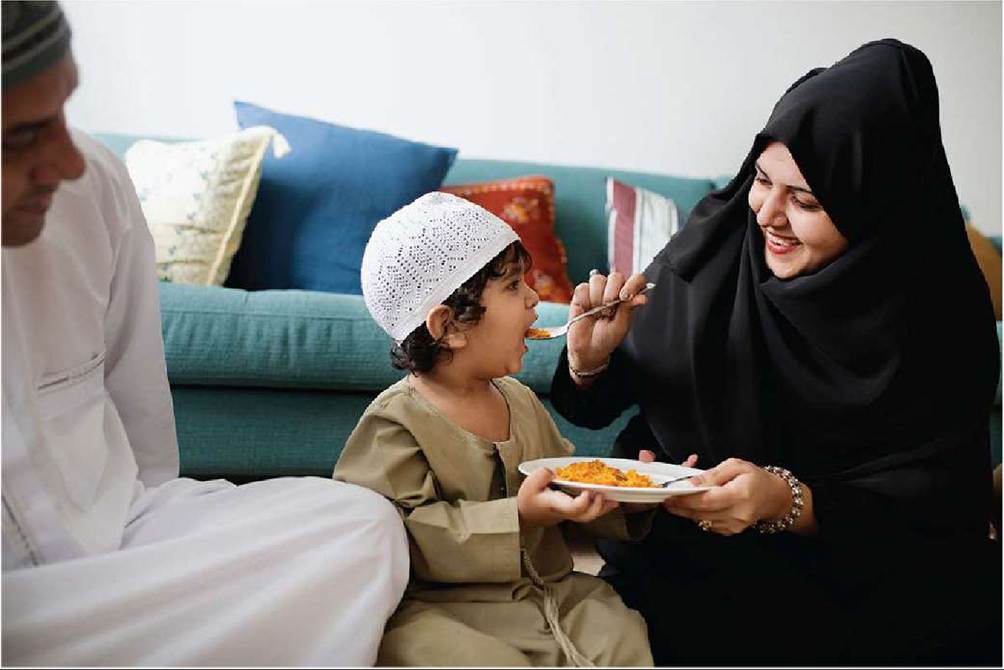
Muslim family in modest attire.
Along these same lines, much cultural variation exists in the practices regarding interaction between Muslim men and women. In some parts of the world, Muslim men and women live very separate lives. The seclusion of women is called purdah in South Asia and is practiced by some Hindus and Sikhs, as well as some Muslims. Elsewhere, as in many parts of Southeast Asia and Africa, Muslim men and women intermingle freely.
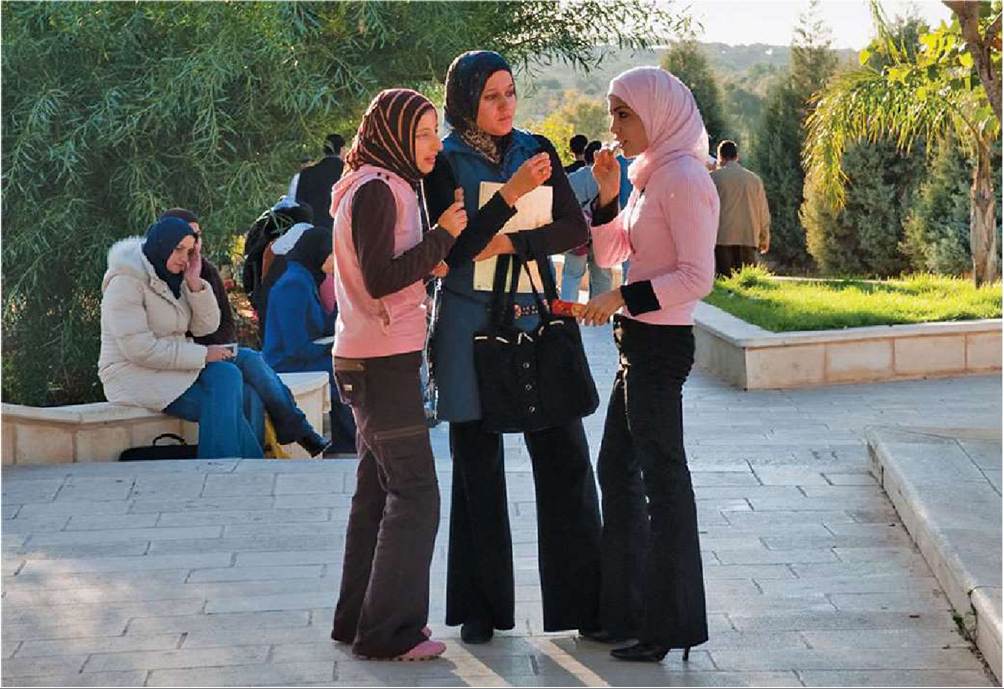
Three young Palestinian students in modest dress.
The Qur’an encourages both men and women to dress and behave modestly. The verses concerning dress—particularly that of women—are interpreted in many ways. Modest men’s and women’s dress takes many different cultural forms. In some cultures, modest dress is interpreted as long pants and a modest shirt or tunic for both men and women. In other contexts, Muslim women wear a type of cloak over their clothing when they leave the home. And some Muslim women choose to cover their heads and hair with a scarf. But this is not solely a Muslim practice: in the Middle East and Mediterranean, women covered their heads long before the time of Muhammad.17 Covering the head has also been common practice among many Christian, Jewish, Hindu, and Sikh women.
Although the word veil is often used in the West as a catch-all term for modest head coverings, the terms used for elements of modest clothing vary from culture to culture. Even so, several terms derived from Arabic are commonly recognized around the world. For example, the Arabic term hijab may refer simply to modest dress or more specifically to a scarf that covers the hair and neck. The term niqab, also from Arabic, normally refers to a covering of the nose and mouth. The term burqa, also from Arabic, usually refers to a full-length garment that covers the head, body, and most of the face.Many Muslim women dress modestly strictly out of religious commitment. For others, wearing modest dress is an important move toward gender equality in the workplace and the public sphere. Such women believe that when they are dressed modestly, they are valued by others on their merit alone, not on their appearance. To others, wearing modest dress makes a statement of resistance to Western scholars and activists by demonstrating that feminism can be defined in myriad ways in different cultural and religious contexts. Some Muslim women say they pity Western women, who they believe must dress in a way that serves men’s pleasure in viewing the female form.
We should not consider the status of women in any religious tradition without also considering historical change; this is particularly true of Islam because of the many negative stereotypes Muslim women have faced in recent years. As we discussed earlier in this chapter, several important reformers in the nineteenth and twentieth centuries sought to improve women’s status in Muslim countries and cultures. As we learned, many of these reformers focused on proper understanding of religious sources and Islamic law concerning women.
Compare the role of women in the Islamic tradition with that of women in other religions. How are the roles of women similar or different?
In much of the twentieth century, particularly in the first half, Muslim feminists were upper- class women who had the time and leisure to deliberate these issues, not working-class women whose labor was necessary to support their families.
One of the most famous of these early Muslim feminists was Huda Shaarawi (1879-1947), an educated upper-class Egyptian woman who symbolically removed her face veil in an Alexandria train station in 1923. Shaarawi was president and founder of the Egyptian Feminist Union and did not believe that veiling was an Islamic requirement. When she removed her veil, she had just returned from a women’s conference in Rome. She encouraged women to cast off their headscarves in a quest for liberation. Many Egyptian women, particularly educated and elite women, were inspired by her example and ceased wearing face veils and headscarves. Shaarawi remained an activist and feminist leader throughout her life. She founded schools and medical facilities in Egypt and also advocated for women’s rights throughout the Arab world.As noted previously, in the Islamic tradition, sexuality is something to be enjoyed and embraced within a contractual relationship like marriage. Islam is often described as a “sex positive” religion, in that sexuality is seen as an aspect of the wonder of God’s creation. Throughout the ages, Islamic scholars have emphasized the importance of sexual activity for pleasure and spiritual development, not simply for procreation.—
As with other religious traditions, Muslims have a variety of views related to sexual orientation and identity. Historically, Islamic societies have often acknowledged same-sex love and attraction, and the Arabic and Persian literary traditions are rife with such references. In the modern period, many conservative Muslims have condemned homosexuality on religious grounds. However, the Qur’an has little to say on the subject. Some Muslims interpret the Qur’anic story of Lut (Lot) and the destruction of Sodom (similar to the story in the Bible) as prohibiting male homosexuality (for example, 7: 81-82). However, others argue that the narrative indicates God’s displeasure with the city’s lack of faith, not homosexuality.19
In recent decades, many Muslims have advocated for a wider acceptance of LGBTQ identities and orientations.
In the 1980s, scholars at a leading Sunni Islamic institution, Al-Azhar University in Egypt, supported gender reassignment as permissible under Islamic law. This surgery is also permitted in Shi‘a-majority Iran, as per a fatwa from Ayatollah Khomeni in 1987. However, transgender Muslims, as other transgender people, still suffer discrimination in many societies. In the United States, an organization called Muslims for Progressive Values (MPV) advocates for gender and sexual diversity in Muslim communities, as embodied in the following issue statement: “MPV endorses the human and civil rights of lesbian, gay, bisexual, transgender, intersex, and queer (LGBTIQ) individuals. We affirm our commitment to ending discrimination based on sexual orientation and gender identity and we support full equality and inclusion of all individuals, regardless of sexual orientation or gender identity, in society and in the Muslim community” ( https://www.mpvusa.org/lgbtqi-resources).VISUAL GUIDE
IsIam
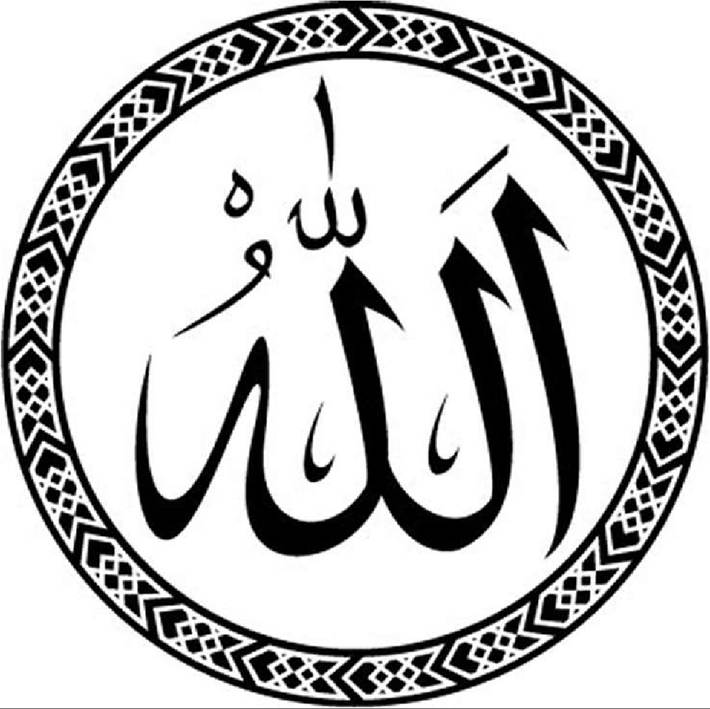
Calligraphy developed as an important art form in Islam because of a widespread understanding that imagery is prohibited by the sacred sources of Islam. This example is the word Allah.
Beautiful calligraphy decorates pages of the Qur’an, mosques, and other items.
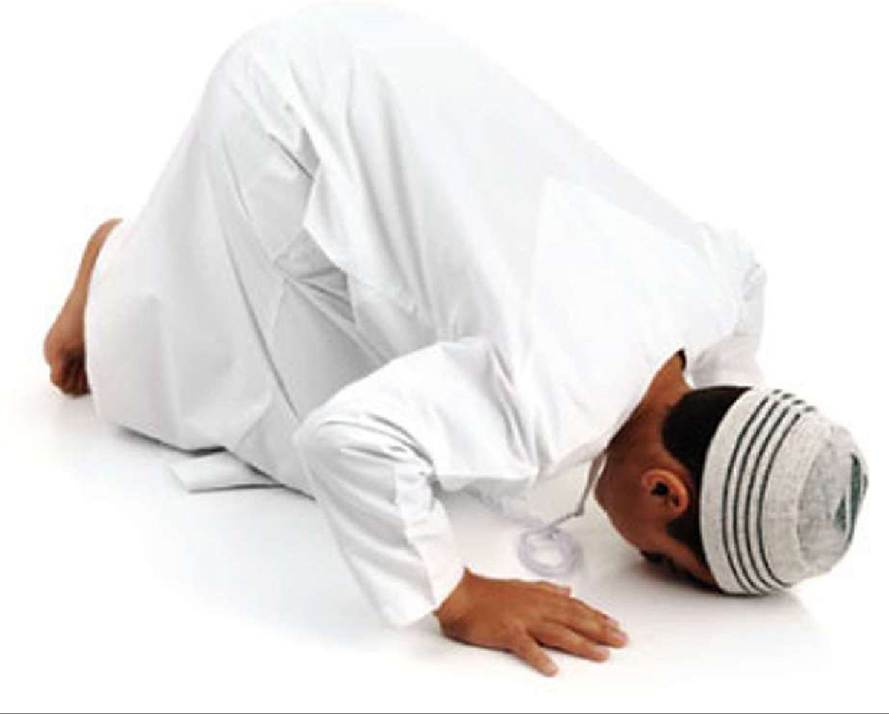
Throughout the daily prayer, the believer faces the Ka'ba in Mecca and stands, kneels, and bows his head to the floor. These cycles of movements, along with the proper recitation, are called raka and vary in number according to the prayer.
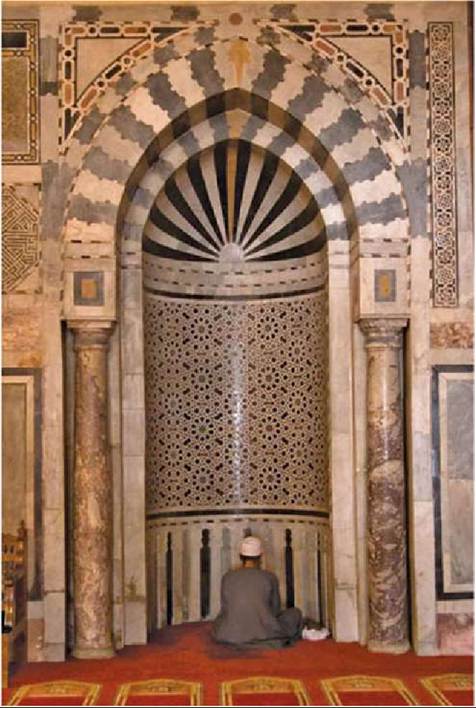
The direction of prayer, known as the qibla, is marked in a mosque by a niche called a mihrab, which is sometimes highly decorated with designs or Qur'anic verses, like this mihrab at a mosque in Cairo, Egypt.
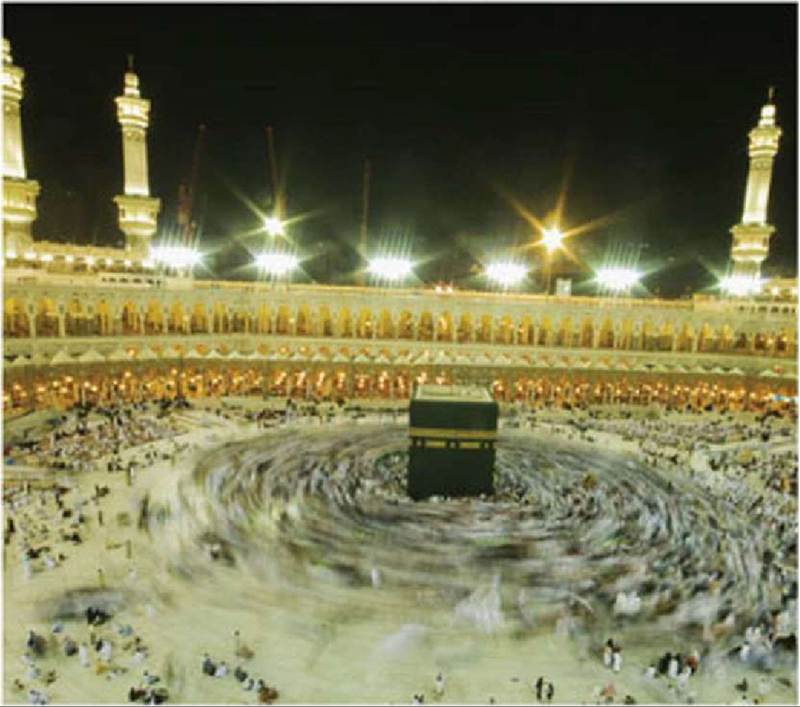
The Ka‘ba, a cubical building in Mecca that measures about thirty feet by thirty feet. Many Muslims believe it was built and dedicated to the one God by Abraham and Ishmael.