Holidays and Festivals
The Buddhist year is filled with holidays, festivals, and other special observances. In most countries, their dates are determined by the lunar calendar and therefore fall on different days each year.
The most important occasions are commemorations of key events in the life of the Buddha, but there are also celebrations of the birthdays of bodhisattvas, commemorations of historical events, and seasonal observances that have taken on a religious significance.Vesak
The most important Buddhist celebration in Theravada countries is Vesak, a commemoration of the Buddha’s birth, death, and parinirvana. Vesak occurs on the day of the first full moon in the lunar month of Vesakha, usually in May. On Vesak, Theravada Buddhists decorate local shrines and light lamps to symbolize the Buddha’s enlightenment and the spreading of his insight throughout the world. During the celebration, some lay Buddhists observe the Eight Precepts, committing themselves to greater moral rigor than required by the Five Precepts as a demonstration of their piety. Others stay up all night in meditation as the Buddha did on the night of his enlightenment. In countries where Mahayana and Vajrayana are the predominant foms of Buddhism, celebrations of the Buddha’s birth, enlightenment, andparinirvana are separate and occur in late fall, winter, and spring, respectively. In English, they are generally known as Buddha Day, Bodhi Day, and Parinirvana Day.
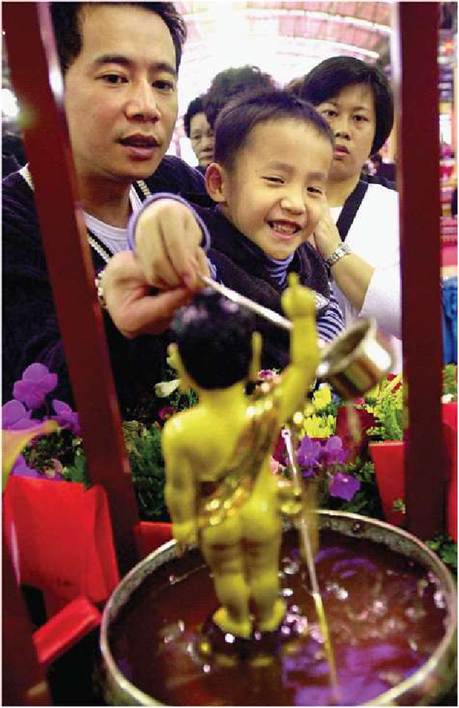
Father and child bathe an image of the Buddha as a baby in a Taipei temple during the April 2001 celebration of the Buddha's birth in Taiwan.
Other Festivals
The Buddhist calendar makes room for many others special days. Mahayana Buddhists make New Year’s Day an important occasion, some beginning their celebration on December 31 and others waiting until the first full moon in January. Traditions vary but often include visits to temples, good food, and fireworks. Asalha Puja, a Theravada festival known in the West as Dharma Day, recalls “the first turning of the wheel of the Dharma”—that is, the Buddha’s first teaching of the Dharma in his Sermon in the Deer Park—and is traditionally celebrated during the full moon in July. Kafhina, another Theravada festival, is usually celebrated in October. On this occasion, laypeople express their gratitude to monks by bringing them new robes and gifts to support their monasteries. During the late summer Hungry Ghosts Festival in China, known in Japan as the Feast of the Dead, the spirits of ancestors are placated with offerings of food and monks are called upon to recite sutras in order to aid the departed in securing a favorable rebirth.