Introduction The Bible
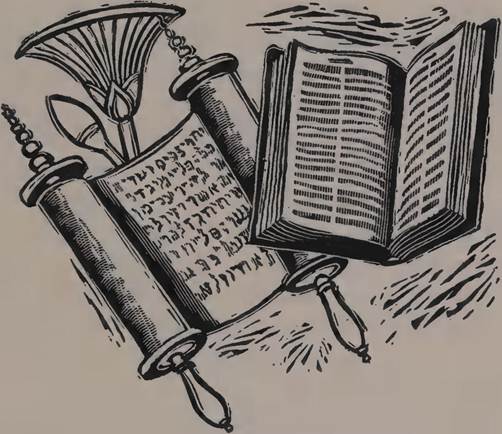
About eight to ten thousand years ago, certain groups of men in Egypt and in the Middle East learned to write.
They made up systems of marks which could be used to represent the sounds they made when they spoke.This was extremely important because it meant that instructions could be written down, instead of having to be memorized. Records could be kept easily so that governments could become larger as well as more efficient. Great stories and poems could be preserved for everyone to read.
There was a catch, however. You had to have something to write upon. We often see cartoons of cave men chiseling words on rocks, but that is all wrong, of course. The prehistoric cave men never learned to write and even the later people who did carve inscriptions on rocks did so only for particularly important occasions. Carving on rock was far too hard and too slow.
For everyday work, something more convenient to write on was necessary. One solution is to strip off some of the smooth, light bark of the beech tree, a very common tree in the forests of northern Europe. In fact, our words “book” and “beech” come from the same ancient Teutonic expression.
One way of writing on tree bark is to use a hot nail, or something of the sort, to burn signs into it. The Greek word for “to burn in” is enkaiein and from the first syllable of that comes the English word “ink.” This word is still used for the colored liquid that is marked on a writing surface, even though burning has nothing to do with it.
Even the best tree bark is brittle and rough, and something still better is needed. That something
THE BIBLE / 3 better came from Egypt, where men had had the longest experience with writing.
Along the banks of the Nile, the great river of Egypt, there grew a tall reed in ancient times.
The Egyptians would cut down these reeds and take out the fibrous pith at the center of the long stem. These they would place side by side, then lay more pith over them crosswise, and build up several layers longwise and crosswise in alternation.The layers were soaked in water, pressed together, then allowed to dry in the sun. The result was a thin, smooth sheet on which it was easy to write. In fact, it was the most convenient material for writing the ancient world knew of — much better than tree bark. The ancients called both the reed and the writing material they made out of it “papyrus.”
Later, the papyrus reed became rare because it had too many uses for its own good. It could be used for making cloth, cords, shoes, even light boats. It could be used for fuel. It could even be eaten. And, of course, as the centuries passed, more and more writing material was needed. By the time of the Roman Empire, papyrus had become quite hard to get (and since then it has just about disappeared, at least in Egypt).
Men turned to the skin of animals for writing materials. This had been used since very ancient times,
but it came into real prominence about 170 b.c. in a city called Pergamum. This city ruled most of what is now western Turkey from 260 to 130 b.c. and its rulers were capable men interested in scholarship. Eumenes II, one of these rulers, founded a great library.
For many of the books in the library, animal skins were used. This was made practical because someone working for Eumenes II devised a special way of preparing those skins so that both sides could be written on. This meant that a single skin could receive twice as much writing. The skins were much tougher and longer-lasting than papyrus, but, of course, they were also much more expensive.
These special skins were named for the city in which they were prepared. The Romans called them carta pergamena (“paper of Peragamum”). Later on, such skin was called simply pergamena and that has come down to us as “parchment.” The finest grades of parchment were made from the skins of very young calves and this was called “vellum” from the old French word for “calf.”
About 800 a.d., a type of writing material similar to the old papyrus made its way westward into Europe from· China.
It was manufactured from mashed-up wood, or from cotton or linen rags. The Europeans called it by the old name of the reed of theTHE BIBLE / 5 Nile and the word has come down to us as “paper.”
It completely displaced parchment. In fact, it has proven to be so convenient and cheap that in over a thousand years nothing has come along to replace if.
When the ancients wished to write a letter or a short document, a single sheet of papyrus was sufficient. For a long piece of writing, a number of sheets had to be used and there was always the danger of losing some or getting the pile out of order. The solution to this was to glue the sheets of papyrus side by side in the proper order. This formed a long strip, sometimes a hundred feet long or even more. To make this long strip manageable it was rolled about a stick and then the free end was rolled about a second stick.
The reader would with one hand would unroll the strip from one stick, while his other hand rolled it onto the second stick. The page being read was in between. We still recall this type of book when we speak of a book as a “volume,” for this comes from a Latin word meaning “to roll.”
In ancient times, when all books had to be copied by hand, a volume of writing meant a great deal of copying. It was quite a chore and people were impressed with the amount of writing contained in a
volume. The word “volume” came to mean the amount of room taken up by anything, and if a lot of room was taken up, it was “voluminous.”
In Roman times, volumes were produced in quite large quantities and trade in the dwindling supply of papyrus was brisk. The chief center of this trade was a town on the shores of the eastern Mediterranean, in a land that was then called Phoenicia but is now part of the little nation of Lebanon. The name of the town was Byblos. It was so famous for its papyrus trade that papyrus came to be called biblos and a volume of papyrus was called a biblion. That word came to be used for any book.
We still make use of this word in a number of ways. A collector of books (particularly rare old books) is called a “bibliophile.” The suffix “-phile” comes from a Greek word meaning “to love,” so a bibliophile is one who loves books. Then, when at the end of any article or book, the author lists other articles or books on the same subject, this is called a “bibliography” (“writing about books”).
The Greeks and Romans had many books of all kinds, but the Jews living in ancient Judea had only a few. Those few, however, were very important to them, for they were books of history, poetry, and prophecy, which dealt very largely with the God
THE BIBLE / 7 they worshiped, and were considered by them to have been inspired by God. They called them just '‘the writings” or “the books,” as though there were no others; and for them there weren’t. All other writings and books seemed insignificant in comparison.
We ourselves still refer to those works of the ancient Jews in the same way. The Latin word for “the books” is biblia and for “the writings” is scri-p- tura. Consequently, we know the writings of the Jews as simply the “Bible” or the “Scriptures.”
During many centuries of Jewish history, from about 700 b.c. onward, various parts of the Bible were written down, and accepted by the Jews as inspired. By Roman times, however, this process was finished.
In 90 a.d. a group of Jewish scholars under Rabbi Akiba ben Joseph gathered to consider the Bible. (The word rabbi in Hebrew means “my great one” or “my master” and was used as a polite title of respect for teachers of religion. We do the same thing today when we address a musician as “maestro,” which means “master” in Italian.)
The group of scholars gathered in the Judean town of Jamnia, which was a center of learning in Judea, after the Romans had destroyed Jerusalem in 70 a.d. The group decided which of the writings were to be 8 / WORDS IN GENESIS considered truly inspired and ordered that those only would be considered part o£ the Bible.
They further declared that no more writings would be allowed to enter the Bible m the future.The rule established by that council has been kept by the Jews ever since. No new writing has been added to the Bible. The writings that are now part of it are “canonical,” from the Greek word for “rule,” or for a “measuring rod” against which standards can be set. The Bible, containing the books that meet the standard, can be referred to as the “sacred canon.”
The word “canon” can also be applied to official works of any sort which are highly regarded. One might refer to the “Platonic canon,” for instance, meaning the works really written by Plato and not by some imitator. Admirers of Sherlock Holmes will use the word, half jokingly, for the full list of stories about that famous detective written by A. Conan Doyle. One can even speak of the “canons of good behavior.”
About the time of the Council of Jamnia, however, additional writings were being prepared about the life of Jesus Christ, a prophet who had been crucified in Jerusalem about 30 a.d. and whose followers considered him to have been the Son of God. Although
THE BIBLE / 9 the Jews never accepted these writings as inspired, the disciples of Christ (eventually called “Christians”) did. When the Christian religion became dominant over the Roman Empire, the version of the Bible used included not only the older Jewish canon, but also the newer writings about Christ and his early followers.
Now the Bible deals very largely with agreements made between God and man. God established certain rules of behavior and the men who worshiped Him agreed to follow those rules. Any solemn agreement is called a “testament” from the Latin word for “witness” because the existence of such agreements in writing was evidence as to the details of the agreement. The agreement itself was a witness, in other words.
The word “testament” can be used for the Bible, and one of the earliest Christian writers, the Apostle Paul, did so.
His letters to the various early groups of the followers of Christ are included among those writings considered canonical by the Christians. In letters written by him to groups of worshipers in the city of Corinth in Greece, he referred to the original Jewish canon as “the old testament,” and to the teachings of Christ as “the new testament.”Ever since, the Bible has been thought of as being
made up of two parts. The first is the Old Testament, sacred to Jews and Christians alike; the second, the New Testament, is sacred to the Christians only.
Originally, most of the Old Testament was written in Hebrew, the language of the ancient Jews. After the Jews had been defeated by Nebuchadrezzar,[*] however, and had been carried off to exile in 586 b.c. to that conqueror’s city of Babylon, knowledge of Hebrew began to slip. When Cyrus of Persia restored the Jews to Judea, about 520 b.c., those who returned began to pick up Aramaic, a language quite like Hebrew, which was spoken by those who lived in Judea while the Jews were in exile. Some of the books of the Bible were written after the exile (the book of Daniel is an example) and they were written in Aramaic. Aramaic was the language used by Jesus and his disciples.
In Greek and Roman times, however, many Jews migrated to lands outside Judea. The city of Alexandria in Egypt, for instance, was one third Jewish. These Jews kept their religion but adopted the Greek speech which was current in Alexandria. More and
THE BIBLE /11 more of them could speak neither Hebrew nor Aramaic so that the Bible became meaningless to them.
About 250 b.c. the king of Egypt, Ptolemy Philadelphus, who was a patron of learning and well disposed toward the Jews, decided to do something about this. He is supposed to have sent to Judea for a number of rabbis who would translate the Bible into Greek, and this was eventually done.
According to tradition, about 70 scholars were involved. The Greek version of the Bible (the very first appearance of the Bible in any language other than Hebrew) was called the “Septuagint,” from the Greek word for seventy.”
The New Testament was written in Greek to begin with, and when it quotes from the Old Testament, it quotes from the Septuagint rather than from the original Hebrew version. The Greek language version of both Testaments was the official Bible among the early Christians, who were drawn mostly from the eastern portion of the Roman Empire where Greek was the language spoken by the people.
In early Christian times, the Jews were in exile again and this time permanently, for Judea had been destroyed by the Romans. They were anxious that the Bible not be distorted or lost and so a group of scholars called the Masoretes edited the Bible to get it into the most authoritative form. The word
“Masoretes” is from a Hebrew word meaning “tradition” because these scholars felt themselves to be holding firmly to the ancient traditions that had come down to them through the centuries.
By the 900’s at the latest, the “Masoretic text” of the Hebrew Bible was established in final form to the last word and letter and there have been no changes since. Even as early as the 3 00’s the Hebrew Bible was pretty close to the Masoretic text.
And while the Jews worried about the Bible, so did the Christians of the western part of the Roman Empire. That part was populated by Latin-speaking people and a Greek Bible was useless to them. About 380 a.d. Pope Damasus I commissioned his secretary to prepare a Latin translation.
This secretary was named Eusebius Hieronymus, but in English he is most commonly referred to as Jerome, which is a shortened version of Hieronymus. In 386, Jerome traveled to Palestine to learn Hebrew. He consulted Hebrew versions of the Bible as well as Greek versions and prepared a Latin translation that has been in use ever since.
Jerome’s Latin translation is called the “Vulgate” from a Latin word meaning “the common people.” After all, it had been translated from a language known, in the west, only to scholars, and now it was in a language spoken by the common people. (Of
THE BIBLE /13 course, since scholars and aristocrats consider the common people to be ignorant, crude, and unmannerly, the term “vulgar” has come to mean anything ignorant, crude, and unmannerly, but that has nothing to do with the Vulgate.)
After the breakup of the Roman Empire, its western and eastern portions followed different paths and grew apart. By 1054, the last ties of religion broke and after that there were two main groups of Christians. The eastern group, using the Greek Bible, and following the authority of the Patriarch at Constantinople, made up the “Greek Orthodox Church.” (Nowadays it is often called the Eastern Orthodox Church because among its followers are many who are not Greek. For many years, for instance, the most important group in the church were the Russians.)
The word “orthodox” comes from Greek words meaning “right opinion” and of course the leaders of the Greek church felt they had the right opinion. Naturally, every other group of people who have any sort of opinion believe the same thing. Therefore, anyone who follows the strict rules of any religion, or even the strict rules of any way of thinking outside religion, can be called orthodox. You can talk of an orthodox communist, or even an orthodox atheist.
The western group, using the Latin Bible and accepting the authority of the Pope at Rome, formed the “Roman Catholic Church.” The word “catholic” comes from a Greek word meaning “universal” because the Roman Catholic C 'hurch considers itself to have universal authority over all people. What’s more, it has been in existence so long and has been so influential that today, even among people who are not Catholics, the use of the simple phrase, “the Church,” with a capital C, is often used to mean the Roman Catholic Church.
Through the Middle Ages, the language problem became serious once again. After the breakup of the Roman Empire in the West, various lands came under the rule of groups of “barbarians” who spoke Germanic languages. Education declined and each group of people developed its own half-Latin dialect. Soon there were a series of languages, such as French, Spanish, Portuguese, and Italian.
Outside the old boundaries of the Roman Empire, languages such as German, Dutch, Swedish, and Danish remained altogether Germanic. English developed from a form of old German called Anglo-Saxon to which a certain amount of Old French was added when the Normans invaded England in 1066.
Yet through it all the Latin Bible was used and
THE BIBLE /15 Latin remained the language of the Church. The Church felt that when Christians spoke a dozen different languages, the only way to hold them together to one religion was to have one language everywhere for the Bible and for church services. (In the same way, the Jews held themselves together during their scattered exile by the use of one language, Hebrew, for religious purposes.)
But every once in a while, there were attempts by various groups to break away from the Church. Such attempts finally met with success in the 1500’s in just those countries where the language was least like Latin — in Germany, Scandinavia, Holland, and England.
The first successful leader in this movement away from the Roman Church was a German monk named Martin Luther, who, in 1517, began his questioning of certain practices of the Church which he felt were wrong. His followers were named “Lutherans.” In 1529, the Lutherans protested against an official decree which banned any changes in religion in Germany and as a result they were also called “Protestants.”
As the years passed, the movement to break away from the Church spread and many other leaders arose. Although the leaders were all against the Pope, they did not agree among themselves, so that different
groups of non-Catholic religious belief arose that were not connected with the Roman or Greek Catholic Church. These new groups were, however, all lumped under the name “Protestants” and they still are.
The different divisions among the Protestants are called “sects” from a Latin word meaning “to cut” or “to divide.” The followers of each sect often quarreled bitterly with those of other sects, even over what would seem to outsiders to be very small points. Consequently, the term “sectarian” has come to mean “narrow-minded” or “quarrelsome over small points.”
Different Protestant sects were sometimes confined to a single nation or to people speaking a single language. They did not feel it necessary to keep to one Biblical language for all nations, but felt their own language would be sufficient for those of their own sect. Martin Luther himself translated the Bible into German, while in England there were a number of attempts to translate it into English.
The first translations in England had been made centuries before Luther. An English scholar named John Wycliffe started a translation of the Bible which was completed in 1389, after his death, by some of his followers. Wycliffe, however, did not follow orthodox belief. He was a “heretic.” This comes from a
THE BIBLE / 17 Greek word meaning “to choose” and applies to someone who, faced with an already established way of thinking, chooses a special way for himself.
Wycliffe’s translation was not accepted by the Church people in England for that reason. In fact, it gave the whole notion of translating the Bible into English a bad reputation.
With the coming of Protestantism, another Englishman, William Tyndale, began a translation in the 152O’s. He went back to the Greek version and used that. He also visited Luther and was strongly influenced by Luther’s German version. Tyndale was also a heretic, however, and he was put to death in 1536. Yet his English version of the Bible set the style that was used forever after. It is to him more than to any other single person that we owe the beauties of the English Bible.
After Protestantism had won its final victory in England under Queen Elizabeth I, it was no longer dangerous to try to translate the Bible. A number of versions were prepared, but English churchmen felt the need of an official translation.
King James I, the successor of Elizabeth I, called a group of scholars together in 1604 to prepare such an official version. Depending heavily on the Tyndale translation, the official “Authorized Version’ 18 / WORDS IN GENESIS was completed in 1611 and has been in use in Englishspeaking Protestant churches ever since. It is familiarly called the “King James Version.”
Meanwhile, as a reaction to all this translation by Protestants, the Catholic Church, in 1546, at a meeting of churchmen at the Council of Trent, formally accepted the Vulgate as the official Roman Catholic Bible. However, the English Catholics finally decided to prepare an English translation of their own that could guide those of the old religion even though it might not be official.
Under Elizabeth I, the leaders of the English Catholics had left the country for a place of safety in Catholic France. Working in the city of Rheims, they prepared an English translation of the New Testament in 1582, and working in the city of Douay, they translated the Old Testament in 1610. This “Douay Version” is the English Bible used by Catholics.
This does not end the history of the Bible, for in the three centuries since the Authorized (King James) Version, the language of the Bible has come to be old-fashioned. Some of the words it uses have even changed their meanings so that people who read the Authorized Version nowadays are in danger of getting a completely wrong idea at times. What’s more, Biblical studies since 1611 have shown that ac-
THE BIBLE / 19 tual mistakes were made here and there in the translation.
For this reason, scholars have felt it necessary to prepare new and modernized versions. This has proved hard to do. For one thing, the exact language of the Authorized Version has become so familiar to many people that they feel any change is irreligious. For another thing, the language of the Authorized Version is so beautiful that it is almost impossible to change it in any way without spoiling the beauty.
Nevertheless, in the 1870’s, the attempts to make a modernized translation of the English Bible were begun. This “Revised Version” was published in 1885, while an American group prepared a slightly different “American Standard Version” in 1901. Finally, the American Standard Version was further corrected, and the “Revised Standard Version” of the New Testament appeared in 1946 and of the Old Testament in 1952.
And yet we must remember that while these new versions are more accurate translations, it is the words of the King James Bible that live in our language and in the hearts of most English-speaking people. In this book, I will always quote from the King James Bible, unless I particularly say that I am not doing so.
The King James, or Authorized, Version of the
Bible is divided into a total of 66 “books,” 39 in the Old Testament and 27 in the New Testament. This number varies in other versions of the Bible, for not everyone agrees which books are canonical and which are not. The Jews, of course, include only the first 39. The Catholics include all 66, plus a few others that are not to be found in the Authorized Version.
We might call these divisions of the Bible “sections” or “parts” in our own day, rather than “books.” The use of this latter word dates back to the time when the various parts of the Bible were indeed separate books in the old volume form, each one rolled upon its own pair of sticks.
Sometimes the Bible is called “the Book of Books” meaning that it is the best of all books. The phrase might also mean exactly what it says, for the Bible is a book made up of a collection of what were originally separate books.
The individual books of the Bible are not long, according to modern notions. In the particular edition of the Bible I am using, there are some books, such as Obadiah in the Old Testament and the Second and Third Epistles of John in the New Testament, which are only a page long. The longest book, Jeremiah, is 7 3 pages long in my edition.
Books that might have been longer are broken up
THE BIBLE /21 into two parts. All of Samuel would have been 78 pages long; all of Kings, 81 pages; all of Chronicles, 85 pages. Each one is divided in two, so that we have 1 Samuel, 2 Samuel, 1 Kings, 2 Kings, 1 Chronicles, and 2 Chronicles.
The reason for this is that volumes, rolling from one stick to another, became difficult to handle if they were too long. They would be heavy and clumsy and to find a particular page might take a wearisome amount of rolling and unrolling. It paid to keep books short, therefore; or, if a book had to be long, to prepare it in the form of several volumes. Thus, Homer’s long poems, the Iliad and the Odyssey, are each in twenty-four “books,” while Vergil’s Aeneid is in twelve “books.”
The switch from papyrus to parchment made volumes even heavier and clumsier. To be sure, modern Jews in their houses of worship (“synagogues,” from a Greek word meaning “to bring together”) have portions of the Bible on parchment on large rolls of this type. These are ceremoniously brought out during services, unrolled to a proper place, and reverently read from. The Bible in this form is large and heavy, and it is a very impressive ritual, but if everyday books were in this form, they would be almost impossible to handle.
About the beginning of the Christian era, someone thought of a new way of handling the numerous sheets of a book. Instead of pasting them side by side, they were stacked one on top of the other. In order to keep then! from getting out of place or lost, the sheets were folded and sewn together along the fold. To keep them folded, the sheets were placed between thin boards of wood or stiff leather and held there in various ways.
In this way, large books of the modern type were first made. The sheets became pages or “leaves” and such a book was called a “folio,” from a Latin word meaning “leaf.” Another word for such early bound books is “codex.” This is a Latin word for a waxed wooden board on which writing could be easily scratched, then erased by smearing the wax. It came to be used for any form of writing such as a folio of parchment or, later, paper. The change from the old volume to the new bound book was complete by about 400 a.d.
Once printing was invented, about 1450, it became convenient to use large sheets of paper on which a number of different pages could be printed at once. The large sheets could be folded twice into quarters (“quartos”), or three times into eighths (“octavos,” from a Latin word meaning “eighth”). Even more
THE BIBLE /23 foldings could be involved. By means of printing and foldings it became very easy to produce books with many pages, and the Bible I am using has over 1500 pages.
A large book such as the Bible, prepared in this form, isn’t particularly heavy or clumsy (very thin paper called “bible paper” is used) and it is no more difficult to find a particular spot than if it were a short book. One only has to flip the pages and turn quickly to any part of any book.
But men don’t change words they are used to just because circumstances change. The divisions of the Bible are still called “books.”
At first, each book was written solidly, with no breaks. This was the easiest way of doing it as far as the writing itself was concerned and the hardworking copyists were glad to take the easiest way. A book all in one piece makes for hard reading, however.
About 1200, an English student of the Bible named Stephen Langton (who later became Archbishop of Canterbury) divided the various books into short, easily handled sections. Now short sections of a book might often be written under titles indicating what each section was about. Such a title is written at the beginning or “head” of the section, and in
English we might call it a “heading.” The Latin word for head is “caput” and such a division or section is called a “chapter.”
Then about 1550, another English scholar, Robert Stephens, divided the chapters of the New Testament into still smaller sections called “verses.” This comes from a Latin word which originally meant the single line or furrow made in the soil by a plow. When the Romans turned from farming to literature, they used the same word for a single line of poetry.
This same system of chapter and verse was extended to the Old Testament later and it all proved very handy in the new age of the Protestants. The Protestant leaders encouraged their followers to read the Bible, and engaged in considerable arguments among themselves about the meaning of the Bible. In doing so they quoted from the Bible often and in order to explain exactly what they were quoting they would refer not only to the book but also to the chapter and verse of the book.
In fact, to this day, when someone presents an argument in which his reasoning and evidence is carefully organized and presented in full, we say he is “citing chapter and verse.”