In the Beginning
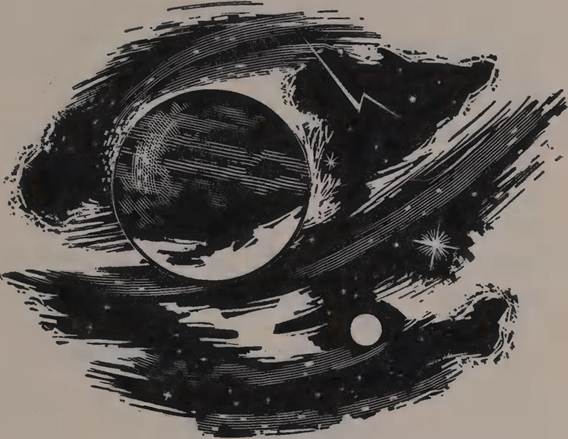
The first book of the Bible deals with the very earliest history of the world, as the ancient Hebrews thought that history to be.
The Hebrews often called the books of the Bible after the first word or phrase. The first word of the Hebrew version of the first book, and therefore its Hebrew name, is b’raysbith, which happens to mean “in the beginning,” and that is a very good name for the book.
The translators of the Septuagint gave the books Greek names, of course, and these are often used in the Authorized Version. The Greek name (and ours) for the first book of the Bible is Genesis, and that is a good name also, for it means the coming into being of something.
Now unless I particularly say differently, I am going to quote only from the book of Genesis in this volume. If I wish to quote the first verse in the first chapter, I will mark it 1:1. The tenth verse in the second chapter will be 2:10. The first number will always refer to the chapter, the second to the verse.
Well, then, to begin with, the very first verse of Genesis and therefore of the Bible is:
1:1. In the beginning God created the heaven and the earth.
As you see, God enters the picture at once. The word “god” is i very old one, its origin lost in the old Teutonic. It can mean any being considered as having powers that are more than human. We speak of the “Greek· gods,” for instance. When the word is written with a capital letter, however, it always means the God of the Bible.
It is natural, somehow, to think there is some connection between the words “god” and “good,” the origin of the latter word also dating far back. However, the similarity in sound seems to be only coincidence. Still, one word can shift to the other in common speech, as in the phrase of farewell.
An old-fashioned saying, when two people part, is “God be with you,” meaning that the person speaking is wishing the other a life under God’s care. The word “God” becomes “good”; the phrase “be with you” is shortened to “b’ye” and the word of farewell becomes “good-bye.” The word is used so frequently, it is being contracted even more to “g’bye” or even just “ ’bye.”In the same way, the day which is dedicated to the remembrance of the crucifixion of Jesus, was originally called “God’s Friday” and this became “Good Friday ”
The word “god” turns up in other expressions where we usually don’t think of it as existing. In the days before modern medicine, people often thought of those who were out of their senses as being under the influence of some god. Someone Eke that would be “giddy.” Nowadays, the word has weakened until it merely means fuzzy-minded or dizzy.
An even odder use of the word stems back to Norman days. The Normans (really “Northmen’) invaded France about 850 and settled in a district named “Normandy” after them. For a while, the Normans continued to speak their original Teutonic language and would frequently call upon some god or other. The French of the time named them after the loud remark “by god” they heard so often. (Their own word for God is “dieu.”) Since the French didn’t like the rough, overbearing Normans, they considered a “bygod” to be all that was bad. The word has become “bigot” and it is used now to refer to a superstitious hypocrite who can see no good in any beliefs but his own.
A more familiar use of “god” is in connection with relationship through religious ritual. A man or woman not actually related to a child becomes a kind of relative before God when he or she sponsors the child at baptism. Such a man or woman is a “godfather” or “godmother.”
The general term for a relative of this sort used to be “godsibb,” the word “sibb” being an Anglo-Saxon word, no longer used, for “relative.” (Psychologists and anthropologists use it in special ways, but it doesn’t come naturally to the rest of us.) Of course, to be god-relatives forms a bond between two people and makes them more apt to be friends.
Any two friends, particularly two women, might consider themselves “godsibbs,” even if they weren’t really.IN THE BEGINNING / 29 For that reason, by the time of Shakespeare, the word “godsibb,” shortened to “gossip,” came to mean “a dear friend. ’ It has lost that meaning now but, as we all know, two women who are dear friends spend much of their time talking about the personal affairs of other friends of theirs. The word “gossip” has therefore come to mean such personal chatter and is still used today in that way.
Genesis 1:1 is a very important verse (getting back to it), for it marked off the religious beliefs of the Jews from the people about them. In all other important theories of the time concerning the origin of the world, it was felt that there were numerous gods who were themselves created. In the Greek myths, unformed matter called Chaos first existed, and a whole series of gods came into being afterward. The most important of the Greek gods, Zeus, had both a father and a grandfather.[†] The Babylonian myths likewise described numerous gods created after various fashions.
The ancient Jews were exposed to Babylonian ideas during their exile in Babylon. Many parts of the Bible, including the book of Genesis, though largely based on old tradition, were not actually written down in their present form till after the
“Babylonian Captivity.” Babylonian influence can therefore be seen in the Bible, as for instance in the story of Noah and the Flood, which resembles certain Babylonian stories.
However, there was one part of the Babylonian way of thinking that the Jews would have nothing to do with, and that was the notion that there was more than one god, or that God could in any way be created.
Yet the very first verse, Genesis 1:1, does show that there was a certain influence in the Babylonian direction as evidenced by the actual word used for “god.” The word for “god” in Hebrew and in related languages is, El, Eli, Eloi, Eloah, and so on.
We are most familiar with this word in its Arabic form (Arabic being a language closely related to Hebrew). In Arabic, the sacred language of the Mohammedan faith, “god” is Allah.However, we needn’t look that far. The Hebrews often used the word El as part of the names they gave their children, to show their religious feelings. For instance, a child might be given the name Eliab, meaning “God is father,” or Elisha, meaning “God is salvation.”
In Christian times, men of many nations adopted the Hebrew names of the Bible. Famous men of
IN THE BEGINNING /31 American history, including E/ihu Root, Samue/ J. Tilden, Dank/ Webster, have names containing the Hebrew word for “god.”
Yet the word for “God” used in Genesis 1:1 is none of those I have given, but is Elohim. According to the way words are formed in the Hebrew language, Elohim is the plural of El and should be translated “gods.” This makes it sound as though the verse were written in a Babylonian style: “In the beginning, the gods made the heaven and the earth.” Just the same, although the word is in the plural form, the Jewish scholars through all of history have always firmly considered it to mean the singular. It refers to only one God.
In the first verse, then, one God exists and everything else is created. This is so important that God is often referred to as “the Creator.” (The word “creator” when used for God is always capitalized. In English, the word “God,” or any noun or pronoun used to stand for “God,” is capitalized as a sign of respect.) God is referred to in this manner in the Declaration of Independence, for instance, where it is stated that men “are endowed by their Creator with certain inalienable rights.”
On the other hand, the universe can be referred to as “creation.” The well-known song “Swanee River”
has a line, “All up and down the whole creation,/ Sadly I roam,” meaning that the singer has wandered everywhere.
All living things have been created by God, too, according to this view, and all, including human beings, are therefore “creatures.” This word is often used in the Westerns we see in the movies and on television, where it is spelled and pronounced “critter.” People are always saying, “He’s an ornery critter.” Sometimes the word “critter” is used to mean farm animals in particular.
Having stated the central belief in the first verse, the book of Genesis goes on to describe the condition of the Universe at the start of the Creation:
1:2. And the earth was without form, and void; and darkness was upon the face of the deep. And the Spirit of God moved upon the face of the waters.
The word “spirit” comes from a Latin word meaning “breath” and it is a translation of the Hebrew word ruakh, which also means “breath.” Apparently, the Hebrews wanted to get across the idea of the invisible presence of God, and the most familiar example of something invisible was air, in the form of breath or wind.
Naturally, there was among many people a belief in all sorts of invisible presences, both angels and demons. The Hebrew prophets felt the need of some way of speaking of the Spirit of God as something more than just an ordinary spirit and so, eventually, they spoke of the “holy Spirit” for reasons I will explain later in the chapter. (There is a reference to the holy Spirit in Isaiah 63:10, for instance.) As time went on, it became customary to substitute the expression “Holy Spirit” for the word “God.”
Another word for the Latin-derived “spirit” comes from the Teutonic geist, which also meant “breath” originally. The English form of the word is “ghost” and, of course, we all know that spirits are ghosts. “The Holy Spirit” can also be expressed, therefore, as “the Holy Ghost” and in the New Testament of the Authorized Version, the phrase “Holy Ghost” is often used as a way of naming an aspect of God.
Unfortunately, the word “ghost” has become so associated with figures in sheets, with Halloween spooks, and with ridiculous comic-strip notions, that the expression “Holy Ghost” seems a little funny to some people. In the Revised Standard Version of the Bible, the expression is changed back to “Holy Spirit” throughout the New Testament.
The next verses of the book of Genesis proceed to tell the story of how God, beginning with a uni- 34 / WORDS IN GENESIS verse “without form, and void,” formed a complete order in six days.
On the first day, He created light and darkness. On the second day:1:6. And God said, Let there be a firmament in the midst of the waters, and let it divide the waters from the waters.
The word “firmament” comes from the Latin fir- mmnentum, meaning something solid and strong, something “firm,” in other words.
To someone looking upward, it would indeed seem that a solid, curved vault was resting its rim on the earth. Observing the rain, one might suppose that there was water above the vault, which sometimes showered down on the earth. We don’t have this view nowadays and perhaps that has helped the word “firmament” with its misleading first syllable drop out of the language. It is hardly ever used now, except in poetry.
Instead, the old Teutonic word “sky” is used. (And yet, there is the children’s verse about the boy who “jumped so high, he touched the sky.” The sky, you see, is seen there as something solid that can be touched.)
God goes on to create the land and sea on the third day, as well as plant life of all sorts. On the fourth day, He creates the sun, moon, and stars, and on the
IN THE BEGINNING / 35 fifth day begins the creation of the animal kingdom, including the creatures of the sea and air.
The first specific kind of creature brought into existence by God is mentioned in the twenty-first verse, which begins:
1:21. And God created great whales...
Actually, the Hebrew word tannin is used for any large and monstrous creature. The Revised Standard Version has the verse begin: “So God created the great sea monsters..
Of course, the greatest of all sea monsters are the whales, some of which are the largest animals that ever lived, as far as we know, in all the history of the earth. Anyone seeing a large whale is bound to be impressed. It might seem necessary to call special attention to the fact that God created them, lest people think it was beyond God’s powers to create so large a beast.
Eventually, the Jews thought of the sea monster created on the fifth day as having a name — Leviathan. The name is used in the 74th Psalm, in a couple of places in the book of Job, and so on. The meaning of Leviathan varied. It could be merely some large and powerful sea creature, like a whale or crocodile. In the legends it could become something impossibly huge, like the Midgard Serpent of the old Norse
myths, which lay in the ocean depths and was so long it encircled the world.
It could be even more vague and terrible and stand for the forces of chaos conquered by God when he formed the world. This might be an echo of Babylonian ideas, for their chief god, Marduk, began the formation of the world by slaying a monstrous dragon named Tiamat. Leviathan might be the Hebrew version of Tiamat.
The forces of chaos might even be trying to undo God’s work. Many mythologies imagined that dragons or wolves were forever attempting to swallow the sun and the moon and destroy the world. Leviathan was sometimes a form of such a destroying force.
Nowadays, the word is usually used, poetically, for the whale, and at least one large steamship of the twentieth century was named Leviathan.
The most famous use of the word in modern times, however, was by Thomas Hobbes, an English philosopher. In 1651, he wrote a book in which he described his theories about governments and societies. He felt that a society was a huge monster made up of individual human beings, and he even had a rather horrible illustration showing this. Because of this view of his, he called his book Leviathan.
Having populated the sea and air, God went on, on the sixth day, to create the various animals of the land, including man, and His work was done. As for the seventh day, that is described at the beginning of the second chapter of Genesis:
2:2. And on the seventh day God ended his work which he had made; and he rested on the seventh day from all his work which he had made.
2:3. And God blessed the seventh day, and sanctified it: because that in it he had rested from all his work which God created and made.
For this reason, the Jews, and later the Christians, considered the week to be a very important unit of time. It was seven days long and every seventh day was particularly important to God. (The ancient Greeks and Romans had had no such unit of time as the week in their calendar.)
The seventh day of the week is, traditionally, the one we call Saturday, a name which is a hang-over from Roman times, being named for the Roman god Saturn (“Saturn’s day”). On the calendar the days of the week are arranged with Sunday first and Saturday seventh.
The Hebrews called the seventh day shabbath, from a word meaning “to stop” (to stop working, that is) and this has come down to us as “Sabbath.” The weekly day of rest, which is particularly dedicated to the worship of God, is therefore called the “Sabbath” or the “Sabbath day.”
The early Christians kept the seventh day as the Sabbath, but also had special rites on the first day of each week, which we call Sunday (named for the Sun, as a hang-over from heathen Anglo-Saxon days) because that was the day of the week on which Jesus was recorded as having been resurrected. The first day was called the “Lord’s Day” in consequence. It is called that even now by some people when they wish to speak reverently of it. In French, the first day is dimanche, from the Latin dominicus, meaning “belonging to the Lord,” so the French name is the equivalent of “Lord’s Day,” you see.
As time went on, the early Christians paid more and more attention to the first day of the week. By 400, the seventh-day celebration was dropped and the Lord’s Day became the day of rest and worship. When a modern Christian speaks of the Sabbath, therefore, he almost always means Sunday.
There are exceptions, though. Some Christian sects believe that the Bible clearly states the seventh day to be the Sabbath and therefore keep that day.
IN THE BEGINNING /39 An example are the Seventh-Day Adventists. These and other sects with the same belief are said to be “Sabbatarians.”
Notice, too, that in Genesis 2:3 God “blesses” the seventh day and “sanctifies” it. “Sanctify” is from a Latin word meaning “to make holy” and the Revised Standard Version uses the word “hallows” (of Teutonic origin) instead, which also means “to make holy.” As for the word “bless,” that, too, has as one of its meanings “to make holy.”
The word “holy” implies a separation from the ordinary run of things. God himself is holy because He only is the Creator; everything else is created, leaving God separate and in a class by Himself. In fact, a common way in which the Jews refer to God is as “the Holy One.” In the same way, as I mentioned earlier in the chapter, the Spirit of God was referred to as “the holy Spirit.”
Anything, then, which is especially set aside, separated from the ordinary run of things, and reserved for the service of God is “sanctified” or “hallowed” or “blessed” and becomes “holy.”
The Sabbath is separated from the other days of the week and is dedicated to the worship of God, so that it is a “holy day.” Other days and times of the year were similarly separated and dedicated as time
went on, and on all of them the ordinary way of life came to a temporary halt. In the form of “holiday,” this has come to mean to us any day or period of time in which the ordinary way of life is interrupted, whether it is used for the worship of God in any way or not.
Men engaged in the service of God and separated from the ordinary ways of life are “holy men.” If we go back to the Latin form of the word, sanctus, the term for such a holy man reaches us as “saint.” Naturally, a man who serves God is expected to behave in a manner pleasing to God. We expect him to be good, kind, helpful, and so on. For that reason, anyone who has all these pleasant qualities is often spoken of as “saintly” even though he might not be directly involved in any form of religious life.
In the Christian calendar, November 1 is a holy day in honor of all saints generally. It is called “All Saints’ Day” or “All Hallows’ Day.” The evening before is “All Hallows’ Evening,” which, by leaving out half the letters, becomes “Halloween.” This is usually celebrated as a day of revelry that usually has nothing holy or saintly about it, but stretches back to pagan days before the arrival of Christianity.
A word in which the notion of “holy” is even more surprising arises in connection with a certain kind of flounder eaten on holy days when meat was forbidden. An old word for “flounder” is “butt,” and the flounder eaten on holy days became “holy butt.” That has come down to us as “halibut.”
More on the topic In the Beginning:
- Foreword: Frances Moore Lappe
- North Korea's Cultural Revolution in 1972
- Kohut Zenon E., Sklokin Volodymyr, Sysyn Frank E., Bilous Larysa (eds.). Eighteenth-Century Ukraine: New Perspectives on Social, Cultural and Intellectual History. McGill-Queen's University Press,2023. — 668 p., 2023
- Introduction
- The Trend of Change and the Kuki Traditional Religion
- KARAITES
- Conclusion
- Introduction: The Separation of Powers and Its Implementation
- NUMERICAL PROBLEMS
- RWANDA