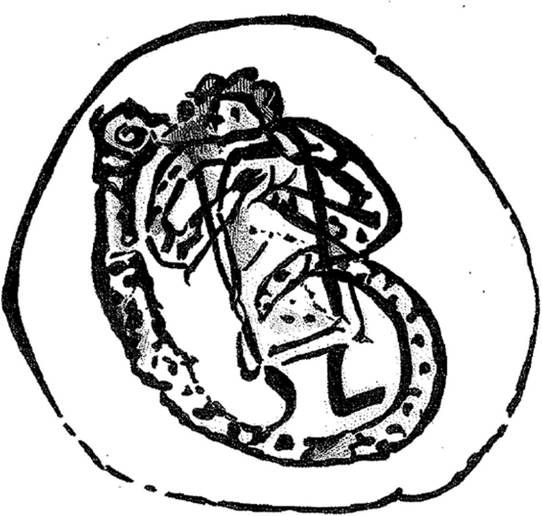
A Recipe for Causing Insomnia from Sefer ha-Razim [SHR I §§137-140]
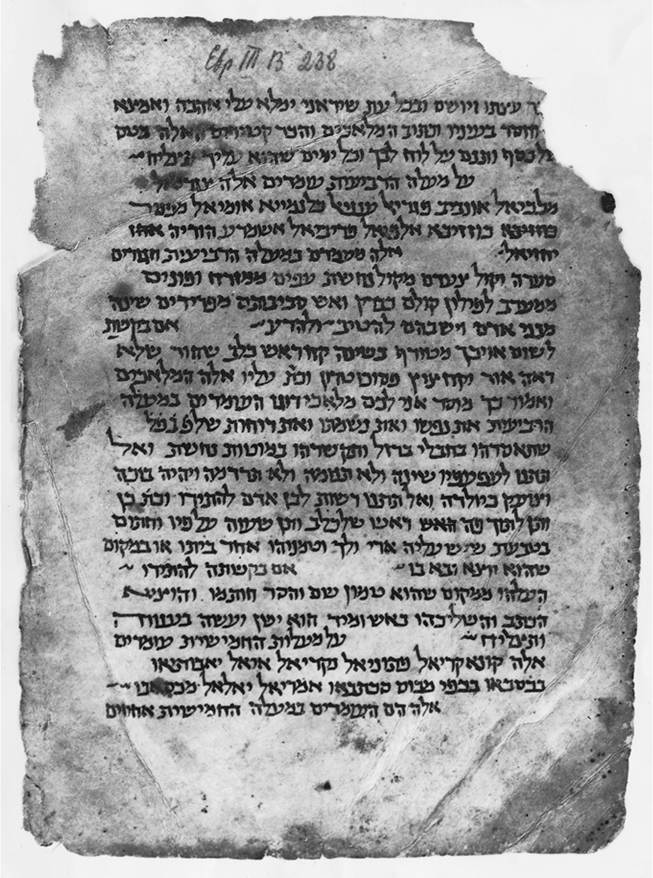
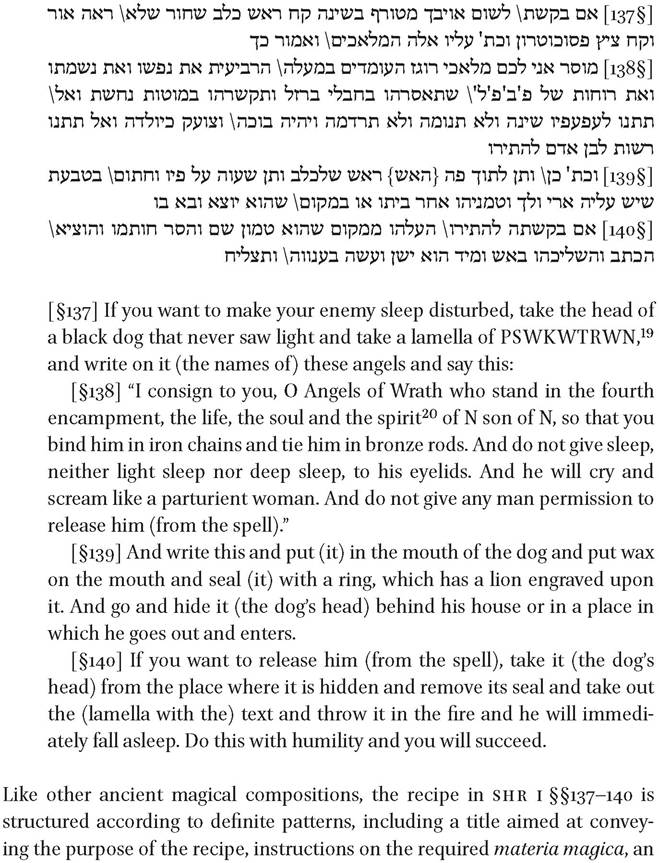
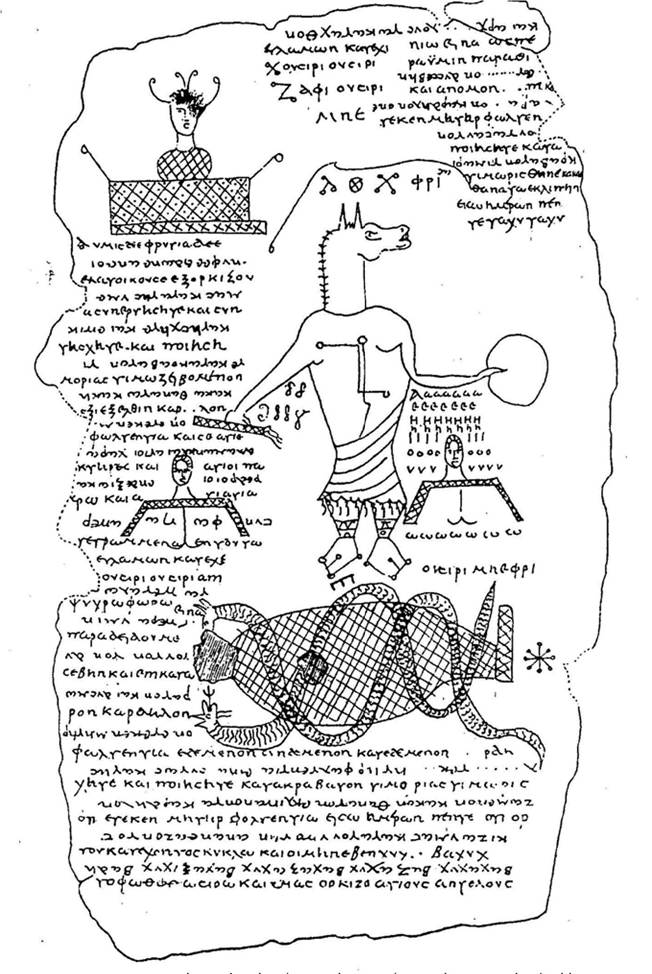
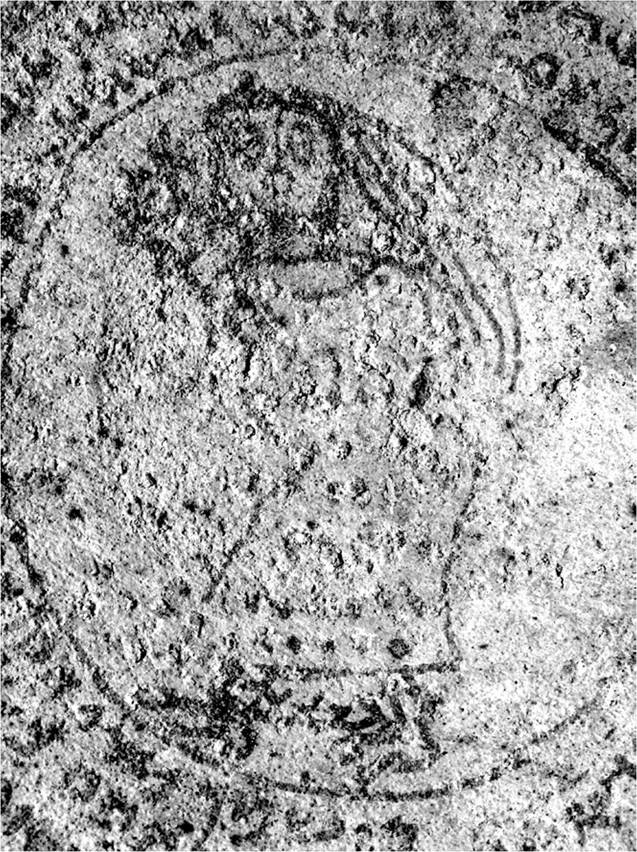
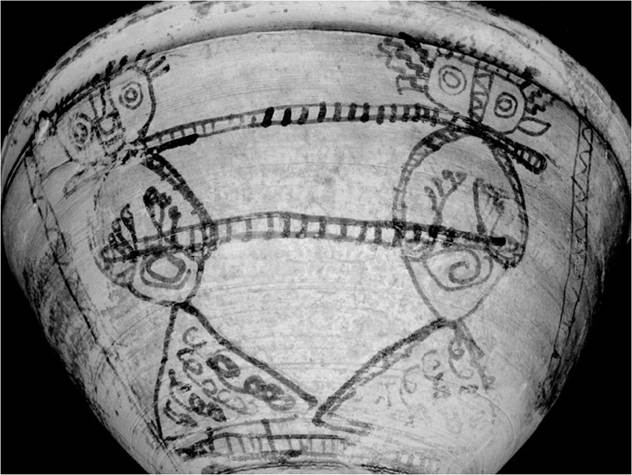
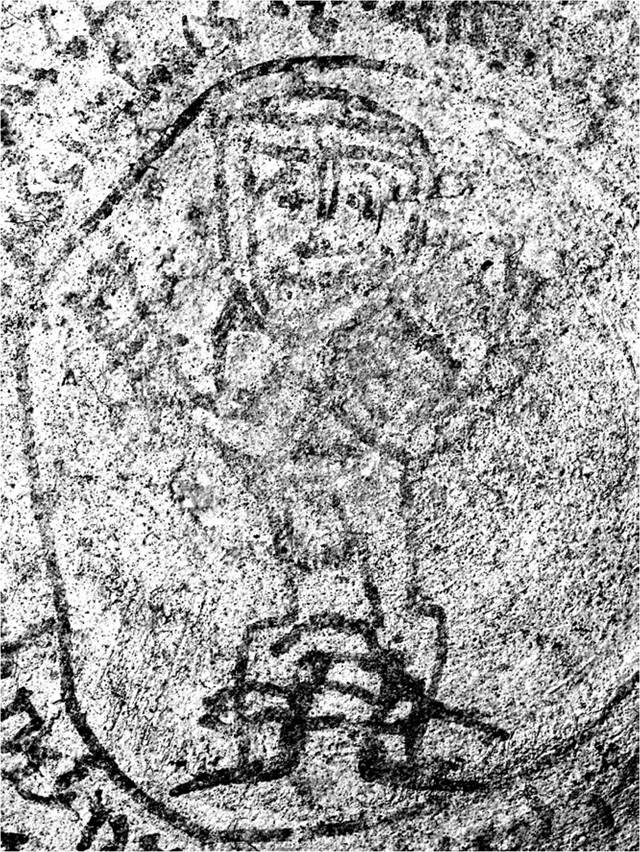
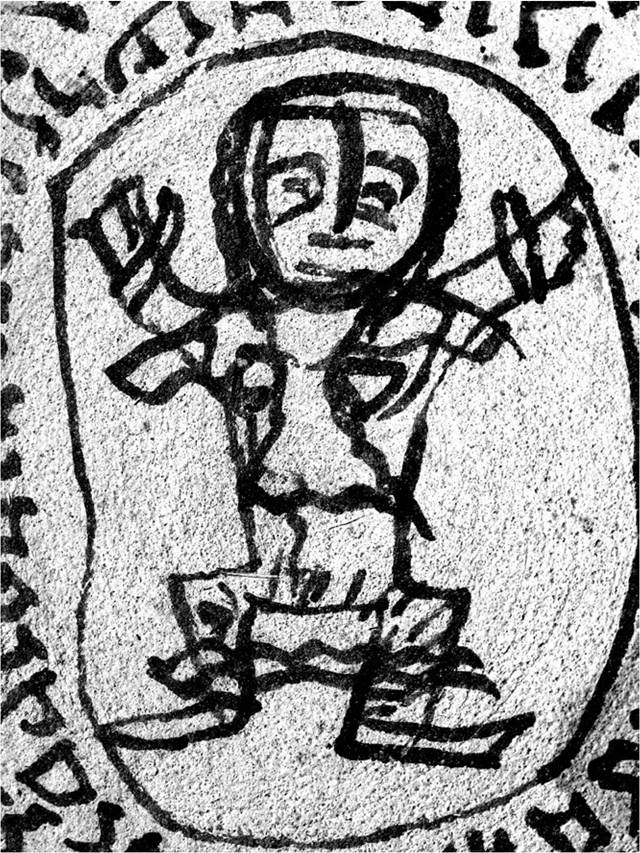
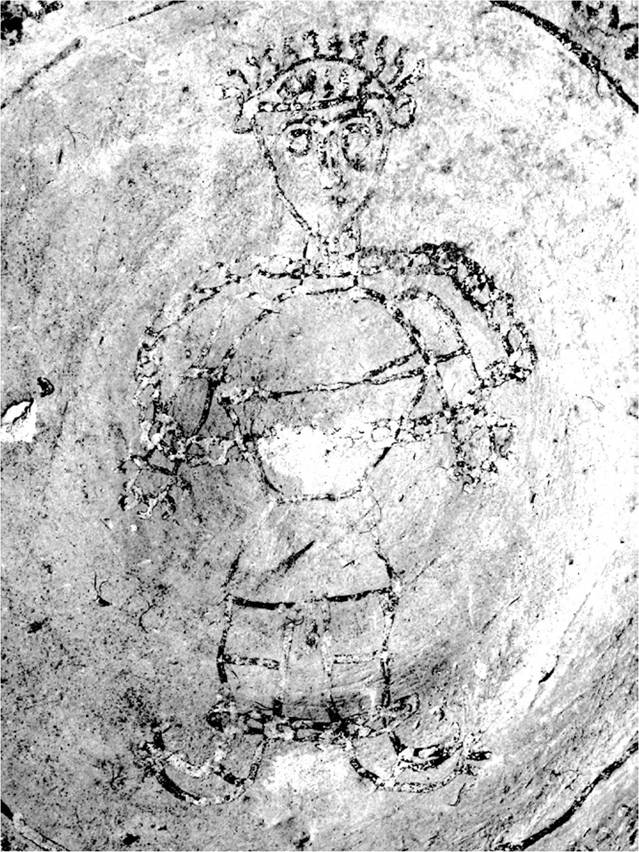
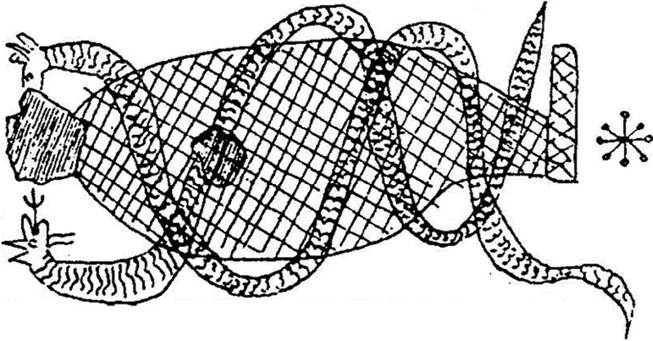
The name Sefer ha-Razim (shr), The Book of Mysteries, refers to a book of magic, whose earliest edition was probably written in late antique Palestine before the Muslim conquest, by an erudite Jewish author familiar with both theJewish orthodox tradition and ‘Pagan’ magical knowledge^ After a brief preface describing its use and its chain of transmission,[322] [323] [324] [325] [326] the book is organized in seven main sections, which reflect an imaginary celestial environment and are, therefore, called “firmaments.” The first six firmaments are divided into further subsections, each of which is inhabited by angels assigned certain functions and endowed with specific powers. Every subsection contains several magical recipes for different purposes, generally related to the role of the angels appointed in that specific part of the book. Arguably, some of these magical recipes might once have circulated independent of the literary framework of the book.13 The angelic names listed in the book were originally meant to be uttered, or written down, during the actual magical practice associated with them.14 shr preserves twenty-eight magical recipes for different purposes, whose goal is in part anticipated in the preface of the book?5 In the fourth step of the second firmament, a celestial section inhabited by angels who prevent human beings from their natural and vital rest, “D’Tnso mN ’J30 niW [§136], shr registers an oneiric aggressive magical recipe for “causing insomnia” [§§137-140].[327] [328] [329] The recipe immediately follows a magical procedure aimed at nullifying someone's intentions and thoughts [§§132-134], enabled by angels in charge of “shaking and agitating the hearts of men, making void their intentions and nullifying their thoughts,” “W’pnnbl e’ptnb mopo [§131] “anneno bmbl Dn^p “isnbl mN 3b riN.17 The proximity of the angels controlling, respectively, the vigilant and dreaming human mind reflects a cultural understanding of the sleeping/dreaming state as a mental phenomenon comparable to the act of thinking, willing and making choices. Yet, the separation of offices between the angels of the third and fourth encampments points also to the idea that dreams and vigilant thoughts express slightly different perceptions on the spectrum of human consciousness. In what follows, I offer a transcription and English translation of, and an extensive commentary on, the oneiric aggressive magical recipe preserved in shr I §§137-140.18 figure 9.1 Fragment Antonin 238, fol. 1b. REPRODUCED WITH THE KIND PERMISSION OF THE NATIONAL LIBRARY OF RUSSIA. now on, Plut. 44.23), an Italian, xvi century manuscript; New York,Jewish Theological Seminary in New York, jts 8117 (from now on, jts 8117), an Italian, xvii-xviii century codex; on these manuscripts, see Rebiger and Schäfer, Sefer ha-Razim I und II, vol. 1, pp. 3, 18, 20-22, 24, 26, 27. [1] Or “take a lamella from the cold water pipe,” for which see below. [1] For “mm,” read “inn.” invocation of the non-human entities involved in the magical practice, further ritual prescriptions, and a conclusive formula. The magical text starts with an introductory expression, which functions as the title of the recipe and is aimed at helping users to orientate themselves within the book. All the different lectiones convey the idea of damaging an enemy in relation to his/her sleep faculties, as is demonstrated by the use of the substantive “FIJ’W,” meaning “sleep,” and verbal expressions from the root qnu*, which assumes, in this contest, the meaning of “being torn apart/disturbed.”[330] [331] [332] [333] [334] Mss. Ant. 238, Gunz. 738, Gross 42 preserve the expression “nrw qniuo TP’lN rnwpb \dto5 nwpa on,” “if you want to make your enemy disturbed during his/her sleep,” thus referring to an undetermined disturbance experienced while sleeping.22 With the lectio “TD’lNQ nrw qinub nwpa dni,” Mss. Gunz. 248, Heb. 849 and Plut. 44.23 explicitly refer to the act of depriving someone of sleep.23 The goal of the recipe is explicitly repeated in §138, “FlOTPn Nbl noun Nbl ni’W 1’DpDpb linn bNl,” and seems to correspond to the psychophysical impairment known in contemporary medicine as “insomnia.”24 After stating the purpose of the magical procedure, the recipe continues with a first series of instructions, aimed at directing the user in the selection of the materia magica. The first required element for the spell is the head of a dog, probably a puppy born dead or a fetus, which, according to the lectiones in mss. Ant. 238, Gunz. 738, and Gross 42, has to be black.25 While the use of a dog is not attested elsewhere in Sefer ha-Razim, dead dogs and canine organic material (“magical material,” embryos, blood, excrements, afterbirths, ticks, dog-bitten stones) are listed among the common magical ingredients registered in the Corpus of the Greek and Demotic Magical Papyri (from now on, pgm and pdm), especially in the spells of the fourth papyrus.[335] [336] [337] The second material required in the magical ritual is a metallic surface—either a foil “P’S” or a tablet “mb,” according to the different lectiones—on which to engrave the magical names and the spell. All the manuscripts report an incomprehensible corrupted word, probably derived from the Greek term “ψυχροφόρον.”27 This term occurs in the expressions “ψυχροφόρου σωληνος” (“a cold-water pipe”) in a magical recipe preserved in pgm VII.396-404 and “ψυχροφόρου τόπου” (“a cold-water system”) in pgm VII.429-58.28 Both the recipes from the seventh papyrus attest to the custom—at least in Greco-Egyptian magic—of scraping lead from the pipes of an aqueduct or any other water system in order to produce a lead lamella, which will be subsequently inscribed during the ritual practice. This use is confirmed also in a fourth or fifth century Roman defixio [DefixTab 155] belonging to the so called Sethianorum Tabellae,[338] in which the term “^u/po^opov,” occurs twice in an adjectival form, in the expression “to ^u/po^opov nsraXov,” “a tablet made out of a cold-water pipe.”[339] In light of the aforementioned Greek parallels, the lectio “JllOlOloa P’S” in ms. Ant. 238 appears to be the most correct, corresponding to the Hebrew translation and corrupted transliteration from the Greek “^u/po^opov nsraXov” in DefixTab 155.31 The lack of understanding of the Greek term “^u/po^opov,” evident already in the ninth century ms. Ant. 238, determined the textual additions in the later testimonies. After the description of the materia magica, the recipe instructs the user to inscribe the lamella with the names of the angels appointed to the fourth encampment. Although the typical formula for the adjuration, “’IN P'PBO D3’bp,” is absent in the recipe, the angels are commanded to bind the victim in chains, a common feature of aggressive magic, and make him/her suffer from lack of sleep. The juxtaposition of the specific terms “HPW,” “HOlJn” and “HOTin” emphasizes the condition of absolute restlessness brought about by the curse. These expressions, attested to also in the Bible, might refer to the prayer Birkat ha-mapyil, which represents, in my view, the “orthodox” counterpart of the prophylactic spells against oneiric aggressive magic that I will discuss below.32 The recipe aims at harming the victim in his/her entire persona, as is suggested by the conjunct use of the terms “W31,” “HOW and “HD.” The pain wished for the victim is very intense and is compared to that suffered in childbirth. The expression “mbl’3,” attested with minor changes in all the manuscripts, might be a mistranslation of the Greek “w; xuwv,” “like a dog,” misunderstood for a participle from the verb “xuw,” “to give birth.”[340] The victim is compared to a barking dog in mss. After the invocation and the curse, the recipe continues in §139 with further ritual instructions, regarding the introduction of the inscribed lamella inside the dog head, its seal and burial. According to the logic of sympathetic magic, the head of the dog symbolizes the head of the victim. The insertion of the lamella, upon which the curse is inscribed, into the head of the dog figuratively represents the entrance of fury and madness into the head of the chosen victim and, therefore, brings about the sleep disorder. As long as the lamella is in the dog's head, the victim is granted no rest at all. The detail that the dog's mouth has to be hermetically sealed with wax refers to the indissolubility of the curse, which can be broken only by the user who activated it. The lion engraved on the signet ring, requested in the recipe, might personify the power of a certain deity, originally invoked in the Greco-Egyptian parallel of this ritual. Although the image of the lion is “common on ancient seals, glass pendants, rings and magical gems,” it is impossible to establish the effective function of the seal ring depicting a lion in this specific recipe, in its present Jewish form in shr.[343] The last section of the recipe contains instructions for releasing the victim from the spell and some general purity rules that need to be observed for the success of the incantation. The recipe preserved in shr i §§137-140 corresponds, in all respects, to an oneiric aggressive magical procedure that aims to harm a certain victim using sleep disorders. Although the Hebrew text does not employ a technical term for “insomnia,” it clearly refers to this specific sleep disturbance. According to the text, the impossibility of experiencing “sleep,” “light sleep,” or “deep sleep,” i.e. an extended phase of insomnia, is a curse dreadful enough to be sent to an enemy. Although the recipe does not specify why the enemy is inflicted with insomnia, the final clause regarding the release of the victim might indicate that the user employs insomnia to blackmail the victim about a certain issue. Whatever reasons drove users to punish or threaten their enemies with lack of sleep, the recipe in shr demonstrates that this specific sleep impairment was regarded as an annoying and dangerous condition, difficult to endure, especially when protracted over a long period. Further evidence for the belief that a healthy life demands physiological sleep is provided by a recipe for restoring someone's sleep preserved in a published eleventh century fragment from the Cairo Genizah, which reads as follows: “\JO КЛЮК JlW’b 513’ D7N pNW ni’wb bp \рюот X'W'-p N’ONba рЛЫ ЬК’ЛЗЛ \bN’2S2 7X"w ЬыЛ’ПО Ьы’рЛО QW3 N’OW 's’n’bs \bp ППТТП ” bs’l nbo JON JON р’ЛРЗ \'s'n'sb pnu nrw inn nrw opu 'Hl ptS’l ('Ul) Qlbn’l JW”1” (“For sleep, when a person cannot sleep: Healing from/ Heaven, in the name of STQY'L, TRYR'L, SRY'L/ SPSY'L/ HNDY'L, You are the holy angels who are appointed/ to the indulgence of sleep, bring sleep of good life to N son of N/ quickly, Amen Amen Selah. And the Lord God caused a deep sleep to fall upon [Gen. 2:21]/ N son of N, And he slept and dreamed [Gen. 41:5] etc., And he lighted [Gen. 28:11] etc.”) [T.-S. K 1.28, 2b, 2-7][344] The above-mentioned text cannot be regarded with certainty as a counter spell against a recipe for causing insomnia such as the one found in shr, since it does not mention whether the user's sleeplessness was imputed to a demonic or human magical activity. Like the recipe in shr, however, the Genizah recipe (a.) concerns human sleep (or lack of sleep), (b.) uses the specific term “ΠΟΊΊΠ” (“deep sleep”) and (c.) refers to the belief that specific angels control the sleeping faculties of human beings. It is not surprising that the angel names in the two magical texts do not match, since the angels adjured in the recipe for causing insomnia in shr are in charge of preventing human beings from natural rest (“DIN ’D30 nrw Ο’ΤΊΡΟ,” §136), while those invoked in the Genizah recipe for restoring sleep are believed to be appointed to the “indulgence of sleep” (“HFW ορυ bp J’ioon,” T.-S. K 1.28, 2b, 4-5). The recipe for causing insomnia in shr shows several analogies with non- Jewish late antique spells and seems largely indebted to Greco-Egyptian magic. Above, I discussed some of its linguistic features that also occur in pgm VII.396- 404, pgm VII.429-58 and DefixTab 155. The similarities between the aforementioned Greek spells and the recipe in the Jewish book of magic are not limited to the materia magica, but also relate to the scope of the recipes and some ritual patterns. Although pgm VII.396-404 does not explicitly indicate that its purpose is to cause insomnia, it represents a spell for silencing people, bringing people into subjection and inhibiting people (“Φιμωτικόν καί υποτακτικόν γενναΐον καί κάτοχος”), i.e. an aggressive incantation aimed at gaining power over a certain individual, like the recipe in shr i §§137-140. Furthermore, both texts instruct users to insert the inscribed lamella into a dead body, a person who died prematurely in the Greco-Egyptian recipe (“καί θές παρά άωρον”), and a dog in the Jewish incantation [§139].[345] The recipe in pgm VII.429-58 is not explicitly aimed at making a victim insomniac; nevertheless, it is “a restraining rite for anything” that “works even on chariots” (“κάτοχος παντός πράγματος καί έπί αρμάτων ποιων”), and which also causes sickness (“κατακλιτικόν”)[346] The aggressive spell preserved in DefixTab 155 is a fourth century finished product probably written by a charioteer or by someone acquainted with circus magic.[347] It aims at provoking a cruel death for a certain Kardelos son of Fulgentia, most likely a rival charioteer, within five days: “Κάρδηλον, ον έτεκεν μήτηρ Φωλγεν[τία,] ούτως αύτον ποιήσητε κατά κράβατον τιμωρίας τιμωρισθηνε κακώ θανάτω έκλιπην εϊσω ήμερων πέντε,” “Kardelos son of Fulgentia, so that you make possible that he is punished and die of a bad death within five days” [DefixTab 155, A50-58].[348] Again, the magical procedure described in the defixio does not refer to insomnia, yet, as with the recipe in shr [§138], it mentions that the victim, “the impious and damned and miserable Kardelos son of Fulgentia,” is bound and handed over to the non-human entities that are coerced to harm him: “εϊνα ώσπερα ύμΐν παραθίθομε τούτον τον δυσεβήν καί άνομον καί έπικατάρατον Κάρδηλον ον έτεκεν μήτηρ Φωλγεντία έδεμένον συνδεμένον κατεδεμένον εϊνα αύτον συνεργήσητε καί κατήσχητε καί παραδώσητε τώ καταχθονίω εις τον τών ταρτάρων οίκον τών ένφερνίον τον δυσεβήν καί άνομον καί δύσμορον Κάρδηλον ον έτεκεν μήτηρ Φωλγεντία,” “like we deliver to you this impious, outlaw and damned Kardelos, son of Fulgentia; bound, bound together, bound below, so that together you fasten him, hold him and deliver him to the (god) of the underworld in the house of Tartaros, of the Inferno, the impious, outlaw and miserable Kardelos, son of Fulgentia” [DefixTab 155, B3-10][349] The will to magically and fatally bind the victim is emphasized by a detail from the picture carved on the tablet, which shows a human figure tied with ropes. Following John Gager’s interpretation, I argue that the figure portrays Kardelos[350] In my view, the black circle in the torso of the figure (see Figures 9.2 and 9.8) might represent the heart of the victim, fatally perforated by two ropes that seem to be serpents with the head of a dog. In the Jewish world, the Babylonian incantation bowls, which will be discussed below, sometimes preserve images portraying demonic and human figures bound with chains and shackles (see Figures 9.3, 9.4, 9.5, 9.6 and 9.7), possibly implying that they are prevented from attacking the users of the bowl. figure 9.2 Drawing by Carl Richard Wünsch, reproducing the Roman lead tablet, DefixTab 155. The humanfigure at the bottom probably represents the victim of the spell, bound by two ropes/snakes with the head of a dog. REPRODUCED WITH THE KIND PERMISSION OF THE NATIONAL ROMAN MUSEUM AND THE SPECIAL SUPERINTENDENCE FOR THE ARCHAEOLOGICAL HERITAGE OF ROME. figure 9.3 Babylonian Incantation Bowl inJewish Babylonian Aramaic, Schoyen Collection, ms 1927/34. The human figure, whose hand andfeet are bound, probably represents afemale Lilith demon. REPRODUCED WITH THE KIND PERMISSION OF MARTIN SCHOYEN AND MATTHEW MORGENSTERN. figure 9.4 Babylonian Incantation Bowl inJewish Babylonian Aramaic, Schoyen Collection, ms 2053/198. The figures bound with chains probably represent the demons. REPRODUCED WITH THE KIND PERMISSION OF MARTIN SCH0YEN AND MATTHEW MORGENSTERN. Some of these human figures depicted upon the bowls might even represent the cursed magician, who becomes the victim in counter-spells (see Figures 9.5, 9.6, and 9.7). Furthermore, a published bowl in Aramaic includes the drawing of a human figure, which might be bound by a serpent, with an iconography similar to that observed in DefixTab 155 (see Figure 9.8).[351] figure 9.5 Babylonian Incantation Bowl inJewish Babylonian Aramaic, Schoyen Collection, ms 1929/12. The human figure appears to be bound and might represent the victim of the spell. REPRODUCED WITH THE KIND PERMISSION OF MARTIN SCHOYEN AND MATTHEW MORGENSTERN. figure 9.6 Babylonian Incantation Bowl in Jewish Babylonian Aramaic, Schoyen Collection, ms 2053/250. The humanfigure appears to be bound and might represent the victim of the spell. REPRODUCED WITH THE KIND PERMISSION OF MARTIN SCH0YEN AND MATTHEW MORGENSTERN. figure 9.7 Babylonian Incantation Bowl inJewish Babylonian Aramaic, Schoyen Collection, ms 2053/259. The humanfigure appears to be bound and might represent the victim of the spell. REPRODUCED WITH THE KIND PERMISSION OF MARTIN SCHOYEN AND MATTHEW MORGENSTERN. figure 9.8 On the bottom, a detailfrom DefixTab 155, depicting a humanfigure bound by two ropes/snakes with the head of a dog. On the top, drawing by Alessia Bellusci of a detailfrom an Aramaic incantation bowl [Bowl 19 in Naveh and Shaked, Magic Spells and Formulae] depicting an anthropomorphic figure that is also possibly bound by a serpent. Like in the oneiric aggressive recipe in shr [§138], in the defixlo the entire persona of the victim is harmed: “καί ωσπερα ούτος ωπιονεπι ψυχρός καταψυχρένετε έπανχωνίζετε μαρένετε καταμαρένετε έπανχωνίζετε συνζαρι καταραζι όντα καί τήν ψυχήν καί τό οστέα καί τούς μυαλούς καί τά νεύρα καί τάς σάρκας καί τήν δύναμιν Κάρδηλον όν έτεκεν μήτηρ Φωλγεντία,” “freeze him like this opionepi is freezed, strangle, destroy, extinguish, strangle him, who is synzari and damned, the soul, the bones, the marrow, the nerves, the flesh, and the vigor of Kardelos, son of Fulgentia” [DefixTab 155, B10-15].[352] While the Greek text mostly refers to the physical body of the victim, “bones” (“οστέα”), “marrow” (“μυαλούς”), “nerves” (“νεύρα”), “flesh” (“σάρκας”), adopting only two terms for the “immaterial” body, “soul” (“ψυχήν”) and “vigor” (“δύναμιν”), the Hebrew recipe entirely considers the spiritual body of the victim, “life” (“^Pi”), “soul” (“noW) and “spirit” (“nn”).4[353] Nevertheless, on account of the above-mentioned similarities, the two magical texts are, in my view, deeply related[354] [355] At least six recipes in the corpus of pgm are explicitly aimed at producing wakefulness, as indicated by their title “άγρυπνητικόν.”48 Although the Greek verb “άγρυπνέω” might possess the meaning “lying in bed and thinking of” and, metaphorically, “being watchful,” it is clear that the derived substantive “άγρυπνητικόν” refers to a spell aimed at making a victim insomniac, since all the incantations with this title in pgm exhibit an aggressive character.[356] Most of them involve a female victim or declare an erotic purpose, such as in pgm νιι.374-76: “ιψαη ιαωαι άγρυπνείτω μοι ή δείνα της δείνα εκείνη τη νυκτί άγρυπνησει,” “IPSAE IAOAI, let her, NN, daughter of NN, lie awake because of me.”[357] [358] [359] [360] [361] One of these recipes predicts the death of the woman within seven days through lack of sleep (“καί άυπνος τελευτήσει μη διαμηκύνασα ήμέρας ζ'”), emphasizing, once again, the awareness of the importance of natural sleep in antiquity.51 Another recipe for making a female victim insomniac, preserved in pgm vii. 376-84, prescribes an iron tablet (“ποίει δέ καί σιδήρου πέταλον”) inscribed with the formula “turn cold, iron, and become snow” (“ψύγητι, σίδηρε, καί χιών γενοΰ”).52 The reference to the coldness of the tablet in pgm vii. 376-84 is reminiscent of the expression “a lamella made from the cold-water pipe” in the recipe in shr and in DefixTab 155, and of the command to the gods to “freeze him like this opionepi is freezed,” in the latter. While in the defixio coldness symbolizes the death of the victim, in the recipe for causing insomnia in pgm vii. 376-84 it might refer, as well, to a state of distress and disease experienced by the victim. Two of the spells for producing wakefulness in pgm employ a bat in the ritual.53 The use of a bat's head, either dried and sewn up in a leather amulet or sewn up in a pillow, is considered a useful aid for wakefulness by the third century author Julius Africanus [Kestoi, 7.17].54 In light of the Greek terminology adopted in the recipe in shr and its parallels with Greco-Egyptian magical texts, it is plausible that the Jewish incantation was originally adapted from a Greco-Egyptian spell, expunged of explicit non-Jewish elements, such as the names of the invoked deities and the more “pagan” iconography on the signet ring. Although there is no concrete evidence of the effective use of shr before the twelfth century, we cannot aprioristically exclude that it circulated widely within Jewish society and that, even before its final redaction, the individual recipes were used by Jews.[362] [363] [364] Unfortunately, the lack of material sources prevents us from conjecturing which part of the Jewish population may have actually engaged in magical rituals for hurting an enemy with prolonged sleeplessness as in the recipe discussed here.