(Re)ConfiguringSpatial Context
Proximity to the ancient and contemporary civic milieu enabled the Roman Fountain of Glauke to translocate symbols from the one context to the other, redefining their significance.
The preeminent spatial context in the new colony was of course the Roman forum. By adopting the rock-cut fountain, colony planners in effect related it to this civic center. For, though the Fountain of Glauke was situated outside the forum to the west, two man-made features linked it to this religious, political, and commercial sphere. First, the well-traveled Sikyon Road, leading into the forum, ran by the front of the fountain.[308] Second, Temple C's relationship to the water source reinforced the latter's connection to the forum. Though this first century temple lacks a definitive identification, it enjoyed a prominent place on the western side of the forum. Roman planners, in positioning the temple's western temenos wall up against the east face of the fountain, and aligning its perimeter wall with the fountain on the north (Hill 1964; Robinson 2005), solidified Glauke's own place in relation to the forum. An effect of the connection outlined here is that the forum acted as an interpretive framework for the aforementioned symbols evoked by Glauke.Above all, Glauke's association with the nearby forum set it within a readily identifiable Roman context. Besides featuring places of commerce, the forum teemed with Roman political and religious symbols, such as the Julian Basilica with its statues of imperial family members at the eastern end of the forum, as well as the temples of Fortuna, Clarion Apollo, and Venus (Spaeth 2011). Signs of the imperial cult further contributed to this Roman orientation. The conspicuously situated altar base inscribed by the Augustales attests to such veneration of the emperor (Walbank 1996; Laird 2010). And Temple E—south of Temple C—likely served as the center for the imperial cult (Bookidis 2005).[309] Finally, Corinth's hosting of imperial games demonstrated the city's pride in its connections with Rome (Spawforth 1994; Walbank 1996).[310] Taken as a whole, these emblems of Roman cultural values populating the forum would have influenced the perception of a nearby structure such as the Fountain of Glauke.
But in order to fully appreciate how Glauke might have been experienced in this broader Roman space, it is first helpful to recall an older spatial context, redolent of ritual concerns. Pausanias observes that near the Roman Odeum, northwest of Glauke, there stood a μνήμα (monument) for Medea's children
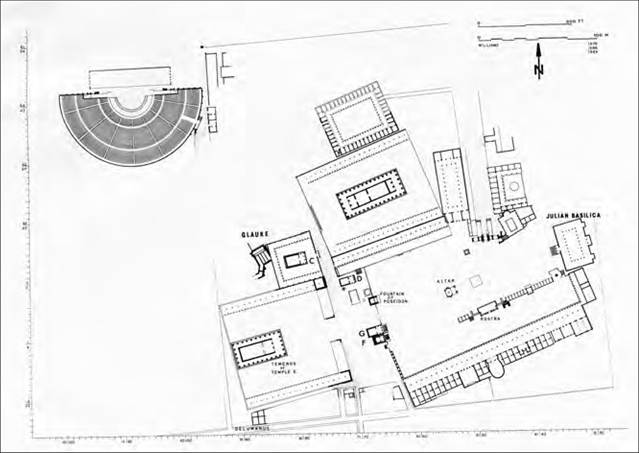
Figure 2. Early first century forum, Corinth; image reproduced courtesy of C. K. Williams.
Mermerus and Pheres; he then rehearses a version of the myth indicting the Corinthians rather than Medea for killing the bearers of poisonous gifts.[311] Owing to the illegality of the murders, Pausanias continues, “the young babies of the Corinthians were destroyed... until... at the command of the oracle, yearly sacrifices were established in their honor and a Λείμα [Terror] was set up” (Descr. 2.3.7 [Jones, LCL]).[312] The μνήμα and Λείμα, though inspiring debate as to their precise identity and location (Pache 2004, 42-43), parallel the existence of a cult for dead children in the vicinity of Greek Corinth.[313] Distinguishing the connecting threads between this local cult and the Medea myth is a notoriously complex enterprise. Sarah Iles Johnston argues that “the story of Corinthian Medea began as a mythic reflex of the local cult of Hera, meant to demonstrate the effects of Hera's neglect [to protect children during childbirth] or hatred,” and only later developed into the familiar version holding Medea responsible for her children's murder (Johnston 1997, 15). At the very least the argument illuminates the overlapping concerns in the Medea of myth and the Corinthian cult involving dead children, shedding light on a Mediterranean-wide preoccupation with infant mortality and belief in reproductive demons. Seen thus, Pausanias's δεΐμα was an apotropaic object representing the very “evil it was intended to ward off’ (Johnston 1997, 56).
In the end, absence of corroborating evidence encourages skepticism about Pausanias's μνήμα and δεΐμα. Nevertheless, by tapping into ancient concerns about reproduction and infancy—and a local ritual instantiation—Pausanias's report enriches our understanding of the ideological impact of Glauke within its Roman spatial context.While the Fountain of Glauke recalled these concerns, the Roman presence headlined by the forum signaled discontinuity with the former means of circumscribing civic identity. Pausanias's remark is suggestive: “after Corinth was laid waste by the Romans and the old Corinthians were wiped out, the new settlers broke the custom of offering those sacrifices to the sons of Medea, nor do their children cut their hair for them or wear black clothes” (Descr. 2.3.8 [Jones, LCL]). The more complex reality undergirding Pausanias's report—Roman colonists put an end to Greek Corinth's ritual practices—is that the new Roman spatial context reframed the concerns formerly articulated in cult. Roman hegemony communicated in the aforementioned monuments and temples to emperors and gods was sufficient substitution for the ancient appeasement rituals, just as it was capable of taming the barbarian “other” represented by Medea. Put simply, the Fountain of Glauke's spatial context subordinated past traditions and practices to a Roman symbolic world.