Shinto as a Way of Life
Far more important to Shinto than beliefs are ceremonies and ritual practices. Some scholars even argue that Shinto beliefs are “more acted out than thought out.” Often, many Japanese perform some of the Shinto rituals and daily habits without full knowledge or consciousness of their doctrinal and theoretical underpinnings.
It is certainly the rituals, both public and private, that enable Shinto practitioners to directly experience the presence of the divine kami and to recognize their bond with them, as well as with one another. The young shrine carrier Satoshi Tanaka, whom you met at the beginning of this chapter, is representative of this Shinto mindset. Although he does not consider himself a deeply religious man, he finds fun and meaning in his participation in the Sanja Festival. Let us examine how the Shinto beliefs discussed earlier in this chapter are lived and acted out in the daily lives, as well as the ceremonial occasions, of the believers.GLOBAL SNAPSHOT
Anime and Shinto
Despite its pervasive influence on Japanese thinking and behavior, Shinto is not an evangelical religion. It makes no attempt to convert, whether inside or outside of Japan. Yet Shinto has attained a global reach, particularly among the young, in recent decades. This penetration of Shinto teachings and symbolism into a worldwide audience has been made possible by the popularity of Japanese films, video games, manga, and most notably anime. Hayao Miyazaki’s famously successful and critically acclaimed animation films My Neighbor Totoro, Princess Mononoke, and Spirited Away, all featuring the adventures of young characters, especially young girls, highlight the Shinto themes of the magic of the kami spirit world, health of the environment, and childlike purity of the human spirit. A popular PlayStation video game Okami (“Great August Spirit”) involves multiplayers who wield the powers of the Shinto gods such as Amaterasu and Susa-no-o in their battles with other deities.
But it is in manga and anime that many Shinto themes and beliefs are often expressed. The manga series Urusei Yatsura (“You’re Noisy, Dudes!”) and Susanoo the Brawler, respectively, re-create the stories of Amaterasu the Sun Goddess hiding in the cave and her brother the Storm God wreaking havoc. Similarly, the anime Wanpaku Oji no Orochi taiji (American title: The Little Prince and the Eight-headed Dragon) portrays Susa-no-o’s adventures after his expulsion from Amaterasu’s heavenly residence.
A significant number of anime in recent years focus on the adventures of teenage heroines who are shrine maidens (miko) with supernatural powers who valiantly combat demons and ogres to bring peace to and restore harmony in the world. Their exploits are set in the routines of Shinto shrine activities where they live and work. The following are representative titles that command a huge fan base worldwide: Asagiri no Miko (Shrine Maiden of the Morning Mist), Gingitsune (Messenger Fox of the Gods), and Red Data Girl. Collectively, they introduce Shinto concepts and practices to a global audience and create a positive and entertaining image for the religion.
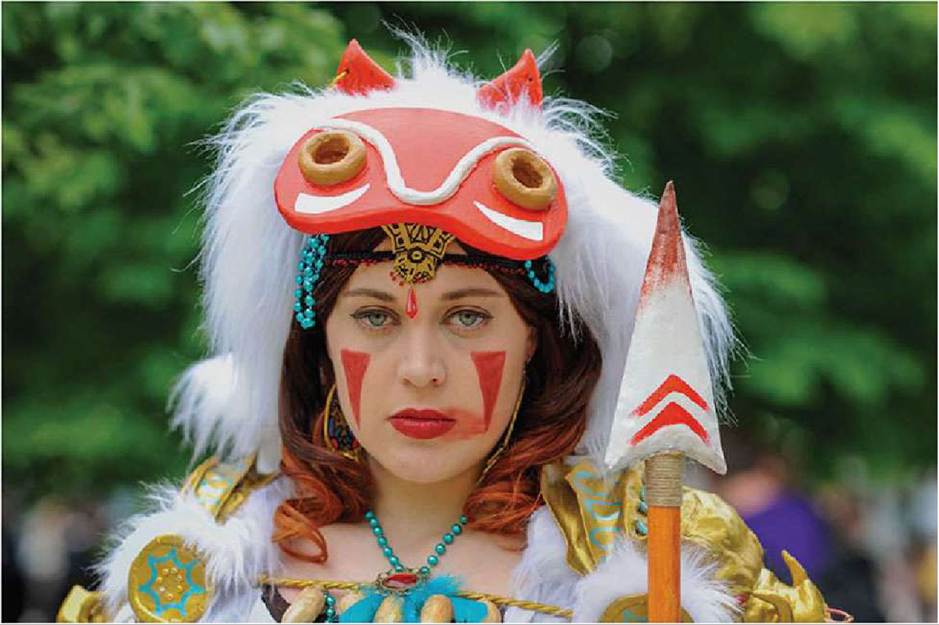
A woman dresses as Princess Mononoke, a character from Hayao Miyazaki's film that draws on Shinto beliefs and legends, at the 2017 MCM Comic Con in London.
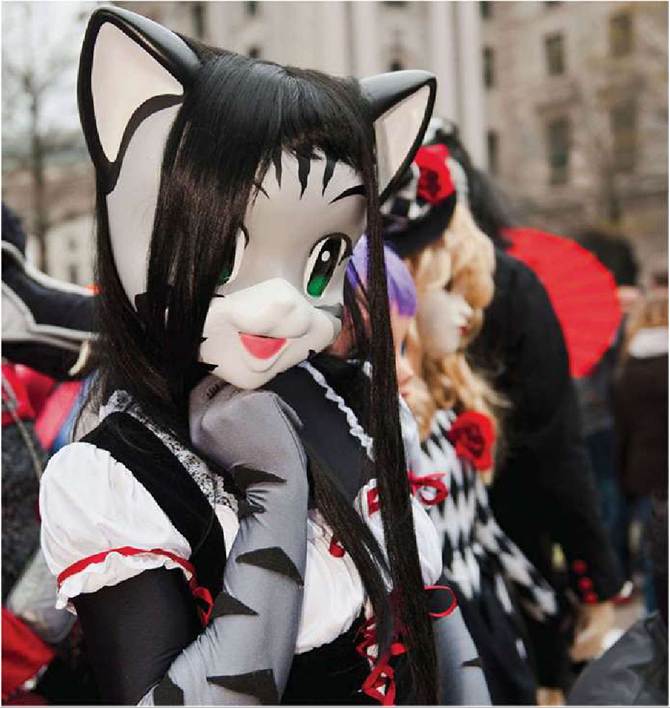
A participant in the annual Sakura Matsu ri festival in Washington, DC, dressed as an anime character.