The Church
Christians do not live the Christian life in isolation. Instead, their faith and baptism unite them with all other believers. In its most basic sense, the Church is the sum of all believers, but most Christians believe that the Church is far more than this.
Following Paul, they understand the Church to be the “body of Christ,” a body whose diverse members are unified by the Holy Spirit: “For just as the body is one and has many members, and all the members of the body, though many, are one body, so it is with Christ. For in the one Spirit we were all baptized into one body—Jews or Greeks, slaves or free—and we were all made to drink of one Spirit” (i Corinthians 12:13).VOICES:
An Interview with Terrie M. and Father Art
Terrie M. is a member of a Roman Catholic church in Sacramento. Father Art is one of three priests who serve its nearly 3,000 members.
How does the Roman Catholic Church stand in relation to other Christian churches?
Terrie: Some people mistakenly make a distinction between “Catholics” and “Christians,” so I want to begin by saying that to be a Catholic is to be a Christian. We share with other Christians our belief in Jesus as Lord. Like other Christians, we believe that salvation comes through faith. We Catholics also believe that God’s love and compassion are boundless and given to all, and so we cannot say that the Roman Catholic Church is the only path to salvation.
Father Art: We share with other Christians our reverence for Sacred Scripture, the inspired word of God, but we have equal reverence for Sacred Tradition, the handing on to each new generation of the wider reality of all that the Church is and believes—that is, its doctrine, life, and worship. The Church’s teaching authority [Magisterium], guided by the Holy Spirit, is both the servant and the authentic interpreter of the word of God revealed in Sacred Scripture and Sacred Tradition.
This authority, exercised in the name of Jesus Christ, has been entrusted to the bishops in communion with the Bishop of Rome. Catholics grieve that not all Christians share this belief, but I know that all Christian churches recognize some form of tradition and teaching authority, as well as the authority of Sacred Scripture. Our sacred task is to pray and to work for that unity of all Christians desired by Jesus.What is the great problem of human existence?
Terrie: The great problem we face as human beings is sin, which separates us from God and ultimately results in death. We come into this world, not evil, but certainly with the ability to sin as part of our human condition. Much suffering is caused when we make a choice to live for ourselves. But we are also born with God’s grace, an unmerited love that is given freely. Reconciliation is possible for all, and there is nothing that cannot be forgiven. Through the love of God through Christ Jesus, even death has been conquered and the original goodness of humanity is restored.
Father Art: Sin not only separates us from God, it prevents us from being all that God intends us to be. We are justified before God thanks to the gratuitous gift of God’s grace in Jesus Christ, crucified and risen, given us by the Holy Spirit at baptism. By the gift of God’s grace, we are enabled to live lives of faith expressed in love.
Does being a Roman Catholic give you a heightened awareness or a different way of looking at reality?
Terrie: My reality as a Catholic is grounded in Christ’s teaching that we must love and live for each other. We do not go it alone. It is this knowledge and awareness that helps me see that the joys and challenges of life are navigated together. It is perhaps in the celebration of the Eucharist that I am most aware of my union with others, for this ritual is not so much about eating as it is about sharing—our stories, all that we are, and all that we have.
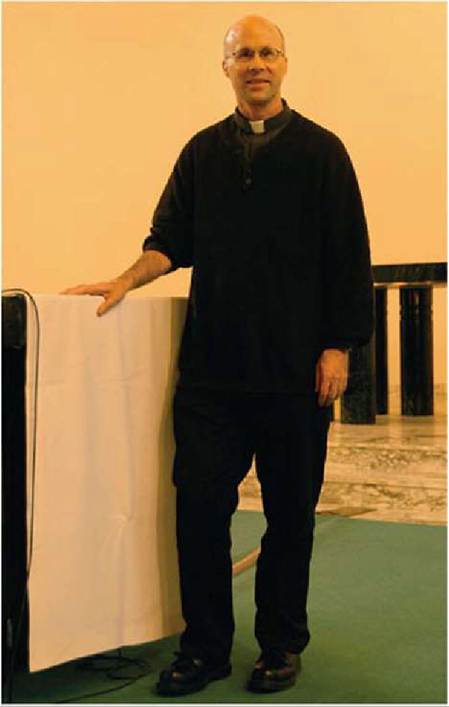
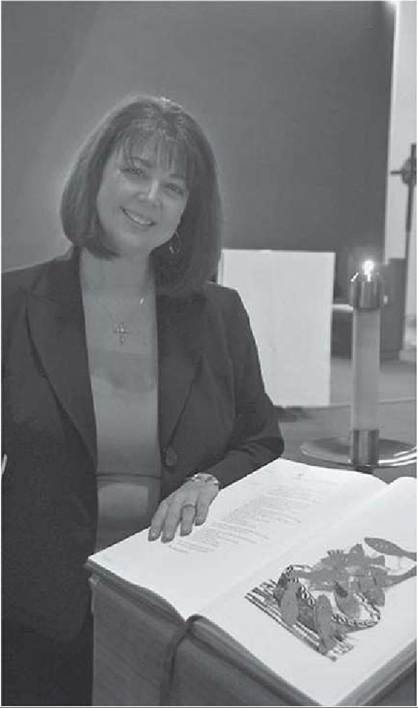
Father Art and Terrie M.
Father Art: Yes, Christ is made manifest to us in the liturgy and the sacraments, and especially in the Eucharist. His presence there heightens our sensitivity to his presence throughout the world, in everyday life, in our work, and in our relationships, so that every moment and every situation becomes an opportunity for praise and worship and for sharing our joy with others.