The Major Festivals
At the core of this system of seasonal religious observances are five major festivals, all linked to each other and to the cycle of nature—Rosh Hashanah, Yom Kippur, Sukkot, Pesach, and Shavuot—as well as minor festivals throughout the year.
Each major festival is biblical in origin, and on each of these occasions Jews are commanded to cease working and devote themselves to prayer. That said, each major chag (Hebrew, “sacred occasion”) is as individual as the season it celebrates and the ritual function it performs.VISUAL GUIDE
Judaism
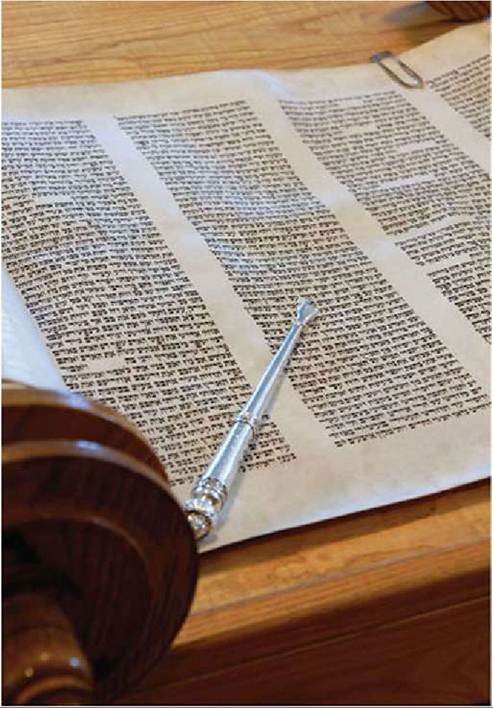
The Torah scroll is placed on a table where the reader will use a yad (a pointer) to read each word aloud.
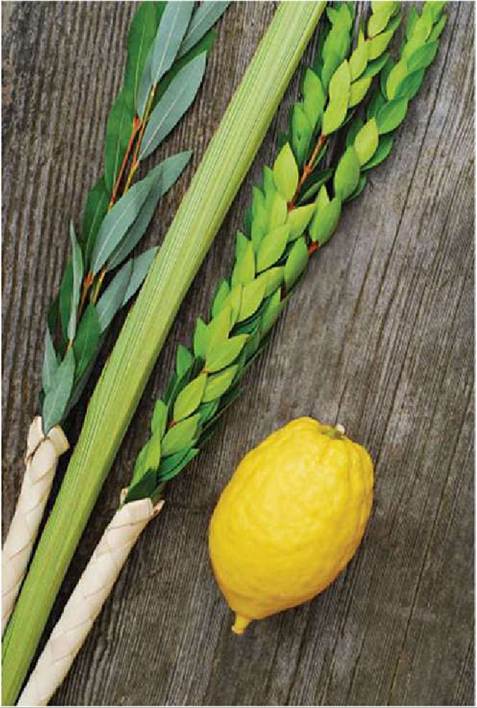
The palm branch, the willow, and the myrtle make up the lulav; the citron and the lulav are held together during Sukkot prayers.
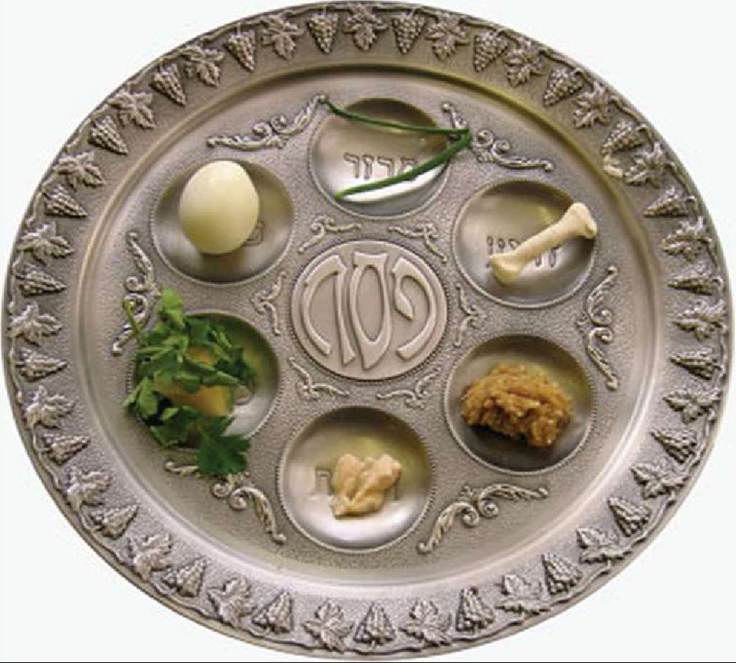
The Passover plate is prepared for the Seder, with an egg, a shank bone, parsley, chives, and bitter herbs.
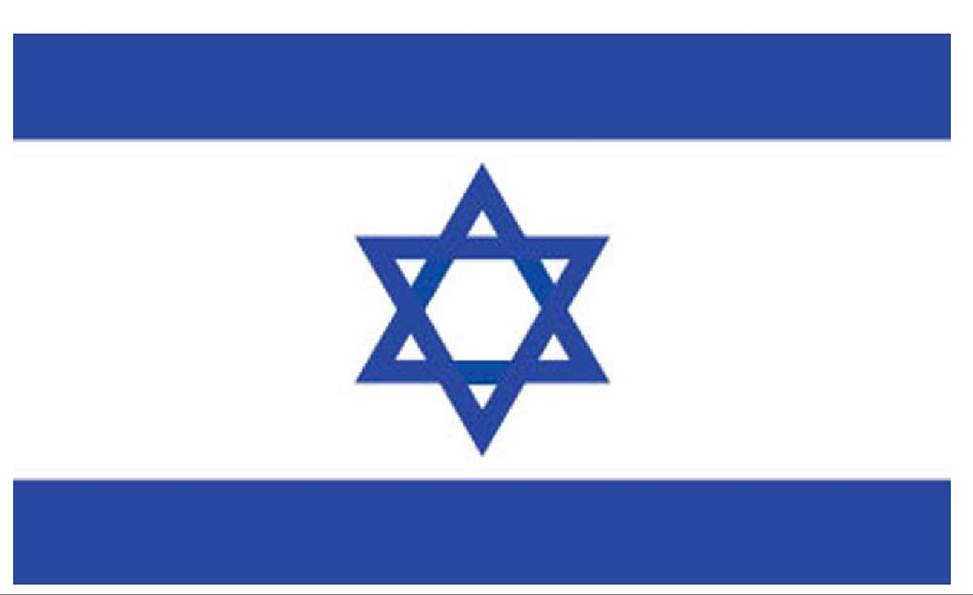
The Star of David is a medieval symbol of Jewish identity placed in the center of the flag of Israel.
Rosh Hashanah
Commonly referred to as the Jewish New Year, Rosh Hashanah is traditionally celebrated for two days at the beginning of the month of Tishri (September-October), and it is regarded as both a solemn and joyous occasion. The year begins with a period of self-reflection, signaled by the blowing of a ram’s horn (Hebrew, shofar) during the synagogue service. The sound of this instrument is designed to awaken the conscience of the worshiper to the need for repentance and reconciliation with God.
For that reason Rosh Hashanah is referred to in the liturgy as Yom Hazikaron, or the Day of Remembrance. At the same time, the mood created during the two days of Rosh Hashanah is generally hopeful, and it is customary to eat a dish of apples and honey as an expression of hope that the coming year will be one of sweet fruitfulness and fulfillment. On this occasion, it is also customary for Jews to greet each other, at the conclusion of religious services, with the words I’shanah tovah tifcatevu—“may you be inscribed for a good year.” This saying alludes to the ancient belief that, during the ten-day period between Rosh Hashanah and Yom Kippur, God writes the names of those who will live for another year in a “Book of Life.”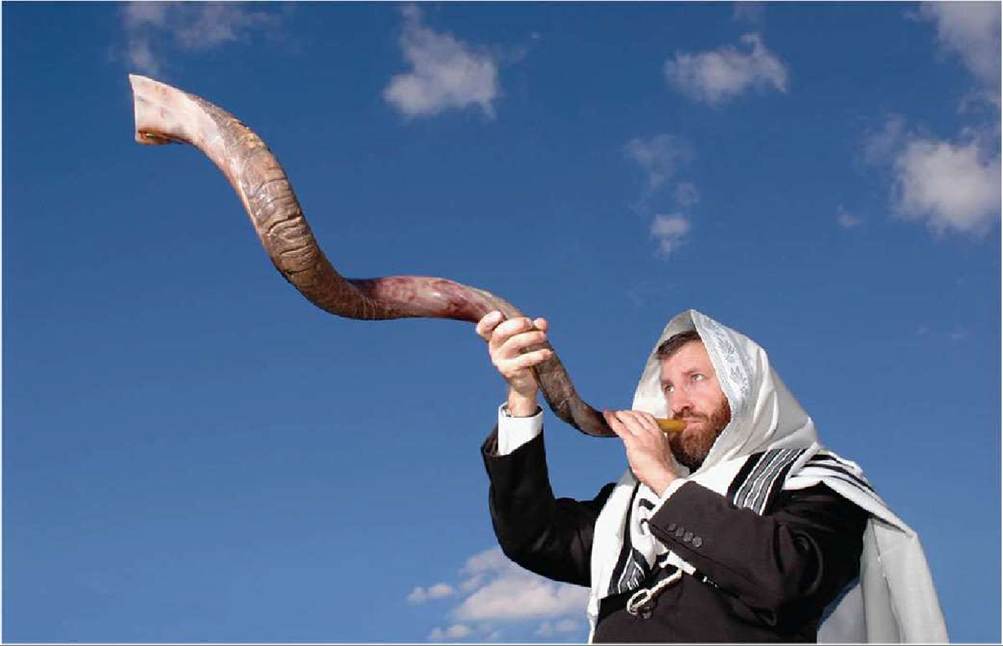
Covered in a large tall it, this Yemenite Jew blows the shofar on Rosh Hashanah.
Yom Kippur
Also known as the Day of Atonement, Yom Kippur is the most solemn day in Judaism’s sacred calendar and its most important fast day. The purpose of both the dusk-to-dusk fast and the penitential prayers that are recited on Yom Kippur was made clear by the rabbis centuries ago: “For transgressions against God, the Day of Atonement atones; but for transgressions of one human being against another, the Day of Atonement does not atone until they have made peace with one another” (Tractate Yoma 8:9). For repentance (Hebrew, teshuvah) to be effective, some restorative action must accompany prayer and self-examination. As a result, the liturgy for Yom Kippur asks forgiveness for all the sins that people are likely to commit against one another, as well as all the acts of defiance that people are likely to display toward God. These confessional prayers, which are recited throughout the day, are collective expressions of guilt and remorse (“Our father, our King, we have sinned before You”). But although it is the norm in Judaism to pray as a part of a community, each worshiper is nevertheless expected to internalize the act of repentance and strive for reconciliation with neighbors and with God.
On Yom Kippur a number of restrictions, in addition to fasting, are imposed on observers. Thus, in Orthodox communities, it is customary for married couples to abstain from intimacy, for men to wear white garments (symbolic of purification) to synagogue, and to neither shave nor bathe (as if one were in mourning). In addition, no work of any kind may be performed on Yom Kippur. People who are ill, children under thirteen years of age, and nursing mothers are generally exempt from fasting and other restrictions.
Video: Jewish High Holidays
[Please note: You must be using an online, browser-based eReader in order to view this content.]
Sukkot
Five days after the conclusion of Yom Kippur, Jews undertake a week-long fall harvest celebration known as Sukkot (“booths”). As with any harvest festival, Sukkot displays symbols of the season, the most important being the palm frond (Hebrew, lulav), the citron, and leaves of the willow tree and the myrtle. The sukkah—or temporary hut, from which Sukkot derives its name—is adorned with these plants, and its roof is left partly open to the sky. During the seven days of this holiday, Jews are encouraged to eat and sleep in the sukkah, so as to reenact, symbolically, the biblical Exodus. Sukkot thus becomes one of three festivals (the other two being Pesach and Shavuot) that recall the Exodus narrative.
It is traditional religious practice to attend synagogue during the first two days and the last two days of the festival, offering thanksgiving prayers attuned to the fall season. The biblical book of Ecclesiastes is read on the Sabbath of Sukkot, highlighting the festival’s themes of the passing of the seasons and the providence of God. At the conclusion of Sukkot, there is an eighth day of prayer and celebration, known as Shemini Atzeret (or “the Eighth Day of Assembly”).
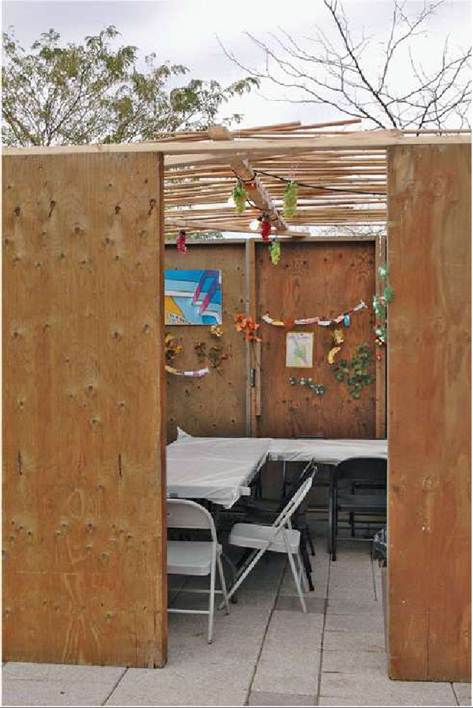
A decorated sukkah, ready for a midday meal.
Traditionally, Jews living outside Israel divide up Shemini Atzeret into two days, with the second day referred to as Simchat Torah (Hebrew, “Joy of the Torah”); on that day, the annual reading of the first five books of the Hebrew Bible comes to an end, and the cycle of weekly readings begins again.
In Israel, and in many Reform congregations, Shemini Atzeret and Simchat Torah are combined into a single day, during which the “gift” of Torah is celebrated.Pesach
More commonly known as “Passover” in English-speaking countries, Pesach is the second of three pilgrimage festivals, the first being Sukkot and the third being Shavuot. During ancient times, Jews made a pilgrimage to the Temple in Jerusalem to offer prayers and animal sacrifices to God. With the Roman destruction of the Second Temple in 70 ce, the practice of celebrating the Exodus from Egypt then shifted exclusively to the synagogue and to the home.
It is in the home that Jews gather on the first two nights of this week-long festival to recount the Exodus stoiy and to partake in a ceremonial meal known as a Seder—a practice that may well have begun in biblical times.
Like Sukkot, Pesach is celebrated for either seven or eight days during the month of Nisan (March-April). The first two and the last two days are subject to the same restrictions that govern any chag—no work and limited travel. In addition, however, Pesach imposes a dietary requirement: no foods containing yeast may be consumed during this period (reflecting the fact that Jewish slaves, escaping from Egypt, had no time to allow their bread to rise). Most observant Jewish households rid the home of all foods that contain leavening agents and prepare for this occasion by either boiling dishes and silverware or using a separate set of dinnerware reserved for use on Pesach alone. The dietary rules, collectively known as kashrut, are fundamentally important to Jewish practice, as the number of foods sold in supermarkets bearing a “Kosher for Passover” label demonstrates.
Observance of Pesach begins in the evening in the home, where the Seder is celebrated with family and friends, followed the next morning by a festival service in the synagogue. The Seder consists of two rituals in one: a meal, featuring biblical and seasonal foods that reflect the Exodus story, and a liturgy, found in an ancient text called the Haggadah (Hebrew, the “telling”).
The Haggadah contains both the story of Israel’s escape from Egypt and a collection of hymns and songs and rabbinic commentaries in praise of God, who made that deliverance possible. One of the goals of this ritualized meal is to leave each participant in the Seder with a sense of engagement with the enslaved generation that witnessed not only the liberation from bondage but also the giving of the Torah at Mount Sinai.Because the Pesach Seder is a family event, children play a prominent role by being given questions to ask, songs to sing, and stories to listen to. During the ceremony that precedes the meal, the prayer leader takes a piece of matzah (a type of unleavened flatbread that, according to biblical writers, the escaping Israelites baked in haste while fleeing Egypt) and breaks it in half, hiding one half of this piece so that children can find it by the end of the meal and exchange it for a gift.
In addition to matzah, other foods displayed or consumed during the Seder meal include bitter herbs (a reminder of the bitterness of slavery); a mixture of wine, chopped nuts, and apples (symbolically representing the mortar used by Israelite slaves to build cities and pyramids); a roasted lamb shank bone (recalling the sacrifice of lambs by the Israelites before their departure from Egypt); and a roasted egg, a green vegetable (usually parsley), and an additional herb or vegetable. These items all reflect the ancient agricultural context of this celebration. Finally, participants consume four small symbolic cups of wine during the Seder meal, each serving as a reminder of the many blessings God bestowed upon ancient Israel and continues to bestow upon the Jewish people. A fifth cup is set aside for the prophet Elijah, whose symbolic presence at the Seder represents the hope that a messiah will someday appear and bring peace and justice into the world.
Shavuot
The last of the three pilgrimage festivals is Shavuot (Hebrew, “weeks”). Between the second day of Passover and the first day of Shavuot, it was the practice in biblical Israel to bring a sheaf of new grain to the Temple, and an obvious connection exists between this festival and the later spring harvest.
However, during the rabbinic era, Shavuot became associated with the giving of the Torah on Mount Sinai, and from that moment on Shavuot became a part of the ongoing liturgical reenactment of the Exodus that we have traced through Sukkot and Pesach. Given this new historical association, we can understand why the rabbis decided that the high point of the synagogue liturgy for Shavuot would be the public reading of the Ten Commandments.Traditionally, Shavuot is celebrated for two days (the sixth and seventh of the month of Sivan [May-June]). It is common practice on Shavuot to decorate the synagogue with flowers and to serve meatless meals with honey as a key ingredient—the idea being that the reading of the Torah should be sweet upon the lips. Also common is the public reading of the book of Ruth, which tells the story of a young Moabite widow who is welcomed into Israelite society and who, centuries later, became the prototype of the ideal convert to Judaism. Finally, there is a custom of staying up the entire first night of the chag for the purpose of studying some portion of the Torah.