THE MITHRAS LEGEND
The story behind the salvatory activity of the god is very rarely addressed in any written sources, and we are dependent on the reliefs for our understanding of the legend. These reliefs are, particularly in the Rhine and Danube provinces, veritable “picture books”, which we unfortunately peruse with more curiosity than real understanding.
The series of images illustrating Mithras’s life and works begins, as far as we can tell, with the birth of the deity. The rare literary testimonies and the inscriptions uniformly support our interpretation by explaining that Mithras is born from a rock (CIMRM 2007; cf. Vermaseren 1951). Numerous images show him emerging from the cliff with both arms raised (see Fig. 19.4). The birth of Mithras is, together with the bull-slaying scene, the most frequently depicted event, either as an iconographic element in a relief or as a motif of a separate sculpture. The frequent depiction of the birth marks it out as key factor for the subsequent career of the deity and thus for the salvation of the individual initiate.
Most commonly, Mithras emerges from the rock in the shape of a youth. A relief from Trier (Germany), for instance, depicts him as a child. The message is that whatever Mithras is and can do, these faculties have been with him from the first moment of his existence. From his very birth he is lord of the world, cosmocrator. With one hand he moves or supports the band of planets circling around the cosmos; with the other, he holds a globe that also symbolizes the cosmos.
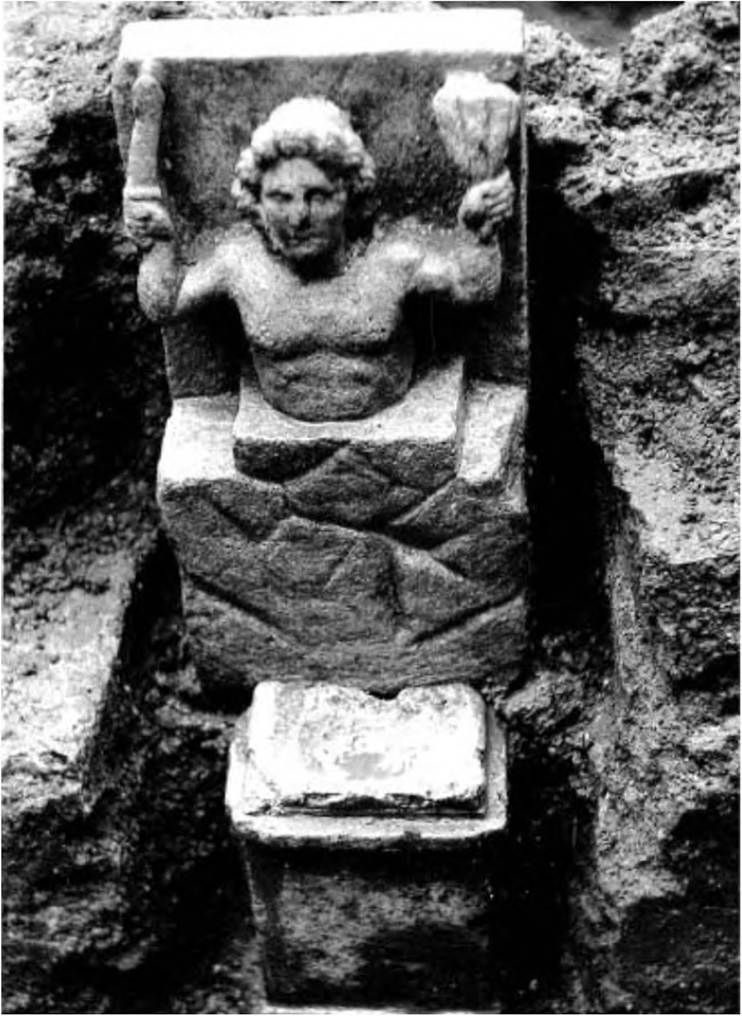
Figure 19.4 Mithras emerging from a rock. © Manfred Clauss.
In images representing the water miracle, Mithras is shown seated on a block of stone, aiming an arrow at a cliff face rising behind a kneeling figure. The water miracle and the ritual meal are the two elements of Mithraism that display the most obvious parallels to Christianity, a religion that was spreading rapidly at the same time as Mithraism.
The concepts in both religions appear to have roots in shared traditions assigning water a fundamental role in the well-being of nature as well as mankind. Mithras and Christ embody, each in his own way, this vital as well as symbolic role of water.The importance of water for a wide variety of ritual activities is documented by the proximity of many sanctuaries to rivers or sources. The first Mithraeum in Ptuj (Slovenia) had an associated spring which was located at a distance from the sanctuary itself. When a second temple was built, this was done directly at the spring, which was integrated into the new sanctuary.
The bull-slaying episode, the culmination of the activity of the deity, is preceded by a lengthy struggle in which Mithras and the bull are almost evenly matched. Since the god can only complete his soteriological mission after a protracted struggle, the various phases of the fight with the bull can be illustrated in a variety of ways in the image-rich Rhine and Danube reliefs. First one sees the peacefully grazing bull, before he has been caught and carried away by Mithras. In no way are the depictions of these scenes regulated by a fixed monographic canon. One row of images shows Mithras riding. This is a motif that one finds particularly in the lower Danube area; of the approximately forty preserved rider images more than three-quarters come from this area. The reason may be the tradition in this area for depicting and venerating so-called Thracian riders (Kazarow 1936).
The struggle with the bull is an important element in ancient myth. People, heroes and gods fight with animals. Again and again the figure of the bull is central to such myths, as exemplified from regions as diverse as Egypt, Anatolia and Greece. The identification of the bull with fertility seems to be an ancient, underlying constant in these conceptions.
Of all the deeds associated with Mithras, the bull-slaying or tauroctony is the most important. It achieved a canonical status that meant that no Mithraeum could be without a bull-slaying image.
Although there are numerous differences in detail, the main theme is endlessly reproduced. Under the dome of the cave, Mithras forces the mighty animal into submission; he kneels triumphantly with his left leg on the back or flank of the bull, and uses his nearly extended right arm to force the beast down to the ground. His left hand grabs the bull by the nostrils and forces up its head in order to diminish its powers; his right plunges a dagger into the bull’s neck. With a death rattle the bull lifts its tail one last time and then expires. Conquest characterizes the god; invictus, “the unconquered”, is the one lasting epithet affixed to him.This bull-slaying should not be understood as the annihilation of the beast, but as an act of transfiguration and transformation. The image denotes this by placing a cluster of grapes under the wound on the bull’s neck, or by letting the tail of the animal end in a spike or bundle of spikes. Magical powers emanate from the bull and explain the presence in the image of a dog, a snake and a scorpion which all crowd around the dying animal. This power was associated particularly with the blood, skin, semen and tail of the animal (whence the spikes). The image is not one of death, but of life reborn from death. The bull is accepted just as the group accepted him. Presumably some of the rituals could be experienced as strange and forbidding, but they were experienced with all the emotional intensity that a group can muster. Whatever the novel experience that confronted him, the initiate encountered them in a social context that may have been more intense than that of other mystery religions, considering the small size of the Mithraea. The fact that a successfully expanding religion after two centuries retained the small-scale sanctuary is evidence that the feeling of belonging to a small group was an important part of the attractiveness of the cult.
Church Father Justin, in 150 CE, commented on the similarity between the Christian Eucharist and the ritual meal of the Mithras cult.
First he describes the Eucharist: nourishment for the flesh and blood of the believer is consecrated by means of the Eucharistic prayer and is thereby transformed into the flesh and blood of Christ. After having quoted the words of consecration, “Do this in remembrance of me, this is my body” and “this is my blood”, he explains that evil demons had introduced a similar rite into the mysteries of Mithras (Justin Apologia 1.66; cf. Clauss 1986).Such similarities should by no means be explained as imitations by one of the other. Sacrificial gifts of bread and wine can be found in nearly all cultures of antiquity; the sharing of a meal to connect the members of a religion with each other and with their deity or deities is a phenomenon found in many religions (Kane 1975). If Christians could perceive the ritual meal of the Mithras initiates as a caricature of their own mysteries, it is because the two were very similar to each other, and may even have had the same words of consecration.
The most impressive depiction of a ritual meal comes from Konjic (Bosnia- Herzegovina; see Fig. 19.5). Columns on both sides indicate that we should conceive of the entire procedure as taking place in an enclosed space. We see a pater and a heliodromus, the two highest priestly grades, reclining for a meal. Both are lying on the skin of a bull, the symbol of Mithras’s victory, the event that is to be celebrated. These two figures are nearly a head taller than the other people presented in the image, and are thus set apart as the most important actors. They rest their left arms on the couch, as is usual when eating, while their right arms are raised in a gesture of blessing. They appear to be reciting sacred formulae over the sacrificial gifts on the three-legged side table. The small table to which the viewer’s attention is directed appears as if seen from above, ignoring the rules of perspective. On the table lie round breads marked with indentations in the shape of a cross which makes it easier to break the loaves. To the right and left there are priests of lower ranks; a “raven” and a “lion” can easily be identified.
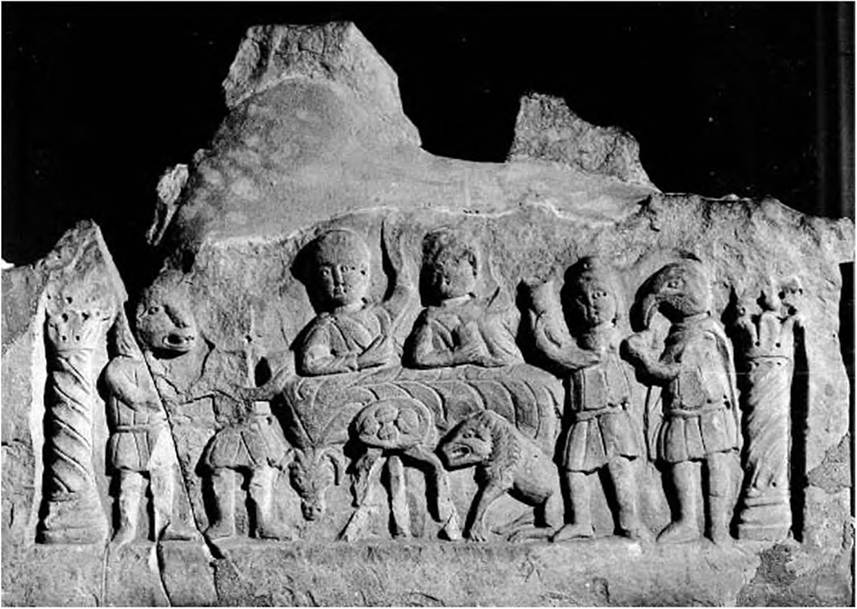
Figure 19.5 Ritual meal of the Mithras initiates. © Manfred Clauss.
The overall layout of the Mithraeum indicates the importance of the ritual meal for the cult as a whole. The main room of the Mithraeum is basically a “dining room”. It looks like a triclinium, the traditional Greek and Roman dining room with couches on three sides. One of the three sides, however, is the location of the image of the deity, signalling that Mithras is the host of the feast.