The Variety of Modern New Religions
There is therefore, a considerable continuity between the new religions that emerged or flourished in post-Second World War America, and those that appeared in earlier generations.
Indian thought found new vehicles in the Divine Light Mission of the Guru Maharaj-ji, Maharishi Mahesh Yogi and Transcendental Meditation, A.C. Bhaktivedanta Swami (also known as Srila Prabhupada) and the International Society for Krishna Consciousness (ISKCON), and later Bhagwan Shree Rajneesh and the Neo-Sannyas Movement (the ‘Orange People’ or Rajneeshism). Christian-originated movements were to arise from the radical conversionist tradition of American fundamentalism in the Jesus People and the more notorious Children of God (Family of Love). And Christian millennialist thought was to be reimported in the unusual form of a syncretic sect which combined Judeo- Christian adventism and Far Eastern Shamanic, Taoist and Buddhist thought in the form of the Unification Church of the Revd Sun Myung Moon (the ‘Moonies’).From the 1950s, Zen Buddhism had found a small following among intellectuals and bohemians (‘the beatniks’ or ‘beat generation’), and continued to thrive, if only among a rather small group of such people willing to suffer the rigours and austerity of Zen Buddhist discipline and practice and the rather arid intellectualism of its philosophy. The postwar occupation of Japan was to result in the return ofGIs, often with Japanese wives, who had converted to the new religion of Nichiren Shoshu (Soka Gakkai), a Mahayana Buddhist heresy.
These movements were not, of course, all of a piece. Even among the Indian imports there were major differences. Transcendental Meditation provided only a meditational technique for the vast majority of its clientele. Customers would attend one or two preliminary orientation sessions, then a brief initiation at which they were given a mantra.
Thereafter they were encouraged to meditate for twenty minutes twice a day. There was little expectation of any continuing involvement with the organisation or other adherents of the practice. The Divine Light Mission too offered a meditational technique, but also sought to encourage its followers, the premies or ‘lovers’ of Guru Maharaj-ji, to live communally, sharing a life of devotion to their guru, although often taking jobs outside the commune. Even more demanding as a way of life was that of devotees in the International Society for Krishna Consciousness, who adopted Indian dress, vegetarian food and a rigorous and ascetic mode of life in which sex, alcohol and tobacco were eschewed. Males were required to shave their heads but for a topknot by means of which Krishna would pull them up to heaven. Devotees rose before dawn in communal temples, for a demanding round of rituals before the temple deities, and sankirtan—chanting and witnessing in public—or street solicitation of funds in return for magazines, incense orrecords. While the Transcendental Meditation follower committed only the equivalent of one week’s pay and forty minutes a day to the movement, the Krishna devotee committed himself twenty-four hours a day, subordinating his identity totally to its expectations.
The Jesus People and the Children of God involved a synthesis of lifestyle elements of the youth counter-culture—such as long hair, hippie dress and speech, rock music, and an emphasis on love and spontaneity—with American fundamentalism, a belief in the literal truth of the Bible, an expectation of imminent apocalypse and the Second Advent of Christ, ajesucentric faith, and a commitment to the notion of the Holy Ghost still working in human lives as displayed through such signs as glossolalia, or ‘speaking in tongues’. While the Jesus People (a disparate range of groups and movements which flourished in the late 1960s and early 1970s and was largely confined to North America) rose rapidly, peaked quickly and then virtually disappeared by the late 1970s, the Children of God were to survive, albeit in a rather different form.
The Children of God emerged in the late 1960s in America as a more radical and zealous wing of the Jesus People. Its leader, Moses David Berg, a former itinerant preacher, was considerably older than most of his followers. Finding his message of cursing the apostate, materialistic worldly system and its compromising churches, and of the imminence of the Apocalypse and Christ’s return eagerly accepted by many of the young people who came to hear him, Berg came to view himself as God’s prophet for the End-time. He took a new young wife and began to introduce many new elements into the movement’s system of belief and practice, including a belief in spirit guides, in Gadaffi as the probable Antichrist, in the likely return of Christ by 1993, and in the freedom of‘spiritual Israel’, i.e. himself and his followers, to do ‘all things’ without sin, including engaging in increasingly indiscriminate sexual relationships.Prominent among the new religions, however, was a range of groups and movements which—although hinted at in the structure and philosophy of Christian Science and the New Thought Movement— represented a relatively new departure. They diverged from traditional religions in being largely indifferent to the existence or will of any creator God. Rather, they construed the individual as a god in embryo or a spiritual being constrained by material or psychological bonds, and it was from ideas of psychological and psychosomatic therapy that such movements developed.
The Psychoanalytic Movement was the main progenitor ofmany of the psychological new religions. The more independently minded associates of Freud often departed from psychoanalytic orthodoxy by travelling in a more spiritual direction. Jung displayed a range of occult interests; Reich investigated forms of energy not located by conventional science, and the UFO phenomenon, as well as developing a form of therapy predicated on the assumption that psychological difficulties and traumas were absorbed into body musculature and would be released by physical as well as psychological techniques.
Otto Rank shifted the locus of the major psychological trauma affecting adult behaviour back from the Oedipal conflict and other aspects of infant-parent interaction, to the trauma of birth itself. This development was crucial, because once the journey back had begun there was no intrinsically logical place to stop. Dianetics—the forerunner to Scientology—was to shift a stage further back from the birth trauma to traumatic experiences of intra-uterine life (the main one revealed by early Dianetics enthusiasts apparently being attempted abortion by the mother).Dianetics was founded by L. Ron Hubbard, a pulpfiction writer who had dabbled in hypnotherapy and the American occult underground. Employing regression and abreaction techniques adapted from medical hypnosis, Hubbard regressed his clients to earlier and earlier points in the life cycle, back to conception itself. Thereafter, although not initially encouraged by Hubbard, clients (known as ‘pre-clears’) began to produce ‘memories’ which they believed could not have come from this life at all. Thus a conception of reincarnation was combined with psychologically-oriented methods, and paved the way for a new religion, Scientology.
Scientology possessed a number of features in common with the other psychological religions and with related movements which offered a means of salvation from life’s vicissitudes, even if they lacked overt spiritual reference. They shared a conception of man as perfectible. Human beings are believed to possess far greater potential ability, awareness, creativity, insight and capacity for emotional expression and experience than they currently display. Dianetics, for example, argued that the average human being used less than 10 per cent of his mental powers.
Through social conditioning and painful social interaction people lose their ability to manifest all their potential. They repress their emotional aspect, learn to act through the medium of constricting social roles and lose their spontaneity.
However, they contain within themselves all that is necessary to be whole, to achieve their potential. Instead of adding anything, the individual may rather need to shed the constraints or impediments that have been acquired during the course of one or many lifetimes. By the practice of some technique, or series of techniques, often organised in a particular ritual format or training, the individual can break down conditioning and release the hidden powers beneath.Just as had earlier been the case with Christian Science and the New Thought Movement, Scientology was to give rise to a myriad of smaller heretical movements and groups founded by individuals unwilling to subordinate themselves entirely to Ron Hubbard’s authoritarian direction, and who believed that by synthesis or through their own insights or experiments, they too could develop such ideas and practices further. One of the most successful of such offspring was Erhard Seminars Training (or est) which synthesised ideas drawn from Scientology with practices from Gestalt therapy and a presentational technique drawn from Mind Dynamics, influenced in turn by Silva Mind Control, which reached back to New Thought and Coueism for inspiration. (Coue’s most influential contribution to psychological development was probably the phrase—to be repeated several times every morning—‘Every day, in every way, I get better and better’.) Est in turn gave rise to various other practices offering a slightly different package such as Lifespring, Actualizations and Insight.
These new psychological religions and related salvational systems adopted not only contemporary psychological ideas and practices, but also contemporary organisational structures and modem marketing methods. They promised not calendrically based collective worship, but rather individually-tailored, or consumer-convenient therapy, training, counselling or courses, available through weekend or evening sessions at a fixed fee and with cash discounts. The salvational commodity was purveyed through permanent outlets in major metropolitan locations, or by travelling teams which set up in large city centre hotels, offering their services to 150 or 200 clients at a time.
The major suppliers organised themselves as multinational corporations, often developing considerable expertise in international financial transfer and in corporate and public law. They marketed a particular range of brand-identified salvational services, striving to retain customer loyalty often by differentiating their product into a series of stages constituting a career which would take a considerable investment of time and money to complete. Some clients would be encouraged to make their hobby into a vocation by volunteering time to recruit or service clients, or by taking full-time employment with the corporation; or clients might be encouraged to pursue their course through the hierarchy of training with the expectation that they would be able to recoup their investment on completion, through professional practice.
Such large corporate suppliers inevitably attempted to maximise control over staff and committed clients, giving them a sometimes somewhat authoritarian character. Others required less exclusive commitment, and marketed their salvational commodity through facilities which provided a location for many different ideas and practices.
A major role in this respect was played by the Human Potential Movement which was a diffuse and eclectic congeries of ideas and practices drawn from the Psychoanalytic heretics; massage and other physical practices; humanistic psychology (Gestalt, Encounter, Transactional Analysis etc.); the corporate major suppliers such as Scientology, Primal Therapy, Arica etc.; and a variety of other sources. These ideas and practices were made available through centres which offered a rotating programme of therapy and training to a shifting clientele which might sample from among the advertised range of one centre and then another, without any necessary commitment to any one system, practitioner or purveyor. The most famous centre in the Human Potential Movement was undoubtedly the Esalen Institute at Big Sur in California, but more modest endeavours could be found during the late 1960s, and early 1970s throughout America, and in the major European metropolises.
One way, then, of considering the new religions of post-Second World War America is in terms of their origins, i.e. whether they are derived predominantly from indigenous religious traditions, from imported religious traditions, or from essential psychological sources.
Figure 54.1: Origins of New Religions in Post- War America
Derivation Indigenous Imported
Traditions Traditions
Examples
Jesus People TM
Children of God ISKCON
Psychological
Scientology
est
Silva Mind Control
Inner Peace Movement Human Potential Movement
Rajneeshism
However, a classification in terms of origins can only take us a short way along the path to understanding such movements, their structure, functioning, development and sources of support. We can get somewhat further along if we conceive new religious movements as having three possible ways of orientating themselves to the world around them: they may reject that world, expecting or promoting its general transformation; they may embrace the world, accepting its goals and values, and promoting the means to cope with it more effectively; or they may merely accommodate to a world they view as potentially corrupting and dangerous, striving to cultivate their religious experience and heighten their religious sensibilities in an effort to provide a more effective example; in the world but not of it.
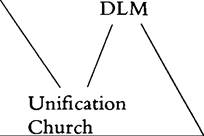
Figure 54.2: Orientations of New Religious Movements
World-rejecting
ISKCON Unification Church Children of God
People’s Temple
World-affirming
est
Inner Peace Movement
Human Potential Movement
TM
World-accommodating
Charismatic
Renewal
House Churches
Subud
These three orientations produce different structures and patterns of behaviour and collective functioning. While there are clear examples of each in the new religions, many new religious movements may combine elements of two or more orientations, or shift between one and another over the course of time.
The world-rejecting movement typically adopts a communal way of life, recruiting the young or other radically disaffected groups on the social margins. Its hostility to the surrounding society may breed a lack of respect for social norms, a willingness to lie or break the law in what is seen as a good cause. Because of the sharp break involved in the transition from the conventional world to that of the movement, recruitment often involves intense, concentrated pressure to convert, with a high level of emotional display, and often an attempt to isolate the new recruit for a period from family or former friends until he is firm in the new faith. Rejecting the wider society will normally entail an unwillingness to engage in conventional occupations, and economic support will therefore be generated by street solicitation, street sales, unemployment and welfare payments, and other means which minimise the involvement of members in conventional social activities. The sharp break with the former life of members will often be marked by a new name and by handing over all possessions to the communal fund.
The world-affirming movement typically organises itself as a commercial operation, recruiting those who have a substantial investment in or commitment to the prevailing order, but who feel they are failing to attain some of the valued goals and attributes which their society makes available. Their full powers and potential can be unlocked by some practice or set of techniques which can be purchased in the same way as other luxury non-durables and services, from a convenient city centre outlet. The adherent becomes only gradually more deeply involved in the group as he invests progressively more time and money, acquires the language and conceptual scheme of the salvational group and begins to view the world in terms of it, and then finds that the only people who speak the same language and share the same interests as him are other members. Most followers must therefore inevitably remain deeply involved in the wider society. They not only see the movement as a recourse to improve their success in, and enjoyment of the world outside, but also have to earn sufficient funds in that world to pay for the therapy, counselling or training that the movement provides. There is no sharp break therefore on joining the group, and assimilation into its world-view and thought pattern, into complete commitment, may be a quite gradual process.
The world-accommodating movement likewise provides a recourse for people who generally continue to live and work in the world. However, they turn to such a movement not in order to become more successful or less guilt-ridden, but in order to heighten their experience of the supernatural, the transcendental, the divine. They are spiritually oriented people, often already committed Christians in the case of Charismatic Renewal and the House Church Movement, who have found the conventional religious institutions lacking in warmth and zeal, and unable to provide a clear experience of the spiritual world. Through ‘speaking in tongues’ and similar activities, neo-Pentecostals can feel themselves to have experienced the power of the Holy Spirit in their lives, reinvigorating their faith, recharging them to return to the materialistic world outside, and revivifying their commitment to moral and religious standards regularly challenged and affronted in that world. A number of small, non-Christian groups would also seem to follow this pattern: the Aetherius Society, Subud and various forms of Gurdjieffian and Ouspenskian study, for example. In addition, many groups tend to develop more in this direction over the course of time, from an originally world-rejecting stance. Some parts of the Jesus People shifted in this direction, and it is arguable that parts of the Unification Church and ISKCON are doing likewise.
Moreover, since these ‘orientations to the world’ and the syndrome of characteristics associated with each of them (see Wallis, The Elementary Forms of the New Religious Life) constitute ‘ideal types’, analytical constructs for the purposes of clarifying major features and central tendencies, we should expect to find that many actual new religions will contain—at least for a while—elements of two or more orientations. This may, indeed, have decided advantages at least during a movement’s early years. The predominantly world-rejecting new religion risks completely alienating its social environment through the hostility it displays towards the wider society, and through its indifference to, or rejection of, normal social conventions. Such behaviour is likely to generate intolerable or at least very high levels of social control. This appears to have been what transpired in relation to the People’s Temple, Synanon, and to a lesser extent the Children of God in various locations. Intense rejection of the world also jeopardises recruitment as potential converts come to find the distance between their world, and the world of the movement, too great to cross. Economic support is also jeopardised as a decline in new recruits may entail a drop in goods and income brought in with them, and sympathisers are likely to be alienated by the blanket condemnation and hostility toward a world which they still inhabit, thus rendering them less willing to donate, or to do business with such a group.
The predominantly world-affirming movement, · with its very open boundaries, attracting in the public and requiring little initial commitment, risks the diffusion of its ideas and practices out through those boundaries, into the wider culture and other organisations beyond. Thus it risks the loss of any distinctive character for its salvational commodity as its ideas and practices are adopted by others and synthesised into quite different packages. Its clientele may therefore drop away as they find more or less the same commodity or service available elsewhere at lower cost.
The world-accommodating movement risks the classic problem of denominationalisation: the gradual attenuation of its distinctively enthusiastic character, and a loss of support as it becomes less clearly distinguishable from the established purveyors of salvation from which many of its followers originally came in dissatisfaction.
A new religion that can sustain elements of all three types may hope to attract three corresponding types of member. The now officially defunct Neo-Sannyas Movement of Bhagwan Shree Rajneesh, or Rajneeshism as it was called, may offer an example. Rajneeshism was founded in India in the late 1960s, but it was to attract a substantial American following, and in 1981 Rajneesh was to move to America, settling with a large number of his followers in central Oregon where he planned to found a large ‘sannyasin’ city.
Rajneesh preached a tantric-inspired philosophy which claimed that enlightenment came from acceptance and surrender to union with the cosmos. Achieving such a state involves ‘dropping’ the ego with its inheritance of social conditioning and patterns of learned belief, expectation and false needs. By total awareness of the present moment, by non-judgemental acceptance of oneself, one’s feelings and circumstances, the individual will awaken from sleep, from mechanically responding to stimuli, and begin acting in harmony with the universe, spontaneously and in love.
Rajneesh initially attracted spiritual seekers and hippies on the guru circuit in the Indian sub-continent, but by the early 1970s, he was also attracting large numbers of Human Potential Movement therapists and group leaders, and through them in turn, many of their clients.
The faithful were gathered together around Rajneesh at an ashram in Poona in India, and later at Rajneeshpuran in Oregon. There they developed a programme of Human Potential activities which made those centres among the largest of all remaining providers of this salvational service. Smaller centres were also established throughout Europe, America and Australasia. The most intensely committed lived in the ashram or centre, and this inner elite constituted the most world-rejecting element of the movement. Not only did they carry out necessary administrative and fundraising activities, but they also provided services and a role-model for less committed followers who continued to live in the world. Such people would remain in more or less conventional homes and jobs, but would visit the ashram or centre for a weekend or longer, to participate in activities there, revive their commitment, and return to the world with a strengthened vision of how life ought to be lived. Services were also provided through therapy, massage, group work and the like, for people with no great commitment to the Rajneeshee way of life, but who found in its facilities resources which equipped them better to cope with the conventional world.
Such a structure was particularly effective in that it provided a mechanism for supporting a world-rejecting elite from the gifts and fees of world-accommodating and world-affirming members and clients. It offered a graded, rather than entirely discontinuous pattern of entry from less committed client to totally committed and deployable member. It also provided a protective periphery of more conventional personnel to represent the movement and speak in its defence in the wider society (Wallis and Bruce, Sociological Theory, ch. 8).
More on the topic The Variety of Modern New Religions:
- The Delhi Sultanate, the Mogul Empire and the Modern States
- Conclusion
- The Cognitive (R)evolution: The End?
- What Was It? What Was It Called?
- CHAPTER 4 Illness as Divine Punishment: The Nature and Function of the Disease-Carrier Demons in the Ancient Egyptian Magical Texts
- The Nature of Qing Governance
- Impact of Stambheswari on Other Cultures