Chapter 1 Roxolana in Europe[88]
Galina Yermolenko
Roxolana in Western Europe
Rumors about Roxolana reached Europe some time by the late 1520s or 1530s, and certainly after her marriage to Suleiman in 1533 or 1534, which shocked both the Turkish and the European public.[89] The chronicles of the Italian humanist historian Paolo Giovio, such as Turcicorum rerum commentarius (Parisiis, 1531, 1538, 1539) and Historiarum sui tempores (1552), published in several European languages and particularly well known in numerous French translations and editions,[90] introduced to the western public the main players at the Ottoman court: Sultan Suleiman, his mother, “Rossa,” and Ibrahim “Bassa.” Giovio linked Roxolana to the 1536 execution of the Grand Vizier Ibrahim, stating that she hated Ibrahim for his opposition to her attempts to procure the throne for her son Bayezid (Bajazet).[91] This story, single-handedly invented by Giovio, was later appropriated by other European historians and chroniclers.[92]
By the mid-sixteenth century, there appeared western European imagined “portraits” of Roxolana.
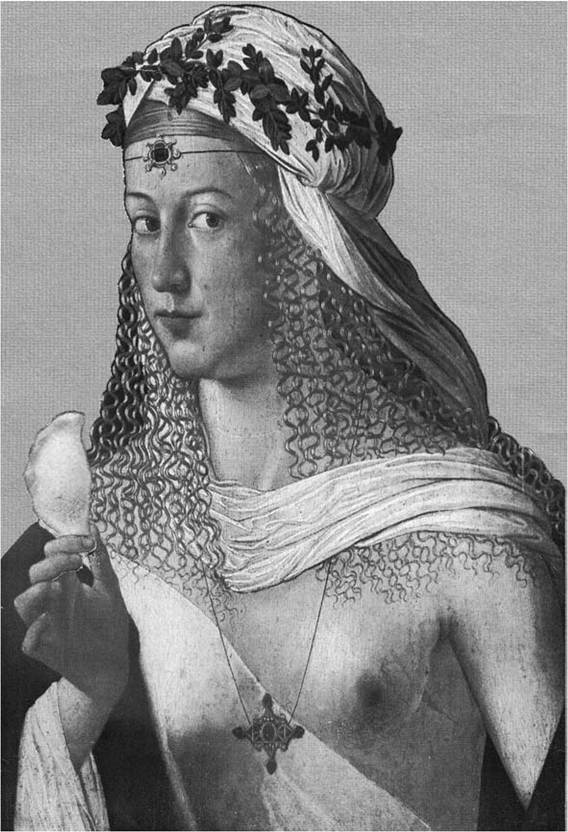
According to some sources, Venetians habitually decorated the walls of their palaces with such imaginary portraits of “la sultana Rossa.”[93] Among these was “La Sultana Rossa” featured on the cover of the present volume. This oil painting (ca. 1552) is attributed to Titian or Titian’s school,[94] and is presently located at The John and Mable Ringling Museum of Art, Sarasota, Florida, but it was originally owned by the Ricardi family in Florence.[95] Other early modern oils, drawings, and engravings portraying “Rossa Solymanni Vxor” [‘Rossa Solyman’s Wife’] are held in the museums of Florence, Vienna, London, and Paris. None of these portraits is believed to have been done from live Hurrem, as strangers were usually not allowed to see or to communicate with the imperial harem women. Some of these portraits may have been based on original Italian medals; others depicted imaginary beautiful women in exotic costumes. Yet such pictorial representations of Roxolana clearly indicated an interest toward the powerful sultana on the part of the early modern European public.But it was the shocking news of the 1553 execution of Prince Mustapha (the conventional western spelling of the Turkish name “Mustafa”) that made Roxolana a notoriously fascinating figure in the early modern West. Through the reports of western diplomats at the Sublime Porte, travelers to Turkey, and escaped captives, the news quickly reached the European continent. One source in particular played crucial role in disseminating the Mustapha story around Europe—Soltani Solymanni horrendum facinus in proprium filium, by Nicholas de Moffan, a Burgundian noble and erstwhile Turkish captive and prisoner.[96] Moffan put the wicked Roxolana (Rosa), whom he called the “vngratious,” “deuilishe,” and “pestilent” woman,[97] at the very center of the intrigue against Mustapha, accusing her of poisoning Suleiman’s (Solyman’s) mind with female artifices and sorcery. Moffan vividly described how the Sultan was watching the strangulation of Mustapha from behind a veil and even encouraged the mutes to finish off the resisting prince promptly, and how Gianger (Jihangir) stabbed himself to death out of sorrow.[98]
To demonstrate Rosa’s destructive effect on and abuse of the Ottoman laws, Moffan also recounted a story of how she tricked Solyman into marriage. She approached a Mufti (a chief Muslim juror) with a question of whether her erecting a mosque and a hospital for pilgrims would be profitable for her salvation. The Mufti replied that as the Sultan’s bondwoman (that is, his property), she would not be credited with all her good deeds; they would rather be credited to her master. At this reply, Rosa fell into sorrow, and was soon manumitted by the besotted Sultan.
Rosa’s next trick was to refuse the Sultan physical intimacy on the grounds that as a free woman, possessing free will, she would be committing a carnal sin by going to bed with a man. This rebuff added more fuel to Soliman’s burning passion for Rosa, and he married her in violation of the Ottoman tradition.[99]Moffan’s pamphlet became an instant hit; it was immediately reprinted by major European presses and translated into major European languages.[100] Equally influential in propagating the Mustapha drama, and hence the negative image of Roxolana, around Europe in the later sixteenth century were The Turkish Letters of Ogier Ghiselin de Busbecq.[101] Although Busbecq’s letters, eloquently written and replete with his erudite comments and sharp observations, were a far cry from Moffan’s misogynist diatribe, they uncritically transmitted to the West the Ottoman rumors about Roxolana’s witchcraft and her vicious plot against Mustapha.[102] Busbecq’s Turkish Letters were repeatedly reprinted and translated into several European languages in the course of the seventeenth century due to their enormous popularity with the European public.[103]
The Mustapha story shook the Western world to the ground and became one of the biggest sensations of the early modern age. It was retold and dramatized, often with embellishments and juicy details, in countless compilations—the Annales, Chronicles, Histories, Vitae, Vies, and Lives of illustrious ancient and modern people, styled after Plutarch’s Lives—that widely circulated around the European continent in various editions and languages. Among such works were the French “continuations” and revisions of Paolo Giovio’s chronicles (Histoires de Paolo Jovio, 1561, 1570, 1581)[104]; Bartholomaeus Georgievic’s De origine imperii Tvrcorvm (1560; 1562); Hugh Goughe’s The offspring of the House of Ottomano (1569/1570); Philipp Lonicer’s Chronicorvm tvrcicorvm (1578; 1584); Andre Thevet’s Les vraispovrtraits et vies des hommes illvstres (1584); Johannes Leunclavius’s Annales svltanorvm Othamanidarvm (1588; 1596); Jean-Jacques Boissard’s Vitae et icones svltanorvm Tvrcicorvm (1596); Richard Knolles’s The Generall Historie of the Turkes (1603); and Michel Baudier’s Inventaire de l'histoire generale des Tvrcs (1617).
Through these works, “Rossa” and “Roxolana” became household names across the European continent.Suleiman’s execution of Mustapha became an ultra-popular topic in sixteenth- and seventeenth-century European drama, spawning numerous French, Italian, and English tragedies: Gabriel Bounin’s La Soltane (1561); anonymous Solymannidae Tragoedia (1581); Georges Thilloys’s Solyman II (staged in 1608; published in 1617); Fulke Greville’s The Tragedy of Mustapha (1609); Prospero Bonarelli’s Il Solimano (1620); Antonio Cospi’s Il Mustafa (1636); Jean de Mairet’s Le Grand et Dernier Solyman ou la mort de Mustapha (1635); and Roger Boyle, Earl of Orrery’s The Tragedy of Mustapha (1668).
The fascination with this matter, with an added interest in the fate of Mustapha’s hunchback hal -brother, Jihangir (Cihangir, Gianger, Giangir, Zanger, Zeangir), continued well into the eighteenth century, in the tragedies of Francois Belin (Mustapha et Zeangir, 1705), David Mallet (Mustapha, 1739), Gotthold Ephraim Lessing (Giangir oder der verschmähte Thron, unfinished fragment, 1748), Christian Weisse (Mustapha und Zeangir, 1761), Sebastien-Roch-Nicolas Chamfort (Mustapha et Zeangir, 1778), and Louis-Jean-Baptiste de Maisonneuve (Roxelane etMustapha, 1785).[105] Even the eighteenth-century European opera took an interest in the Mustapha story, as can be seen from Johann Hasse’s Solimano (Dresden, 1753) and David Perez’s Solimano (Lisbon, 1757; revived in 1768).
The interest in the Mustapha story reflected the West’s fear of and fascination with the Ottoman Empire, feeding into the stereotypical images of the “cruel Turk” and the “lascivious Turk” that Europe conjured up in response to the Ottoman practices of fratricide (the custom of executing all the brothers and half brothers of a new sultan to prevent feuds between them) and polygamy.[106] Suleiman’s violent act against his own son and his excessive love for Roxolana gave the western world an opportunity to moralize on the tyrannical nature of the Ottoman system.
The issues of dynastic legitimacy and monarchic power were of paramount importance for the West, where several European courts were plagued by bitter dynastic disputes, such as the rivalry between the sons of Catherine de Medicis in France, or the Tudor dynastic struggle after the death of Henry VIII in England. Roxolana’s central role in the Mustapha tragedy evoked the early modern European fear of a female ruler, as a number of powerful females—Catherine de Medicis, Mary Tudor, and Elizabeth Tudor—ascended to power in the sixteenth century. As these female sovereigns were struggling with the religious and political dissent in their dominions (e.g., the Huguenot opposition during Catherine de Medicis’s reign and the Protestant opposition during Mary Tudor’s reign), their ability to maintain order and to reign wisely was often challenged by male historians and writers, such as Jean Bodin in France or John Knox in England.[107]
In such a context, Roxolana’s disruptive influence on Ottoman state affairs was perceived as a female threat to the patriarchal system. In the Mustapha story, Europeans saw a warning against a powerful woman whose machinations could subvert the existing order. Particularly offensive was the fact that Roxolana was not even of royal descent but a former slave of a barbaric origin, and a sorceress, to boot. Her witchcraft, then, was seen as the strongest manifestation of her illegitimate goals and the destructive effect of her actions upon the state. For instance, Jean-Jacques Boissard, in his popular compilation Vitae et icones svltanorvm Tvrcicorvm (1596), stressed Roxolana’s use of magical potions with which she poisoned Suleiman’s mind and weakened his will, thereby causing him to violate the Islamic law and act against the interest of the state.[108] In a similar tone, English historian Richard Knolles denounced Roxolana’s role in the execution of Mustapha.[109] Knolles called her the “mistresse of his [Suleiman’s] thoughts” and the “commandresse of him that all commaunded,” and he blamed her deceptive beauty, mischievous designs, and sorcery for the disruption of the political order and eventual decline of the Ottoman state.[110] Knolles reprinted the portrait of Roxolana from Boissard’s chronicle (see Figure 3) and accompanied it with a verse emphasizing the gap between Roxolana’s beautiful appearance and her poisonous essence:
To fairest lookes trust not too farre, nor yet to beautie braue:
For hateful thoughts so finely maskt, their deadly poisons haue.
Loues charmed cups, the subtile dame doth to her husband fill:
And causeth him with cruell hand, his childrens bloud to spill.[111]
Roxolana was further demonized in several sixteenth- and early seventeenth-century French and English plays. The predominantly Senecan drama of the time was chiefly concerned with matters of politics and statecraft, and their moral underpinning, and as such it was “drama in little but name.”[112] Several Senecan tragedies, such as Gabriel Bounin’s La Soltane (1561), the anonymous Latin play Solymannidae Tragoedia written at Oxford in 1581, or Fulke Greville’s Mustapha (1609), focused on the dynastic ramifications of the Mustapha story and portrayed Roxolana as a cruel scheming machine and a major troublemaker. In psychological terms, these plays demonized Roxolana even more than early modern historical accounts.
Bounin’s La Soltane (1561),[113] which was the first French play based on the Mustapha story and the first French tragedy based on a Turkish theme, largely
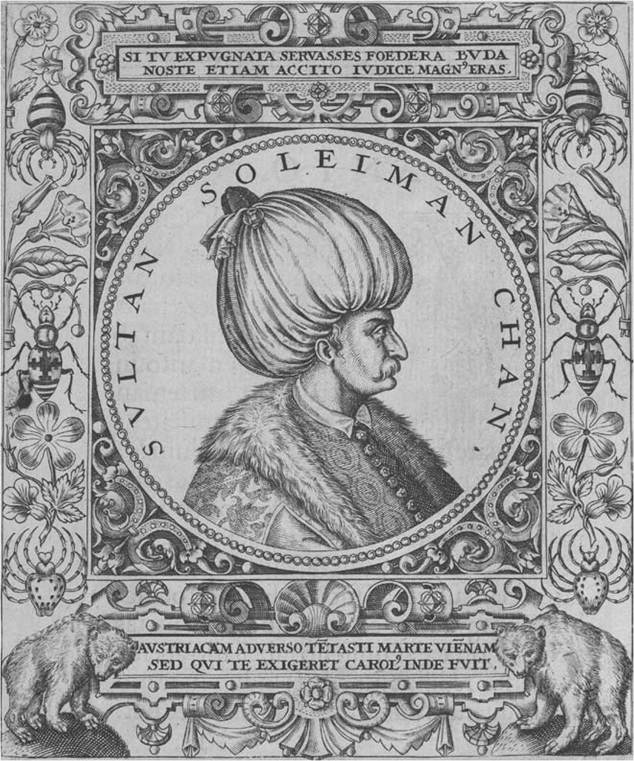
Fig. 1 Svltan Soleiman Chan; engraving by Theodore de Bry from Jean- Jacques Boissard, Vitae et icones svltanorvm Tvrcicorvm (Frankfurt, 1596). Courtesy of Beinecke Rare Book and Manuscript Library, Yale University.
followed Moffan’s account of the Mustapha execution. Bounin portrayed Roxolana (“Rose” in the play; the name also borrowed from Moffan) as a mastermind of the Mustapha intrigue, an ambitious sultana conducting a ruthless political scheme that posed a serious threat to the established political order. Bounin emphasized not only Rose’s excessive jealousy and boundless ambition but also her use of sorcery, necromancy, and love philters for achieving her political goal (1.8.29-40).
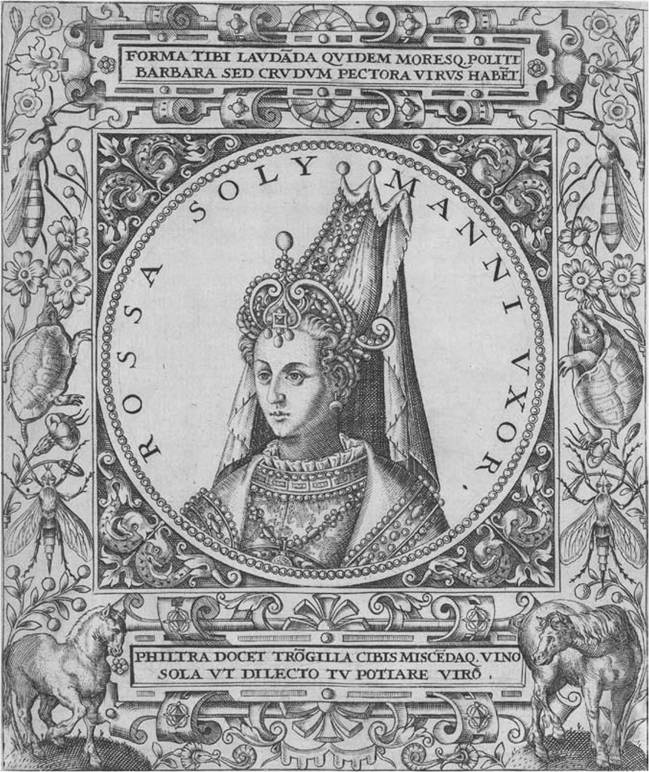
Fig. 2 Rossa Solymanni Vxor; engraving by Theodore de Bry from Jean- Jacques Boissard, Vitae et icones svltanorvm Tvrcicorvm (Frankfurt, 1596). Courtesy of Beinecke Rare Book and Manuscript Library, Yale University.
Similar interpretations of the Roxolana figure appeared in English Senecan drama at the turn of the sixteenth and seventeenth centuries. Greville’s The Tragedy of Mustapha (1609), which was greatly influenced by Knolles’s Generali Historie of the Turkes, highlighted Rosa’s utter ruthlessness and moral depravity. Greville’s Rosa uses her friends and family to climb to power, and she literally stops at nothing to achieve her political goal—even at killing her own daughter,
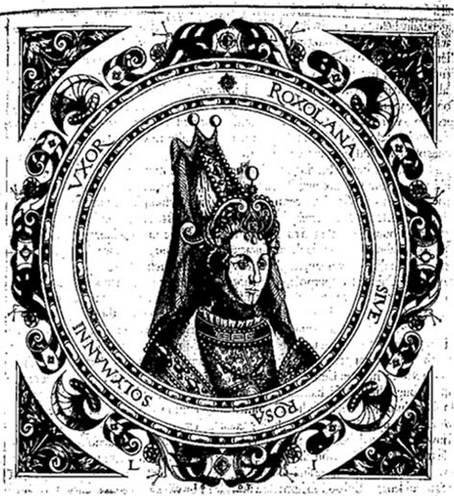
Fig. 3 Roxolana sive Rosa Solymanni Vxor; from Richard Knolles’s The Generall Historie of the Turkes until this present Yeare 1603 (London, 1603); based on the engraving by Theodore de Bry. By permission of The British Library Board, RB.31.C.453. Image from Early English Books Online published with permission of ProQuest LLC.
who sides with her step-brother Mustapha. At the root of the problem are Rosa’s disobedience and greed for power: “O werisome obedience, I despise thee, / [... ] E’re my delights or will shall stand in awe / Of God or Nature, common peoples lawe” (2.3.Cv).[114] In Greville’s portrayal, Rosa’s unruliness is dangerous in that it overthrows the laws of the empire.
As early modern historical works, Greville’s play probed into the issue of women’s power and rule. A staunch Calvinist, an Elizabethan courtier, and a writer prone to misogyny, Greville himself had many personal anxieties and frustrations about Queen Elizabeth Tudor’s reign, disapproving of the constant courtship and sexual jealousies at her court in his Life of Sidney. It has been argued that through his representation of Rosa as an embodiment of “the internalized danger of femininity, the disruptive force within,” Greville “returns to and reevaluates the threat that Elizabeth’s gender represented to England.”[115]
The image of Roxolana changed drastically when in 1619 Italian playwright Prospero Bonarelli wrote his tragedy, Il Solimano.[116] Bonarelli portrayed Roxolana (called “Regina” in the play) not as a villain and psychopath, but a person with rational dynastic ambition (hence her name, the ‘Queen’) and capable of intense emotional suffering. The plot against Mustapha is masterminded by the evil Rusten (Rustem), Soliman’s general and son-in-law acting out of jealousy of the Prince’s military glory. Despite her participation in Rusten’s plot, Regina is more a victim of cruel fate than an instigator of the scheme. She is drawn into it only because she is motivated by a rational dynastic interest—to save her own son from fratricide and promote him to the throne. To deepen the heroine’s drama, Bonarelli introduced the “exchange of the babies” motif: Mustapha is really Regina’s lost son, who was substituted at the moment of birth. Regina discovers this fact too late, and the tragic effect is enhanced by a realization that her own intrigues caused the death of her son. Unable to deal with this terrible discovery, she kills herself.
The change in Bonarelli’s characterization of Roxolana may be accounted for by a new type of drama that originated in Renaissance Italy—the neoclassical drama—which taught moral lessons and presented truth in its universal form.[117] As part of the neoclassical aesthetic, Il Solimano presented universal, timeless characteristics of human nature: human error and weakness, and human suffering from conflicting emotions. From this perspective, Roxolana’s actions were common follies of humanity, rather than heinous crimes of a villainous woman. Though a queen, she is also a mother, who becomes a victim of the fateful circumstances.
Il Solimano gave impetus to the development of the French classical tragedy, particularly with regard to the “Turkish” themes. Following Bonarelli, Jean de Mairet further developed the image of Roxolana as a powerful queen filled with strong emotions and capable of noble acts in his tragedy Le Grand et Dernier Solyman ou la mort deMustapha (1635). Whereas Mairet’s Roxolana (“Roxelane,” in the French spelling) is a schemer in the first three acts of the play, her maternal fear of fratricide is presented as justifiable, and she even appears magnanimous in her suffering at the end.[118]
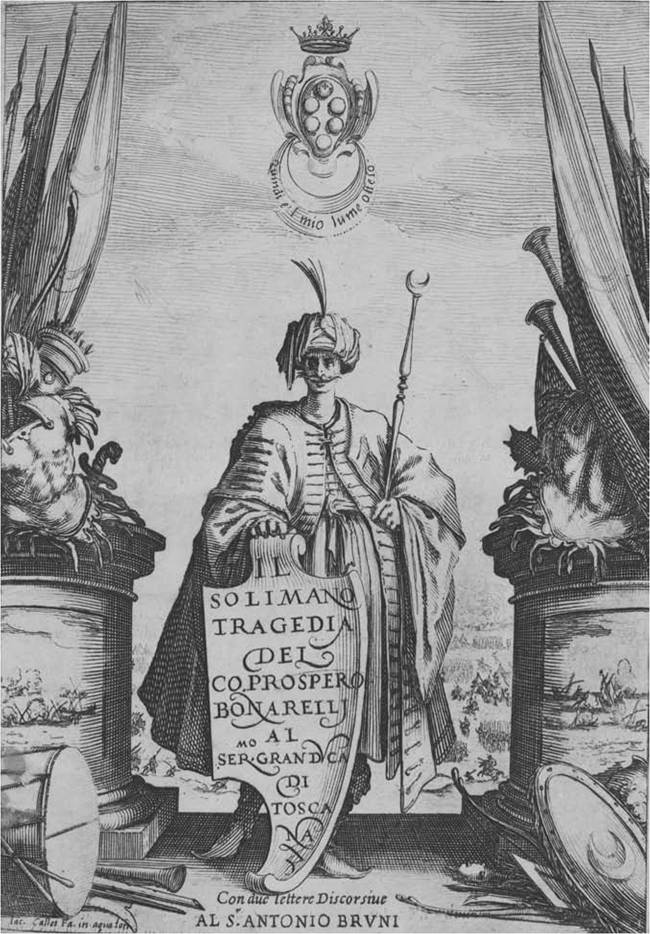
Fig. 4
Frontispiece of Prospero Bonarelli’s tragedy, Il Solimano (Florence, 1620); etching by Jacques Callot. Courtesy of the Rosenwald Collection of The Library of Congress.
In addition to creating a more psychologically complex portrait of Roxolana, mid-seventeenth-century French drama provided two new developments in the Mustapha story itself. Charles Vion Dalibray significantly changed its tone by developing a happy resolution in his play, Le Soliman (1637). The Mustapha- Roxolana conflict became, for the first time in the history of literary representations of Roxolana, a matter of tragicomedy. Dalibray also downplayed Roxolana’s (“la Reyne’s,” as she is called in the play) role in the plot against Mustapha by emphasizing her fear of fratricide and her eventual remorse.[119]
Jean Desmares’s tragicomedy Roxelane (1643) connected the Mustapha plot with the story of how Roxolana tricked Suleiman into marrying her. The latter anecdote was related by Moffan and many other early modern historical chronicles to condemn the wicked Roxolana for disrupting the established Ottoman tradition. Desmares’s Roxelane is clever, strong-willed, and although calculating and hypocritical, not wicked. The play ends with Soliman’s welcoming Roxelane to the throne as a legitimate co-ruler and declaring her children the successors to the Empire.[120]
The changes introduced by the Italian and French drama of the seventeenth century—namely, the deepening of Roxolana’s suffering in Bonarelli’s and Mairet’s classic tragedies, and the happy resolution of the conflict in Dalibray’s and Desmares’s tragicomedies—marked a definite shift in the evolution of dramatic representations of Roxolana. It is not entirely evident whether this shift reflected a new attitude toward the “Turk.” Although these plays contained some Asian exotic details, they had very little to do with Turkish history and authentic atmosphere. On the other hand, several Turkish embassies to France (1619, 1669) may have triggered off a new interest in the Turks on the part of the French public, which was reflected on the theatrical stages.
A further step toward the softening of the Roxolana image was made when seventeenth-century French drama abandoned the Mustapha story altogether and turned to other plots involving Roxolana, such as the career of Suleiman’s Grand Vizier, Ibrahim Pasha. The Soliman-Ibrahim plot grew out of an earlier Soliman- Perseda-Erastus plot, which was associated with Suleiman’s capture of the Greek island of Rhodes in 1522. Soliman in this story embodies both the “cruel Turk” and the “amorous Turk,” in that he besieges both the island of Rhodes and Perseda, a beautiful Rhodian woman married to Erastus. Perseda flatly refuses to accept Soliman’s advances and remains faithful to her husband. The story ends tragically: Soliman executes Erastus for treason; Perseda, disguised as a man, challenges Soliman to a duel in which she dies; and the Sultan sorely repents his cruel deeds.
In other versions of the story, Soliman also dies at the end from a deadly wound received in the duel with Perseda.[121]
Initially, Roxolana was not associated with this story, probably because at this early stage of Suleiman’s fame, she was still unknown to European public at large.[122] But Madeleine Scudery’s 1641 novel, Ibrahim ou L 'illustre bassa, turned the Erastus-Perseda plot into a story of Grand Vizier Ibrahim and his beloved Princess, Isabella, who becomes an object of affections for the lascivious Suleiman (Soliman).[123] As M. Scudery’s novel was heavily influenced by Paolo Giovio’s and Michel Baudier’s historical accounts of Ibrahim’s career (which blamed Roxelane for his fall), Roxolana inevitably became part of Scudery’s story. The association of Roxolana with the fall of Ibrahim was further solidified in the 1643 dramatic version of Madeleine Scudery’s novel by her brother, George Scudery, in his tragicomedy Ibrahim ou 1’Illustre Bassa.[124]
Both Madeleine and George Scudery depicted Roxelane as a ruthless schemer, the way she was portrayed in the earlier dramatic renditions of the Mustapha story. Yet, both works had a happy resolution, which was a new development in the history of literary representations of Roxolana.
But the winds of fashion were blowing in a different direction. When Englishman William Davenant staged his heroic opera, The Siege of Rhodes, at the Lisle’s Tennis Court theater in 1661 (a revised version of an earlier performance of 1656),[125] it was a decidedly new outlook on Roxolana. Ibrahim was not part of the story, but Roxolana was introduced into Part II as Soliman’s queen, who is jealous of her husband’s passion for Ianthe, wife of Alphonso (the latter two characters are a version of the Perseda-Erastus (Perside-Erastes) couple discussed above). In a typical habit of the heroic drama, Roxolana embodies here the excessive passions of jealousy and sensual love (in contrast to Ianthe’s pure love), but she is not an evil character. Davenant’s acquaintance with the French classic theater and the burgeoning opera during his French exile (1642-1651) had undoubtedly influenced his treatment of the Roxolana figure, and his opera also reflected new English sensibilities about the Turks and themselves. As Susan Wiseman pointed out, the English operas of the late 1650s and early 1660s attempted “to legitimate the international ambitions of the English by presenting the audience with quasi-nationalist oppositions and juxtapositions,” such as “Englishness against otherness, Christian against pagan,” or “European against non-European.”[126] Davenant’s Siege of Rhodes manifested England’s new fascination with cultural difference by showing that Roxolana’s sexual jealousy was rooted in her Asian origin and the Islamic faith.[127] Although Roxolana is portrayed as inferior to lanthe in moral qualities, she emerges as a powerful queen capable of noble acts. The high praise lanthe bestows on Roxolana for setting Alphonso free at the end of the play accentuates this shift: “To all the World be all your Virtues known / More than the Triumphs of your Sultans Throne.”[128]
This image of Roxolana was continued in later heroic dramas, such as Roger Boyle, Earl of Orrery’s Tragedy of Mustapha (1668) and Elkanah Settle’s Ibrahim the illustriousBassa (1677). Boyle, returning the Mustapha plot, portrays Roxolana as a rather noble, just, and compassionate queen at the beginning of the play.[129] She is later dragged into the Mustapha plot by the evil Rustan, but she acts not out of ambition but rather out of her motherly instinct (which reflects the importance of Nature for the heroic play) in an attempt to protect her only son Zanger from fratricide. Thus, the cruel Ottoman law and fate are blamed for Mustapha’s death. At the end Roxolana repents and seeks death; she is then banished by Solyman to repent in exile.
Settle, who elaborated on the events of the Soliman-Ibrahim-Isabella plot, also turned to the tragic genre, discarding both Madeleine Scudery’s lighthearted tone and her portrayal of Roxolana as an unscrupulous opportunist. Instead, Settle made the evil Morat Bassa the villain of the play, while presenting Roxolana as a rather noble, loyal, and suffering woman. Roxolana’s love for Solyman (Suleiman) is exalted in this play. In Act II, Ulama, heir of Persia, urges Solyman to “Think of that dazzling form, so far above / Natures less lights, your Roxolana’s love.”[130] Other characters call Roxolana a “jewel in the Turkish Diadem,” and they consider her to be a paragon of nobility and faithfulness: “Pride of the World, in Beauty, Power, and Love / Great here below, and no less great above: / To Solyman’s Throne by Divine Justice led.”[131]
According to some scholars, English heroic plays, in general, tended to portray female characters as active subjects, exercising virtue, exploring their passions, and acting upon male heroes.[132] In this regard, they must have reflected new attitudes toward women that started to appear before or at the beginning of the Bishop’s Wars in 1638 and intensified during the Civil Wars several years later.[133] By the Restoration period, “women had become newly important in English culture.”[134] The preoccupation, on the part of the English culture, with women’s growing influence and independence had led to a significant reinterpretation of female dramatic characters.
Specific concerns arose with regard to the influence of women on King Charles II. It has been argued that the heroic drama responded to the anxieties of the English society over Charles Il’s adulterous relationships with numerous mistresses and the debauchery of his court by downplaying women’s threat to the male body politic. Heroic plays often represented women as powerful and positive forces in politics that prevented “men from becoming threats to the body politic.”[135] From this perspective, Orrery’s Tragedy of Mustapha is viewed as blaming the Sultan and his advisers for the execution of Prince, while excusing Roxolana as a mere tool in their hands.[136] In Settle’s tragedy Ibrahim, the lustful Solyman served as a prototype for Charles II in that his lusts drew him away from his lawful wife and toward a potential mistress.[137] As Alex Garganigo has maintained, the heroic drama strived “to rewrite the figure of female transgression,” and it managed to successfully “aestheticiz[e] away the threat of female influence.”[138]
The popular image of Roxolana changed again by the late seventeenth century, when Europe started to develop a new attitude toward the Turks. After the unsuccessful siege of Vienna in 1683 and the Treaty of Karlowitz in 1699, the Ottoman Empire was no longer perceived as a menace, but rather as a regime in decline.[139] The increased travel to the East also brought about a re-evaluation of major Asian institutions, such as polygamy and despotism. The West was now more interested in the sensuality and mystique of the Oriental seraglio than in Turkish atrocities or military prowess. The sultan’s harem was now perceived as a fascinating and tantalizing place—a place of romance, passion, and sexual jealousy, a place of the “immense sexual lust,” “boundless jouissance,” and the “despot’s endless copulation with an endless number of women”[140]—but it was also closely linked to the political and moral corruption of Asian despotism. The new serail fantasy found its most eloquent literary expression in Montesquieu’s Lettrespersanes (1721).
As Western Europe began to form its Oriental harem fantasy, and as the “cruel Turk” image gave more room to the “amorous Turk” image, there also came a shift in the perception of Roxolana’s personality. Her early modern image as a ruthless schemer was replaced with a more seductive and intelligent figure operating from the heart of the Turkish seraglio. That a former slave could subdue the invincible Oriental despot and virtually turn him into her own “love slave” imparted greater mystique and sensuous appeal to her personality, but it also made her figure sexually immoral. The name “Roxolana” (and alternately “Roxana”) became associated with upper-class European courtesans, who wielded great material and political success through their sexual power.
In a famous episode of Daniel Defoe’s novel, Roxana the Fortunate Mistress (1724), the heroine, an upper-class French courtesan living in the London of the Restoration era, describes her pseudo-Turkish dance before a party of illustrious guests:
It was indeed a very fine figure, invented by a famous master at Paris, for a lady or a gentleman to dance single, but being perfectly new it pleased the company exceedingly, and they all thought it had been Turkish; nay, one gentleman had the folly to expose himself so much as to say, and I think swore too, that he had seen it danced at Constantinople.[141]
Although two other women—the real Muslim women from Persia—also perform their Oriental dance before the same audience, it is their European rival who receives the applause and admiration of the bedazzled spectators: “and one of the gentlemen cried out, Roxana! Roxana! by —, with an oath, upon which foolish accident I had the name of Roxana presently fixed upon me all over the Court end of town as effectually as if I had been christened Roxana.”[142] The eighteenthcentury readers of the novel would have hardly missed the irony of this statement: it was not due to her dress and “Turkish” dance that the heroine was “christened” Roxana, but rather due to her status as a high-profile courtesan. Moreover, this passage suggests that the eighteenth-century European public was more interested in its own fictions of the Orient than in authentic Asian experiences. On the other hand, the Oriental allusions of Montesquieu’s and Defoe’s novels aimed at questioning Europe’s own institutions and sexual mores, such as the depravity of Charles Il’s court depicted in The Fortunate Mistress[143]
By the second half of the eighteenth century, turcomania, or turquerie, came in full fashion in Europe, and Turkish music, costumes, tobacco, and candy flooded the aristocratic salons and theatrical stages of France, England, and Germany. Turkish themes moved from tragedies to comic operas and ballets.[144] Separate Turkish interludes and scenes were inserted in the operas, ballets, and plays that did not even deal with the Orient. In the late eighteenth century, several German- language musical theatres in the suburbs of Vienna specialized in producing numerous exotic/Oriental fairy tales and farces.[145]
The “orientalization” of the East and the “domestication of the exotic”[146] led to the further softening of the Roxolana image in the later eighteenth century. By this time, Roxolana was completely exonerated—and significantly re-invented— in French fiction, drama, opera, and operetta. Jean-Francois Marmontel’s tale “Soliman II,” from his Contes moraux (1761), retold the story of Roxelane’s manumission and her marriage to Soliman in a humorous way, filling it with the ideas of personal liberty and equality characteristic of the Age of Enlightenment. In this story, the captive Roxelane emerges as a progressive French woman competing for Soliman’s (Suleiman’s) love with two other concubines, the Spanish Elmira and the Circassian Delia. The clever Roxelana conquers Soliman by selling him the ideas of gender equality (“You are powerful, and I am pretty; so we are even”) and by teaching him the gallant manners of a French gentleman. It is not her ruthlessness or wickedness, but rather her free spirit, wit, and her “little turned-up nose” that ultimately overthrew the laws of the empire and made her a powerful sultana.[147]
Charles-Simon Favart converted Marmontel’s tale into a versified libretto for his comic opera Soliman II, ou Les trois Sultanes [Soliman II, or the Three Sultanas] (music by P C. Gibert), which was first performed at the Comedie-Italienne in Paris in the same year, 1761. Its dazzling dialogue and spectacular musical numbers provided a light-hearted entertainment the public craved. The costumes were brought from Istanbul to add realism to the story, and Madame Favart’s triumphant performance of the Roxelane role had ensured the long-time popularity of this part among later French actresses.[148] The comedy ended with a “Divertissement,” when all the odalisques and slaves of the seraglio came out to the stage to crown Roxelane, while dancing and singing: “Vivir, Vivir Sultana; / Vivir, Vivir Roxelana'” [‘Long live Sultana; Long live Roxelana! ’].[149] Roxolana’s marriage to Suleiman—a case of a woman’s law-breaking in the early modern age—was now perceived by the Western audience as a triumph of a woman’s wit and charm!
Favart’s opera-comique enjoyed enormous popularity and was quickly adapted to German, English, Dutch, Danish, Swedish, and other musical stages of Europe. In England, Isaac Bickerstaff remade Favart’s play into a farce, The Sultan, or A Peep into the Seraglio (1775), having turned Roxolana (“Roxalana”) into a feisty Englishwoman, who introduces the Sultan to the cardinal Enlightenment values of liberty, equality, reason, and free love.[150] Franz Xaver Sussmeyer’s
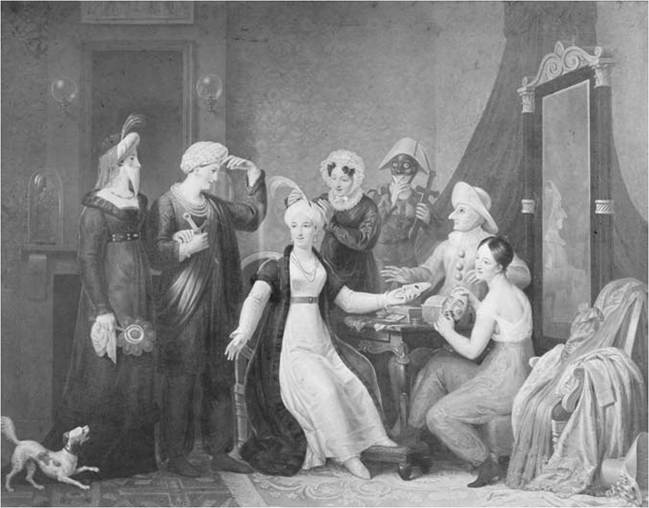
Fig. 5 Mademoiselle Mars (1779-1847) in ‘Les Trois Sultanes'; nineteenth
century French school. Bibliotheque de la Comedie Fran^aise, Paris, France. Courtesy of Bridgeman Art Library.
(Sussmayr’s) opera, Soliman der Zweyte; oder Die drey Sultanninen (libretto by Franz Xavier Huber), opened in Vienna in 1770.[151] After it was performed at Esterhaza Palace in 1777, Joseph Haydn composed a set of variations on an old French melody, which presented a musical portrait of Roxolana and which was incorporated into Haydn’s Symphony No. 63 as “La Roxelane” suite. In 1799, Beethoven wrote a set of eight variations for piano on a theme from Sussmeyer’s opera.[152] In Sweden, Joseph Martin Kraus’s opera Soliman den andra, eller De tre sultaninnorna (libretto by Johan Gabriel Oxenstierna) premiered in Stockholm on 22 September 1789, marking the beginning of the “Gustavian” (i.e., pertaining to the reign of King Gustav III) Opera and Ballet.[153] It was performed over 31 times up through 1817.[154] Italian composer Catterino Cavos brought Les trois Sultanes to St. Petersburg, Russia, where it premiered in French on 7 June 1798.[155] Some of these adaptations were still performed in the nineteenth century, and Favart’s opera-comique remained on the repertory of the Comedie Fran^aise well into the twentieth century.[156]
The vogue for Les trois sultanes at the close of the eighteenth century must be viewed in a larger cultural context. A number of eighteenth-century French and German (Viennese) operas, most notably Mozart’s Die Entführung aus dem Serail (1781; libretto by G. Stephanie, Jr.), featured an abduction-from-the-seraglio plot.[157] The popularity of the theme of a European woman’s liberation from the Oriental seraglio—whether through an escape/rescue arranged by her European lover or relative, or through her manumission by her Turkish captors (as in the case of Roxelane’s marriage to Soliman)—in late eighteenth-century operas and musical dramas indicated the public’s interest in the issues of women’s rights and equality. These operas also manifested Europe’s increased cultural tolerance toward the “Turk,” as their Turkish characters often emerged as sympathetic or generous at the end. At least, the role of a villain was now relegated to minor Turks, while sultans or pashas invariably demonstrated great magnanimity.[158]
With the end of turcomania in Europe at the close of the eighteenth century and further weakening of the Ottoman Empire, the image of the Turk underwent yet another adjustment in the nineteenth century. The West’s fascination with Turkey and the Near East[159] resulted in the popularity of tales of romantic adventures of young European ladies and gentlemen in Turkish harems. Such romantic tales were abundantly produced by both high and low literary genres, ranging from Lord Byron’s “Turkish Tales” (1813-1816) to the anonymous erotic novel, The Lustful Turk, or Lascivious Scenes in a Harem (1828).
During this time and in the later nineteenth century, the Roxolana character appeared in the revivals of Favart and other musical dramas featuring the “escape- from-the-seraglio” plots.[160] Yet, her popularity as one of the most favorite dramatic and operatic female characters on the theatrical stages of Europe began to wane gradually. On the other hand, the Roxolana image underwent a major makeover throughout the nineteenth century, due to a renewed interest in Ottoman history provoked by the increased travel to the East and scholarly publications of Ottoman histories and archival documents.[161] The latter rekindled the public’s interest in Turkish history, but they also revived the negative Ottoman image of Hurrem and the early modern Western stereotypes of Roxolana as a schemer. The new demand for historical and fictional tales about the Orient and Ottoman history catapulted Roxolana (or rather, Hurrem) into the realm of popular historical and fictional characters. In this new role, Roxolana began to lose her eighteenth-century European glamour and re-entered the domain of the Other, this time the Exotic Other, with all the conventional attributes of an Asian queen (the allure, exoticism, mystique, and cruelty). She was becoming known to Europeans by her Turkish name, Hurrem.
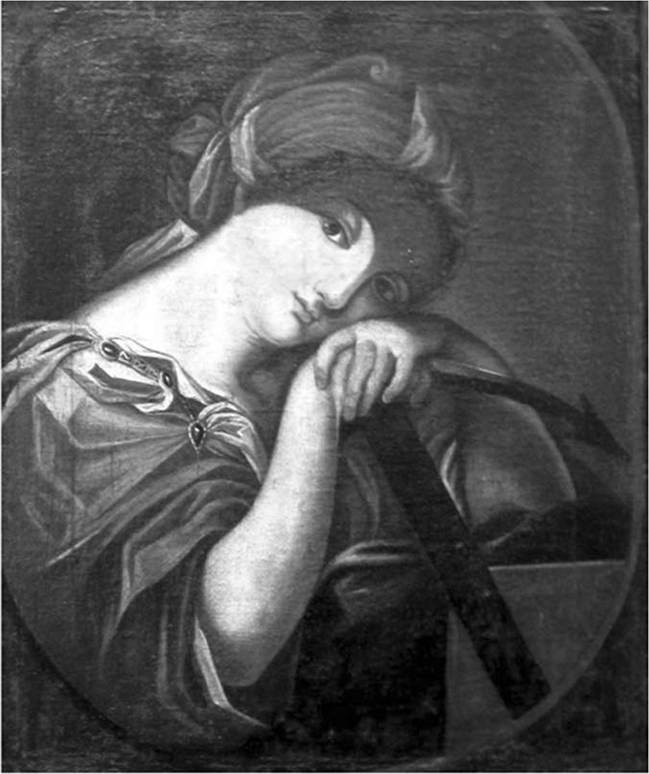
While she was still portrayed as a strong-willed and intelligent Roxolana, capable of succeeding under the oppressive circumstances of the Turkish harem,[162] or as an outrageously free-spirited and clever European “Roxelane,”[163] she was also romanticized as an alluring Eastern European or Asian beauty in twentiethcentury historical and fictional narratives. The circumstances of her origin were altered to create an aura of exoticism around her: she was sometimes presented as a daughter of a Ukrainian bishop[164] or the Crimean khan.[165] The old, negative image of Roxolana as a manipulative and ruthless intrigante proved to be irresistible for quasi-historical and biographical novel writers who were recreating her as an exotic/ Asian queen, with a typical mix of allure and cruelty. Such narratives were replete with formulaic statements the likes of “she never forgave those who punished her” and she was as “hard as the diamonds she mocked.”[166] Recycling the misogynist commonplaces of early modern chroniclers and historians, modern men of letters also blamed Roxolana for the demise of the Ottoman Empire, as is evident, for instance, from a chapter title in Fairfax Downey’s 1929 novel, The Grande Turk: “How Suleyman Chose a New Favorite in His Harem to the Bane of His Empire.” This trend continued in later twentieth-century historical and biographical narratives.[167] Anthony Bridge, in his 1983 fictionalized biography of Suleiman the Magnificent, wrote of Roxolana as a “single-minded and ruthless woman,” who got rid of Mustafa mostly because she did not like competition. Bridge concluded, “Unluckily for Turkey, when Roxolana was determined to do something, she pursued her purpose with a relentlessness which knew no limits.”[168]
Contemporary novels about the Ottoman Turkey oscillate between sympathetic and negative representations of Hurrem, often mixing both.[169] Some of these novels, however, fearlessly exploit Hurrem’s dark side and erotic appeal, and they unabashedly use “poetic license” to add more sensational details to her already eventful life story. For instance, Colin Falconer’s 1992 novel, The SultanS Harem, portrays Hurrem—the bold, free-spirited daughter of a Crimean khan, and a goldenhaired “fox,” with “cunning to match”—as diabolically clever and calculating, and even monstrous, in her relentless climb to power. In a memorable episode, after having spent her first and only night with Suleiman before his departure for a long-term war campaign, she resolves to ensure a pregnancy by seducing a harem eunuch Kapi Aga, who had somehow regained his virility [sic], and then cruelly disposes of him.[170] In this starkly innovative way, the author explains why Hurrem’s first son Selim (the future “good-for-nothing” Sultan Selim II) grew up to be fat, stupid, and idle, unlike her other children by Suleiman.
Behind such representations, one can see not only the Orientalist fascination with the Exotic Female Other, but also a timeless, misogynist fascination with a seductively beautiful and cruelly powerful woman—an archetypal woman standing for a whore by night, an intrigante by daytime, and a ravishing beauty always—a fascination that keeps us craving for more.[171] In the Western popular imagination, Roxolana/Hurrem has joined the pantheon of archetypal women, the likes of Cleopatra, Medea, and Lady Macbeth.
Roxolana in Eastern Europe
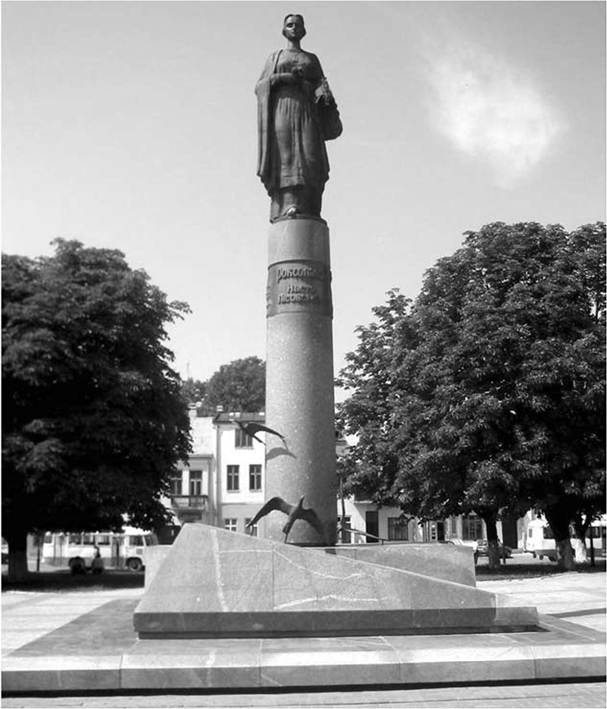
The Roxolana legend evolved based on a different scenario in Eastern Europe, particularly in Poland and Ukraine, where it became associated with the most dramatic development of early modern history—the massive slave trade carried out by the Crimean Tatars and Ottoman Turks in the Black Sea and Mediterranean regions. During that time, Poland was a powerful kingdom (and part of the Polish- Lithuanian Commonwealth) controlling large provinces in Western Ukraine, such as Ruthenia (or Red Russia), Podolia, and Volynia, which emerged separately after the fall of the Kyivan Rus. Nevertheless, thousands of Polish and Ukrainian people, nobles and peasants alike, were systematically captured and sold at the slave markets of the Crimea, Turkey, Italy, Spain, and the Barbary Coast.[172] It is believed that from the fifteenth century to the first half of the seventeenth century, approximately 2.5 million Ukrainians were kidnapped and sold into slavery.[173]
The devastating effects of the Black Sea slave trade were powerfully recorded in early modern Polish chronicles[174] and folklore, particularly in Ukrainian songs and poems (dumas):
Great woes the Ukraine have befallen,
No place there a haven affords:
Hey, the children small have been trodden
To death ‘neath the hoofs of the horde!
Oh, small ones to death they have trodden,
The grown ones they’ve taken away,
Their hands ‘hind their backs they knotted
And drove them to Tatar domains.[175]
Roxolana’s name became part of that tumultuous history, because she was one of the captives. But unlike many of her compatriots, she succeeded tremendously in Ottoman captivity.
Rumors of Roxolana must have reached her native land during her lifetime. Mikhalon Lituan, the Lithuanian ambassador in the Crimea, wrote in his 1550 chronicle that “the beloved wife of the Turkish emperor, mother of his eldest son and heir, was some time ago kidnapped from our land.”[176] References to Roxolana can also be found in several early modern Polish documents.[177] Piotr Opalinski, the Polish Ambassador to Suleiman’s court in 1533, claimed that through Roxolana’s pleading, the Sultan forbade the Crimean khan to bother Polish lands.[178] Samuel Twardowski, member of the Polish Embassy of Prince Krysztof Zbaraski to Istanbul in 1621-1622, confirmed that Roxolana was born in the Ruthenian town of Rohatyn, not far from Lviv, as he was told at the Ottoman court.[179] [180] Although these early references indicate that Roxolana’s name was well known in Polish royal and diplomatic circles—which considered her as a “Polish sultana” (polskq_ suhanky9')—it is hard to estimate the extent of her general popularity in her native land at the time. Nor is there evidence suggesting that the eighteenth-century turcomania, which swept across Western Europe and made Roxolana’s name popular on the French and Viennese theatrical stages, reached the European East. But there is sufficient evidence to believe that in Eastern Europe, the formation of the Roxolana legend began in the late eighteenth century or early nineteenth century, in the wake of the national revivals that were taking place in Poland and Ukraine under the influence of Western Romanticism. In both countries, these movements entailed a heightened, and highly romantic, interest toward past history, particularly the dramatic early modern period. The Polish national revival and Romantic movement (with Adam Mickiewicz as its major exponent) brought about a renewed pride in the glory of the early modern Polish state. But it also entailed a romantic interest in the old Ukrainian folklore,[181] which was considered to be partly Polish due to the fact that the western provinces of Ukraine were Poland’s colonies at the time. Because Roxolana was born on the territory belonging to the Polish Crown, she was considered to be a Polish subject. For instance, in his 1864 poem “Podolia,” Mauycej Goslawski expressed great pride in the fact that the celebrated Roxolana, before whom the entire East trembled, was a native of Podolia: And what about Roxolana, Who rocked the entire East? She was ours, from Podolia, A native of Chemerovtsy.[182] As proof of the close connection the Sultana maintained with her native Poland during her life, several Polish sources mentioned Roxolana’s assistance in preventing the Tatar raids and slave trade in the region. The truces of 15251532, 1543, and 1553 between Turkey and Poland, as well as numerous Polish embassies to the Sublime Porte,[183] were attributed to Roxolana’s influence. In the above-quoted poem, Goslawski also stated that Roxolana always remembered her beloved native land (“Drogich pol ojczystych pomna”).[184] The pride in Roxolana’s Polish roots and her imperial destiny was thus an extension of the Polish pride in its early modern statehood. This “imperial” theme was evoked with nostalgia in Roxolana, the Podolian, by L. N. H. Musnicki, published in London in 1832.[185] Roxolana is depicted in this high-spirited tale as a very ambitious woman, who even in her teenage years, prior to being kidnapped from her village and sold into the imperial harem, had had visions of her imperial destiny.[186] As Musnicki explained in the introduction to his work, his purpose was to provoke an interest in Polish history by reciting one of its glorious moments.[187] The Ukrainian national revival also provoked a close examination of its early modern past—namely, the Tatar-Turkish slave trade, the Polish colonization, and the Cossack movement—and its reinterpretation in strong patriotic and heroic terms. It is during this time that the Ukranian folklore, particularly songs and legends (dumas) reflecting the suffering of Ukranian people from Tatar slave raiders, Ottoman slave masters, and from Polish nobles, was recorded and inventoried by the poets, historians, folklorists, and other cultural activists.[188] As the nation turned to its heroic past to form a national vision, the Roxolana story received a strong patriotic treatment. Although no early modern folk songs about “Roksolana” or “Roksoliana” (the Ukrainian versions of the name “Roxolana”) were discovered, many old dumas featured young Ukranian females who were kidnapped and forcibly married off to Turkish pashas. Once they had children by their Turkish masters, these women had no motive to return home and usually remained in captivity. As some early modern poems showed, these women managed to retain their Orthodox faith, even if in a clandestine way and despite their confined circumstances. One such early modern duma, “Маруся Богуславка” [‘Marusia of Bohuslav’], closely resembles the story of Roxolana, as it portrays a daughter of an Orthodox priest, kidnapped and sold into a Turkish Pasha’s harem. Although Marusia feels cursed for having accepted the hateful “Turkish luxury” (“розкіш rypenbKa”), she manages to free 700 Ukrainian Cossacks from her master’s dungeon on the eve of Easter Sunday.[189] This duma eventually became associated with Roxolana,[190] projecting an image of her as a savior of her suffering compatriots. How was it possible that a successful renegade, such as Hurrem Sultan, became a national heroine linked to the liberation of Ukraine from the Tatar-Turkish yoke? Roxolana’s case was probably not usual, given that she became so successful in captivity. Her triumph over a slave’s lot and the unprecedented power she wielded at the Ottoman court must have filled many Ukrainians with inspiration and a sense of national pride. Roxolana’s local Ruthenian/Galician identity was thus transformed into a pan-Ukrainian, national identity.[191] Nineteenth-century Ukrainian writers compensated for the lack of factual evidence related to Roxolana with poetic imagination and license. Her maiden name, Anastasia Lisovska, which is etymologically close to the Ukrainian word lis [‘forest’], in reference to the beautiful Carpathian forests, may have also been invented during this time, for historical studies have shown that this surname was not present in the Ruthenian and Podolian town records of the sixteenth century.[192] By giving Roxolana a poetic Ukrainian name, nineteenth-century writers asserted her firm place in national memory and history. They viewed her dark actions— such as her plot against Mustafa and her support of her son Selim, who turned out to be a drunkard and a good-for-nothing sultan (nicknamed “Selim the Sot”)—as a kind of revenge on the Turks, as singular events that started the decay of the Ottoman Empire.[193] Some nineteenth-century Ukrainian paintings even portrayed Roxolana as a martyr or an avenger with a dagger in her hands.[194] Fictional works praising Roxolana proliferated in the second half of the nineteenth century and the early twentieth century. Among these works were the operetta Роксоляна [Roksoliana] composed by Ivan Lavrivsky (libretto by Ivan Husaleych) in the 1860s; a historical-political drama Роксоляна [Roksoliana] published in Kolomyia in 1869; a historical novel Роксоляна или Анастазгя Лисовская [Roksolana, or Anastaziia Lisovskaia] published in Подольские Епархиальные Ведомости [PodolskDiocese News] in 1880; a poem by Liudmyla Starytska-Cherniakhivska, published in Kyiv (date unknown); a play by Hnat Yakymovych (date unknown); a historical novella, Роксолянка [‘Roksolianka’] by D. Sharabun, published in Kolomyia in 1907; and a libretto of Denys Sichynsky’s opera Роксоляна [Roksoliana] published in Kolomyia in 1911.[195] In the historical opera Роксоляна [Roksoliana] (libretto by I. Lutsyk and S. Charnetsky), Roxolana’s sacrifice to the Ukrainian slaves in Constantinople became the central theme. When Suleiman, unable to win her love, gave her a chance to Fig. 6 Roksolana; anonymous Ukrainian artist; oil on canvas; late eighteenth-early nineteenth century. By permission of National Museum of Ukrainian Art, Lviv. go back home, she stayed in the harem in order to help her captive “brothers and sisters.” During the performance, the chorus of Ukrainian slaves shedding tears in nostalgia for their motherland is constantly present on stage—in the foreground or background—to remind the audience, and Roxolana, of their suffering. Roxolana frequently faints at the sight of the captives’ plight and at the constant daydream visions of her beautiful native village. Suleiman is so mesmerized by her beauty that he grants life to all Ukrainian captives and takes them under his protection. This radical act causes a rebellion on the part of the Turks, and the tragedy ensues. Roxolana dies, but in her death, she becomes a national martyr.[196] The tradition of depicting Roxolana as a national heroine continued in twentiethcentury writings.[197] Her Ukrainian origin became one of the central points of admiration. She was often seen as the “flower of Podolia”[198] or the “flower of the steppe”[199] that was torn away from its native soil and taken to Bosporus for a greater destiny. Almost all twentieth-century fictional and poetic works give a great deal of attention and space to portraying Roxolana’s childhood and teenage years spent in Ukraine, and her education and adherence to the Orthodox faith, and they invariably emphasize her nostalgia for her homeland while in Turkey and her constant help to Ukrainian slaves.[200] Even Roxolana’s conversion to Islam is not held against her. Rather, it is viewed as a condition that had enabled her to survive and assist her compatriots suffering in captivity. Despite the lack of hard evidence, many twentieth-century Ukrainian writers maintained that during the 40 years of Roxolana’s power in Istanbul, neither Tatars nor Turks attacked Ukraine. They further argued that this circumstance gave the Ukrainian Cossacks time to consolidate their forces and organize resistance against the Turkish and Tatar raiders.[201] Some of these works directly connected Roxolana’s imperial career with the rise of the Cossacks. Mykola Lazorsky’s 1965 novel Степова квітка [The Flower of the Steppe] depicted Nastusia (the would- be Roxolana) as a veritable Cossack maiden, and the events of her life are closely intertwined with the nascent Cossack movement. For this reason, the author moved her birthplace to Poltava, closer to the area where the Cossack resistance to the Tatar and Turkish devastation was started.[202] Attempts have been made to counter such romanticized and over-sentimental portrayals of Roxolana with more realistic and historically accurate accounts,[203] and some authors have called for shifting attention from Roxolana’s imagined patriotism onto her extraordinary individuality. In the afterword to his 1979 novel Роксолана [Roksolana], Pavlo Zahrebelny defended Roxolana’s actions as her right to the “pursuit of happiness,” the pursuit of her unique individuality, which is the ultimate measure and purpose of human life.[204] Furthermore, present-day historical scholarship questions the existing idealistic conceptions of Ukraine’s early modern history, thus attempting to reveal much more complexity in the phenomenon of the Ottoman slavery in Ukraine. Recent historians have argued that while the Ottoman slavery was undoubtedly a heavy burden on Ukraine, many Ukrainians became successful renegades in the Ottoman captivity—a fact that had been for the most part ignored or downplayed by the earlier scholarship. Moreover, they maintain that, in contrast to the traditional perception of the relations between the early modern Ukrainians and Tatars-Turks in terms of a religious and political confrontation, the borderline between the East and the West, which is believed to have passed through the early modern Ukraine, was “an area of intensive ethnic and cultural exchange,” involving close personal, economic, and cultural contacts between Ukrainians, Tatars, and Turks.[205] Such assertions are partly based on the nontraditional representations of slavery and attitudes to it that can be found in early modern dumas on slavery,[206] which testify “not only to the tragic perception by the Ukrainians of their country’s fate, when she suffered from being bled dry by the Tatar raids, but also to their awareness of a close kinship with the Crimean Tatars.”[207] Fig. 7 Roxolana is Coming Back Home; bronze monument in Roxolana’s birthplace Rohatyn, Ukraine; sculpture by Roman Romanovych, architectural design by O. Skop, 1999. Photo by Galina Yermolenko, 2004. There have also been arguments that the Ukrainian folklore should not be viewed as an authentic early modern source, because it became known in its written form only in the nineteenth century and should therefore be regarded as a nineteenth-century phenomenon, that is, within the historical and cultural context in which it was recreated, rather than in the original context, which had ceased to exist.[208] Fig. 8 Roksolana, Volodymyr Kostyrko, oil on canvas, 70 x 110 cm, 1995. Private collection, Ivano-Frankivsk, Ukraine. Courtesy of Volodymyr Kostyrko. These critiques have not so far damaged the Roxolana image in present-day Ukraine. Whether she missed her native land or helped her captive compatriots will probably never be known, but in a sense, it is immaterial, because now her name belongs to national legend, rather than to history. As the country has gained its independence from Russia, the Roxolana legend has become an important building block in Ukraine’s identity-construction and nation-building. She has entered the pantheon of cultural icons. The names Roksolana and Roksoliana are widely popular among Ukrainian girls and women. Roxolana’s name appears on seltzer water bottles and vodkas, on posters and stamps, on marriage and travel agencies, beauty salons, and boutiques. In 1999, a monument to Roxolana was erected by her compatriots in her native town of Rohatyn. The monument (sculpture by Roman Romanovych; architectural design by O. Skop), called “Роксолана повертається додому” [‘Roxolana is Coming Back Home’], features a four-meter female figure, in a traditional Ukrainian costume, standing on a six-meter column, which rests on a wave-shaped foundation. The design thus represents Roxolana’s symbolic return home via the Black Sea.[209] A 20-series film, Roxolana, was aired on Ukrainian and Russian television in 1997, and a 26-series sequel, Roxolana—the Imperial Sovereign, followed in 2003,[210] both tremendously popular with the Ukrainian and international audiences (Russian, Turkish, and Arabic), despite being what Pavlo Zahrebelny called “soap opera[s] tinted with Ukrainian hues.”[211] More publications on this famous woman, including children’s books, film scripts, and newspaper articles continue to come out annually.[212] Despite the current criticism of this “new religion of Roksolana”[213] and the attempts to demythologize her image, the “passion for Roksolana continues.”[214] In the popular memory, Roxolana’s name is connected with the fate of Ukraine, because it offers redemption of the tragic past, no matter how much a fantasy it is. Time will show how long this legend will endure in the Ukrainian imagination. This page has been left blank intentionally