Julius Held's Allegorical Interpretation
Julius Held, in his 1944 article on The Polish Rider, adhered quite closely to the professional standards of art history and accepted the work as Rembrandt's, but he put the word “Polish” in its title in quotation marks, thus seeming to question its Polish connection.
He pointed out that the Lisowski Regiment was disbanded by the 1630s and thus Rembrandt could not have painted one of its members as a youthful rider in the mid-1650s. Indeed, it was doubtful whether the artist even knew about the unit. Held also agreed that the rider could not have been a Ukrainian Cossack, since they customarily wore bright-coloured clothing. As a clincher, he maintained that the Cossacks commonly sported loose, baggy pants (sharavary in Ukrainian), not tight breeches. like the rider. Held maintained that Polish scholars who identified the handsome sitter as Rembrandt's son, Titus, were wrong, since Titus was far too young to be mounted on a horse in the early or mid-1650s.Held examined the subject's costume, weapons, and horse and concluded that these were not specifically Polish, but rather general accoutrements of central and eastern European soldiers, including Hungarian ones. Thus cap, coat, and weapons, and the horse's decorative horsetail standard, which Held called by a Hungarian name, kutas, and other equipment as well, were all generic items. Indeed, even the rider's personal grooming was un-Polish, since his hair was long and his moustache shaved, unlike most martial Poles of the time, who wore their hair short and sported bushy moustaches.
Held pointed to three possible models for the painting: the medieval statue of a rider in Bamberg Cathedral in Germany, Rembrandt's own sketch of the skeleton of a Dutch horse, and, following the Polish scholar Jan Boloz-Antoniewicz (c. 1905), the sketches of Polish cavalrymen visiting Rome by the Italian artist Stefano della Bella.
He concluded that the picture was not necessarily a portrait but rather a generalized allegory of the Miles Christianus, the good Christian knight, riding off to defend Christendom from the Turks and Tatars. Held questioned not its author but its traditional connection with Poland. Had the rider been discovered in a Hungarian castle instead of a Polish one, he concluded, it would today universally be known as Hungarian Rider.19Held's influential essay opened up a new trend, suggesting an allegorical representation of some more ethereal or literary hero. For example, Jacob Rosenberg closely followed suit in his highly influential Rembrandt: Life and Work (1948).20 Meanwhile, the same year, the veteran Rembrandt scholar W.R. Valentiner identified the rider as Gijsbrecht van Amstel, the traditional Dutch hero of a famous, eponymous play of 1638 by the prominent poet Joost van den Vondel, which Rembrandt surely knew; the play was performed in Amsterdam every New Year's Day till 1968. J.Z. Kannegieter thought the equestrian was Sigismundus van Poolen from a play performed in 1647 and available in print in 1654, and Colin Campbell (1970) proposed the Prodigal Son riding out into the world after having received his “portion” (Luke 15:11-13). Leonard Slatkes's Rembrandt and Persia (1983) saw in him a biblical “young David”; Reiner Hausherr viewed him as a kind of Jewish Messiah, painted especially for the Jews; and a Canadian scholar, D.W. Deyell, in 1980 declared that the rider was St Reinold of Pantaleon, one of the few popular seventeenth-century literary figures who, “as a soldier and a saint gives acceptable meaning to the Frick Collection Rider.” Finally, in 1985, the distinguished Rembrandt expert Gary Schwartz opted for an equestrian soldier from the play Tamerlane by Joannes Serwouters, first performed in Amsterdam in 1657. Of course, all of these allegorical interpretations are pure speculation, and none of them contradicts the fact that a real person in real costume probably served as a model for the painting.
Moreover, some of them are far-fetched indeed, since, for example, as Held pointed out in his “Postscript” of 1991, Gijsbrecht van Amstel was already an old man when he supposedly fled to Poland, the Prodigal Son is usually depicted with a purse to carry his inheritance; there is no iconic precedent for a “David” on horseback; and finally, Rembrandt's rider looks rather nonchalant for a Tamerlane or one of his men in pursuit of the Ottoman Sultan Bayazet, as Schwartz claimed.21Only one Polish scholar came up with an allegorical theory. Jan Bialostocki, writing in 1969, discovered a pamphlet by a Polish Socinian group in Holland pleading for religious tolerance. The author signed himself only “Eques Polonus" (A Polish Knight), but was otherwise known as Jonasz Szlichting, a man of about sixty. Bialostocki proposed this Polish
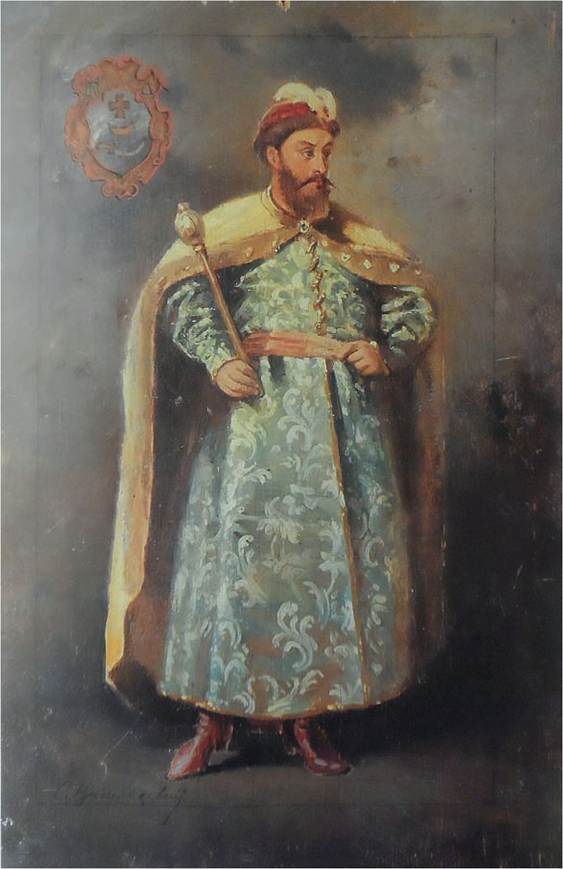
plate 1. Hetman Petro Doroshenko (1900), by Serhii Vasylkivsky. From Volodymyr Nediak, Ukraina kozatska derzhava (Kyiv: Emma, 2007), 355.
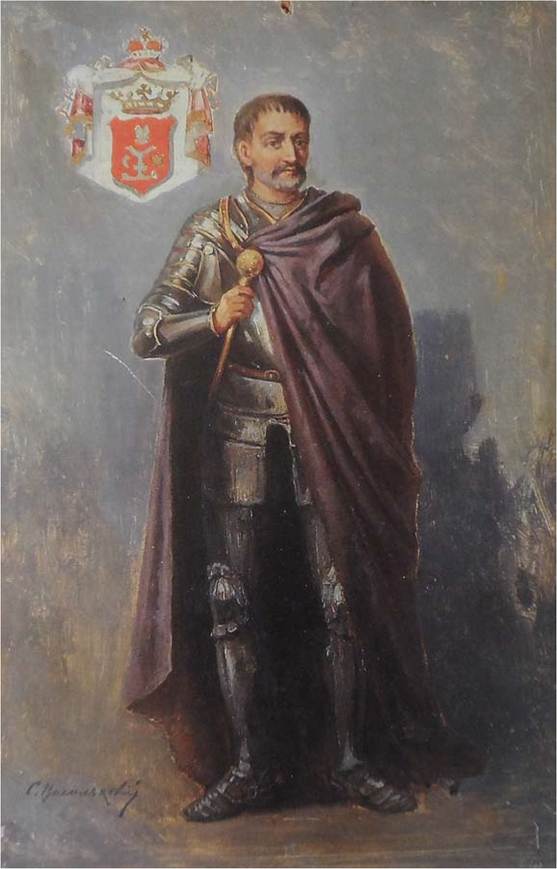
plate 2. Hetman Ivan Mazepa (1900), by Serhii Vasylkivsky. From Volodymyr Nediak, Ukraina kozatska derzhava (Kyiv: Emma, 2007), 406.
In Ukraine the title “hetman” came to designate the ruler of an autonomous or semiindependent Cossack polity. Ukrainian historians stress the quasi-monarchical nature of the Cossack “states” after Hetman Bohdan Khmelnytsky led the Ukrainian Cossacks to de facto independence in 1648. But in 1667, the Polish-Lithuanian Commonwealth and the tsardom of Muscovy tried to partition those Cossack lands between themselves, and resistance was led by Hetman Petro Doroshenko (16271698), who accepted the sovereignty of the distant Ottoman sultan. Hetman Ivan Mazepa (1639-1709) began his political career under Doroshenko and later ruled the Cossack state, or Hetmanate, in left-bank (eastern) Ukraine under Muscovite overlordship.
But he too strove for more independence and sided disastrously with Swedish king Charles XII against the Muscovites at the battle of Poltava (1709). Doroshenko's attire (Plate 1), particularly in his “kaftan” or long dress, shows some definite “oriental,” especially Persian influences, and contrasts with that of Mazepa in full, western armour (Plate 2).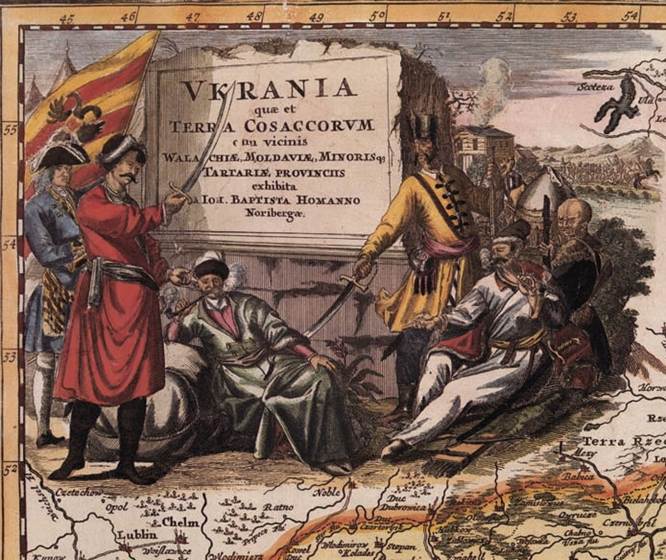
plate 3. Seated Mazepa, from Homann's Map of Ukraine (Nuremberg, c. 1720). Cover illustration from Forum: A Ukrainian Review, no. 90 (1994), courtesy of Andrew Gregorovich, Toronto.
A hand-painted cartouche (title illustration) from Johann Baptist Homann's undated Map of Ukraine, printed probably at Nuremberg c. 1720. The title reads, “Ukraine, which is the Land of the Cossacks, and the Neighbouring Provinces of Wallachia, Moldavia, and Lesser Tatary.” Some scholars believe that the illustration depicts a seated Mazepa smoking, with Charles XII of Sweden and Peter the Great of Russia on the left, and two Turkish Janissaries and a Cossack on the right. Peter appears to be threatening Mazepa, while the Turks, who opposed Peter, may be there to defend him. The fact that this map appeared about a decade after Mazepa's revolt reflects Ukraine's high profile in western Europe at that time.
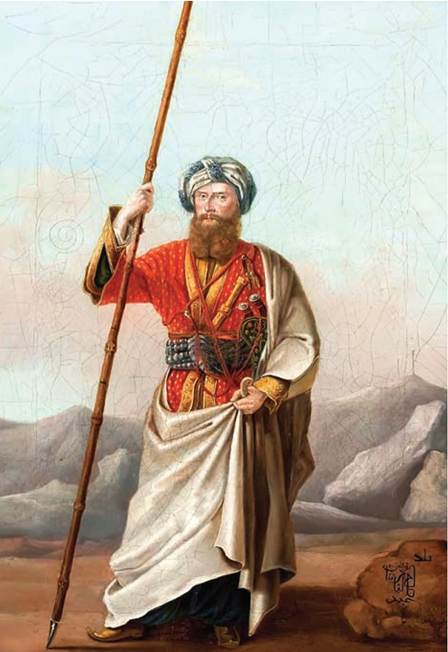
plate 4. Emir Rzewuski: Taj al-Fahr, or “Goldenbeard,” nineteenth-century illustration. Based on a painting by Kazimierz Zwan (1792-1848), based on a lithograph by Piotr Le Brun (1802-1879).
From the Kresy to the Middle East: The “Emir,” Taj al-Fahr (Crown of Glory), was born Count Wadaw Rzewuski / Viacheslav Revusky in 1784 in the Ukrainian-Polish borderlands (Kresy). Feeling the ignominy from his family's help in bringing about the partition of Poland in the 1790s, he fled to Arabia. There he collected thoroughbred Arabic horses, studied customs, language, and penmanship, and became an expert sketch artist and calligrapher (see self-portrait in Plate 4).
After his return to Ukraine, he collected its folklore and musical instruments and patronized its poets. After a skirmish between his private Cossack regiment and the Imperial Russian army in 1831, he disappeared, allegedly fleeing back to Arabia, to live a long life and die peacefully.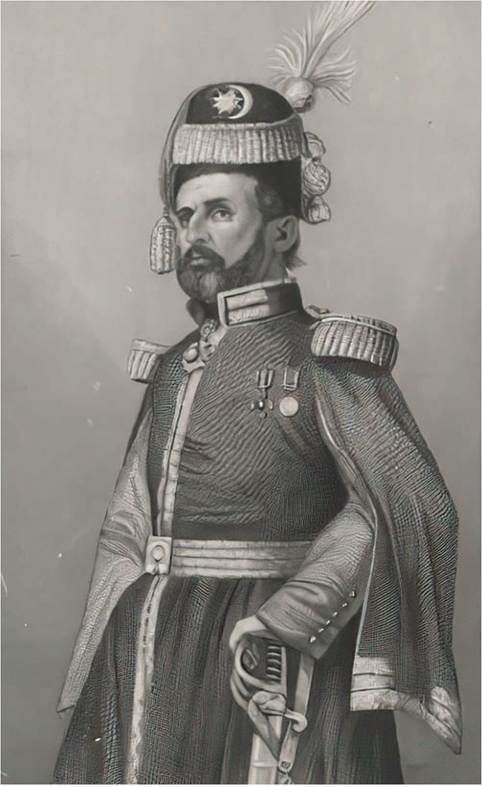
plate 5. Sadyk Pasha, nineteenth-century illustration.
Also hailing from the Kresy was Sadyk Pasha (Plate 5), born Mykhailo Chaikovsky / Michal Czajkowski (1804-1886). He took part in the Polish insurrection of 1830-31, went into exile in France, and then wrote novellas on Cossack themes. He later went to Turkey and commanded the Ottoman Cossack Brigade against the Russians in the Crimean War (1853-56). After the war he returned to Ukraine. But this romantic “neo-Cossack” always dreamed of restoring a free Cossack Ukraine.
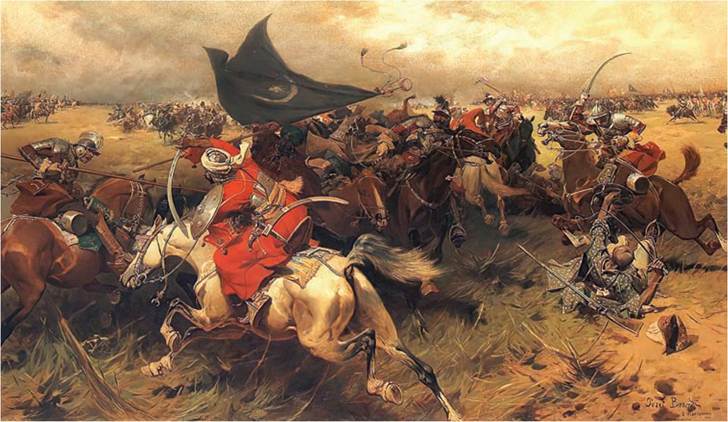
plate 6. Fight for the Turkish Standard (1905), by Jozef Brandt. National Museum, Cracow.
Jozef Brandt's 1905 painting is one of the great canvases depicting the seventeenthcentury wars between the multinational Polish-Lithuanian Commonwealth and the equally multinational Ottoman Empire. The most famous battle occurred at Vienna (1683), where Poland's King Jan III Sobieski and his army (two-thirds of it from lands now part of Ukraine) defeated the Ottoman army besieging Vienna and captured a flag allegedly once owned by the Prophet Mohammed. But most of the wars' battles took place in the Ukraina (the south-eastern borderlands of the Commonwealth) and involved the Crimean Tatars more than Turks, and Orthodox Cossacks as well as Roman and Eastern Catholic gentry.
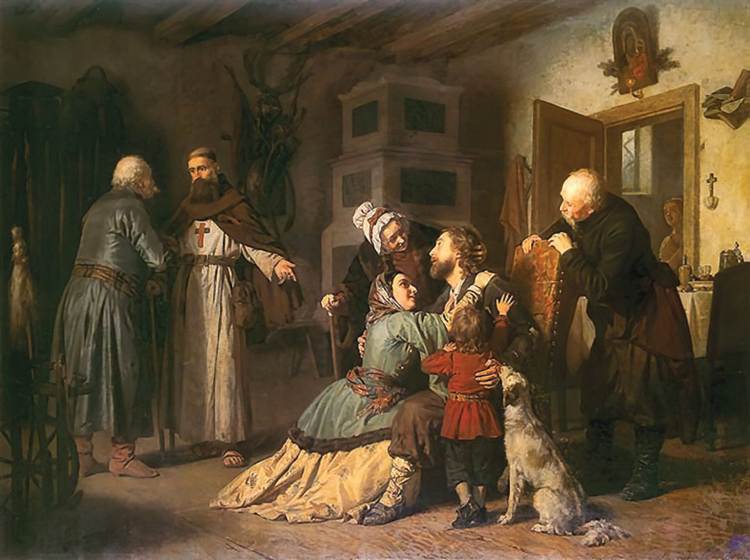
plate 7. Return from Tatar Captivity, by Leopold Loeffler, nineteenth century.
Leopold Loffler (1827-1898) depicts a young man returned to his home in Poland or Ukraine after being ransomed with the help of the (Catholic) Trinitarian order (founded 1198 to ransom Christian slaves).
The captive is probably a szlachcic (gentleman) of the south-eastern borderlands (Kresy) of the old Polish-Lithuanian Commonwealth, the region that suffered most severely from Tatar raids. Although the icon above the door may be either Catholic or Orthodox, the cross by its side with a container for holy water below it suggests a Roman, or perhaps Eastern Catholic household, less likely Orthodox. For Eastern Catholics and Orthodox Ukrainians, ransom intermediaries were more often Armenians (also Eastern Christians) or others who had Christian and Muslim contacts. The szlachcic’s costume, as well as his loving wife and child, are typical for the Ukrainian gentry of that period.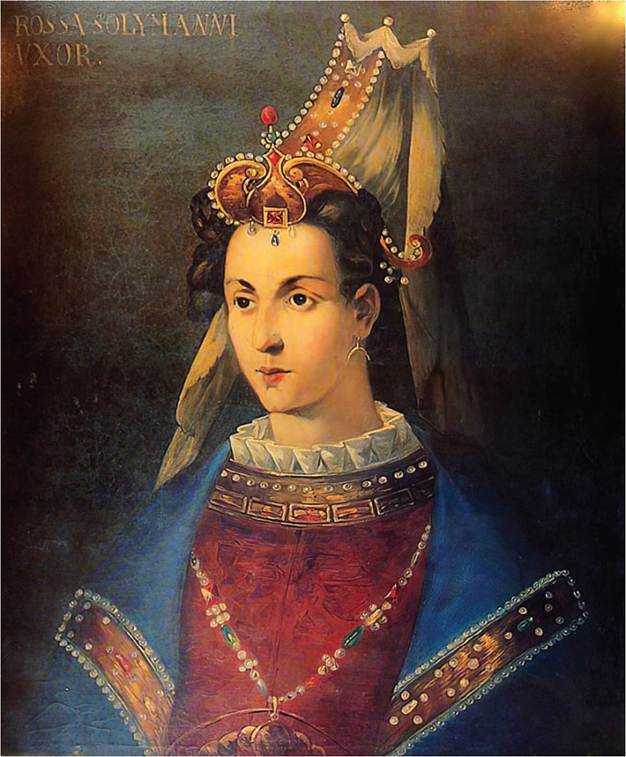
plate 8. Roxelana (wife of Suleiman the Magnificent), oil on canvas, by an unknown painter of the late sixteenth or early seventeenth century, Topkapi Palace Museum, Istanbul.
This portrait of Roxelana, the Ruthenian consort and wife of Suleiman the Magnificent (reigned as sultan 1520-66), by an unknown painter of the late sixteenth or early seventeenth century, hangs in the Topkapi Palace Museum, Istanbul. In the upper left corner, a Latin inscription reads: “Rossa Solymanni Uxor” (Rose, wife of Suleiman).
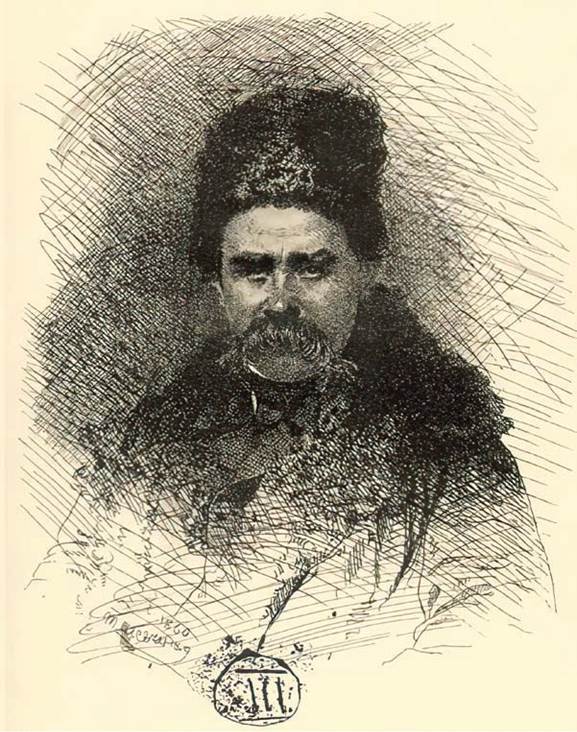
plate 9. Taras Shevchenko (i860), by Taras Shevchenko, pen drawing. From Taras Shevchenko, Mystetska spadshchyna, vol. IV (Kyiv: Vyd. an UkRSR, 1963), plate 62.
Taras Shevchenko, Ukraine's national poet, was also a talented artist, who produced many fine self-portraits (such as Plate 9). He executed these two pen drawings in 1859-60 after his return from central Asian exile. Mykhailo Maksymovych (18041873) (Plate 10) was a prominent Ukrainian biologist and literary figure, who was greatly influenced by the western European culture of his day, and whose pioneering 1827 collection of Ukrainian folksongs stimulated the sudden and rapid growth of
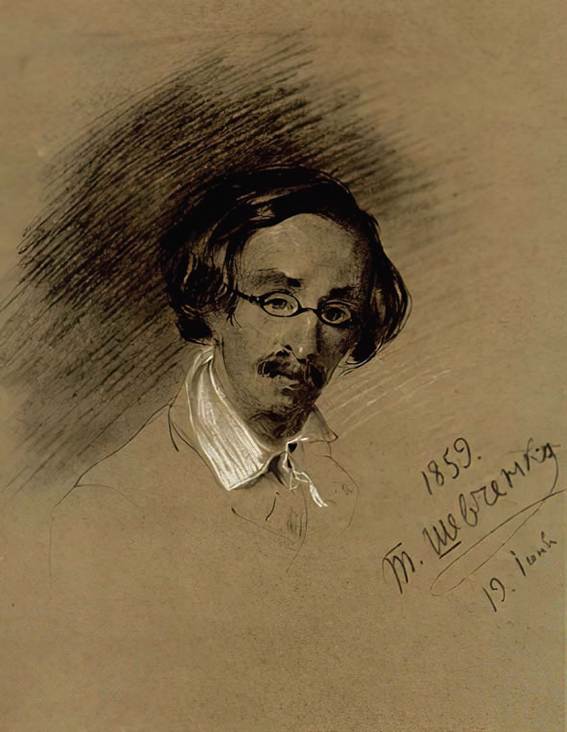
plate 10. Mykhailo Maksymovych (1859), by Taras Shevchenko, pen drawing. From Taras Shevchenko, Mystetska spadshchyna, vol. IV (Kyiv: Vyd. an UkRSR, 1963), plate 43.
national consciousness among his compatriots. Like so many others, Maksymovych was overwhelmed by Shevchenko's innovative verses, which remained so true to spoken Ukrainian, yet clearly raised it to the literary level of other, more developed European languages. But how the modest, soft-spoken biologist and university administrator, with rather conservative political beliefs, could admire the poet's fiery, even revolutionary verses remains an unsolved puzzle.
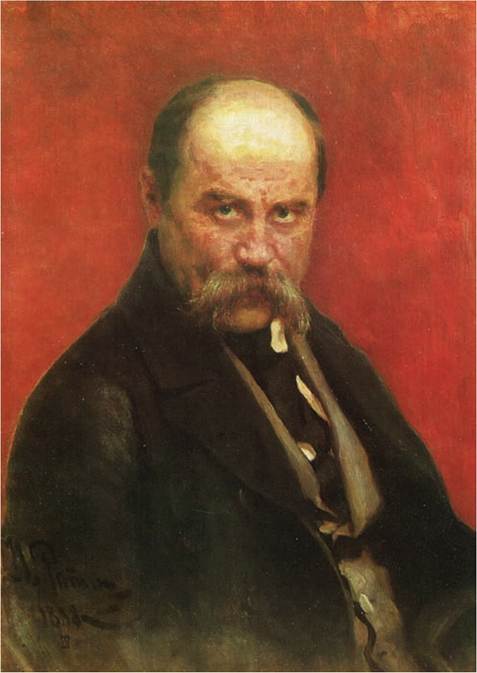
plate 11. Shevchenko, by Ilya Repin, Shevchenko Museum, Kyiv. From Shevchenkivskyi slovnyk, vol. I (Kyiv: Instytut literatury, an URSR, 1976), frontispiece.
Both the Ukrainian poet Taras Shevchenko (1814-1861) and the Caucasian resistance leader Imam Shamil (1797-1871) were fierce opponents of the Russian Empire, though in different ways. From 1840 to 1859 Shamil led a Sufi Muslim imamate in the North Caucasus that defended its mountain homeland against the Russians. The poet's fiery verses condemned Russian imperialism in that same Caucasus and called out for truth, freedom, and glory. The portrait sets Shevchenko (Plate 11) against a flaming red field; Ukraine-born Ilya Repin executed it several years after the poet's death, and it conveys the revolutionary spirit of his incendiary poem “The Caucasus.”
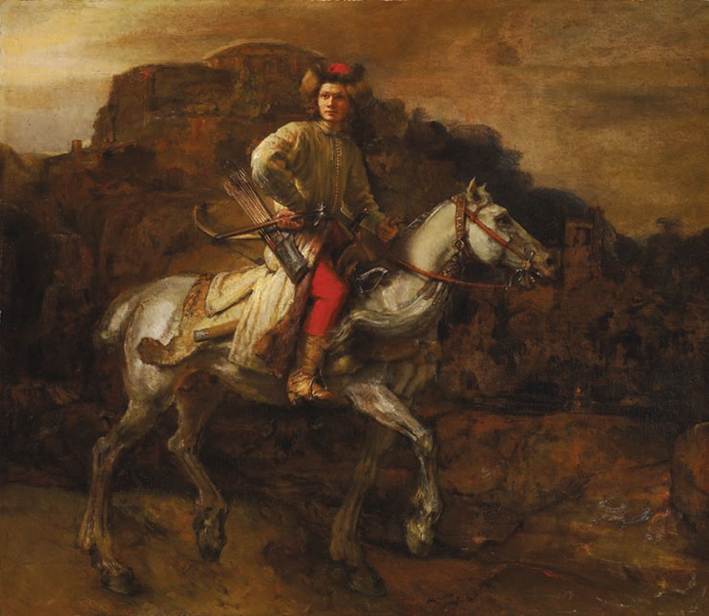
plate 12. The Polish Rider (c. 1655), by Rembrandt, oil on canvas. Copyright Frick Collection, New York. Used by permission.
Rembrandt van Rijn almost certainly, about 1655, painted this handsome and somewhat mysterious young eastern European-looking rider, armed for war. It was originally titled Cosaque a cheval. The canvas's aristocratic provenance is Polish; its documentation does not antedate the eighteenth century. The young rider's identity remains uncertain, as does whether Rembrandt painted the picture, or only parts of it, and whether others - possibly a student - did the rest. Regardless, the work remains a masterpiece of striking originality and beauty, which could hardly have been created by a lesser artistic genius.
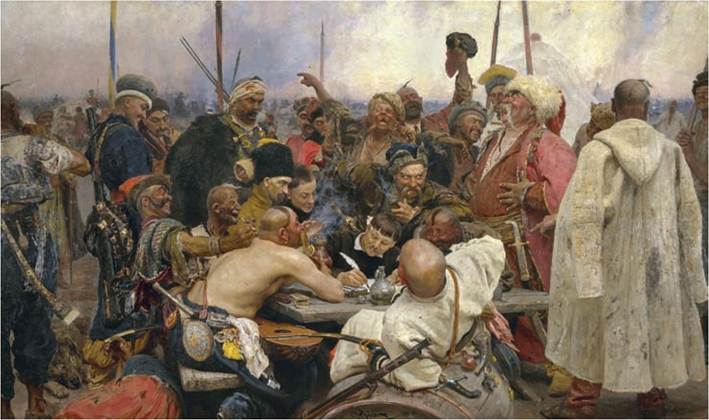
plate 13. Zaporozhian Cossacks Writing a Satirical Letter to the Turkish Sultan (1891), by Ilya Repin (“St Petersburg version”), oil on canvas.
Russian Museum, St Petersburg.
This most famous version of Ivan Repin's Zaporozhian Cossacks Writing a Satirical Letter to the Turkish Sultan was completed in 1891 and hangs in St Petersburg's Russian Museum. It is the largest, most balanced, and in some ways most aesthetically pleasing version of this picture. The faces are taken from real people, almost all of Ukrainian background, whom Repin knew in St Petersburg or sketched in Ukraine. Despite the work's theme, and even though some of the attire, weapons, and objects clearly reflect “eastern” influences, it is difficult to see it as an “orientalist” creation a la Edward Said, since Repin definitely thought of these Cossacks as “our own,” and not “the other.” Both the floppy hat of the Cossack standing behind the Taras Bulba figure in red, and the upright-standing pole on the furthest left, bear what became the blue and yellow national colours of Ukraine during the 1917 Revolution.
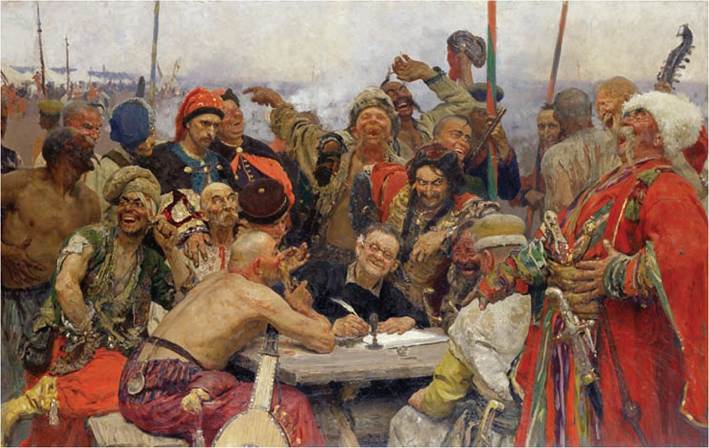
plate 14. Zaporozhian Cossacks Writing a Satirical Letter to the Turkish Sultan (1880s-1890s), by Ilya Repin (“Kharkiv version”). Kharkiv Art Museum.
The second great version of Ivan Repin's Zaporozhian Cossacks Writing a Satirical Letter to the Turkish Sultan, which hangs in the Kharkiv Museum of Art, was begun before the 1891 St Petersburg version (Plate 14) but completed after it. Repin liked the latter very much, but wanted to do something more historically accurate. Here few Cossack faces can be recognized. Repin included descendants of the Zaporozhians, both free peasants and former serfs, whom he had sketched during research trips to central Ukraine and the Kuban. The Taras Bulba figure in red and the bare-chested Cossack on the left, however, have been identified.
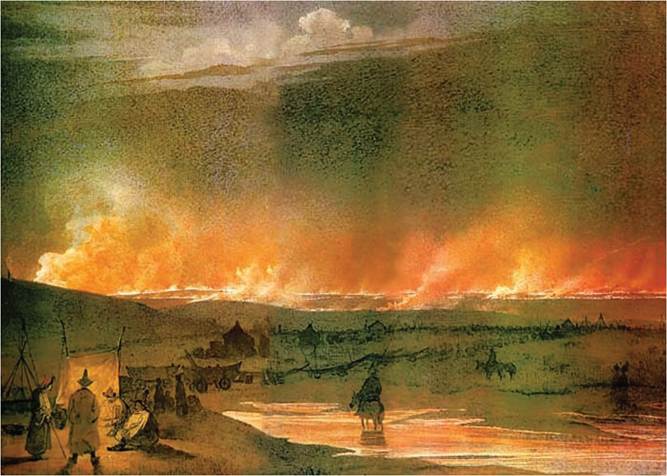
plate 15. Fire on the Steppe (1848), by Taras Shevchenko, watercolour.
By the nineteenth century, Middle East and Islamic culture had a long history in central Asia, where the Ukrainian poet Taras Shevchenko was exiled in 1848 and spent over a decade as a common soldier, forbidden to paint or to write, but sometimes managing to do one or the other. Plate 15, Fire on the Steppe (1848), one of his most memorable watercolours, depicts a wildfire engulfing the steppe in what is today Kazakhstan. Such prairie fires are notorious for their violence and speed, especially when whipped up by a strong wind. Native Kazakhs are shown in the foreground. At that time, the Kazakh and Kirghiz nomads to the north of central Asian cities like Samarkand and Bukhara were only slightly Islamicized, but they made a deep impression on Shevchenko, who sketched them as often as he could. knight as the Polish Rider, though a “spiritual” rather than a real one, since Szlichting was too old to be the horseman. But the Socinians were a radical Protestant sect, unitarian and pacifist, so hardly reflected, as Held pointed out, by Rembrandt's well-armed rider.22