Note on Transliteration
In the text of this book, the modified Library of Congress system is used to transliterate Russian, Ukrainian, and Belarusian personal names and toponyms. This system, designed to ease reading by avoiding non-English diacritics and word endings, omits the soft sign (ь) and, in masculine personal names, the final 'й' (thus, for example, Khmelnytsky, not Khmel'nyts'kyi).
The same practice is followed in the notes, with the exception of bibliographic references, which are rendered in the full Library of Congress system (ligatures omitted) in order to make possible the accurate reconstruction of the Cyrillic original. The ALA-LC Romanization Tables detailing the Library of Congress transliteration of Ukrainian and Russian are available online at www.loc.gov/catdir/cpso/roman.html. Titles of publications issued after 1800 are given in modernized spelling. In bibliographic references to the Russian-language publications of Ukrainian authors, the author's name is transliterated from its Russian form (for example, Mykhailo Hrushevsky appears as Mikhail Grushevskii). Toponyms are usually transliterated from the language of the country in which the designated places are currently located. As a rule, personal names are given in forms characteristic of the cultural tradition to which the given person belonged. If an individual belonged to (or is claimed by) more than one national tradition, alternative spellings are given in parentheses. In this case, as in the use of specific terminology related to the history of the Eastern Slavs and titles of East European officials and institutions, I follow the practice established by the editors of the English translation of Mykhailo Hrushevsky's History of Ukraine-Rus'.1The Julian calendar used by the Eastern Slavs until 1918 lagged behind the Gregorian calendar used in the Polish-Lithuanian Commonwealth and Western Europe (by ten days in the sixteenth and seventeenth centuries, eleven days in the eighteenth century, twelve days in the nineteenth, and thirteen days in the twentieth). Dates in this study are generally given according to the Julian calendar; where both styles appear concurrently, the Gregorian-calendar date is given in parentheses, for example, 13 (23) May.
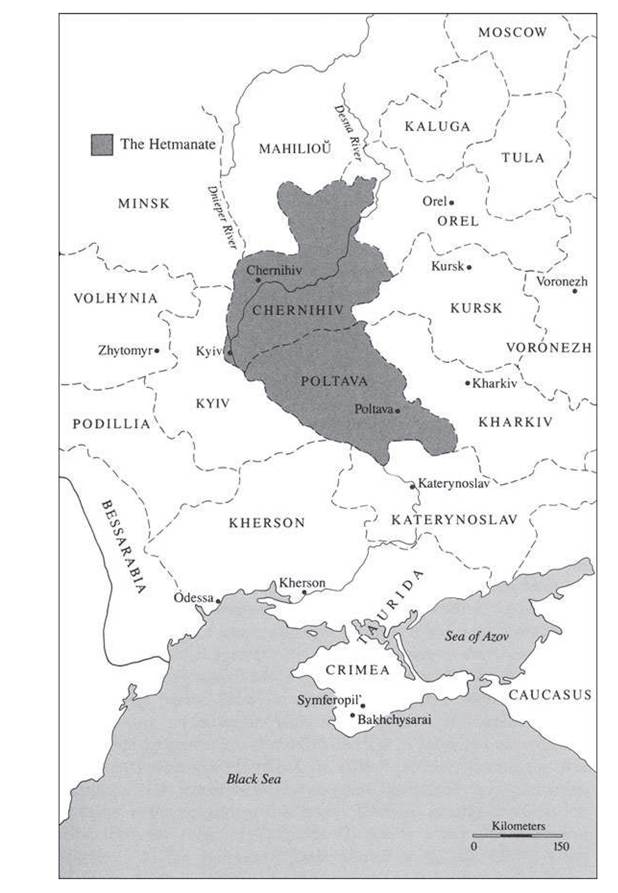
1. The Cossack Hetmanate as Part of Imperial Russia. Zenon E. Kohut, Russian Centralism and Ukrainian Autonomy: Imperial Absorption of the Hetmanate, 1760s- 1830s (Cambridge, MA: Harvard Ukrainian Research Institute, 1988), xv.
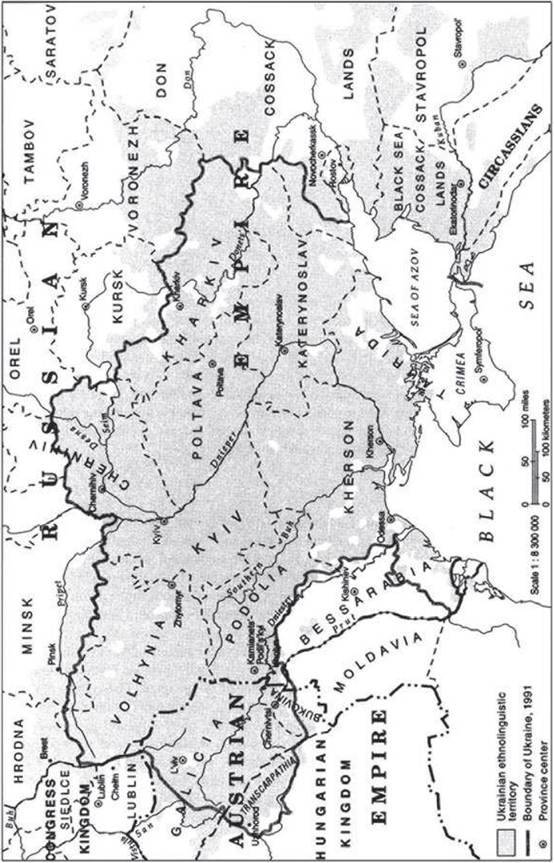
2. Ukrainian Lands in the Nineteenth Century. Zenon E. Kohut, Bohdan Y. Nebesio, and Myroslav Yurkevich, Historical Dictionary of Ukraine (Lanham, MD, Toronto, and Oxford: Scarecrow Press, 2005), map 5.
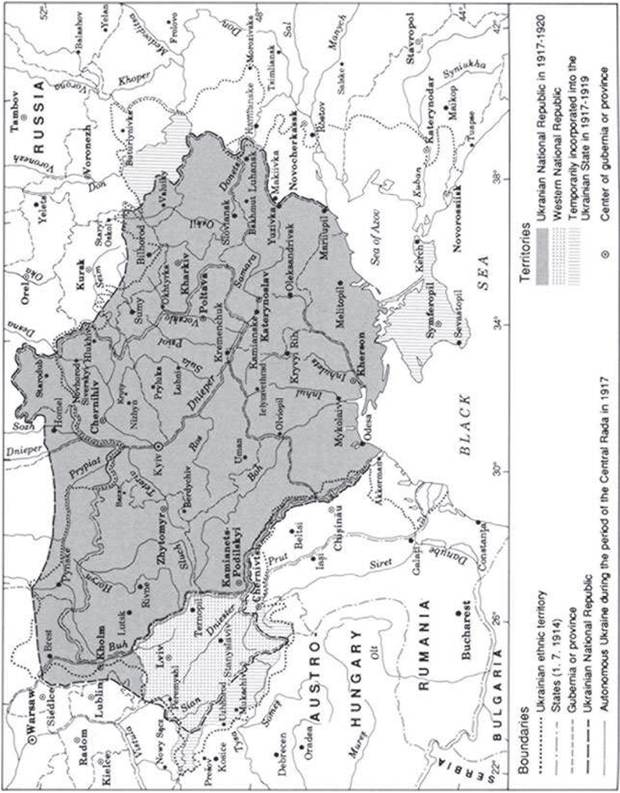
3. Ukraine at the Time of the Revolution of 1917. Encyclopedia of Ukraine, ed. Volodymyr Kubijovyc and Danylo Husar Struk, vol. 5 (Toronto: University of Toronto Press, 1993), p. 409.
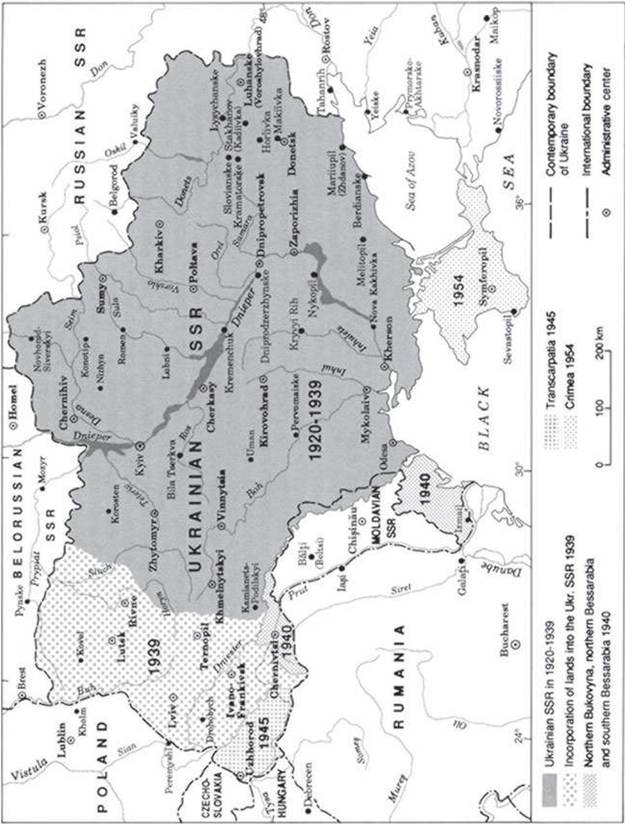
4. Soviet Ukraine. Encyclopedia of Ukraine, ed. Volodymyr Kubijovyc and Danylo Husar Struk, vol. 5 (Toronto: University of Toronto Press, 1993), p. 441.
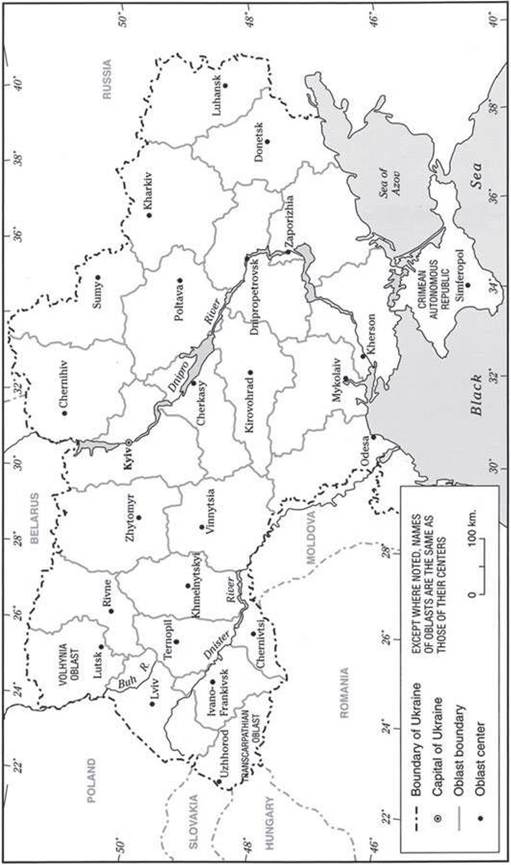
5. Present-Day Ukraine. Zenon E. Kohut, Bohdan Y. Nebesio, and Myroslav Yurkevich, Historical Dictionary of Ukraine (Lanham, MD, Toronto, and Oxford: Scarecrow Press, 2005), map 9.
UKRAINE AND RUSSIA