Pathogenesis of HIV-Associated Pulmonary Hypertension
The histopathology of HIV-associated pulmonary hypertension is similar to that of primary pulmonary hypertension. The most common alteration in HIV-associated pulmonary hypertension is plexogenic pulmonary arteriopathy (Fig.
1), while thrombotic pulmonary arteriopathy and pulmonary veno-occlusive disease are more rare histologic findings. This observation may suggest that similar etiopathogenetic mechanisms are at the basis of both HIV- associated pulmonary hypertension and primary pulmonary hypertension.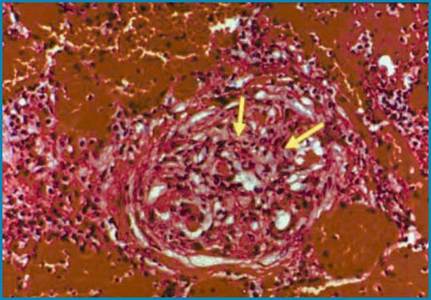
Fig. 1 Plexogenic pulmonary arteriopathy (arrows) in a patient with HIV-associated pulmonary hypertension (autopsy specimen). H&E, x20
The finding of an increased incidence of pulmonary hypertension in HIV-infected patients was at first related to viral infection. Although a direct role of HIV-1 in HIV- associated pulmonary hypertension has not been demonstrated [4, 5], several indirect mechanisms may link HIV infection to the pulmonary vascular changes. The principal pathogenetic hypotheses formulated for development of HIV-associated pulmonary hypertension with related clinical evidence are reported in Table 1.